Road Trip on a Road Trip
Our southwest trips usually include a stop in Tucson, making a visit with our snowbird friends in Florence an easy transition on our way up to Phoenix. This time Tucson was not on the itinerary, so we created another little road trip for some fun with friends and to explore more of the history and beauty of Arizona.
To start at the beginning of this series, visit The Spectacular Southwest.
The Best Laid Plans
We would have saved lots of ($4/gal+) gas had we included Dobbins Lookout and the Riparian Preserve (from my last post) on our way to Florence as planned. But the kitchen sink in our condo had other plans and by the time maintenance got it draining properly, we decided to skip those first two stops. The good news is we arrived a little earlier at our friends’ place for a great afternoon of catching up with Mr. Gilberti’s wine before fish & chips and Boozy Bingo at a local pub.
Boyce Thompson Arboretum
The next morning, we got an earlier start to beat the heat – although we should have left way earlier to achieve that goal! We had hoped to do a little hiking at the Apache Trail of Tears today as well, but with temps once again in the 100s, we decided to postpone that hike till next time we visit – a little earlier in the year.
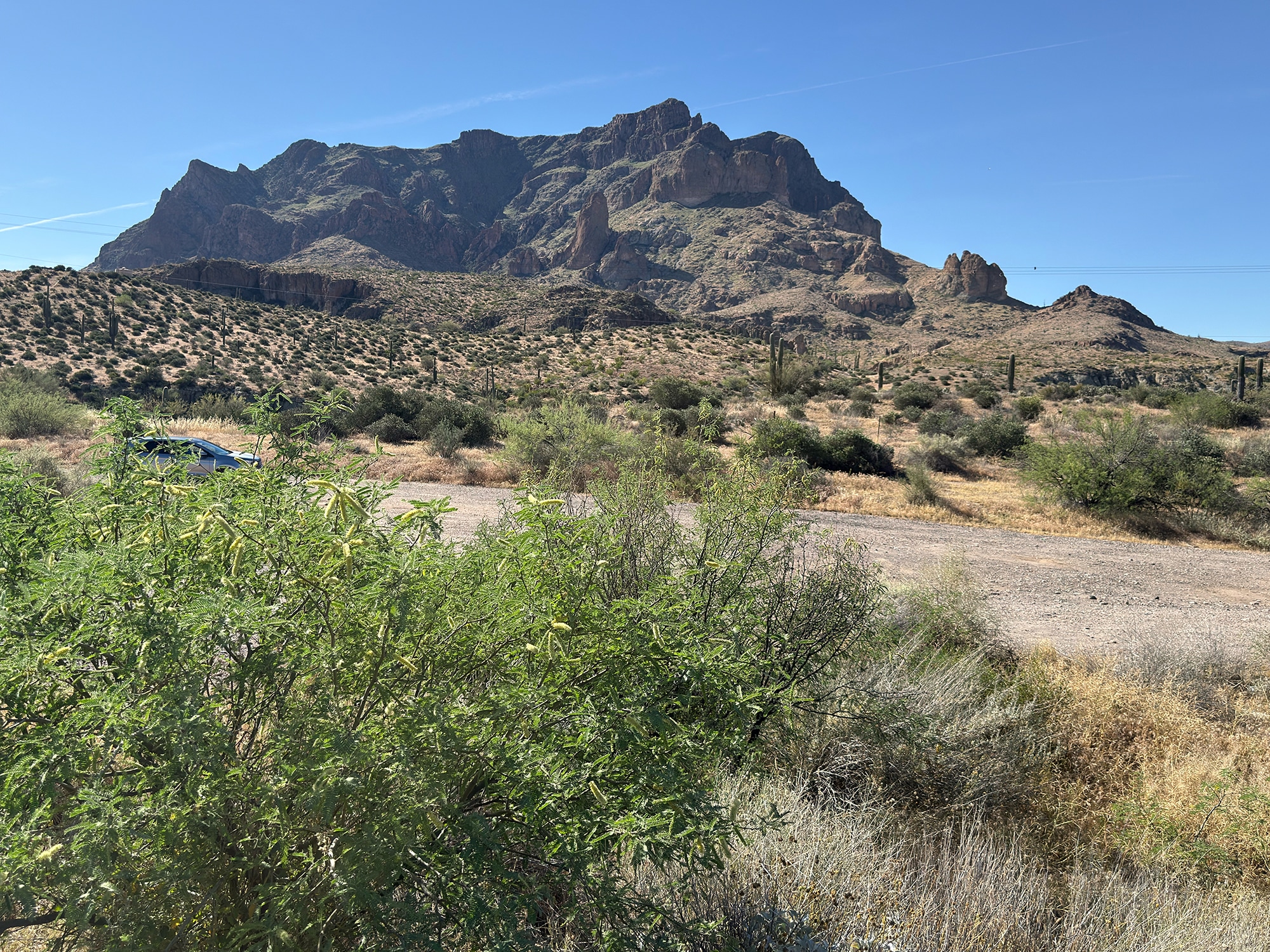
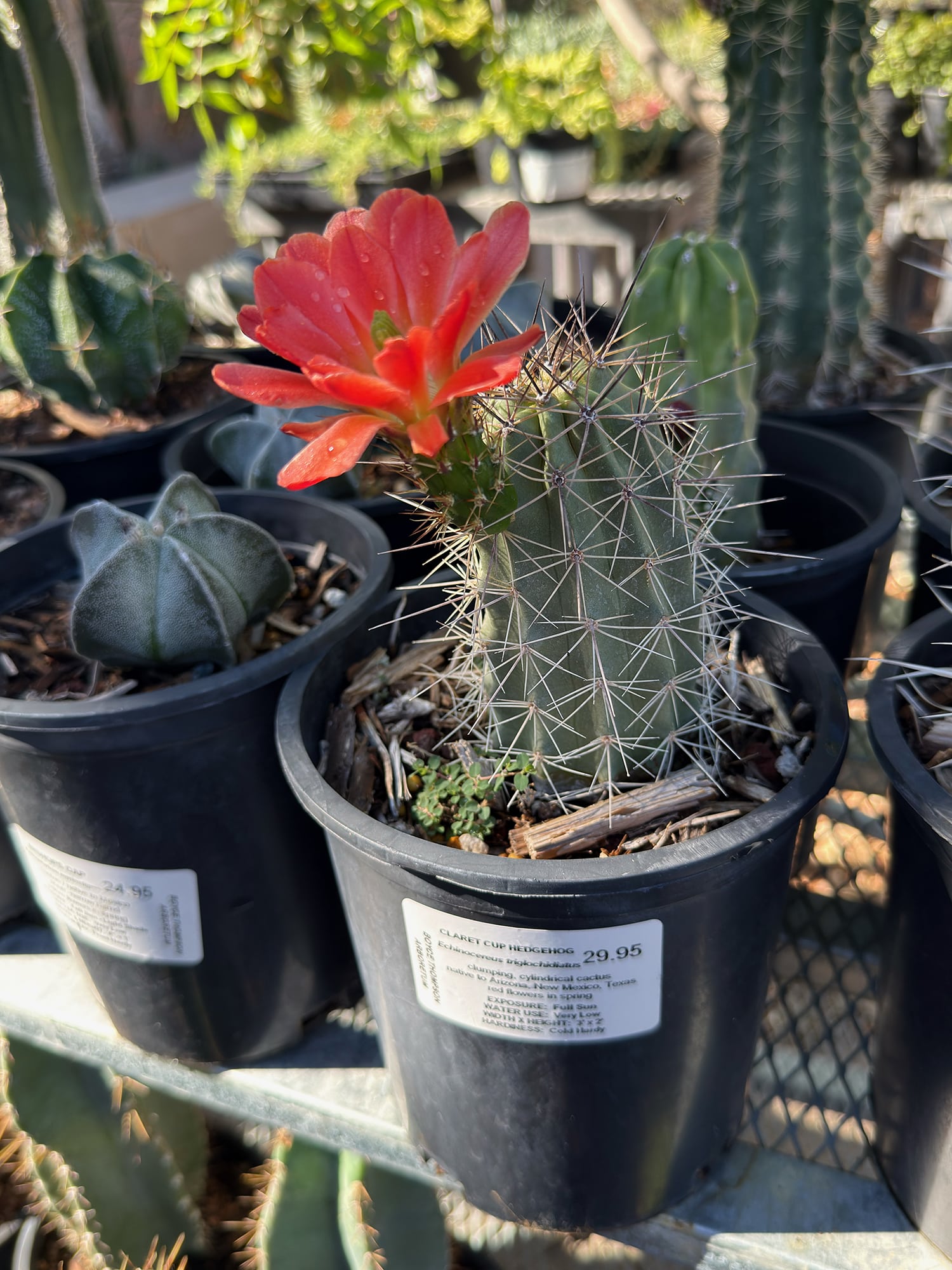
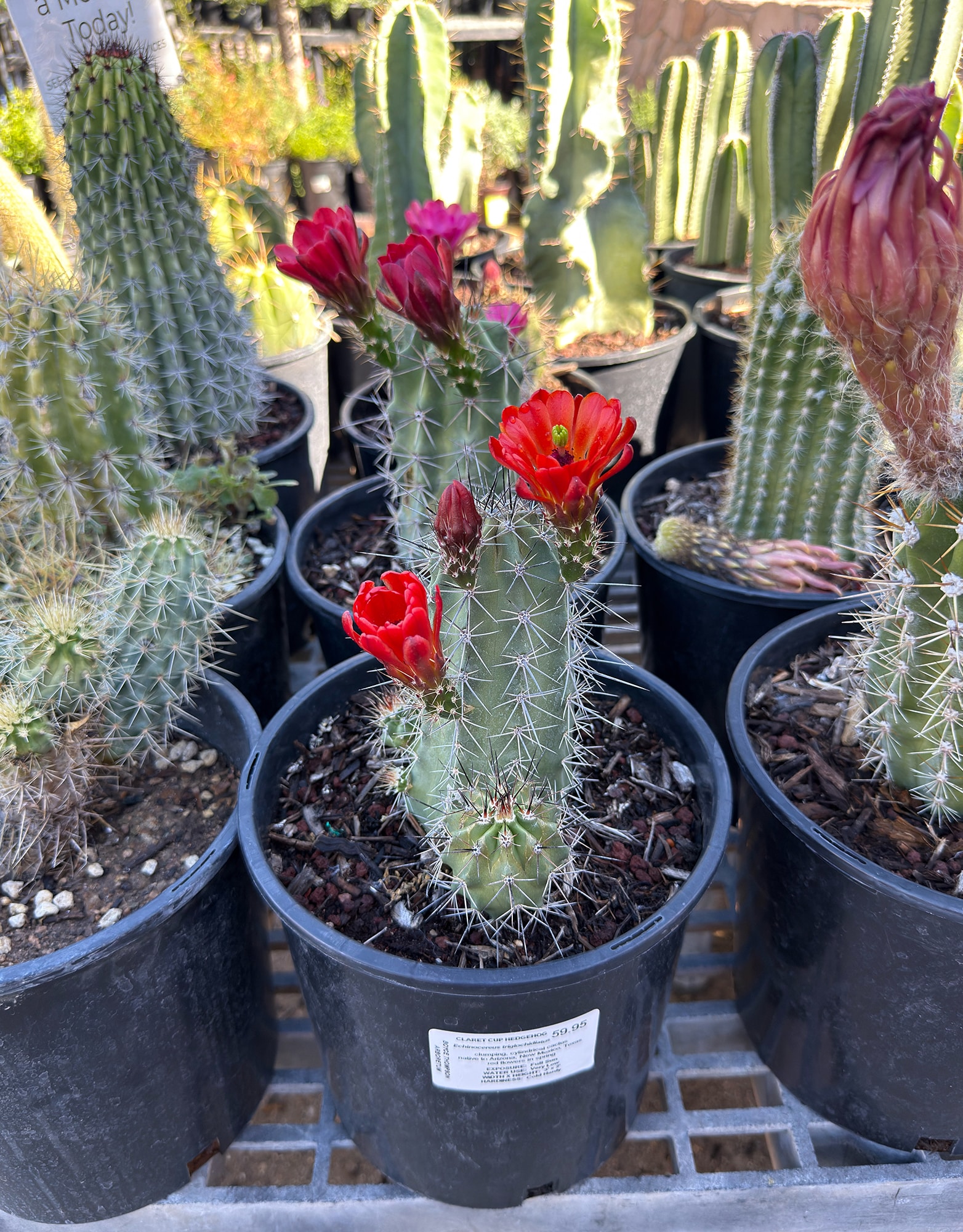
We traveled about half an hour to Superior for a fabulous visit at the Boyce Thompson Arboretum – Arizona’s first and largest botanical garden. As we approached the Welcome Center, I took pictures of the blooming cacti that were potted for sale – assuming I wouldn’t see many others with this dry spring, but I would be pleasantly surprised by some pops of color along the way.
“Col. William Boyce Thompson was an American engineer, financier, and philanthropist who created his fortune in the mining industry. His visits to Russia before the Revolution and again in 1918 just after, changed his life. As a member of an American Red Cross relief mission, he witnessed rampant crop failure and starvation and saw firsthand the suffering of the people. The Russian experience convinced him that agriculture, food supply, and social justice are linked. This conviction, along with his faith in science, helped to shape his philanthropic projects around plants and plant science.
In the early 1920s, Thompson, enamored with the landscape around Superior, built a winter home overlooking Queen Creek, and called it the Picket Post House. In 1924 he founded the Boyce Thompson Institute for Plant Research in Yonkers, New York (now at Cornell University in Ithaca), and the Boyce Thompson Arboretum on 400 acres around the Picket Post House, in Queen Creek Canyon.”
A Feast for the Eyes
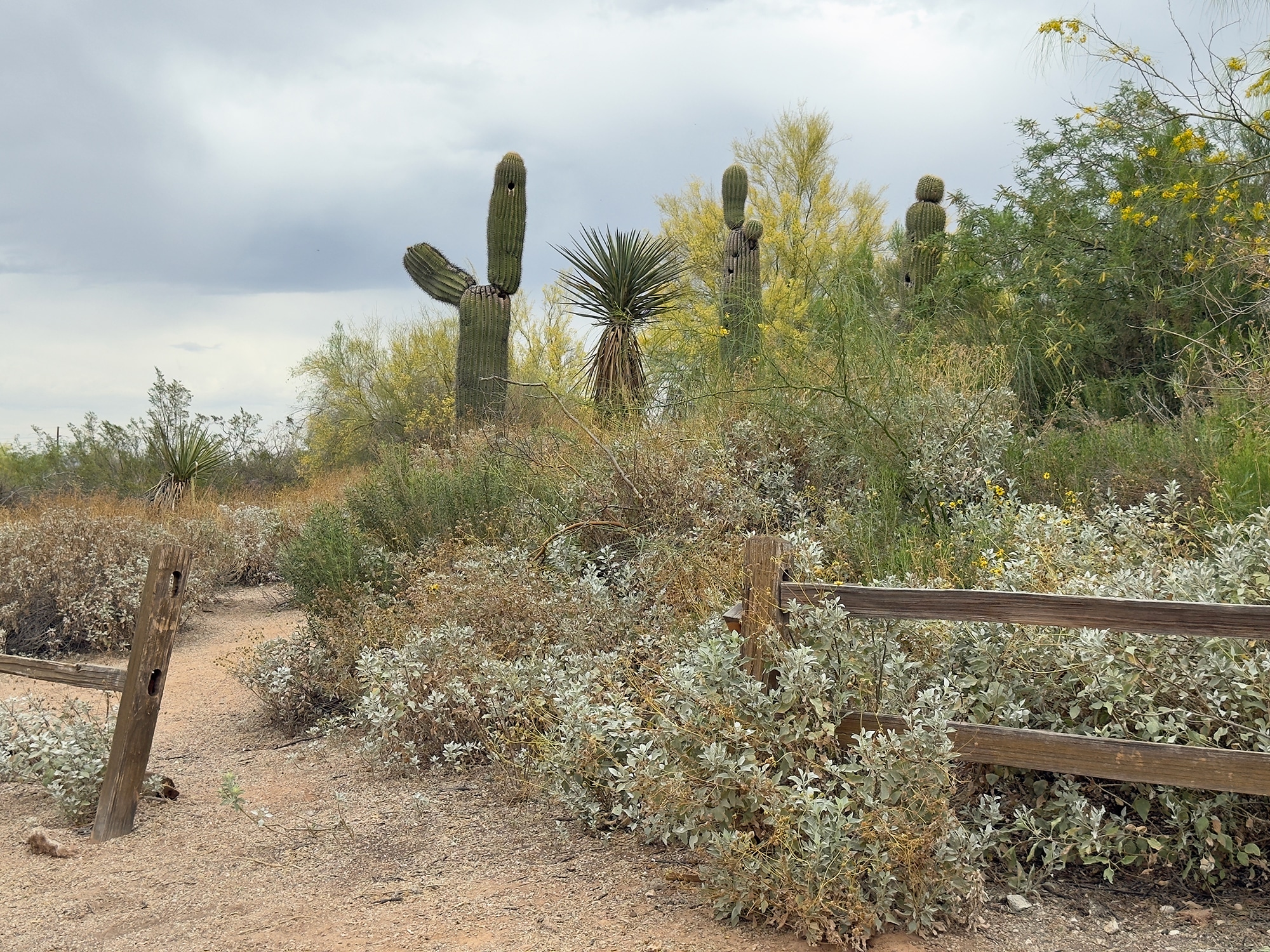
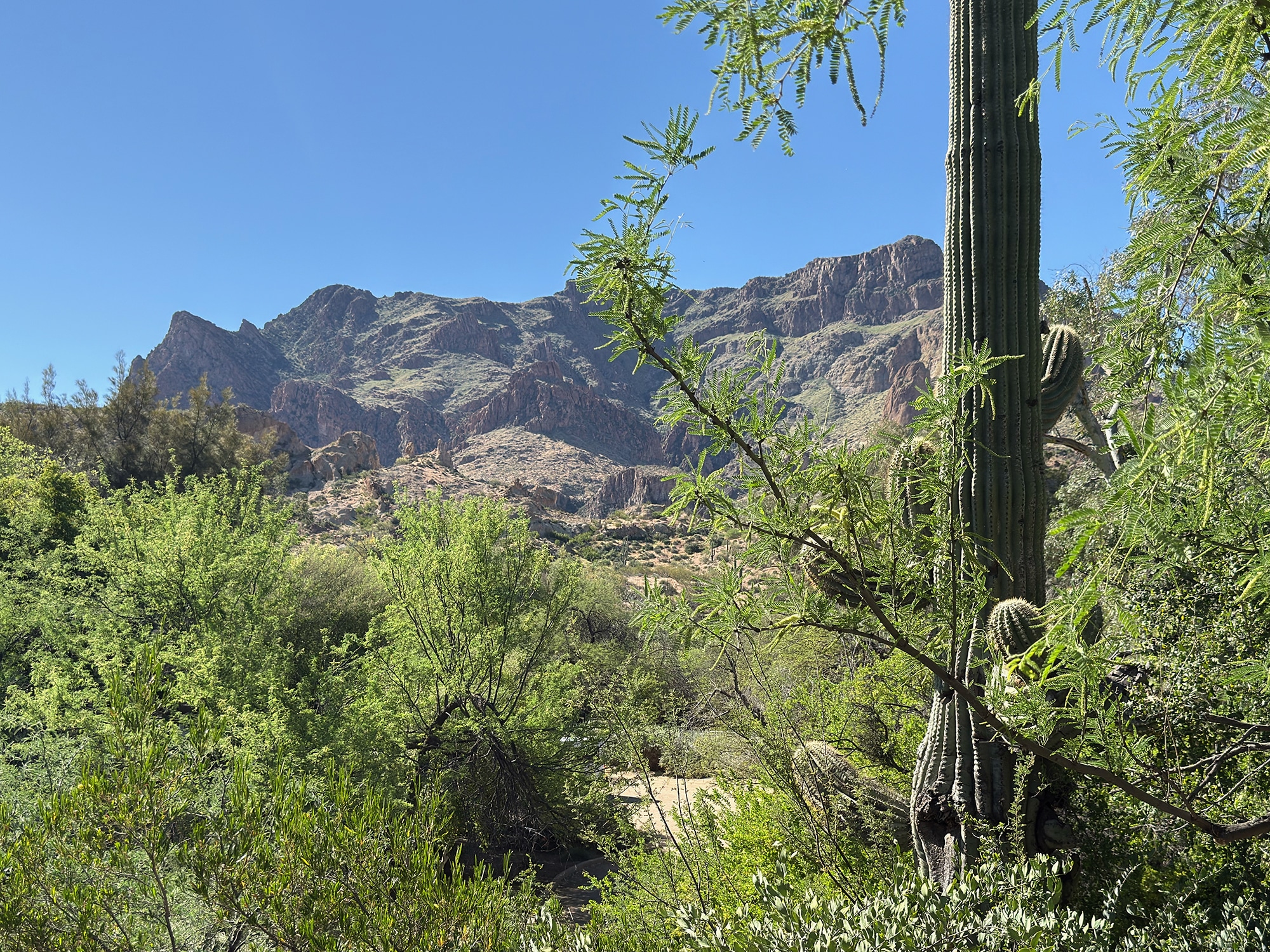
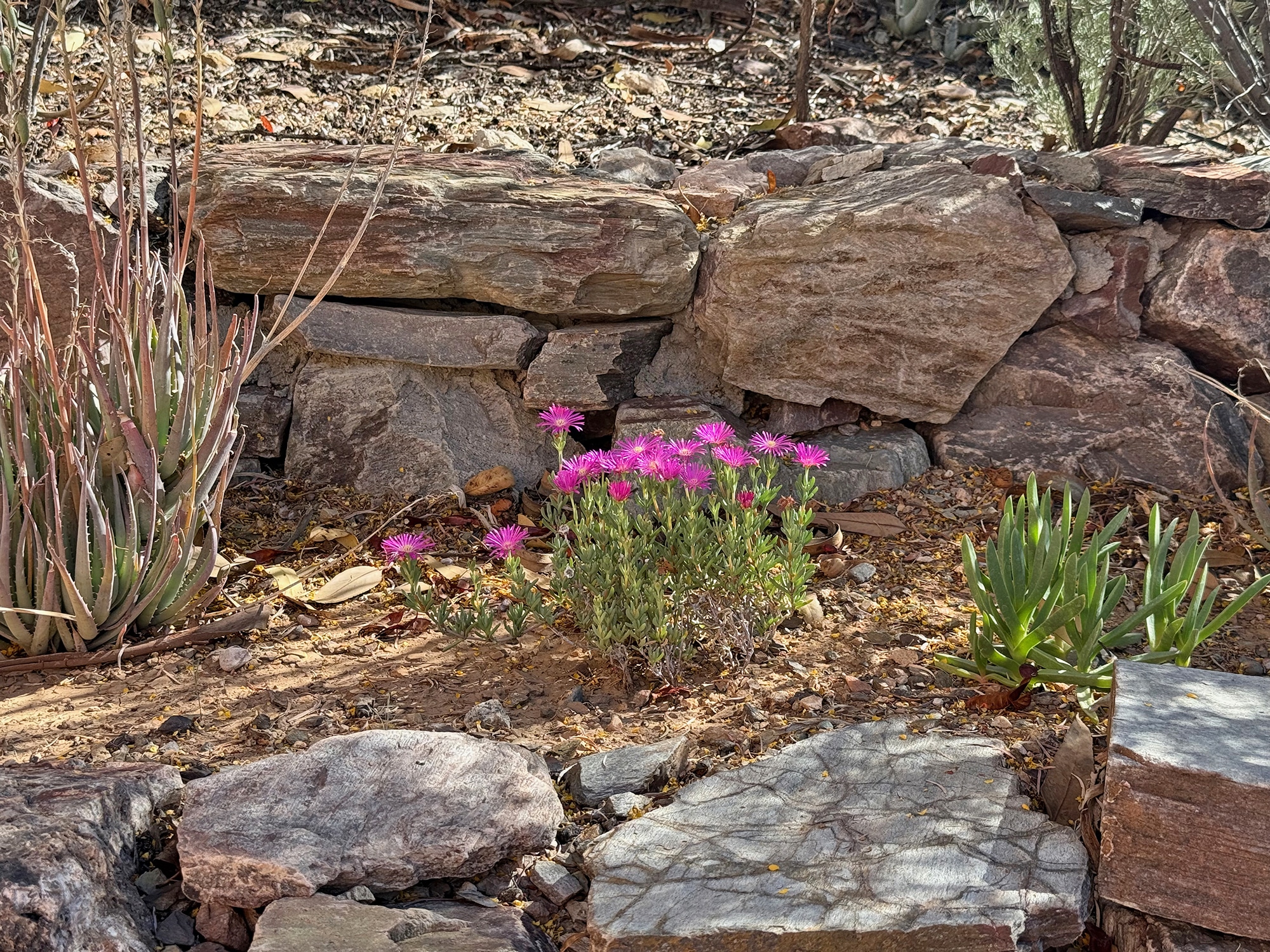
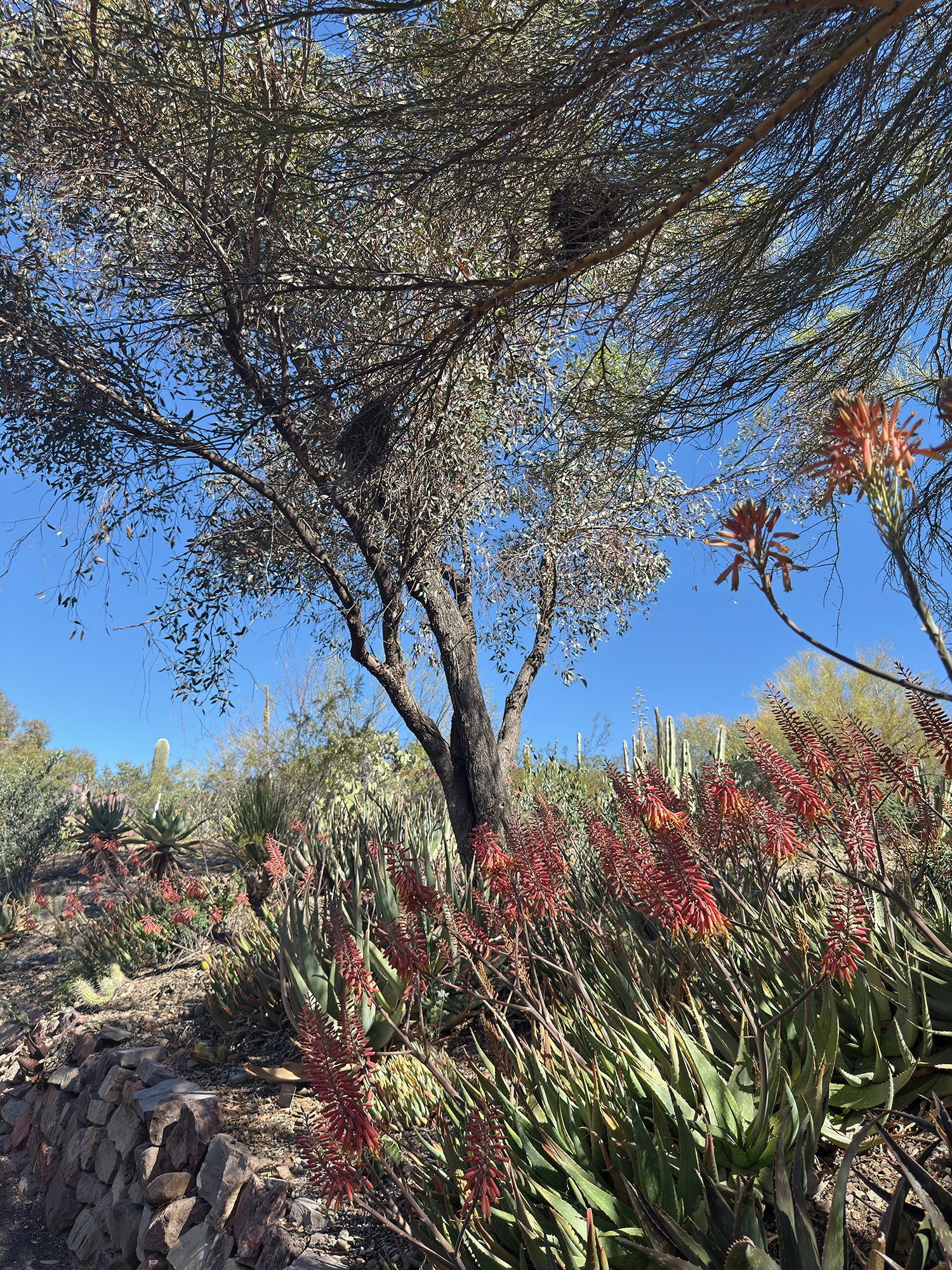
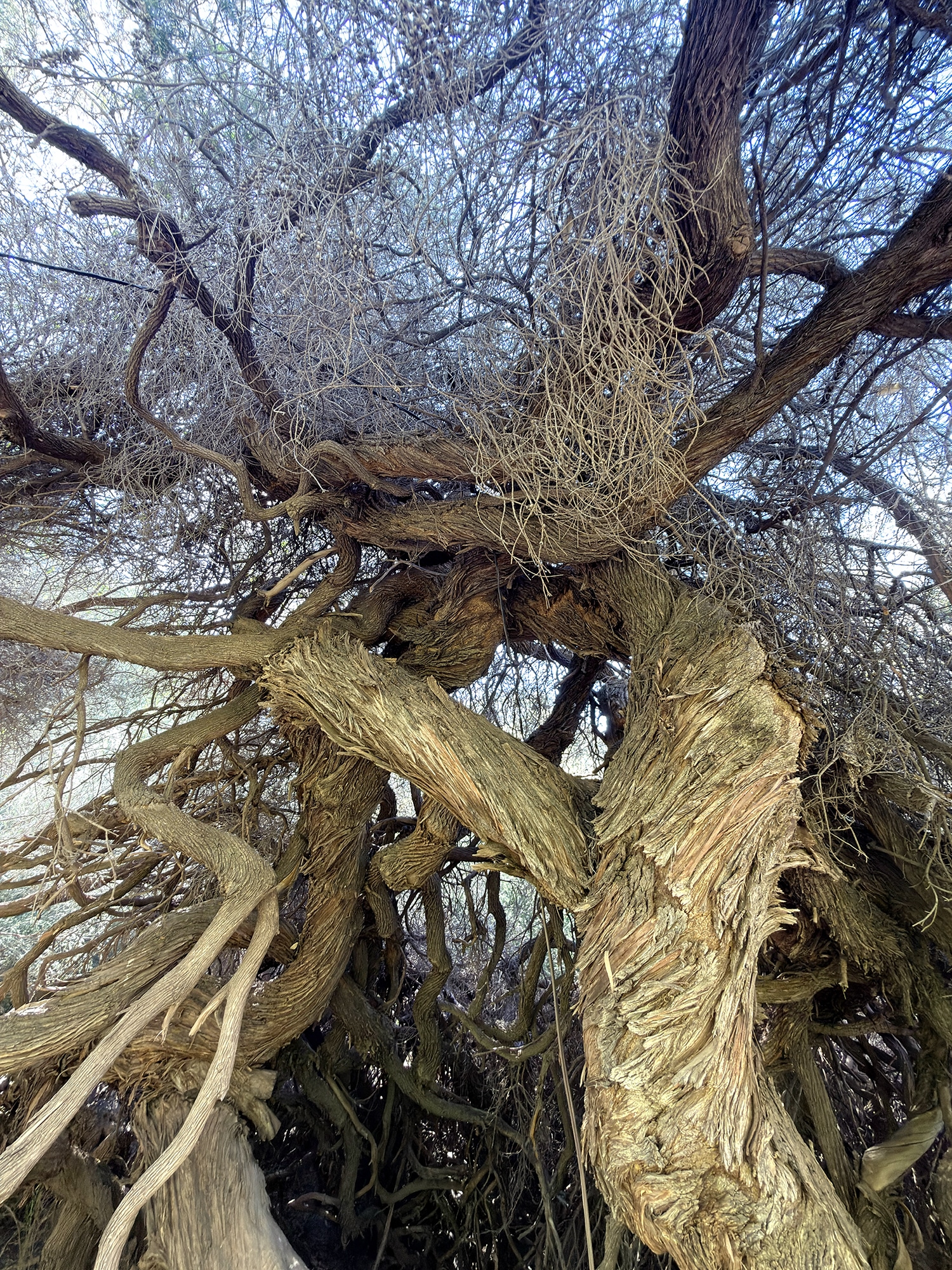
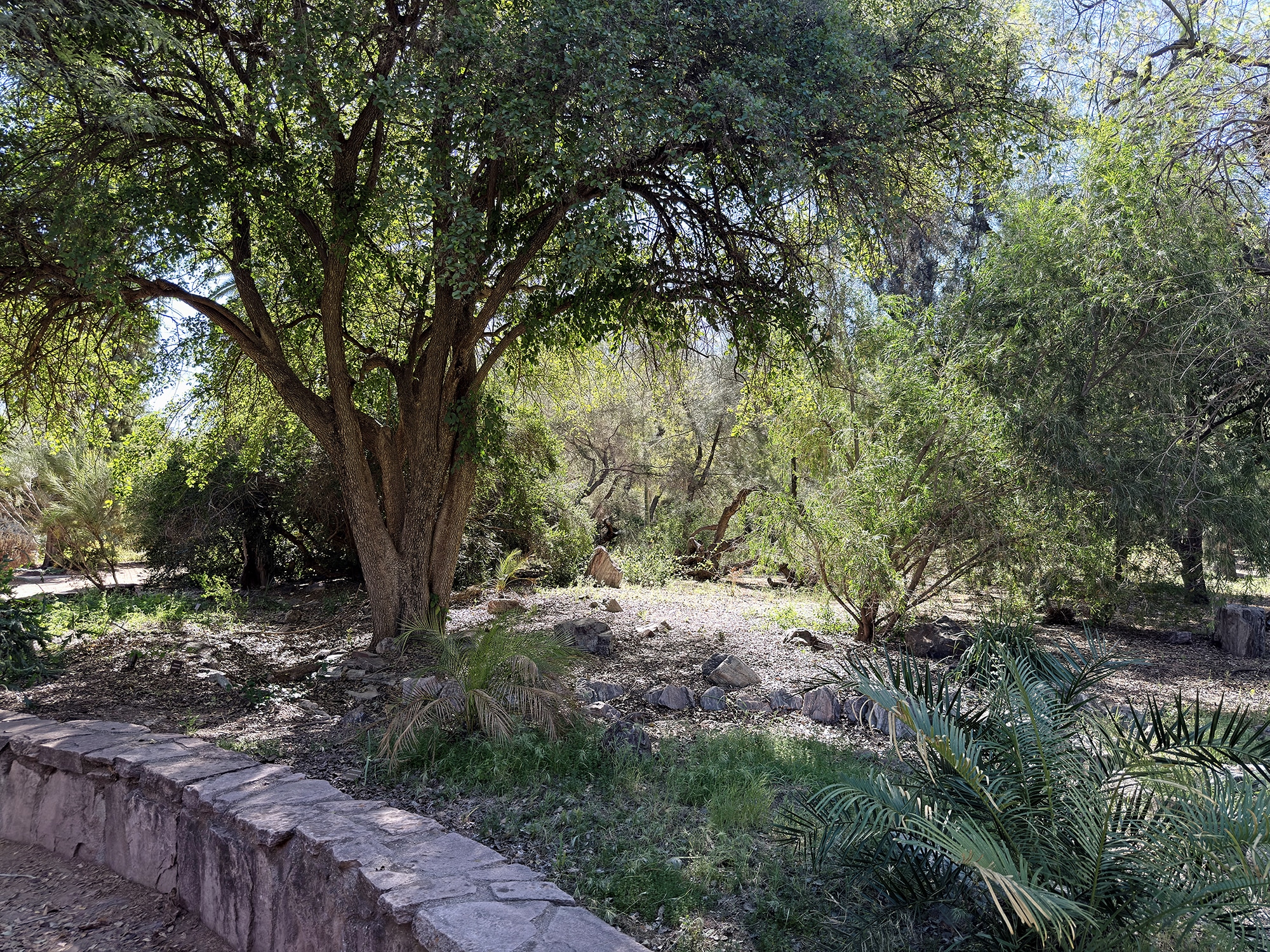
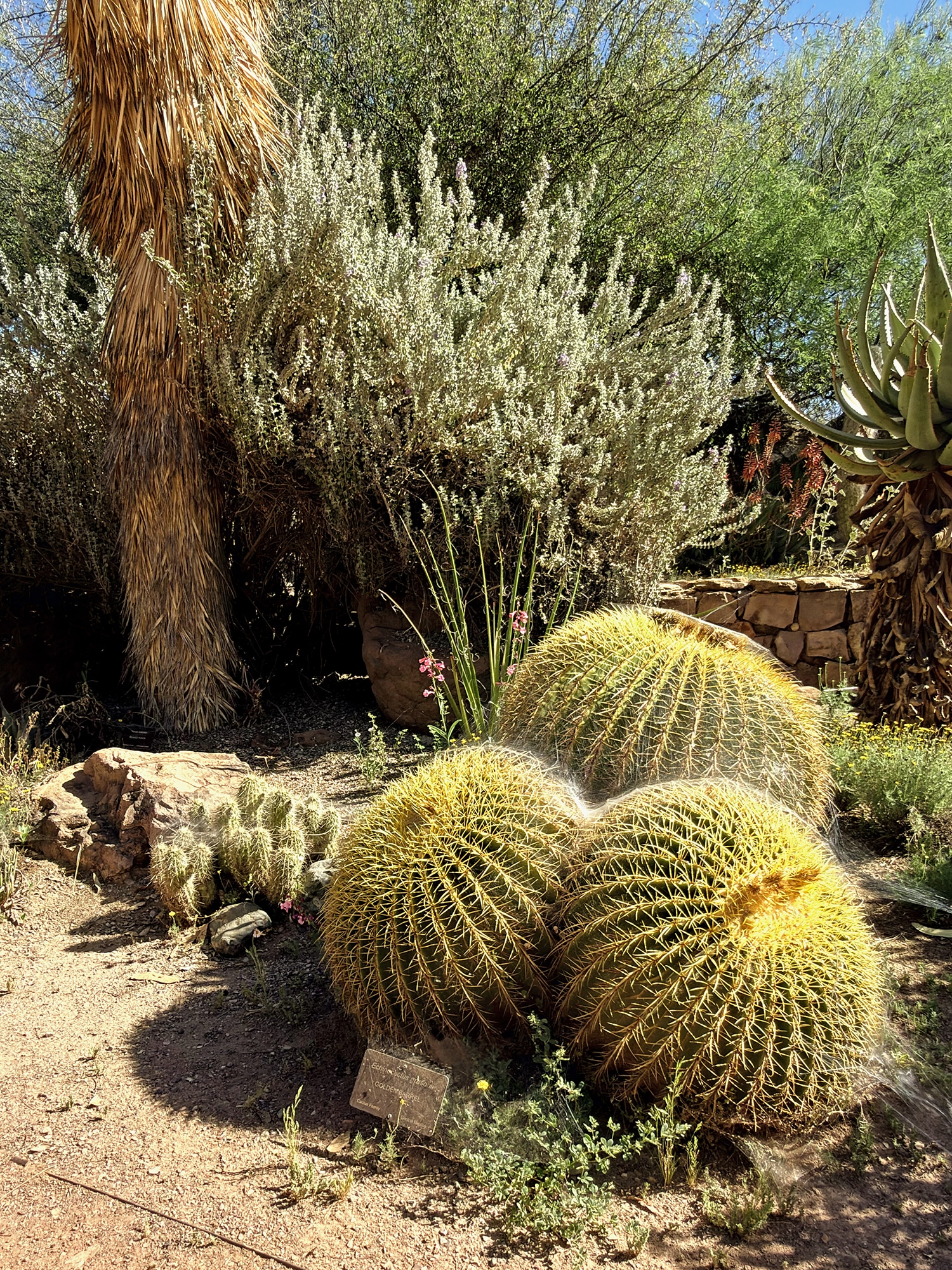
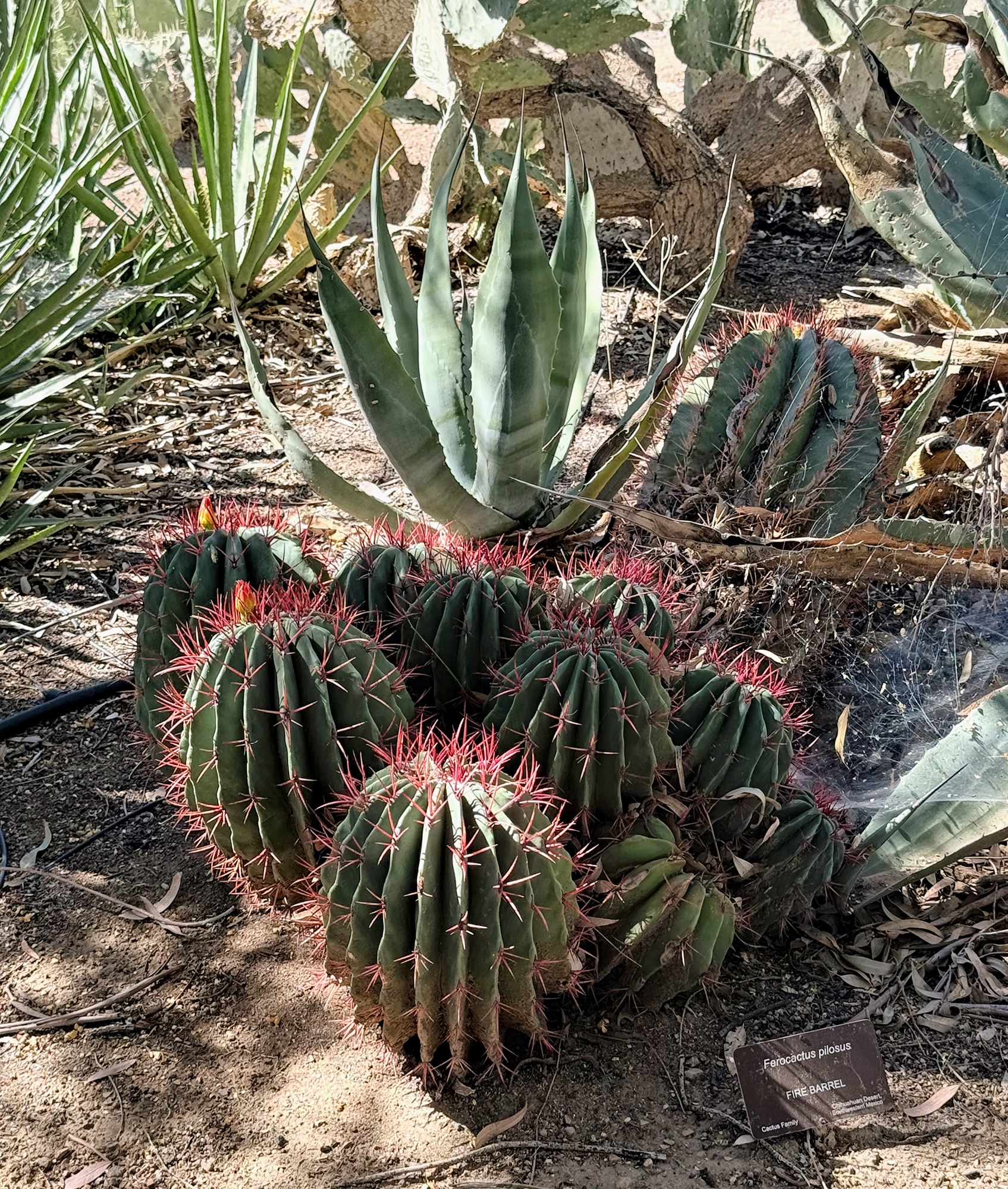
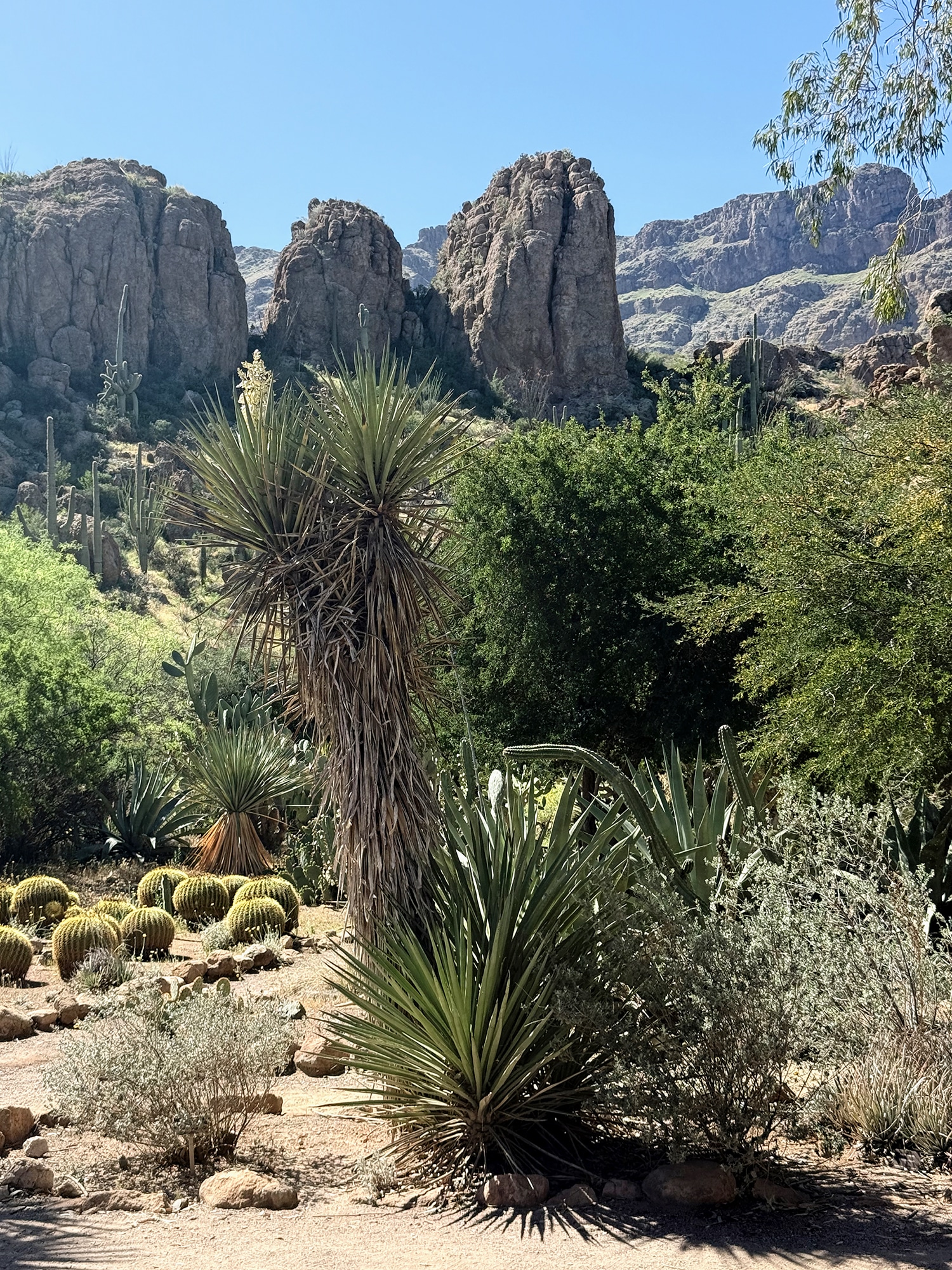
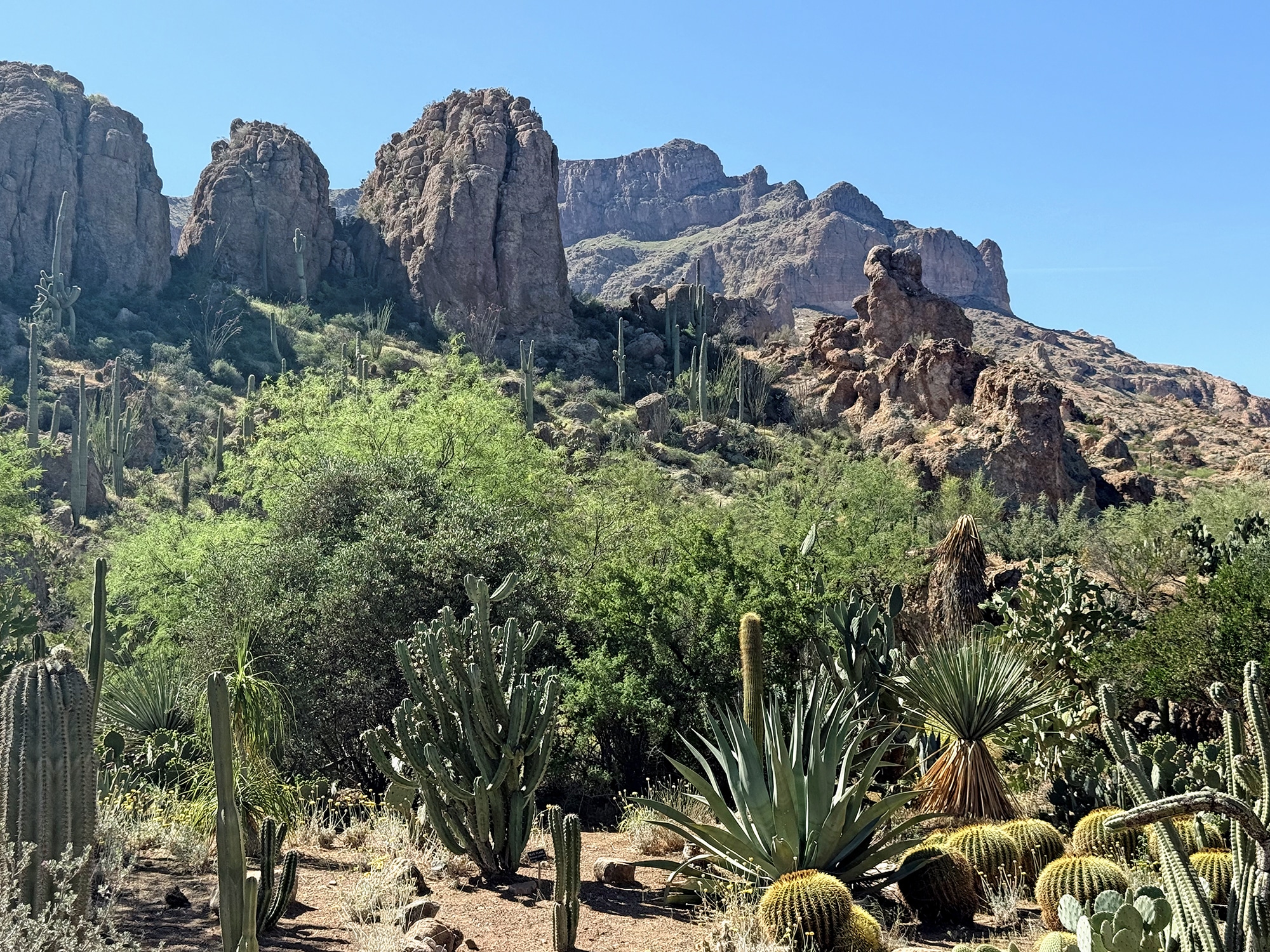
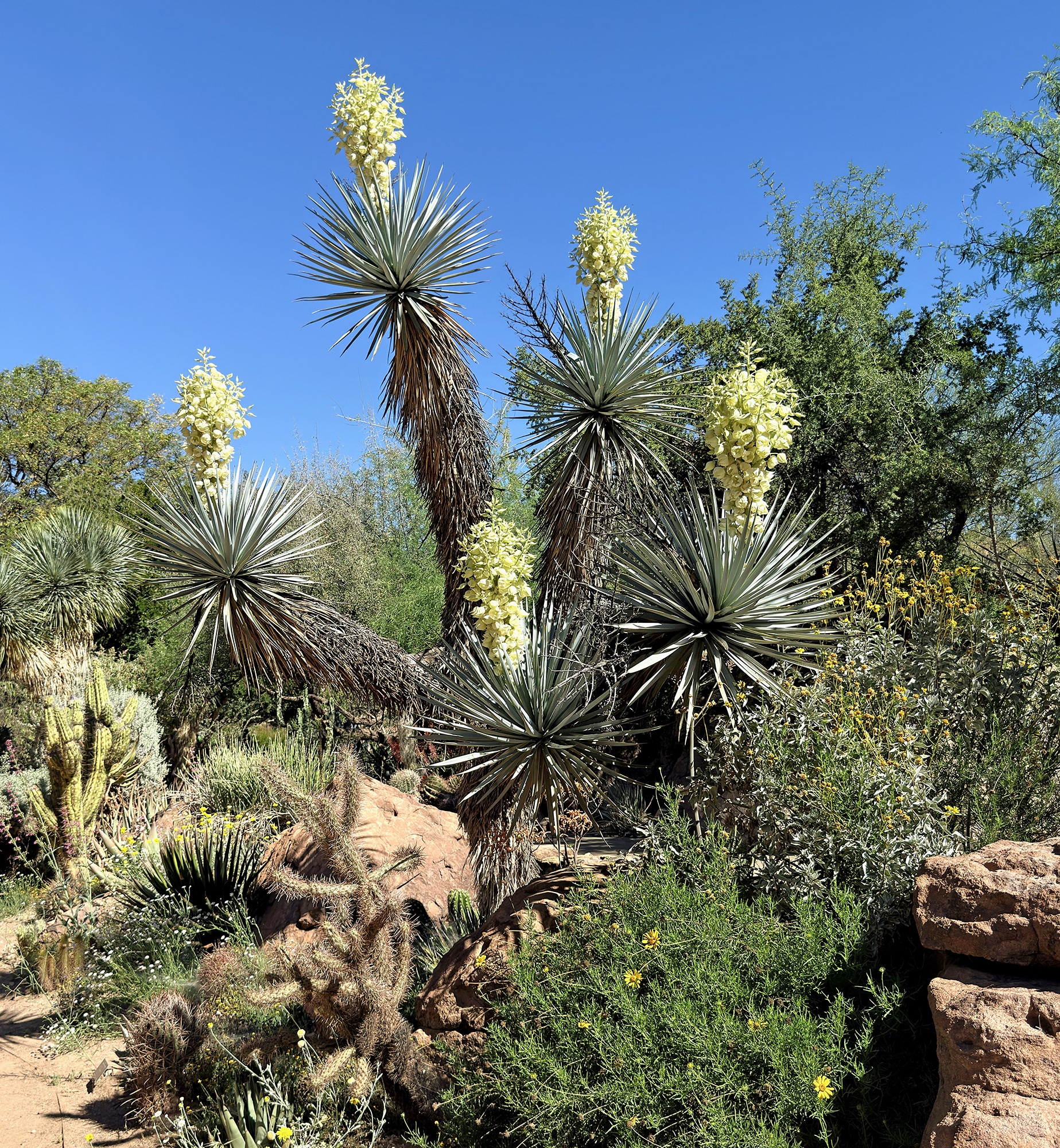
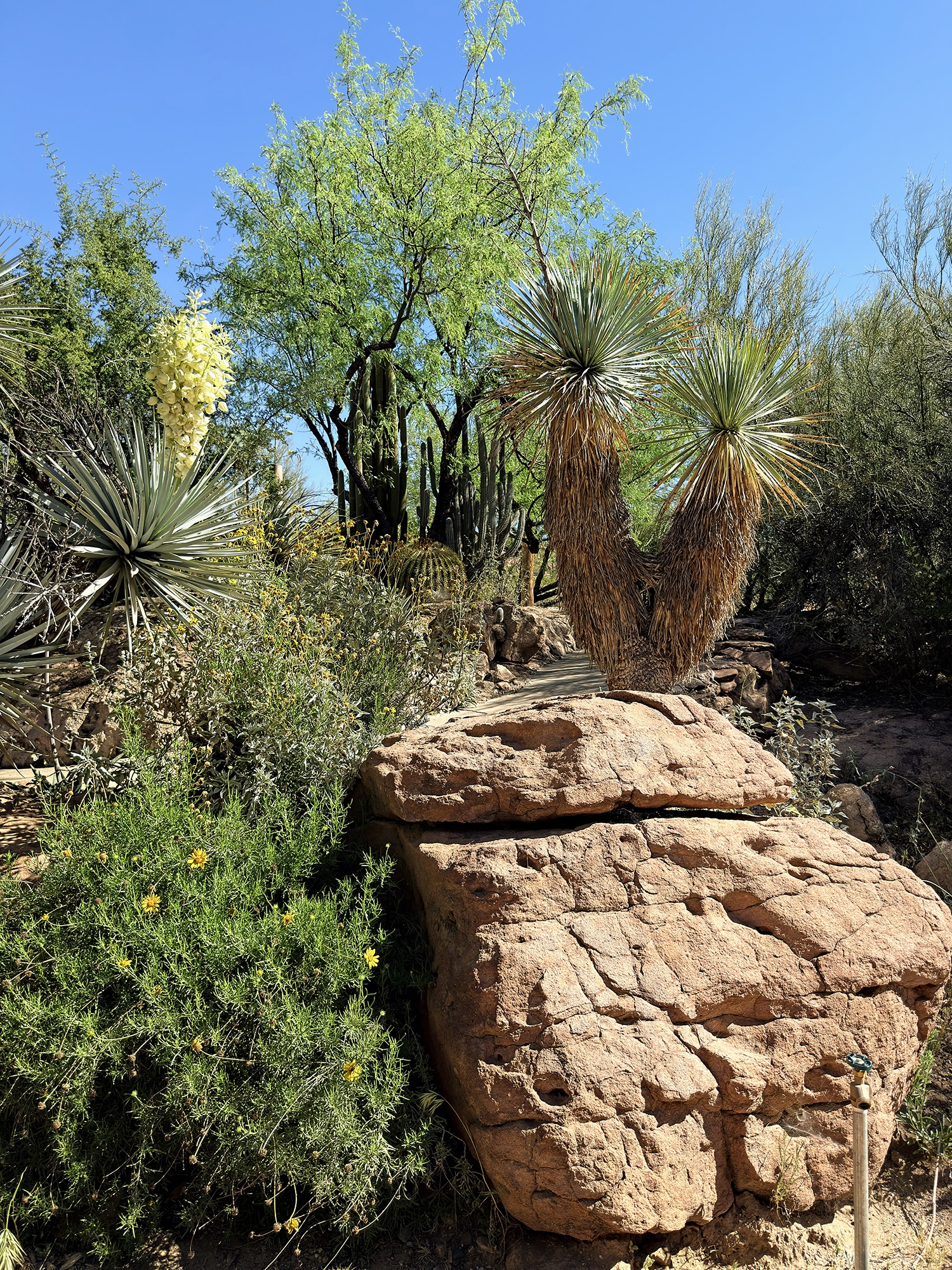
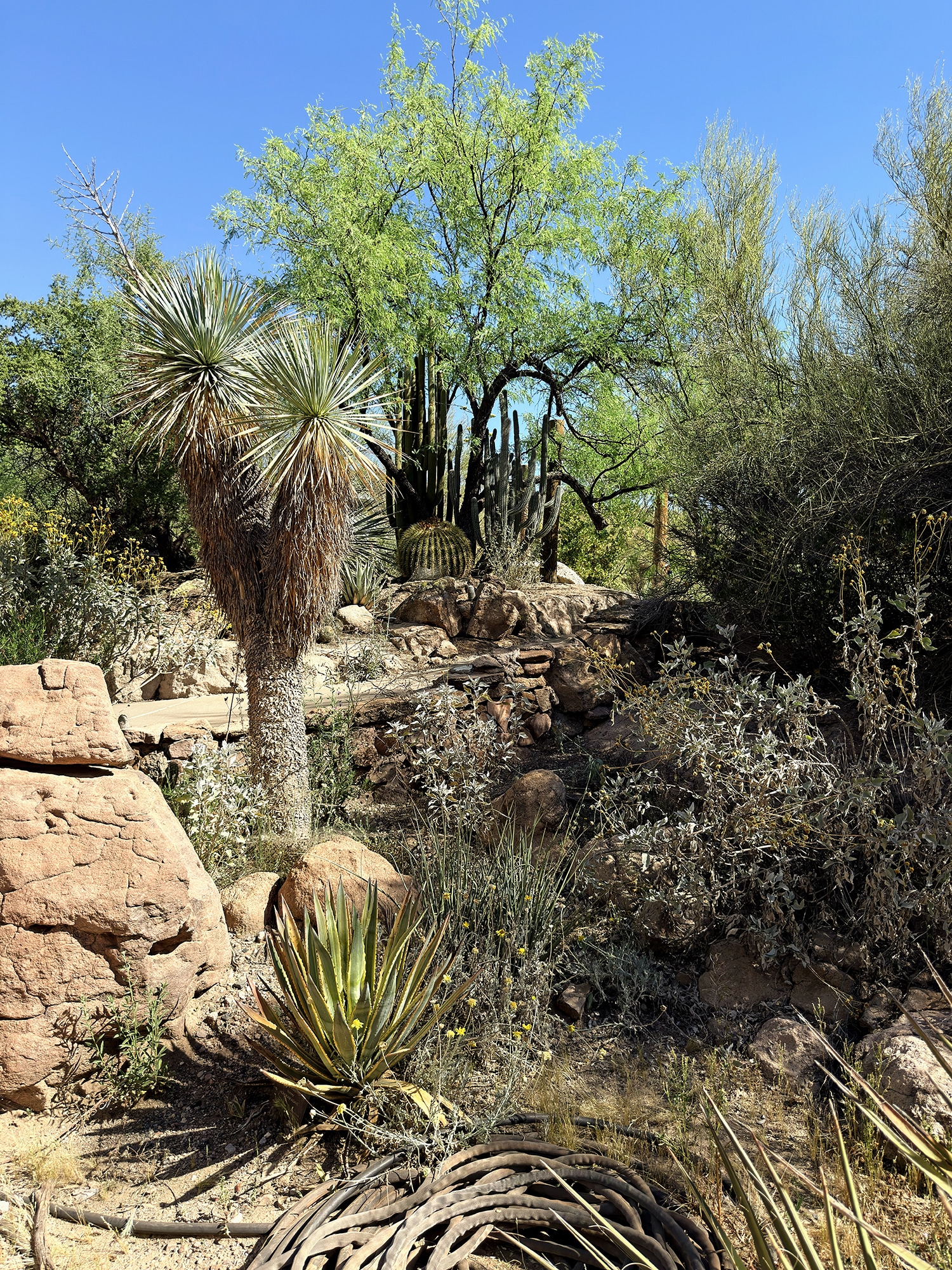
There are almost five miles of trails throughout the Arboretum, with a diverse combination of gorgeous trees, cactus and terrain. It was hard not to take pictures of everything I saw, and adding in a historic building or two didn’t help!
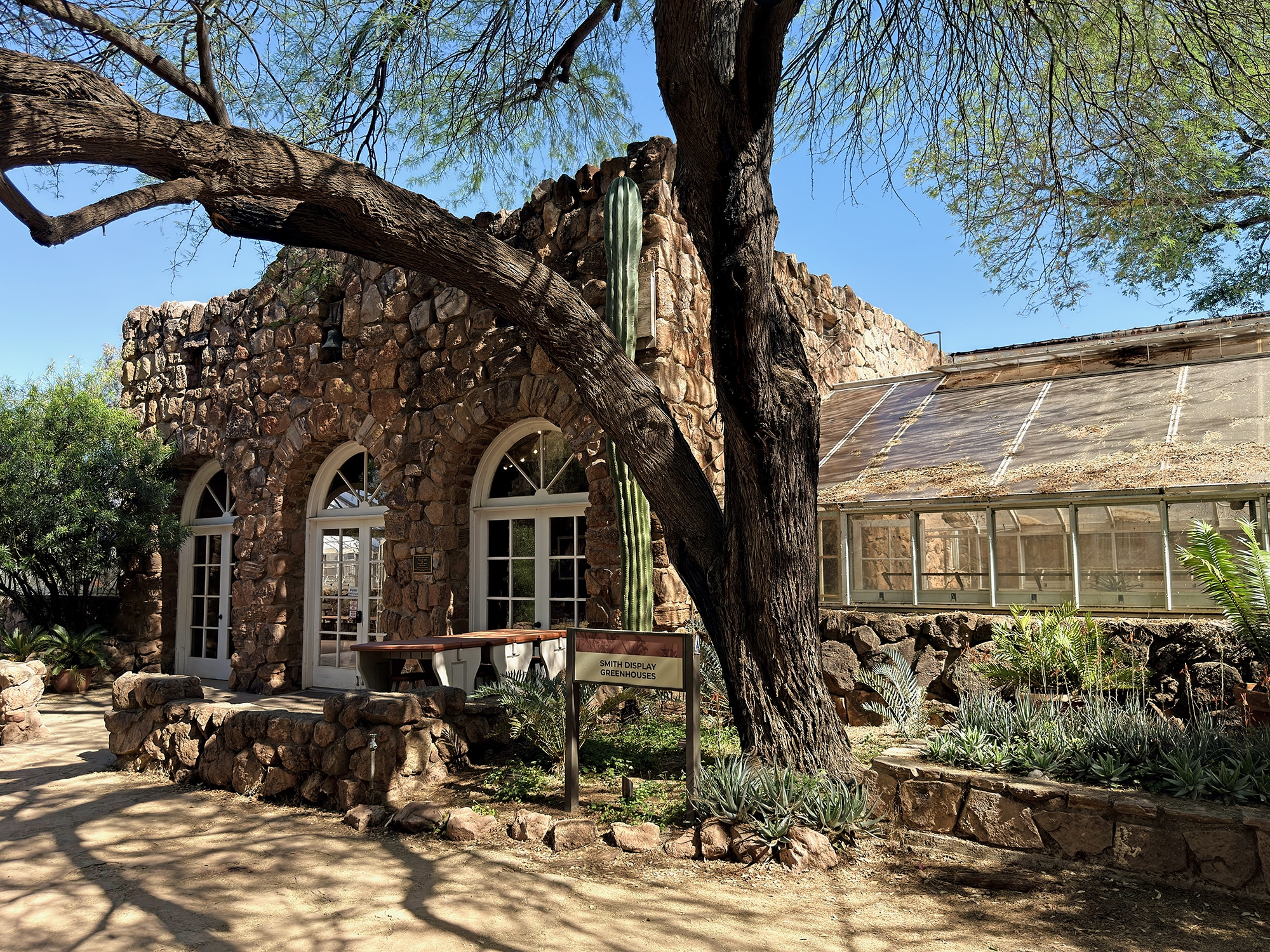
The Smith Building (below) dates back to 1926. It was designed and built by Lord & Burnham of native rock, and looks so beautiful in its natural setting. It was named after William T. Smith (longtime chair of the board and CEO) for his contributions to the Arboretum’s growth and development.
“The Smith Building is not just an architectural marvel; it is a space for learning and conservation. The Smith Building’s greenhouses showcase a diverse array of plant species from around the world. From rare succulents to endangered cacti, these greenhouses are a treasure trove of botanical wonders, offering visitors a glimpse into the beauty and fragility of our planet’s plant life.”
More Color!
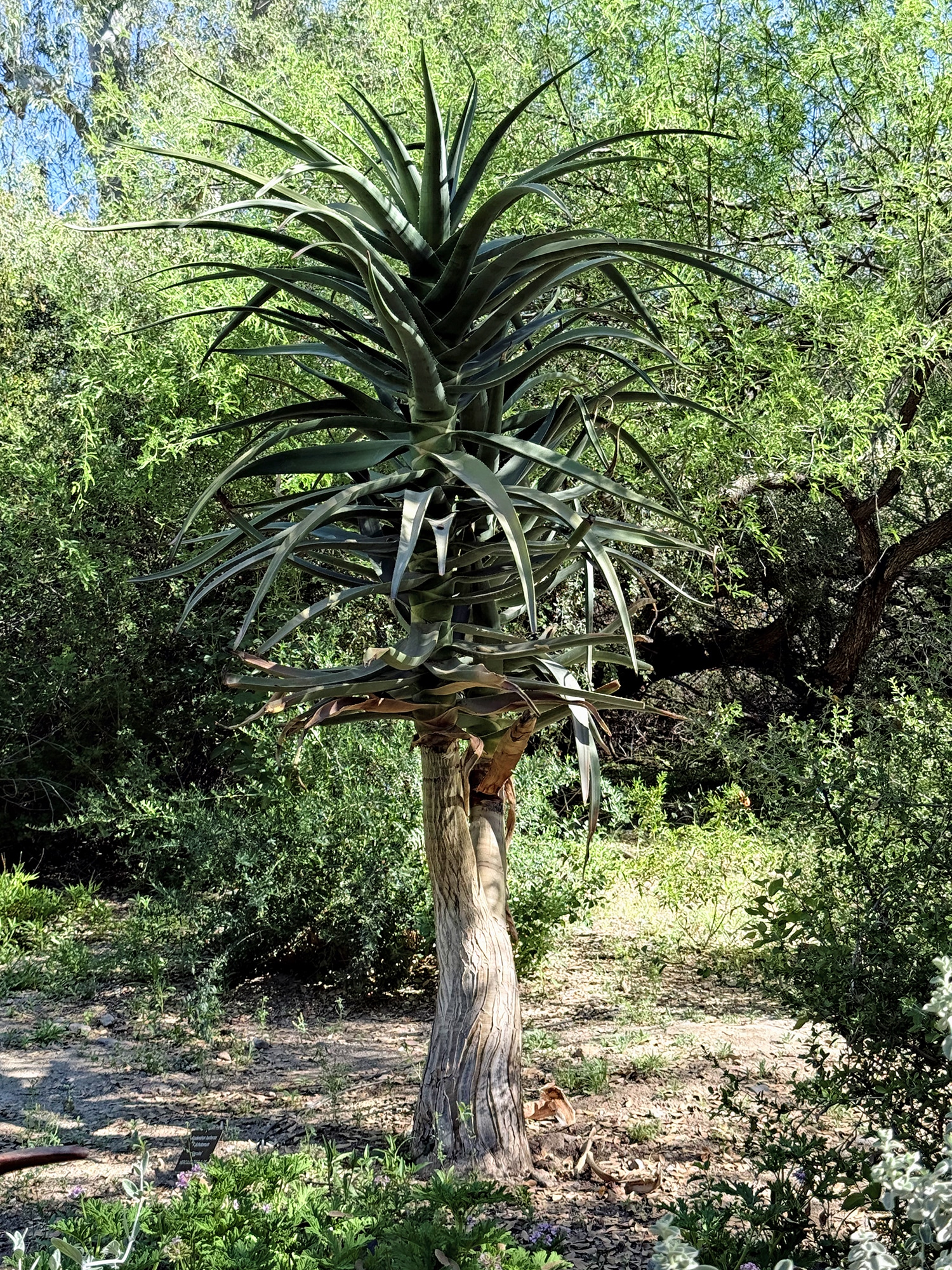
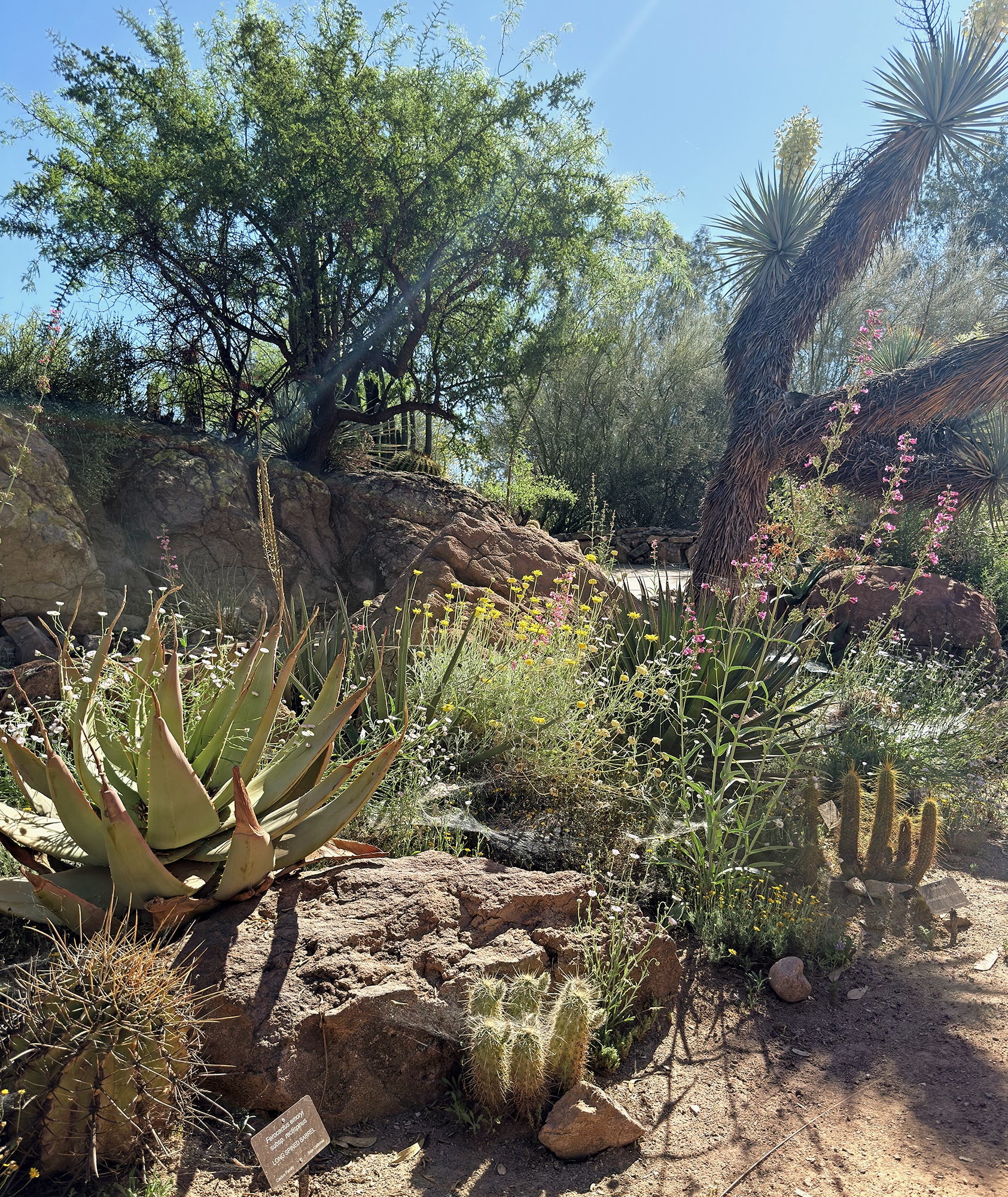
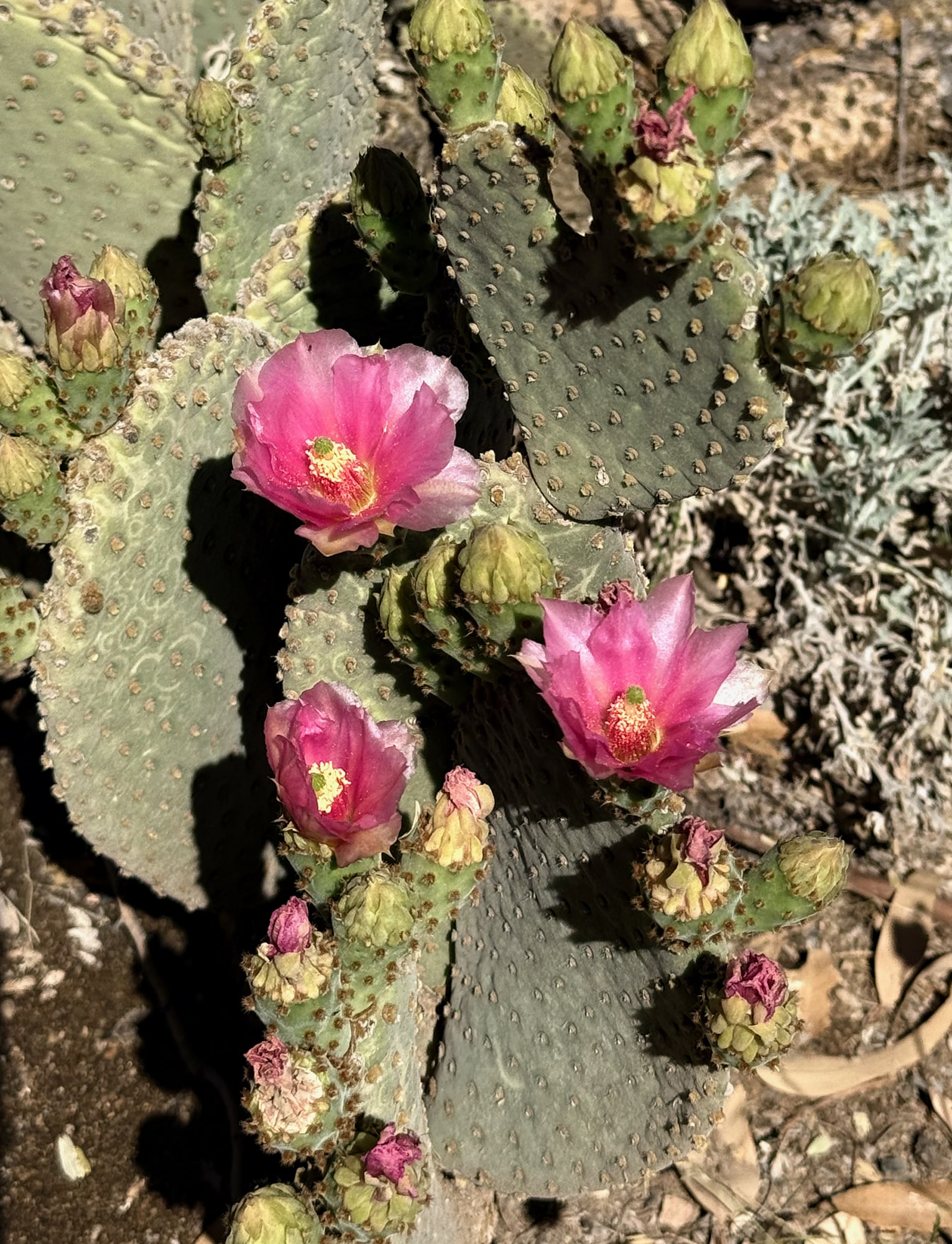
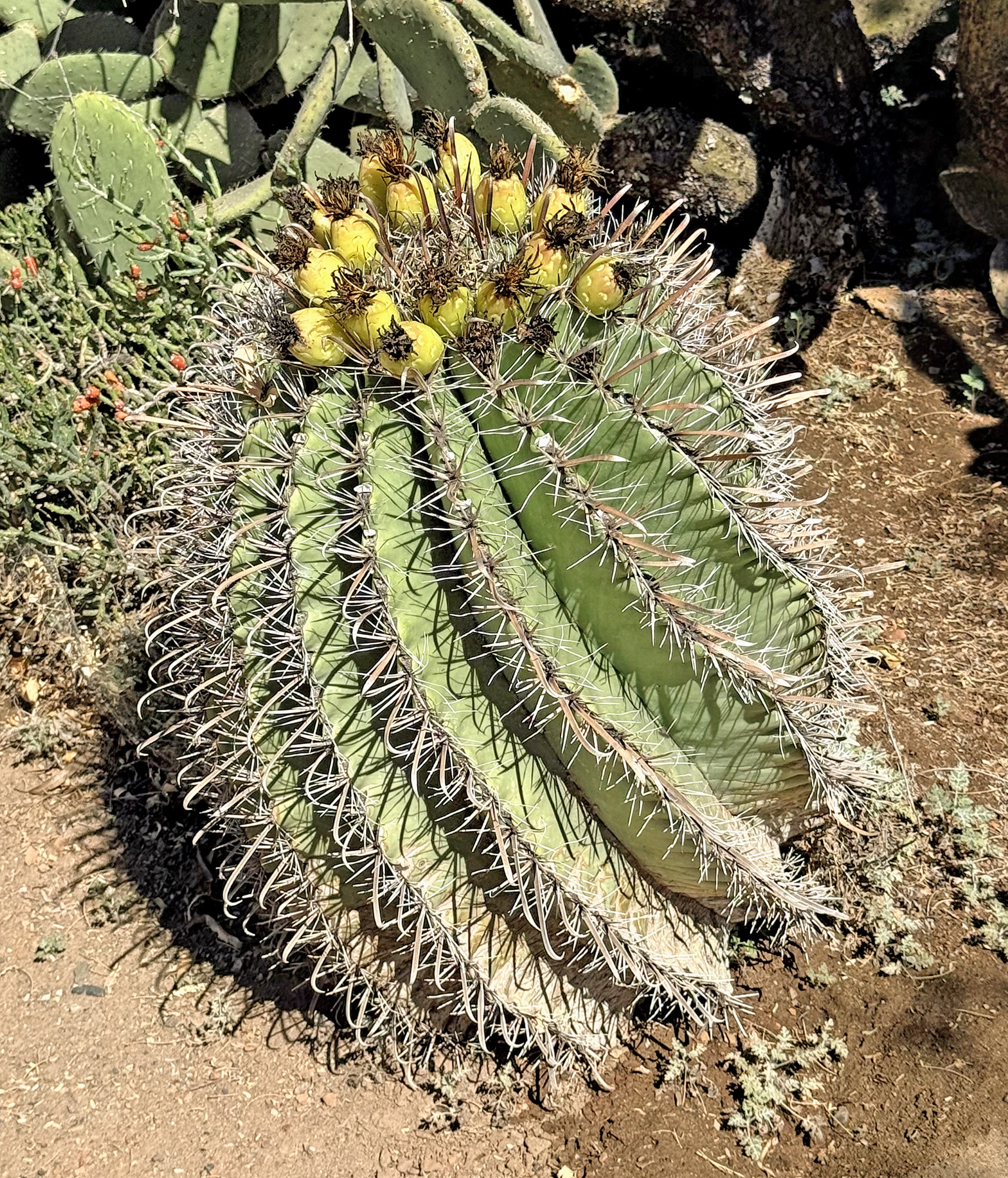
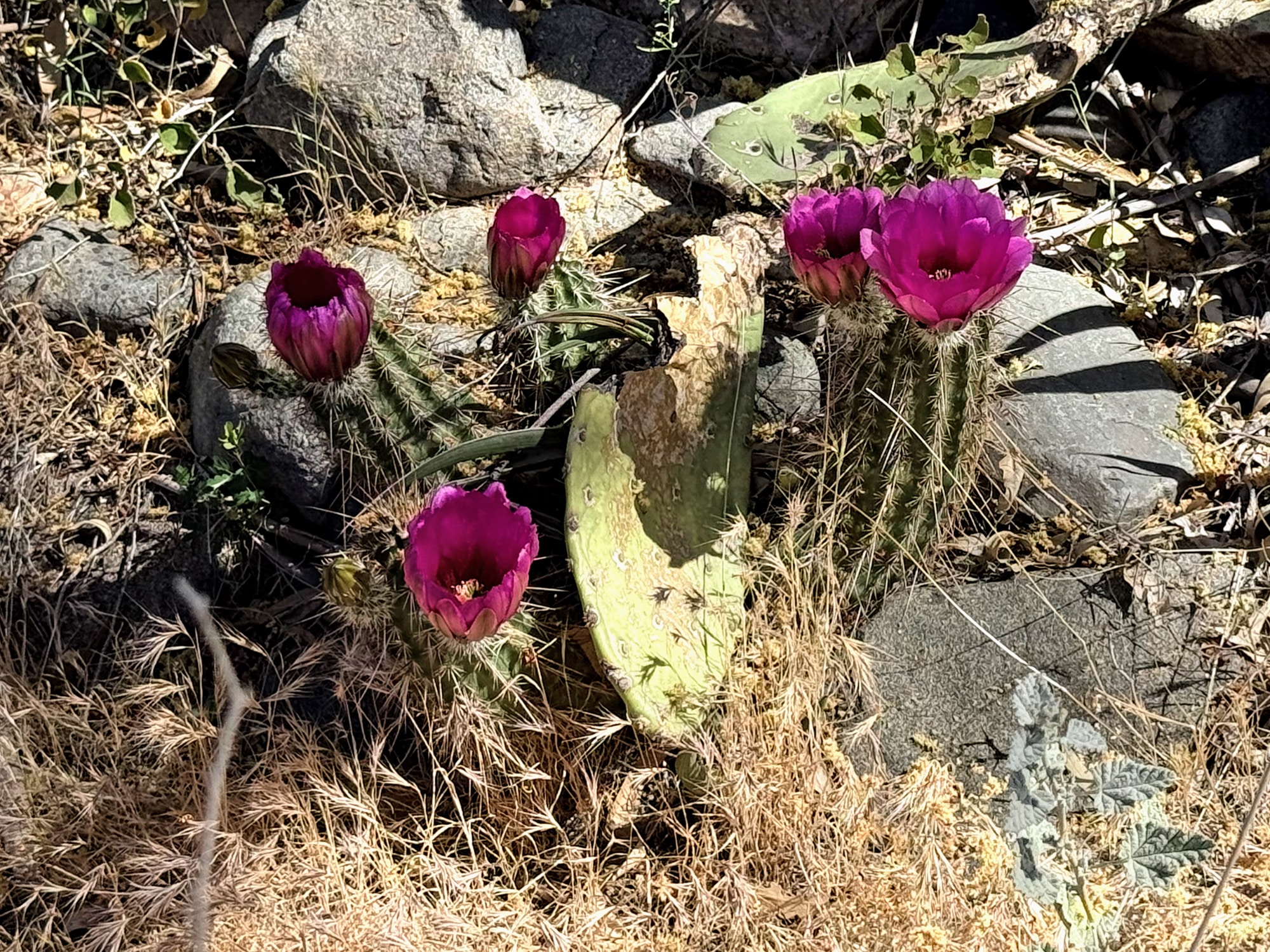
When I moved to Arizona in April way back in the 70s, apparently the valley was inundated with rain just before my arrival, because cactus blooms and flowers were everywhere! I was so amazed by its beauty that I immediately fell in love. I haven’t seen anything like it on subsequent visits, but I love every little bloom that I see.
Ayer Lake
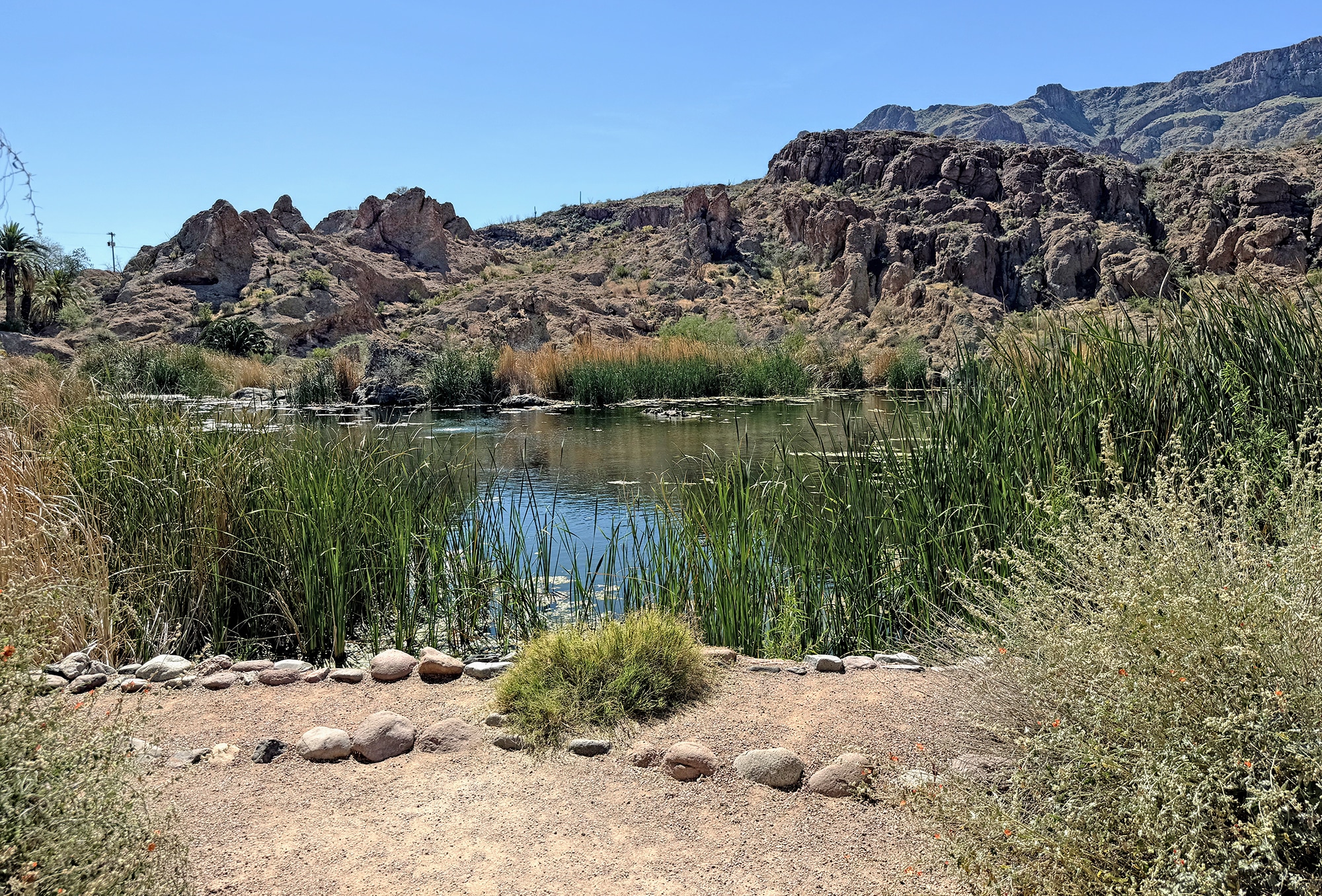
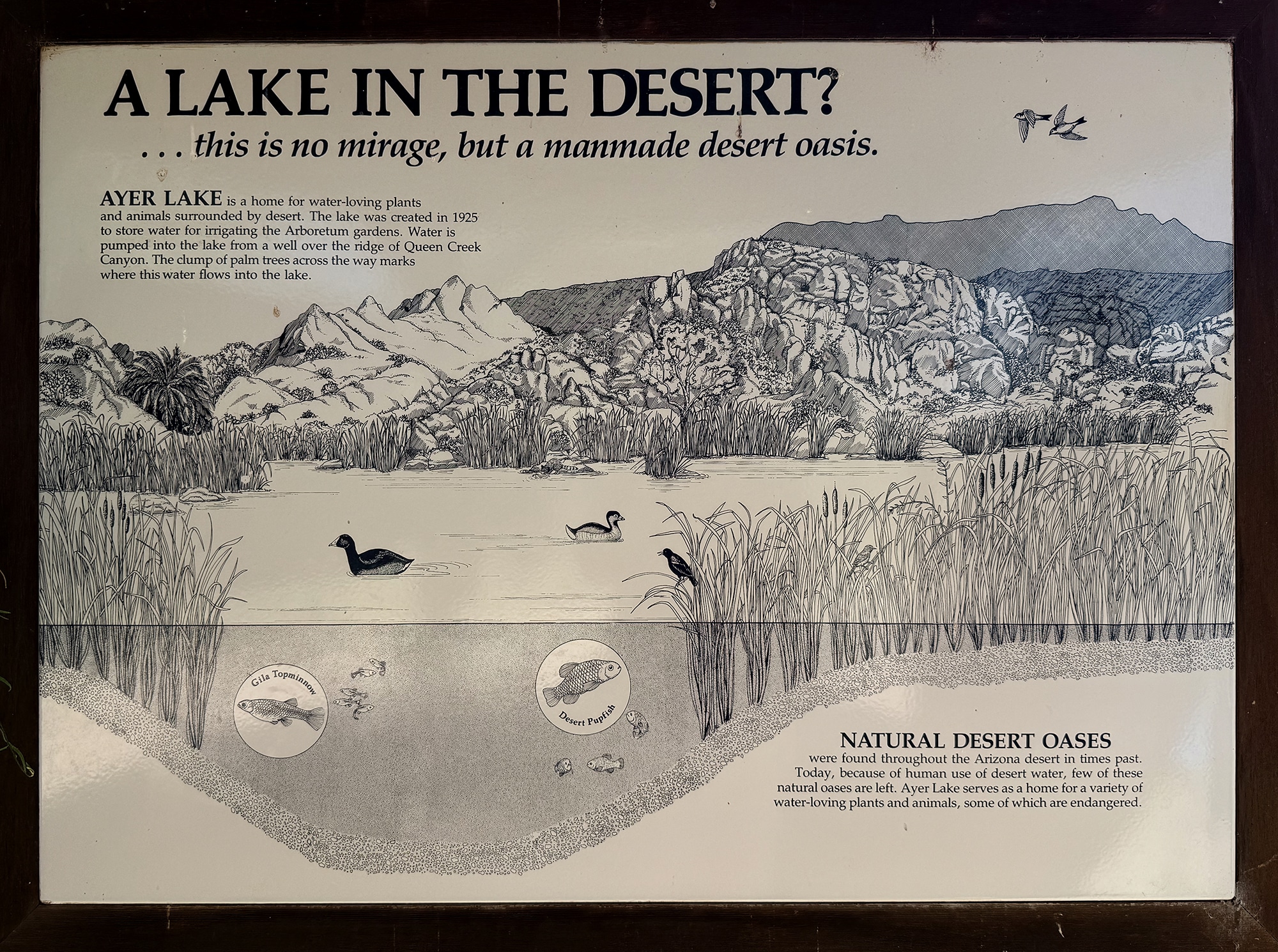
It was certainly a surprise to see a lake in the middle of the desert, but Ayer Lake was manmade in 1925 for the survival of the plants and animals at the arboretum. The third photo below states that across the lake, water is pumped in from a well over the ridge of Queen Creek Canyon. The ducks and geese were pretty lucky to have such a nice place to swim on this hot day.
“Natural desert oases were found throughout the Arizona desert in times past. Today, because of human use of desert water, few of these natural oases are left. Ayer Lake serves as a home for a variety of water-loving plants and animals, some of which are endangered.” ~ from the sign below
Amazing Trees
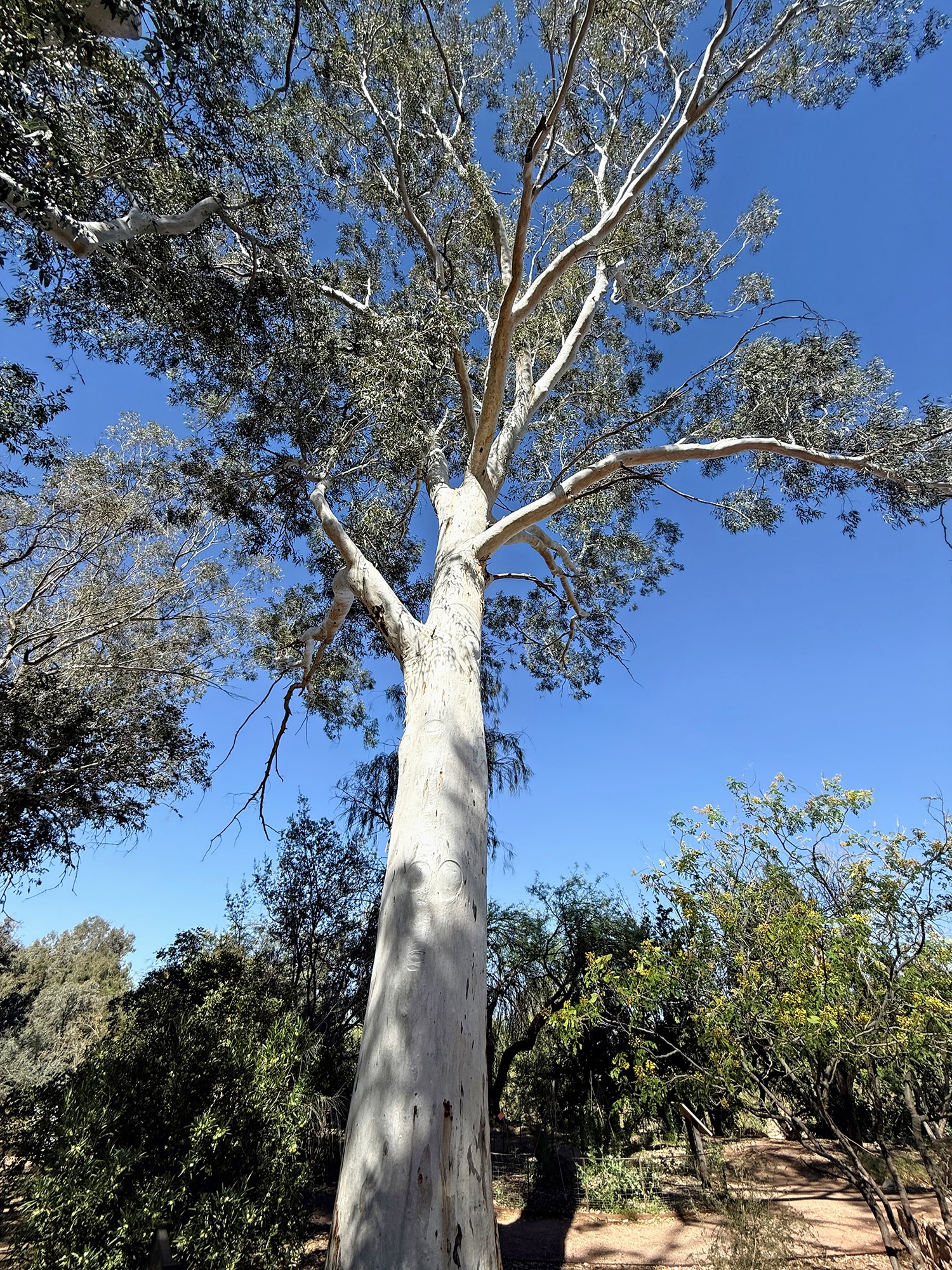
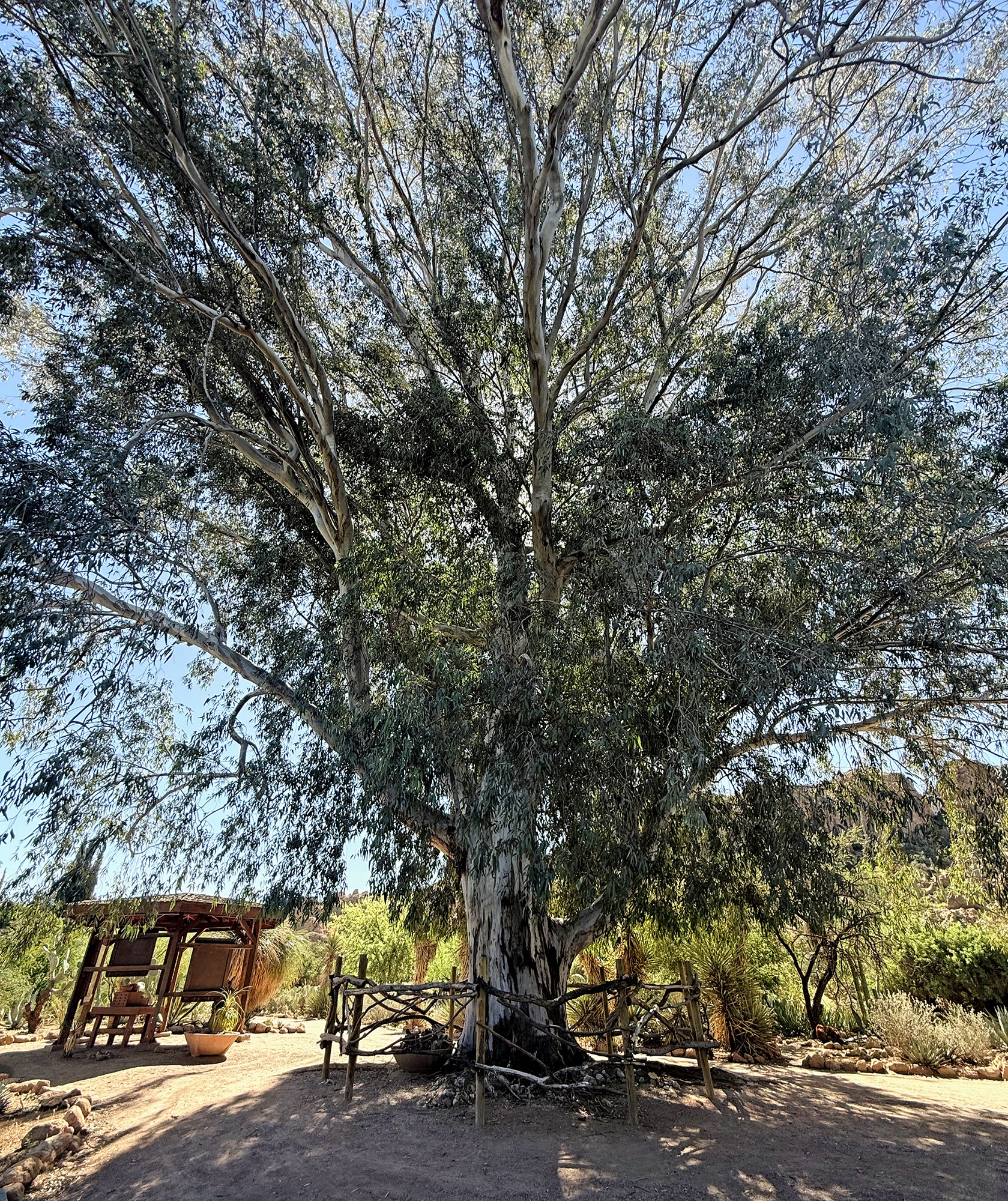
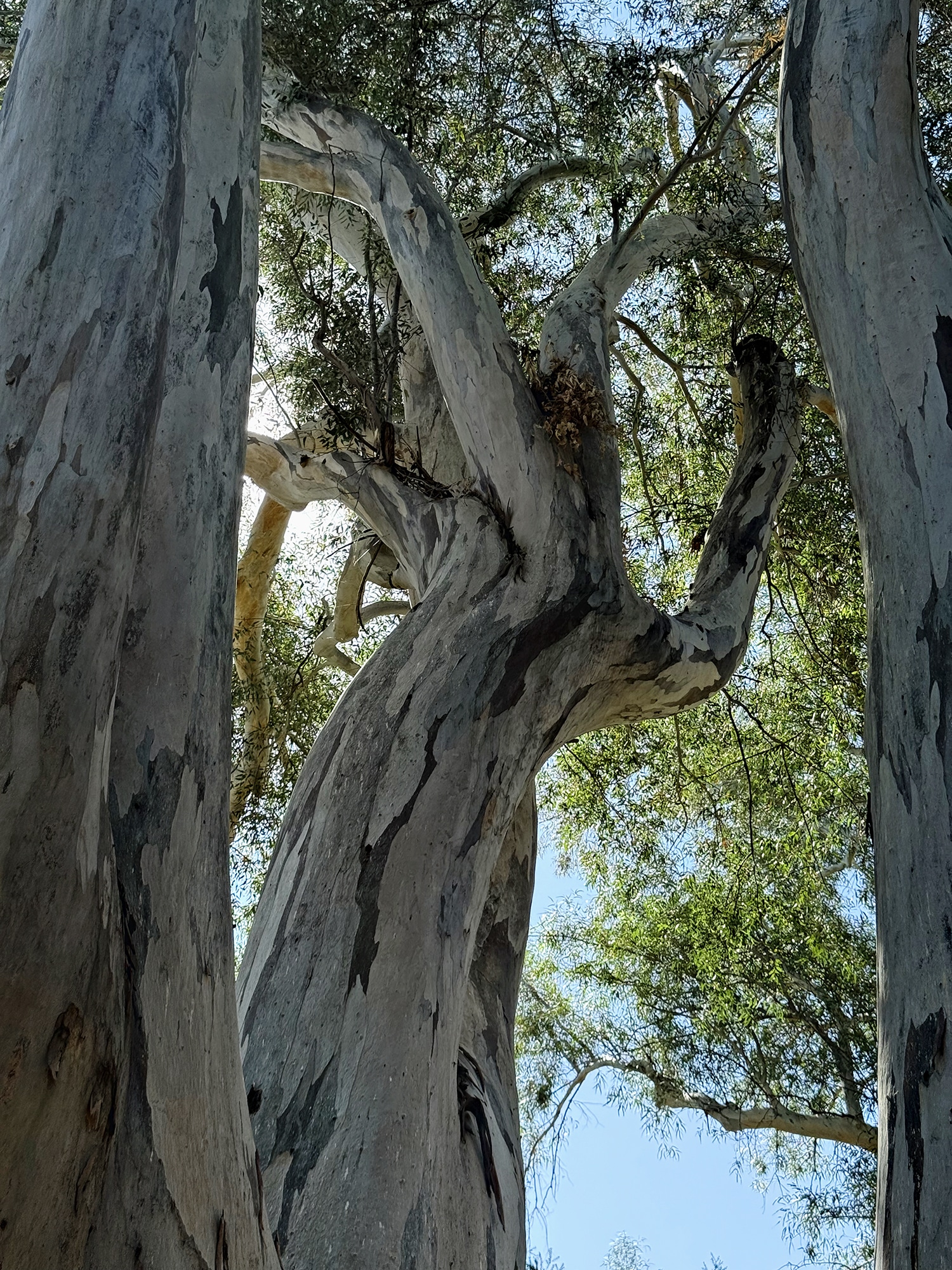
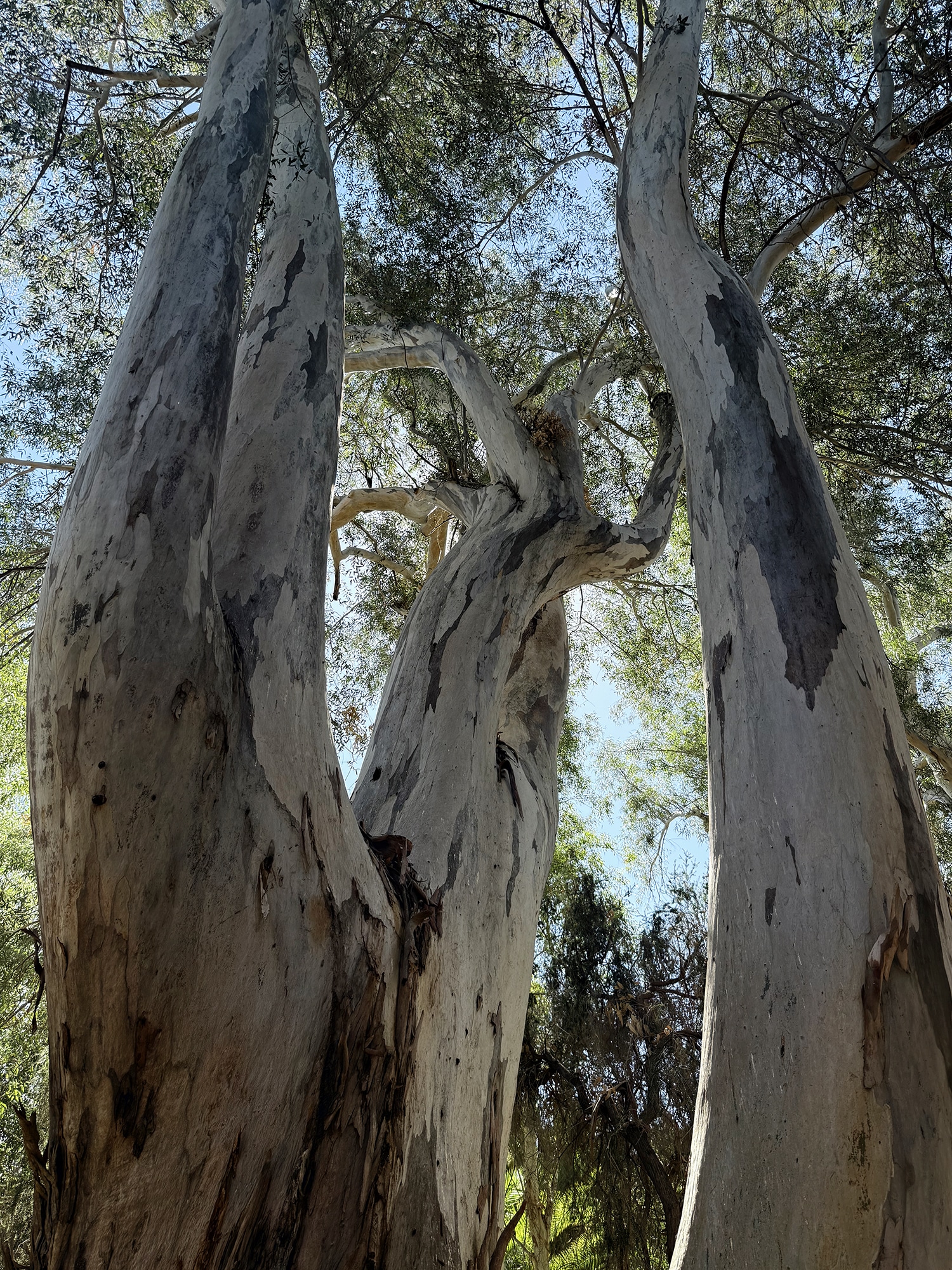
The first two photos below show Mr. Big – the largest eucalyptus tree in the gardens. This “Arizona Champion” is a Longbeak (red gum) Eucalyptus and was a three-year-old, six-foot sapling when he arrived here in 1926.
“Today he stands at 117 feet high and has a circumference of more than 22 feet. It is the largest known tree of its species in the country according to the Arizona Forestry and Fire Management Agency.”
Clevenger House
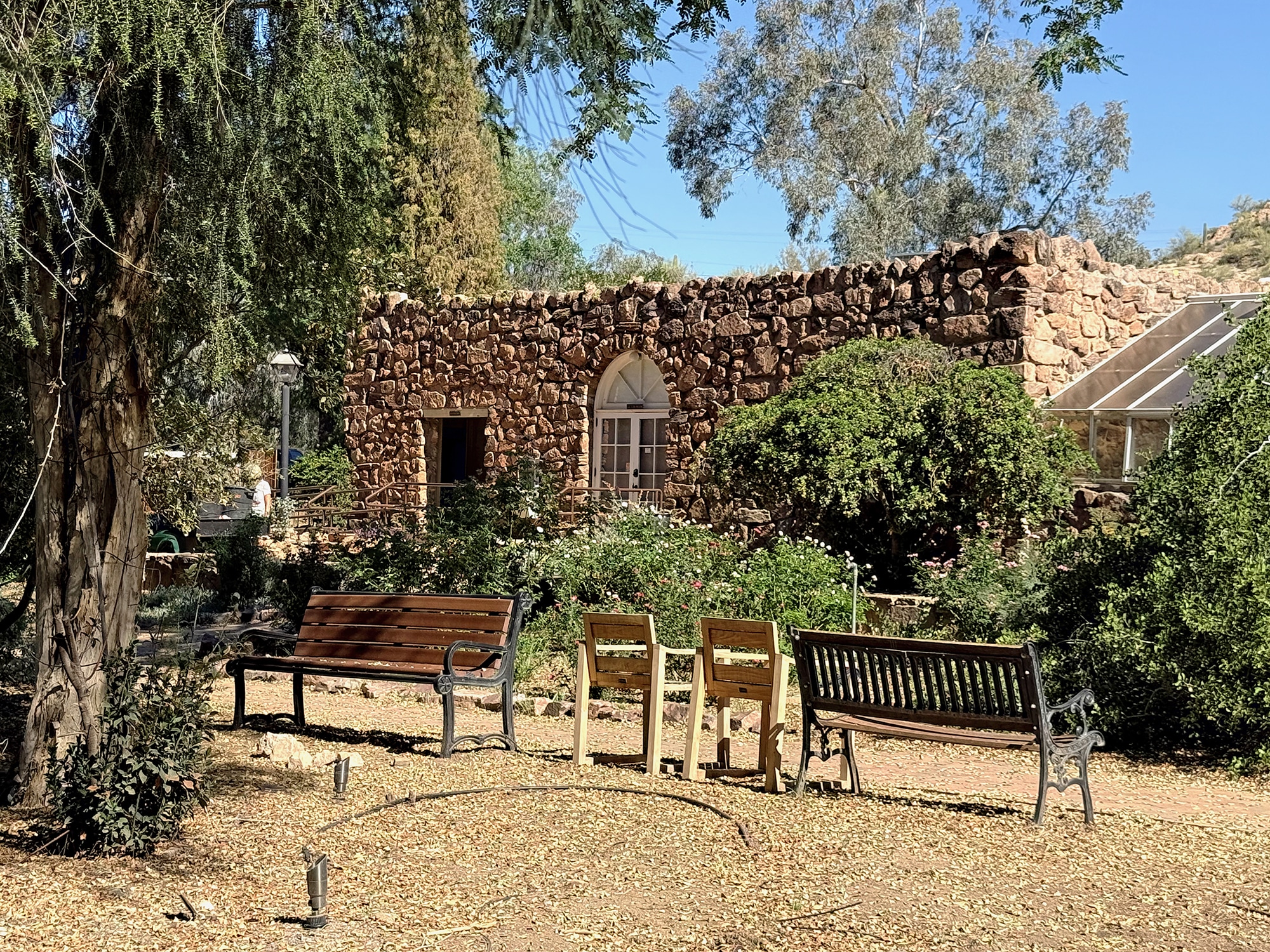
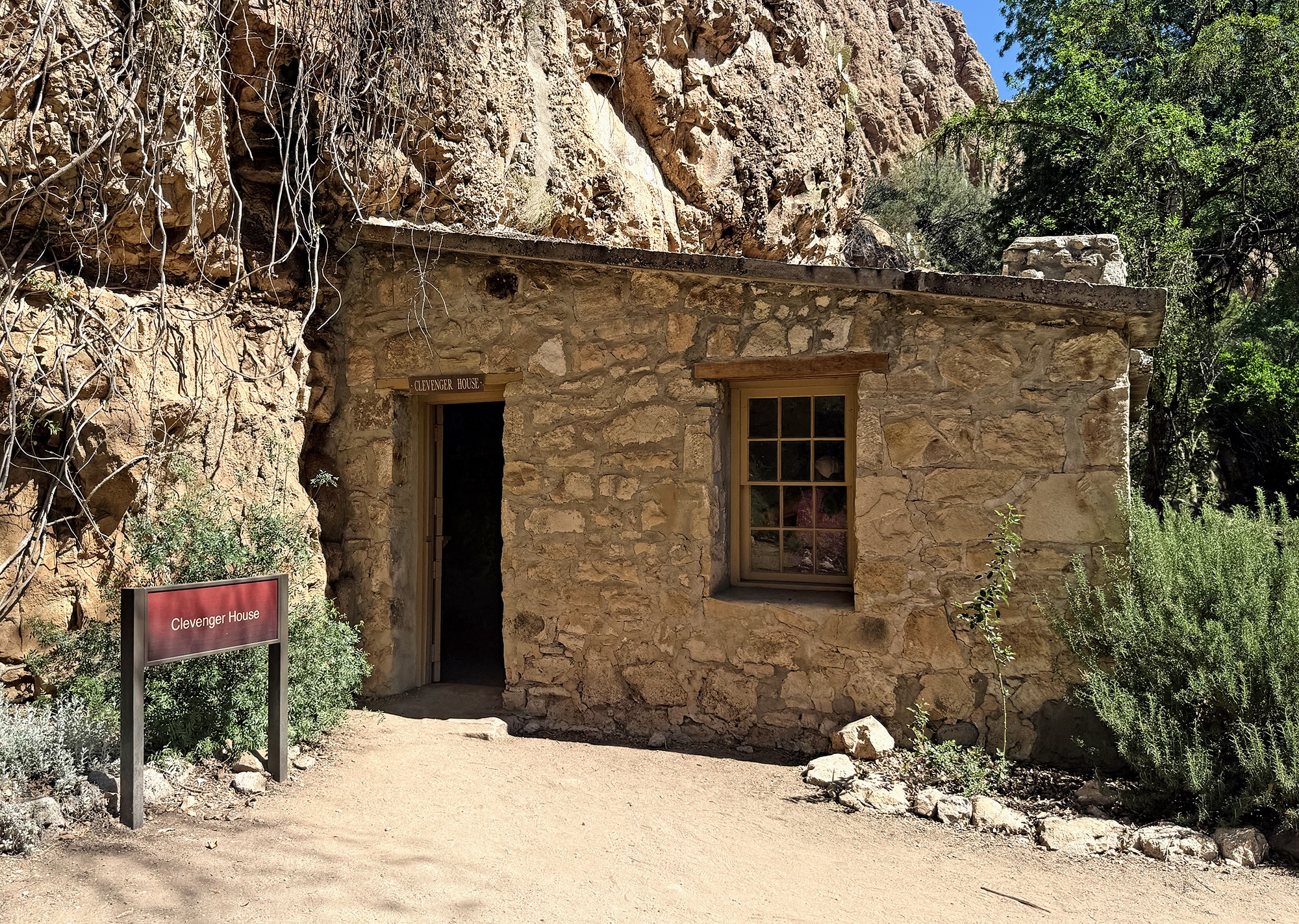
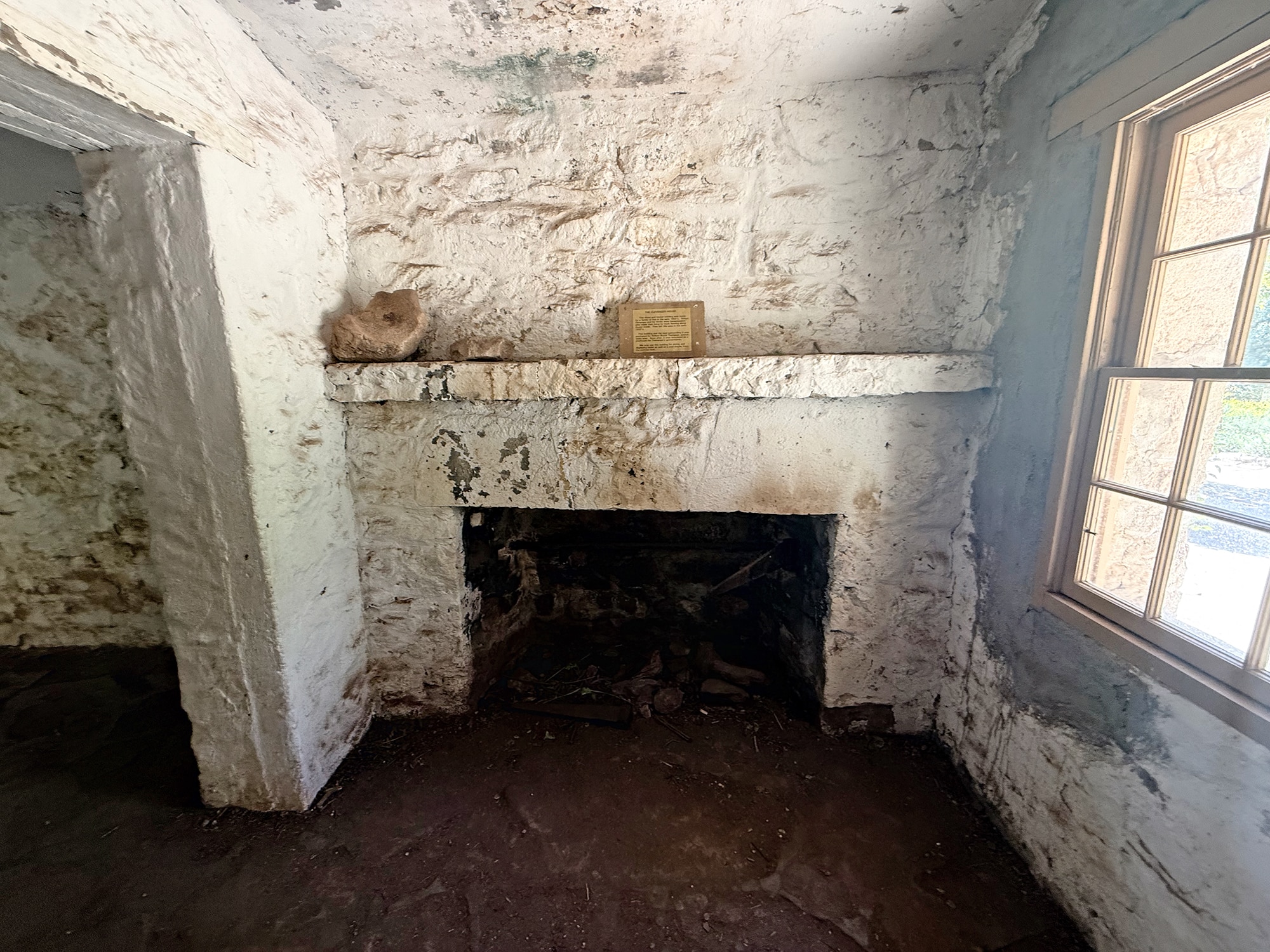
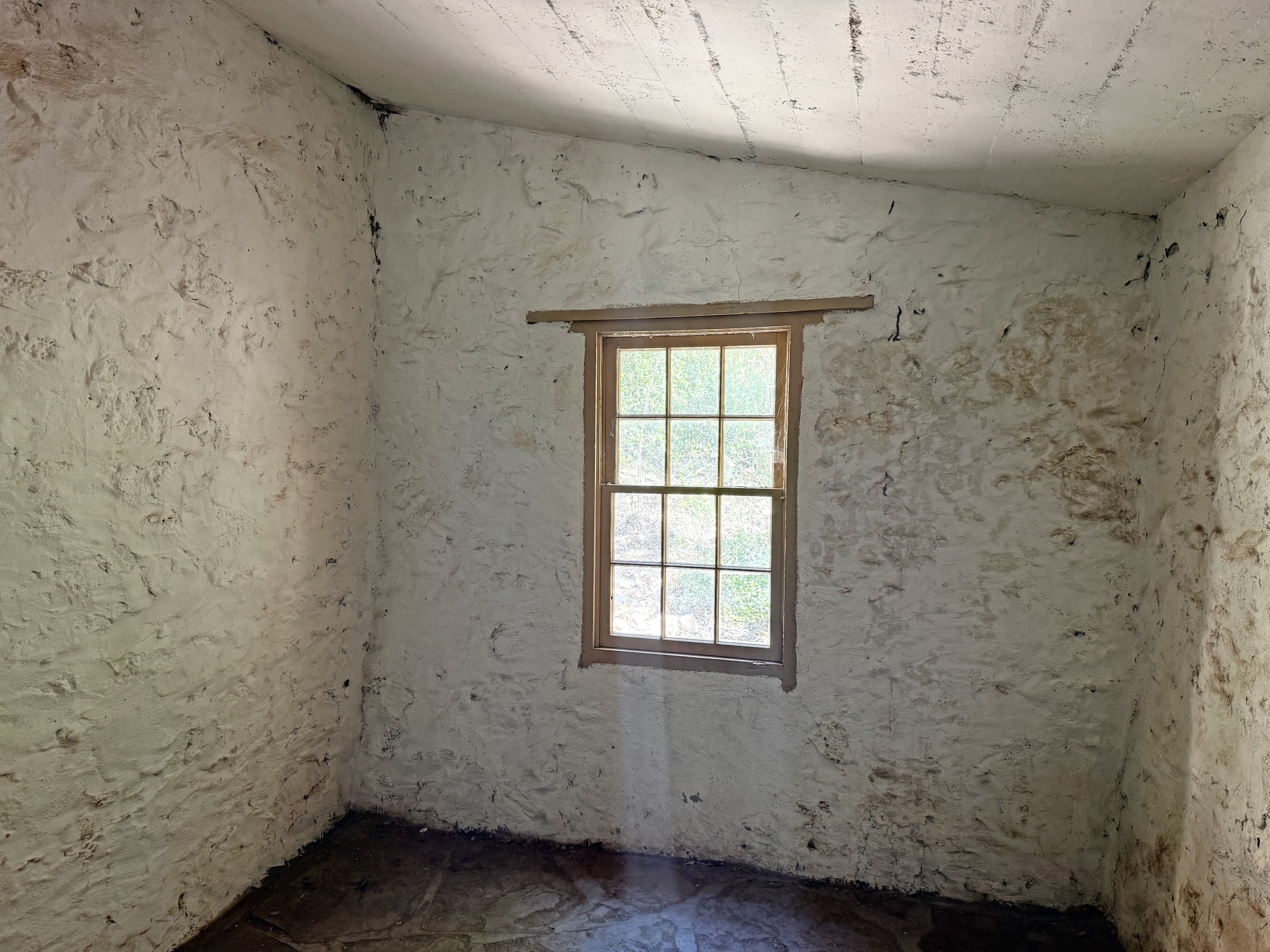
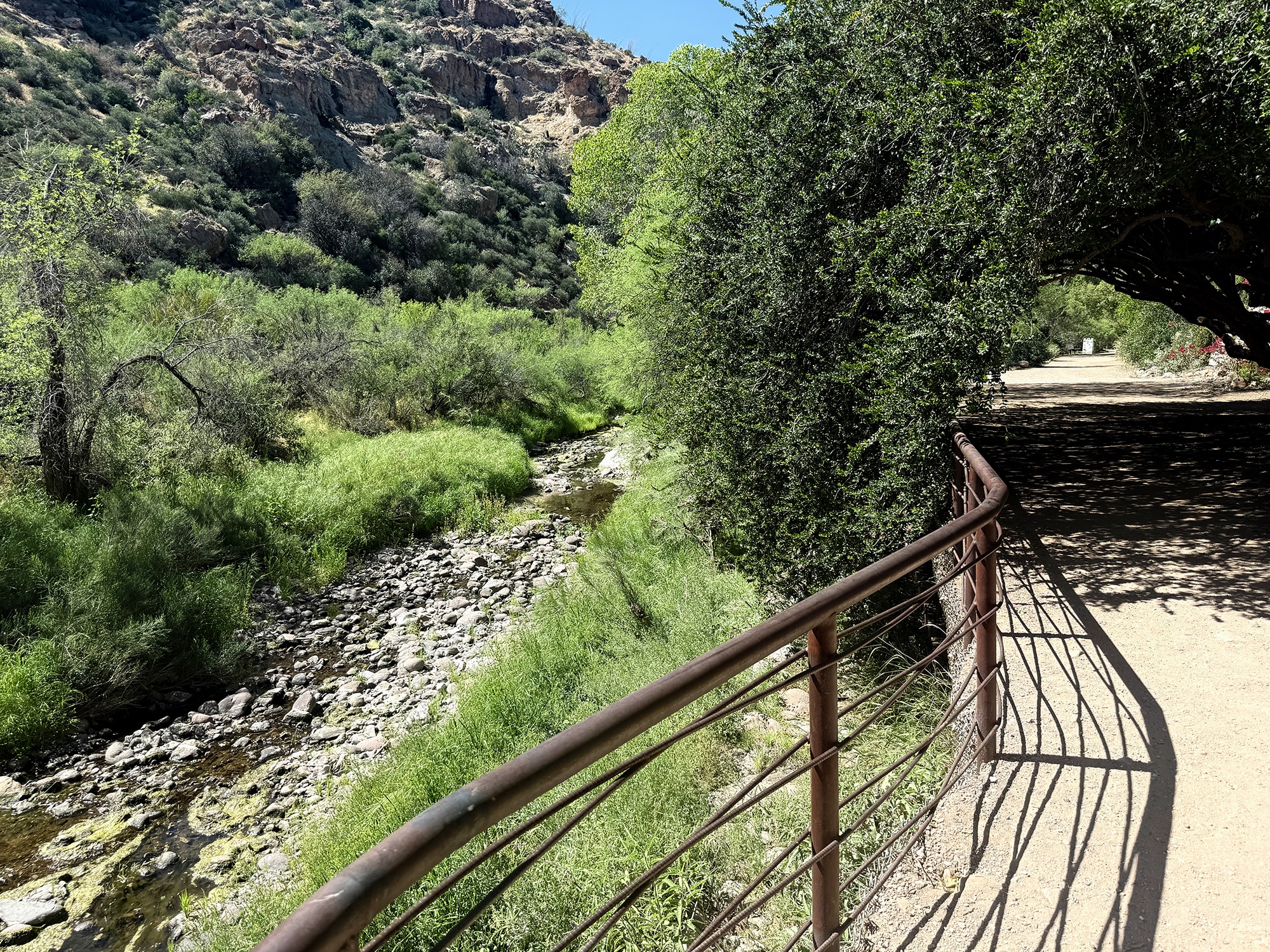
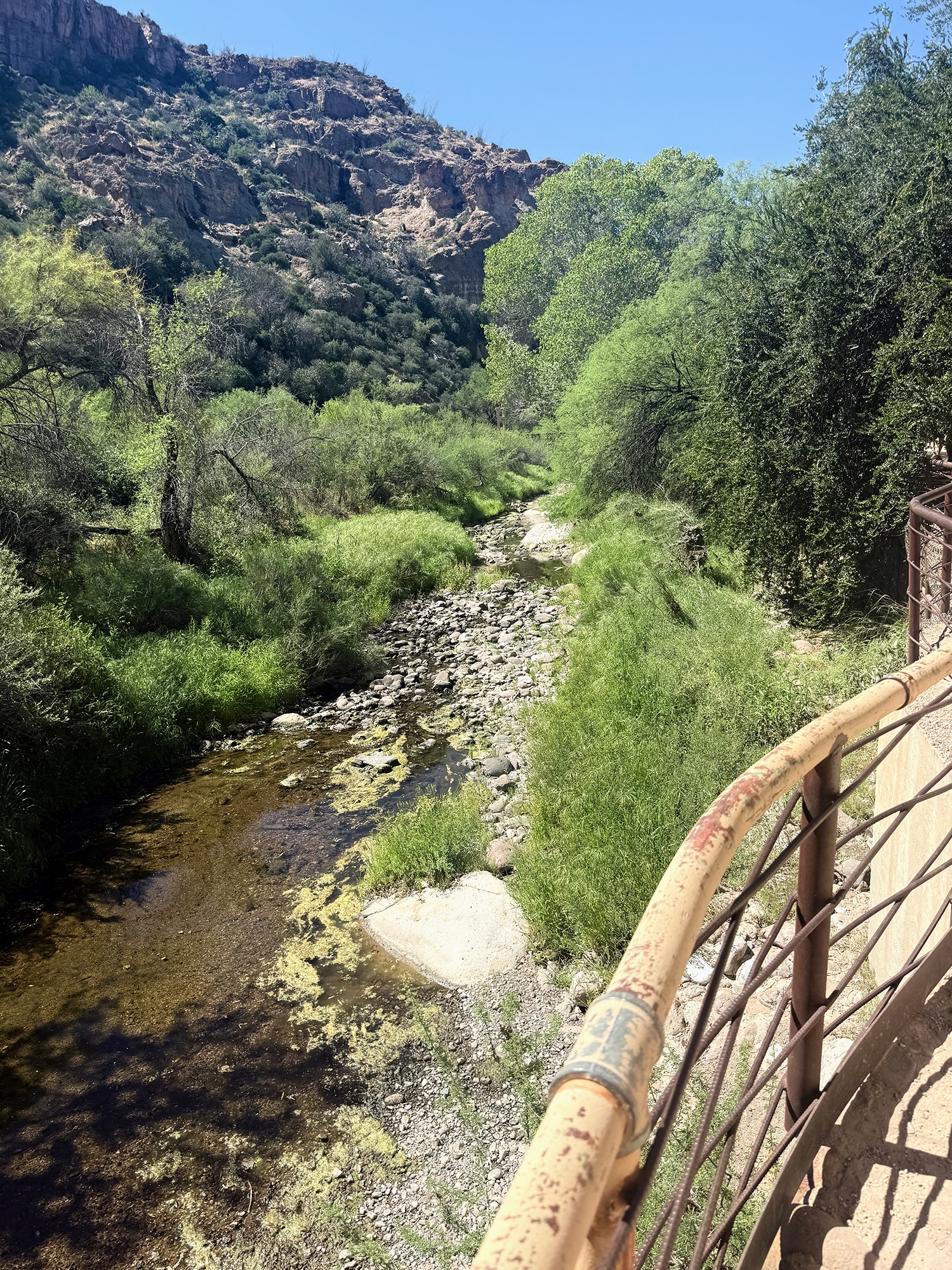
When Robert Clevenger built this stone house for his wife and five children (yes, 5!), he used a mountain as one of its walls! Robert grew produce and herbs on his land, which he sold at local markets. With Queen Creek about fifty yards away, water was not an issue – back then. Today, the creek is not flowing nearly as fast as the good ole days (if at all).
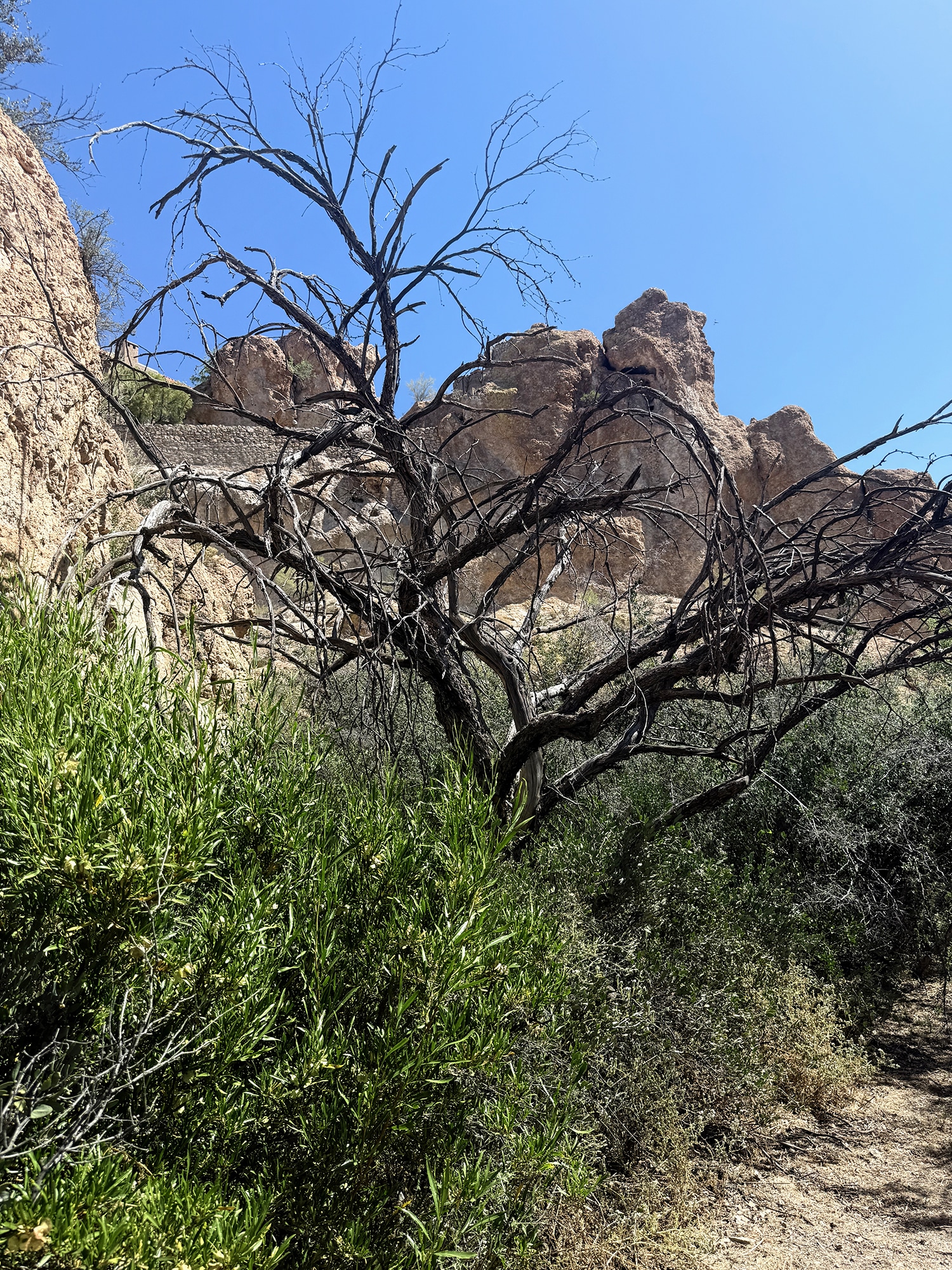
The Wing Memorial Herb Garden (one of many gardens at the arboretum) “contains many low-water use native and southern European herbs [that Robert may have grown] that thrive in the Sonoran Desert, such as thyme, oregano, dill, rosemary, lamb’s ear, comfrey and chamomile, along with many other herbs used in the culinary arts, medicinal healing, cosmetics and insect repellants.”
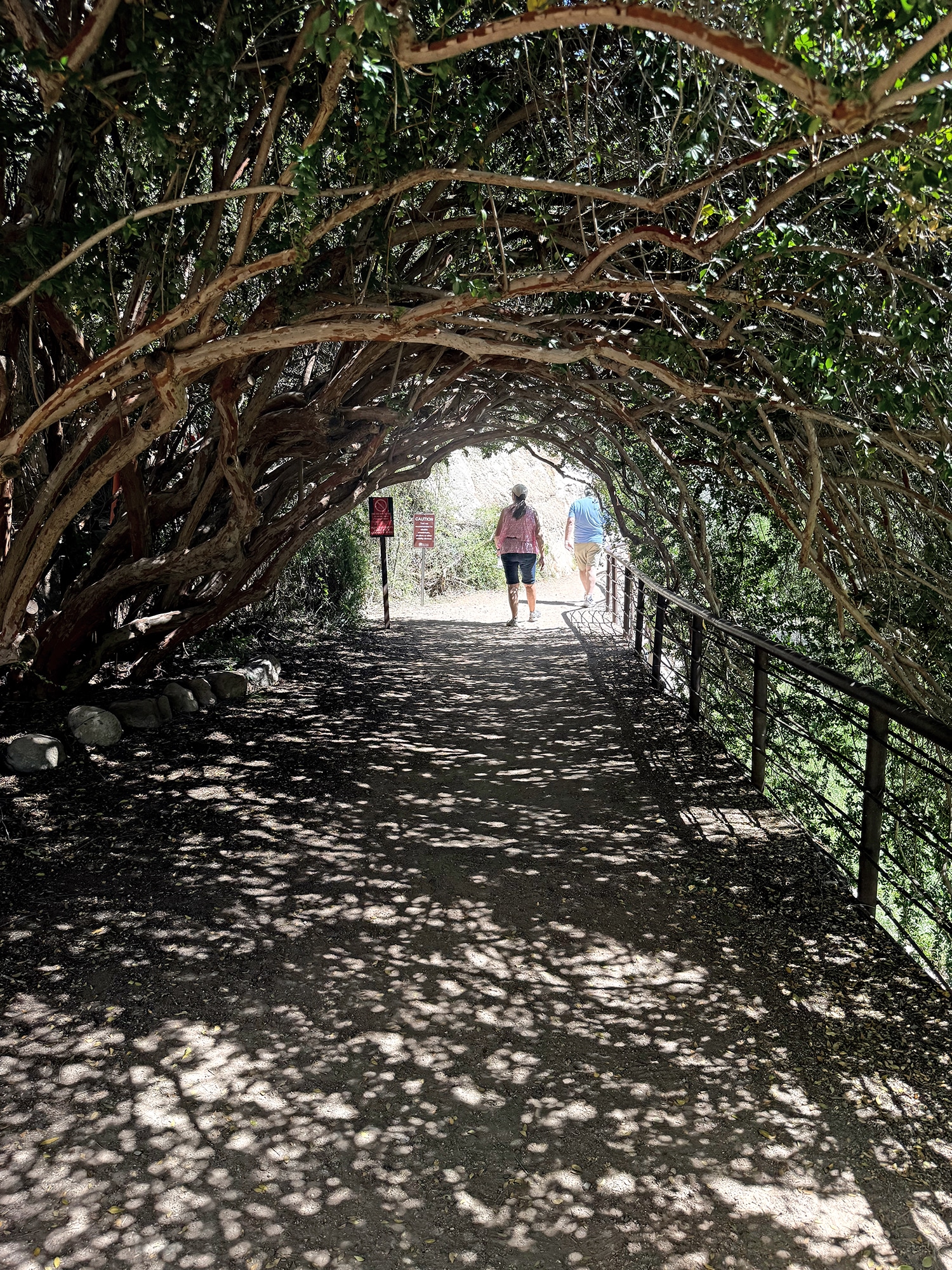
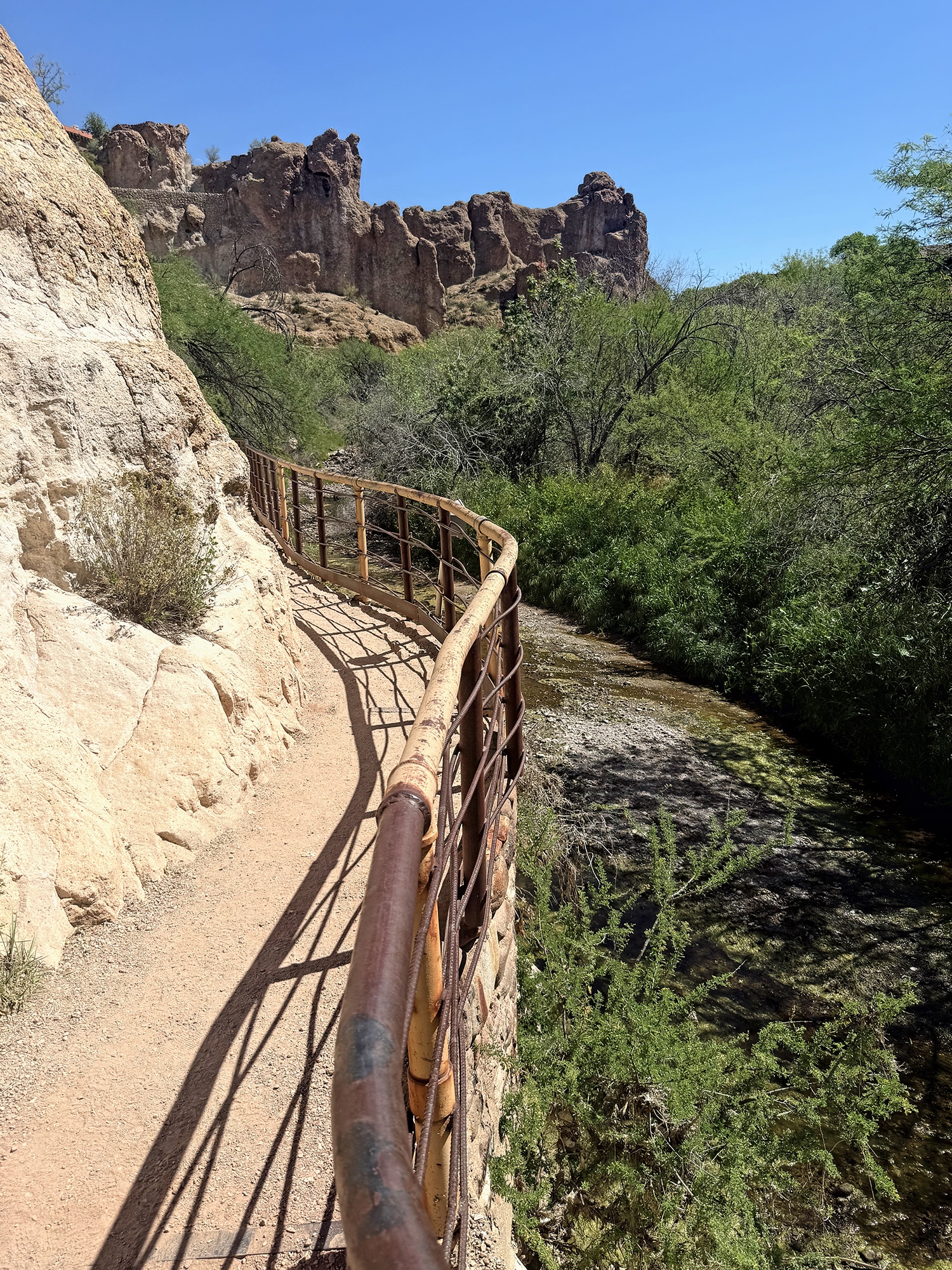
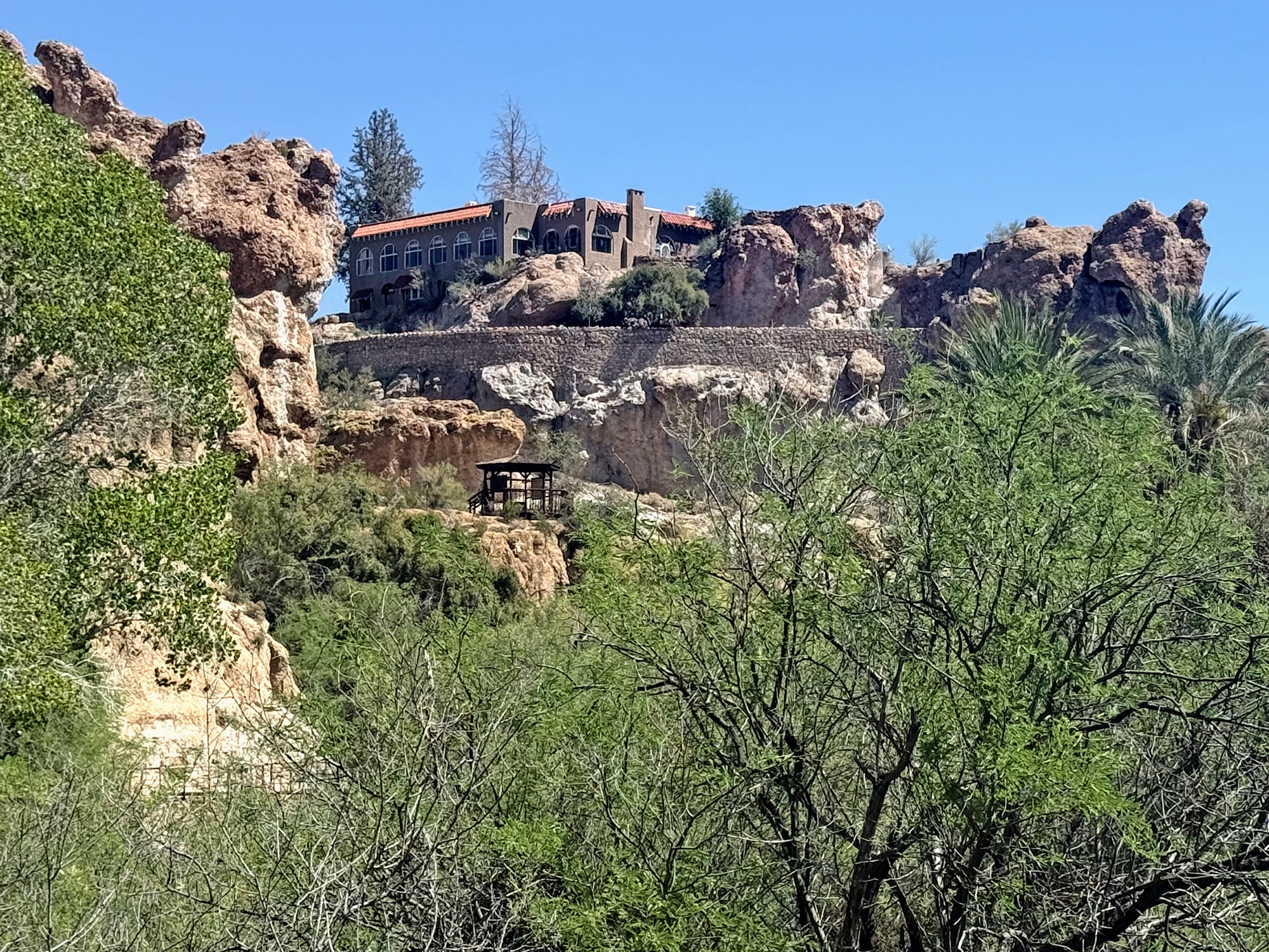
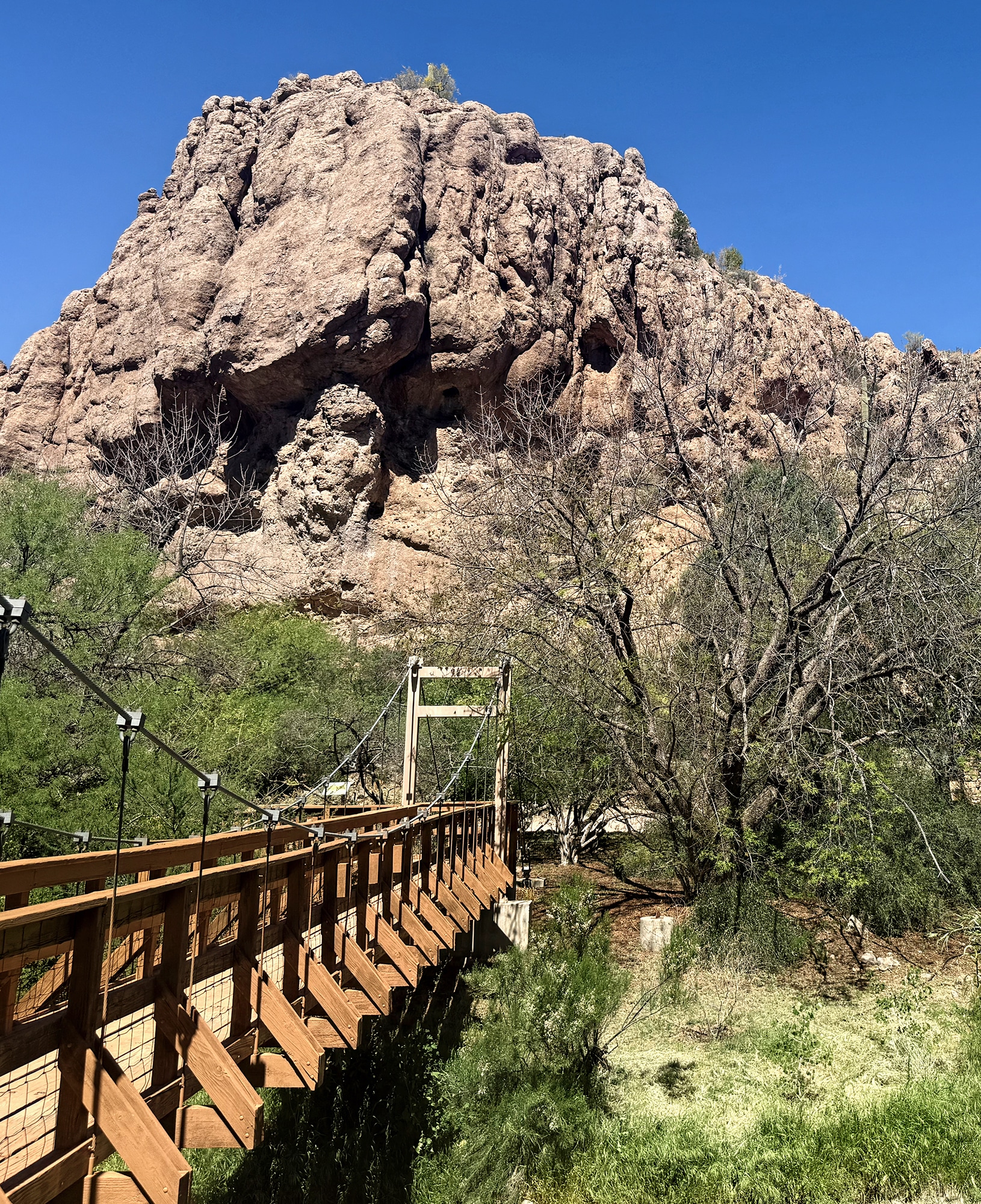
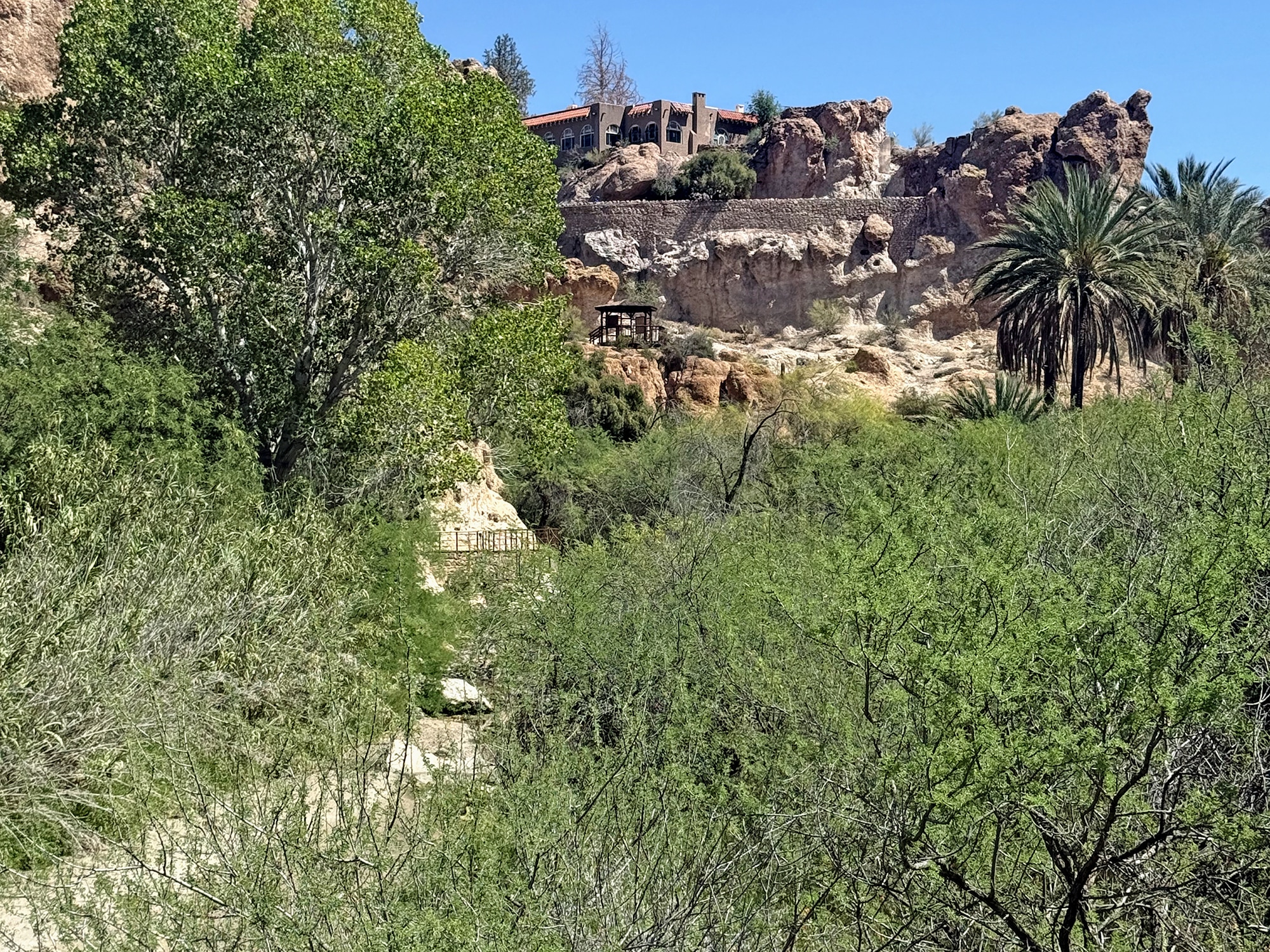
This was a beautiful and shady spot near a tunnel of trees, with a walkway along Queen Creek. Down the trail a bit was an awesome suspension bridge with views of the Pickett Post House – Boyce Thompson’s winter home. Pickett Post House was called “Castle on the Rock” by the locals, and this trail is as close as you can get to it.
What a wonderful day!
After returning to Florence, we took a quick siesta and then walked to some neighbors for happy hour. With each gathering in the month of April, there are fewer attendees as folks start heading back to their other-three-season homes after a wonderful winter with their Arizona friends.
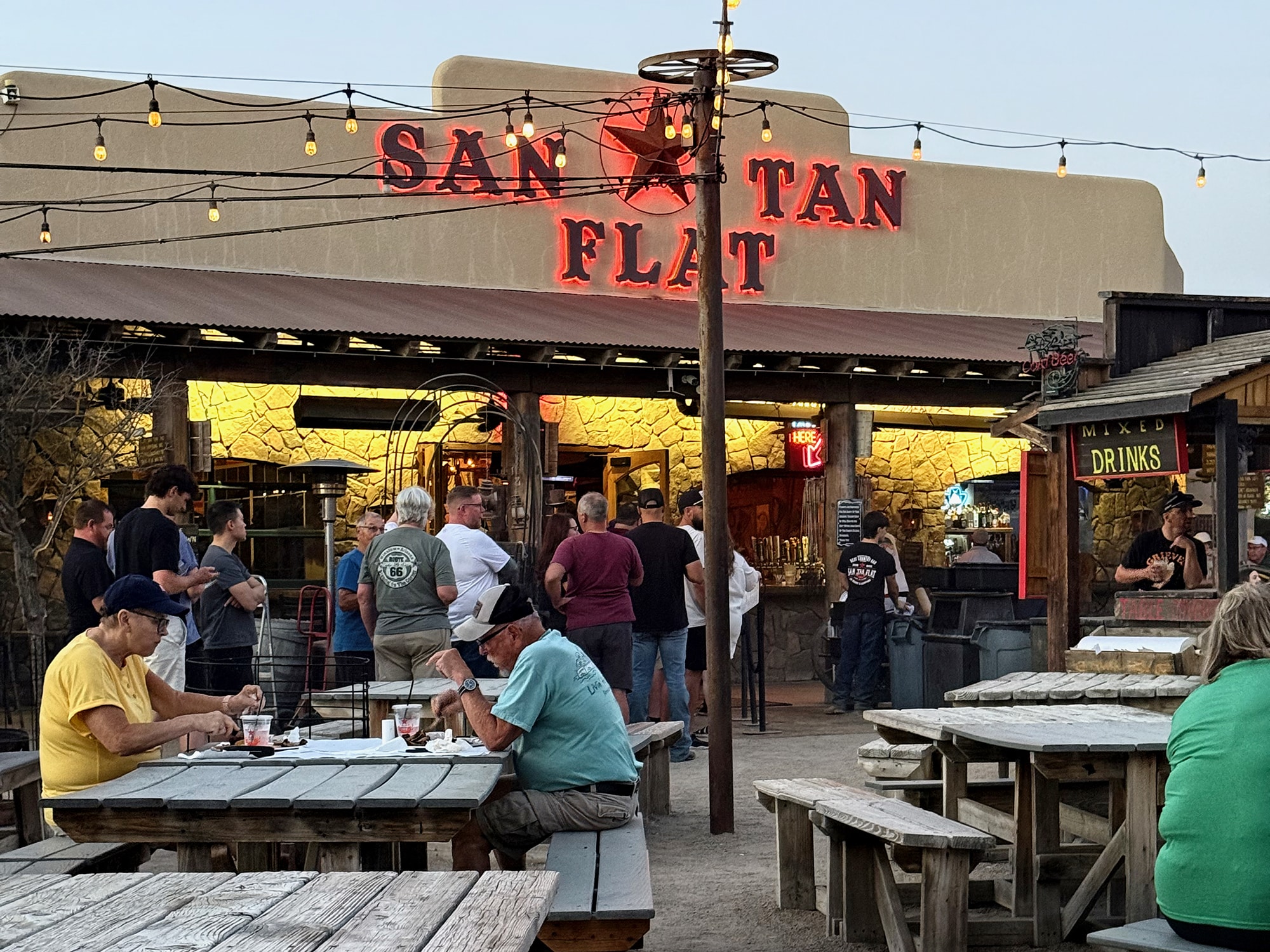
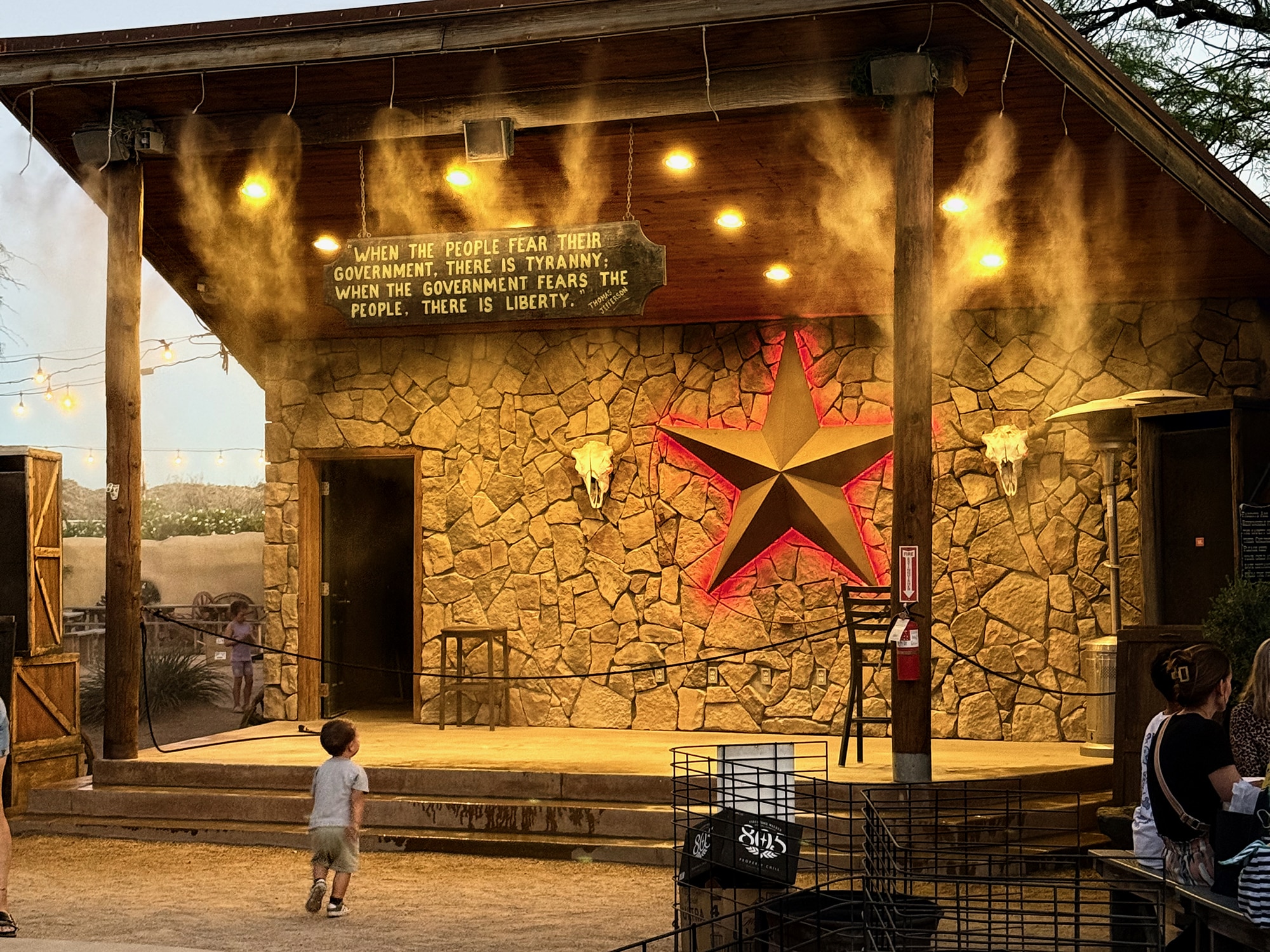
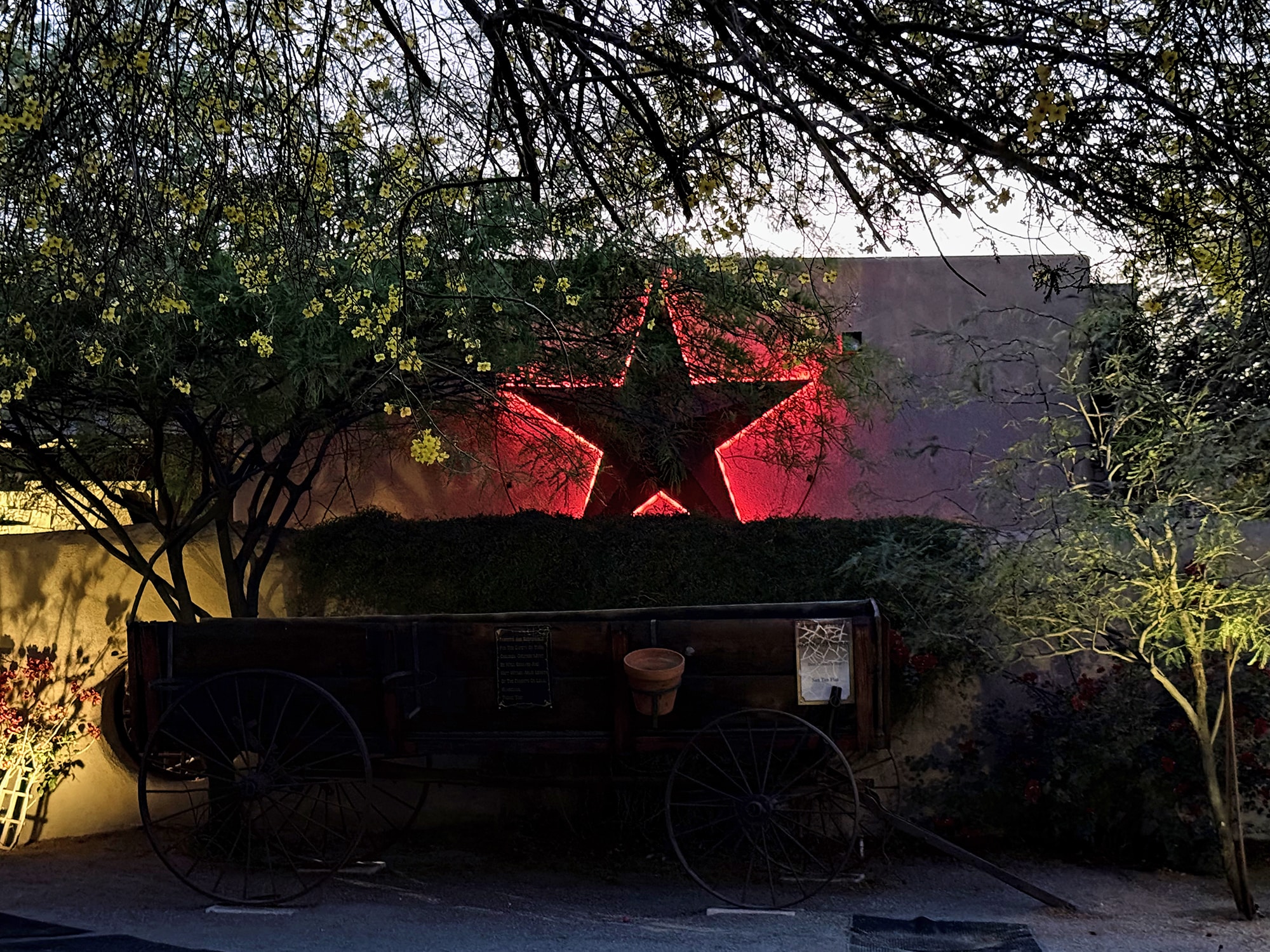
We finished off the day at San Tan Flat for some delicious ribs and a little music. Although live music was not on tap tonight, they had a great sound system and misters to cool us off – until the sun went down. Then one of us went looking for a jacket!
Next Stop – Top of the World (oops, never mind)
The next morning we said our goodbyes and hoped to drive the gorgeous stretch of US-60 between Superior and Miami to visit Top-of-the-World Viewpoint. Top-of-the-World is known for its “stunning desert vistas and high-elevation perspectives of the Sonoran landscape”.
Wouldn’t you know it, on this visit US-60 was open between Superior and Globe, but only before 9am and after 2pm with “closures and lane restrictions due to the Queen Creek and Waterfall Canyon Bridges replacement project.”
Since we were in Florence and didn’t want to get up at the crack of dawn or wait too late to leave, we took another scenic route: Florence north and east to Superior, then south to Winkelman, then back up to Globe.
Yes, it was a bit out of the way with more steep and curvy roads in the middle of nowhere. But we saw some unseen and beautiful territory, along with the Ray Mine – a HUGE open-pit copper mine with the largest copper reserves in the United States. We’ll just have to try again next time to see the top of the world instead of a ravaged 3-mile wide, 7-mile long, 24-feet deep gash in the beautiful red rock. I guess they don’t call Arizona “The Copper State” for nothing!
Besh Ba Gowah
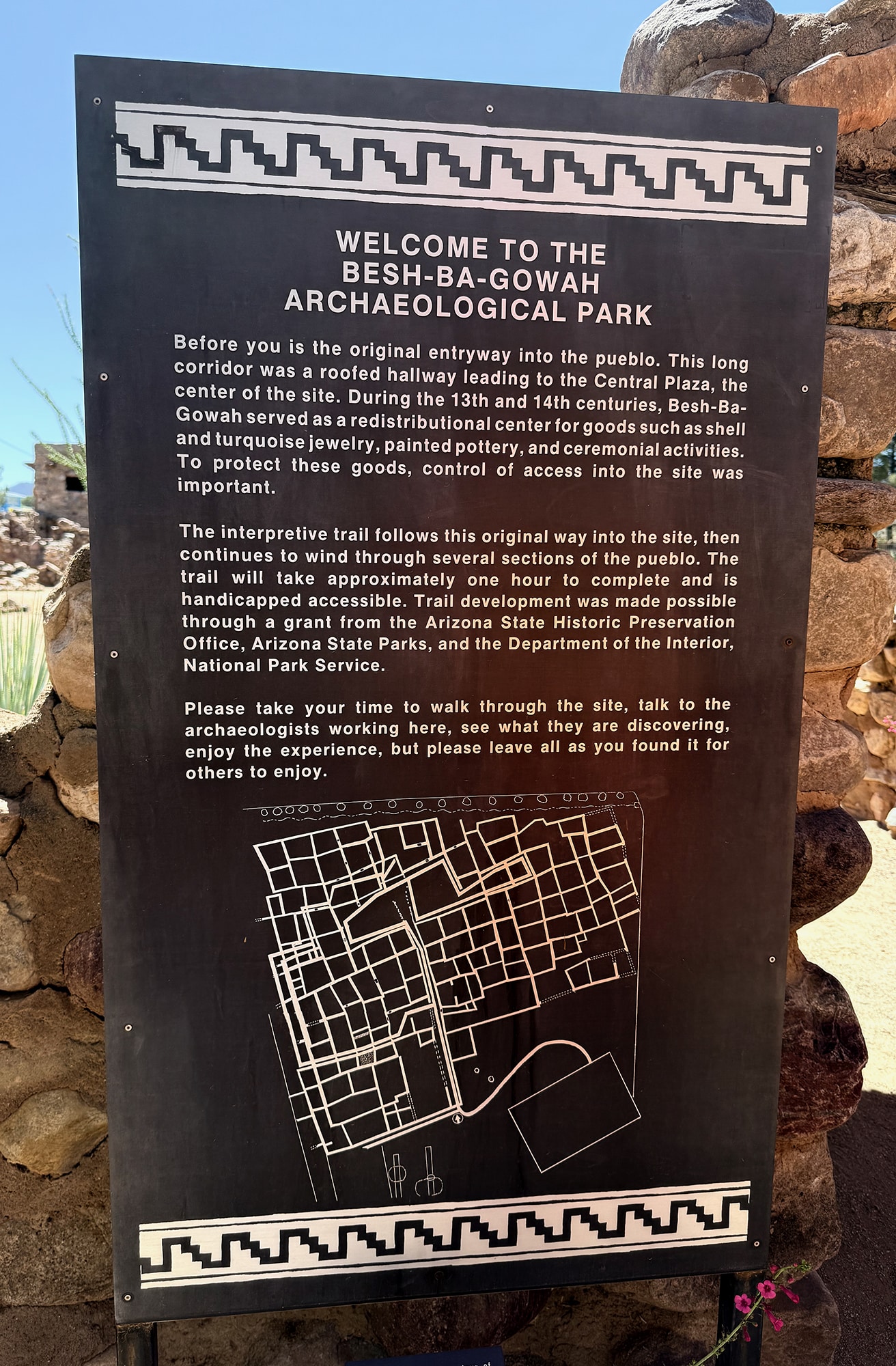
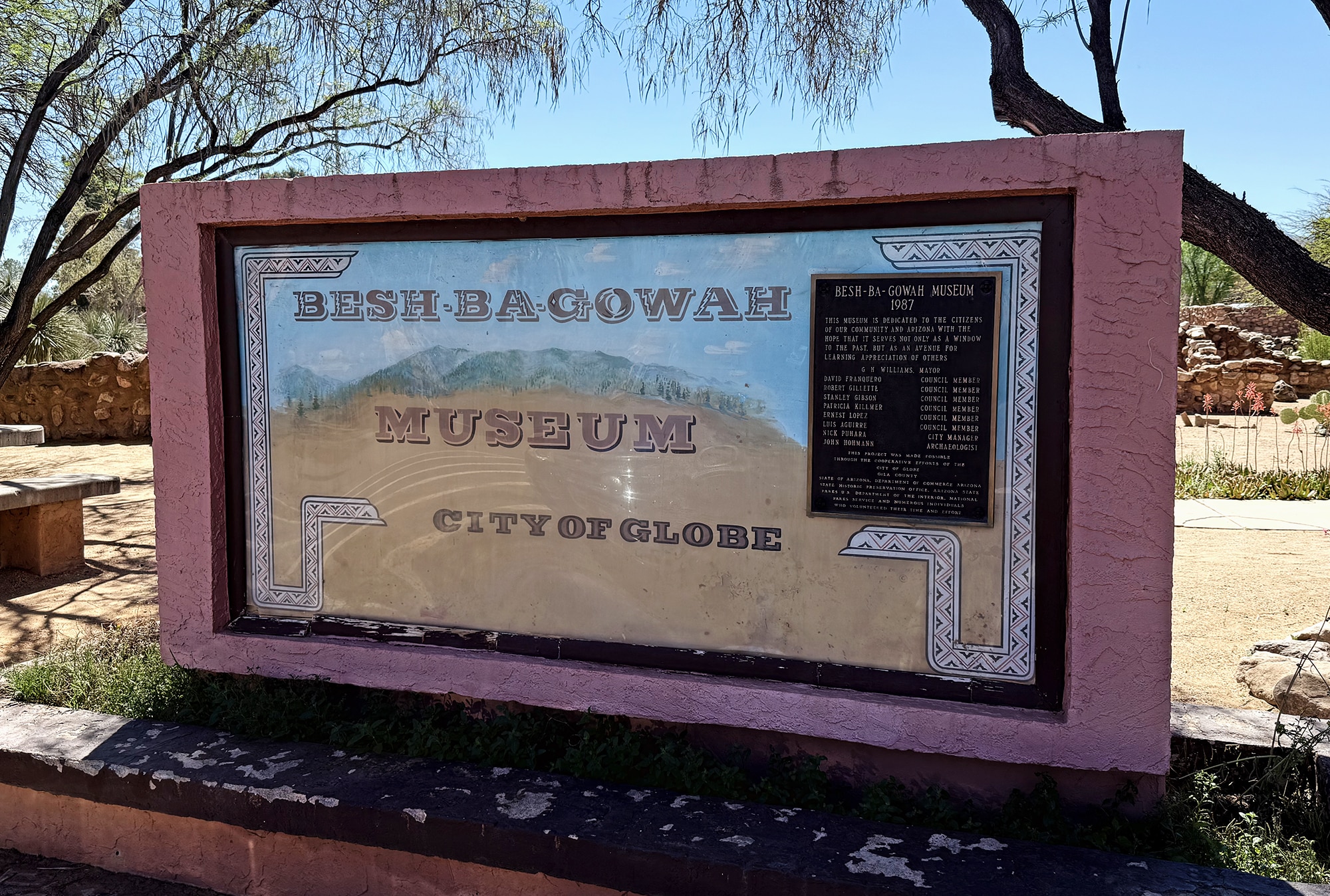
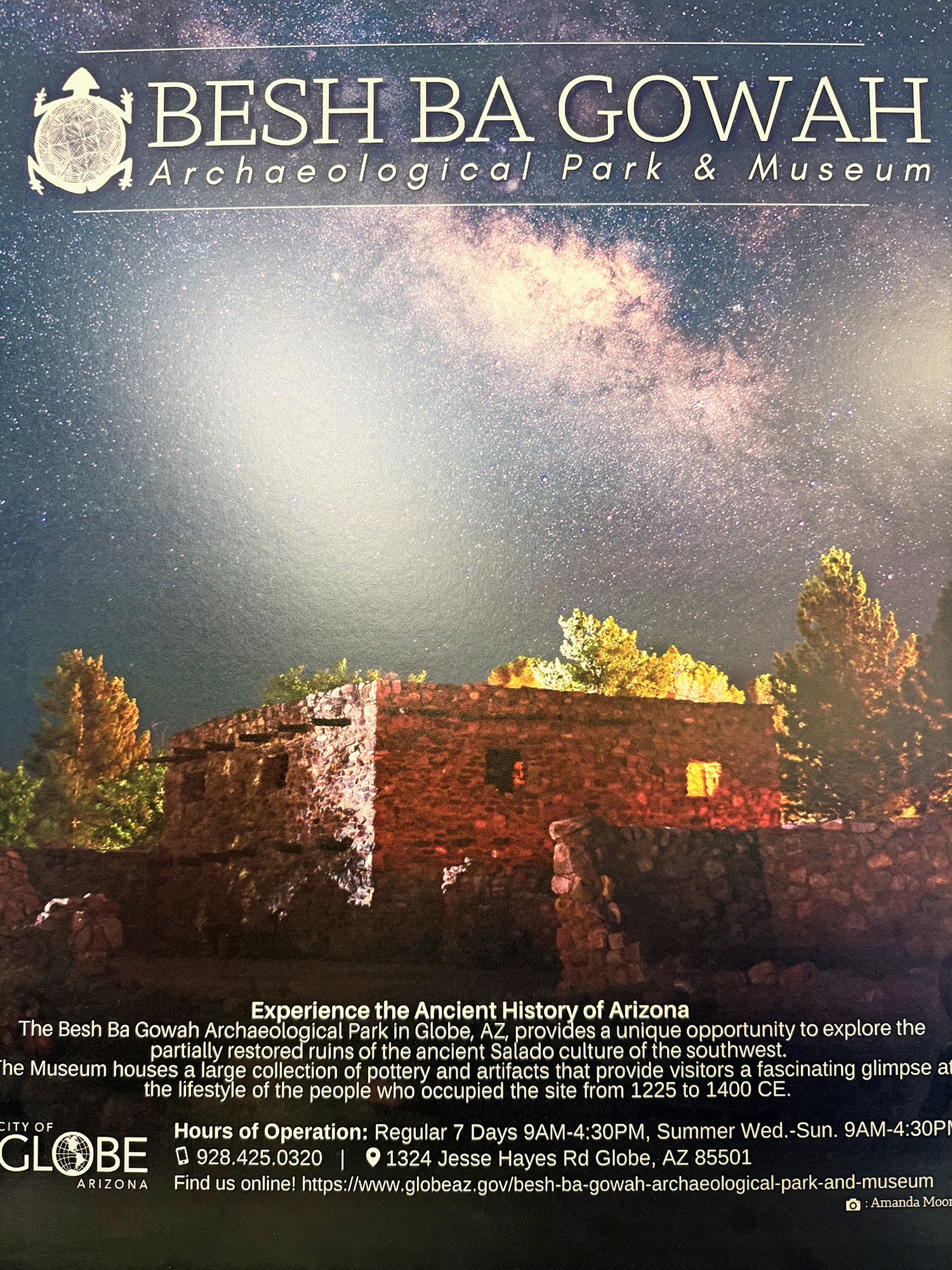
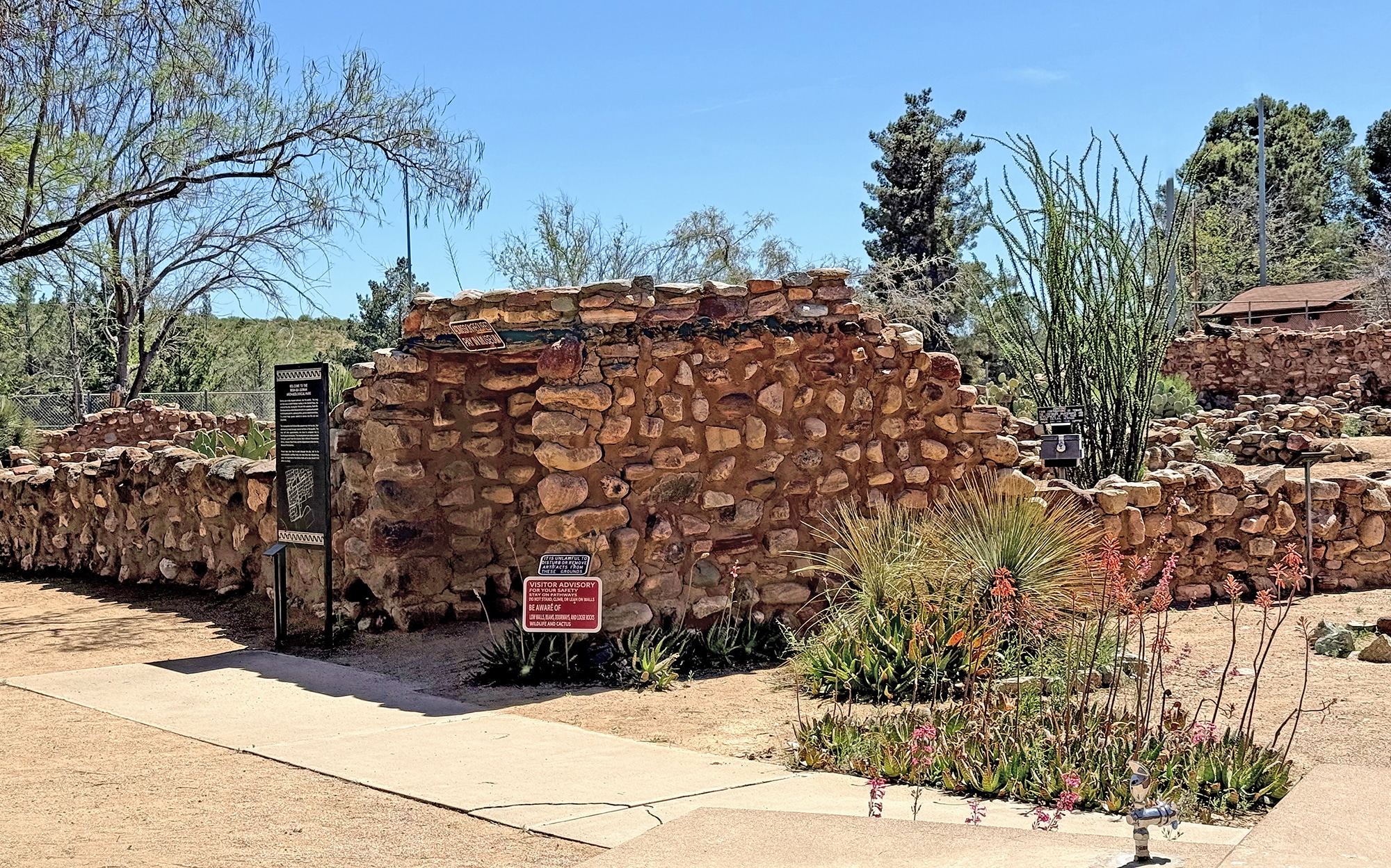
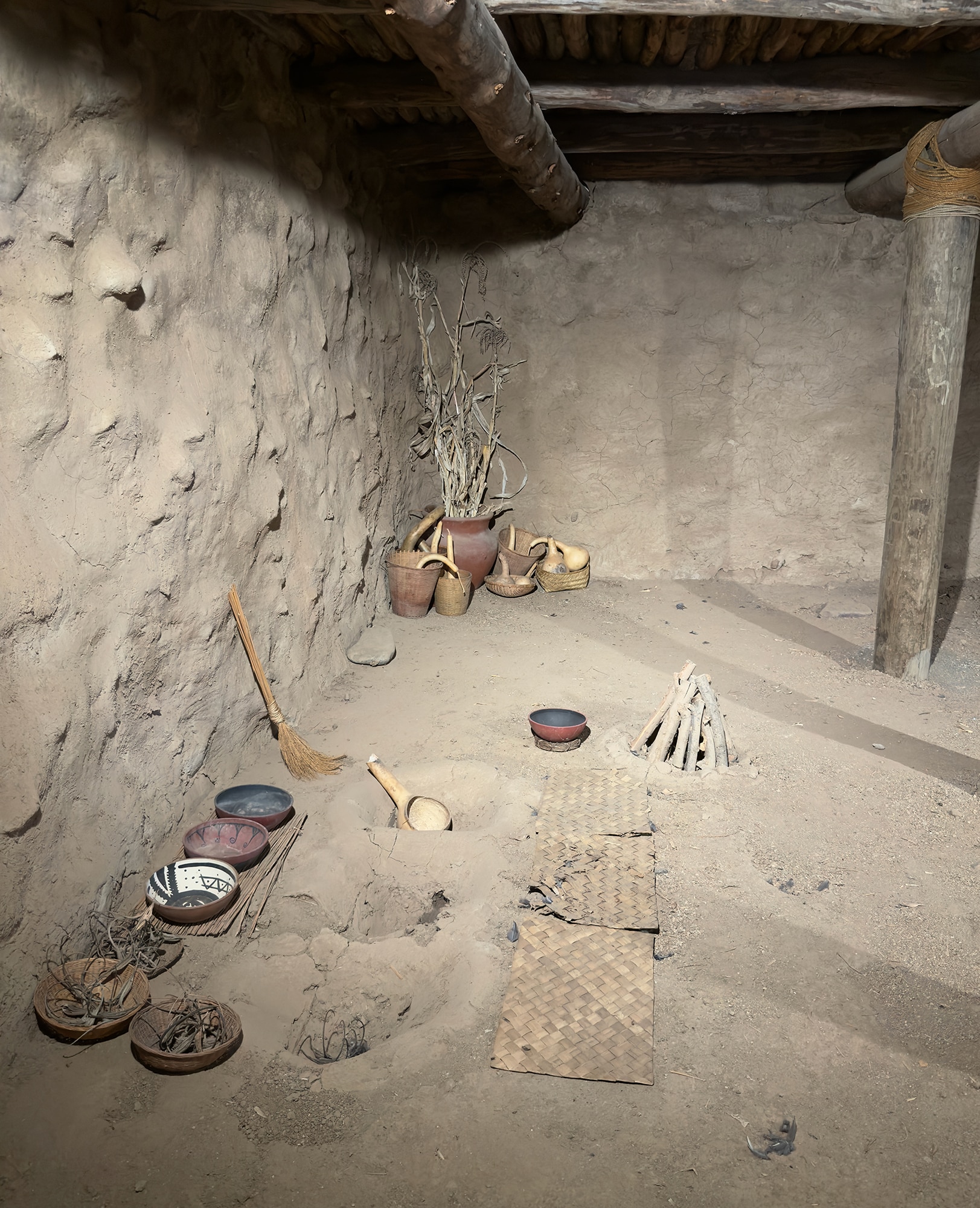
“One mile southwest of the City of Globe, stands the remains of a large pueblo village constructed by the Salado culture who occupied the region between 1225 CE and 1450 CE… The partially reconstructed pueblo structures, along with the adjacent museum provide a fascinating glimpse at the lifestyle of the people who thrived in the ancient Southwest.” ~ READ MORE
Amazing Artifacts and History
The museum contains several cases of beautiful pottery and other artifacts, as well as a tribute to the founder of the museum. Irene Singleton-Vickrey moved from Illinois to Globe when she was 20, hoping the less-humid air would help with her respiratory issues. There she developed a passion for archaeology and began her life’s work. There is more information at her link.
“From 1935 to 1940 Irene supervised the excavation and partial reconstruction of the ancient pueblo site she designated Besh Ba Gowah, a Western Apache term given to the area meaning “Metal Camp.” Here she uncovered one of the greatest southwestern single site discoveries and the most extensive Salado culture collection ever recovered.
Work on the project was halted due to World War I and at the age of 35 Irene passed away unexpectedly, never having fully completed her work. Today, her legacy lives on through the efforts of dedicated museum staff and the city of Globe.” ~ from a sign at the Museum
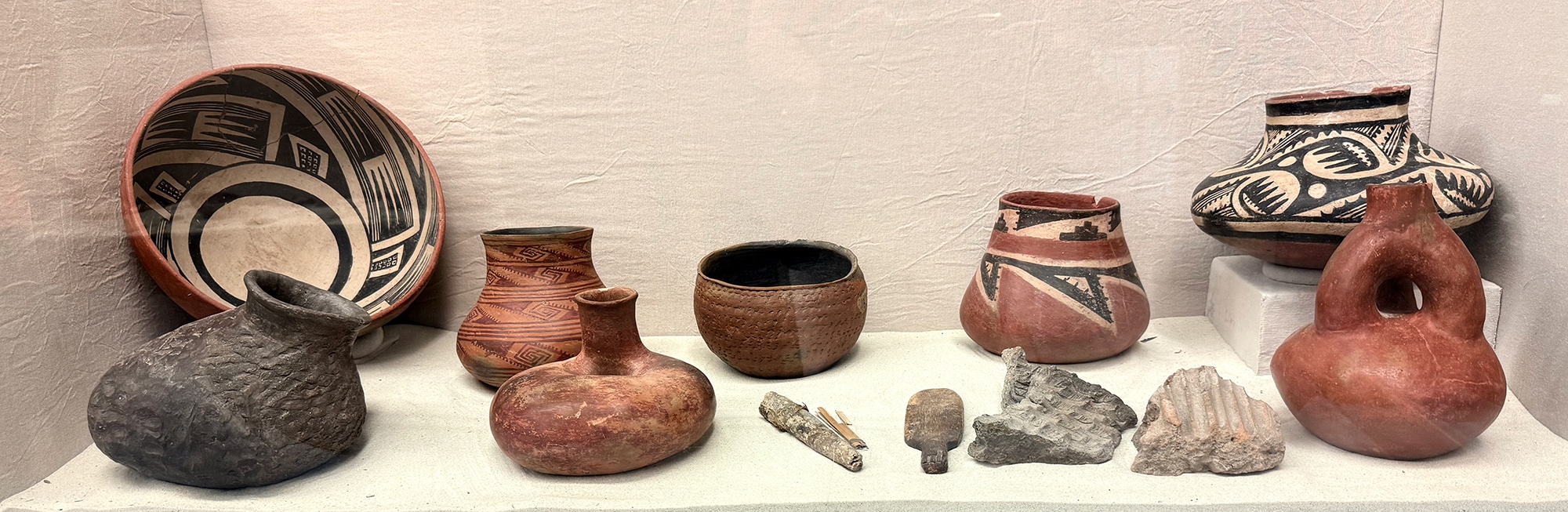
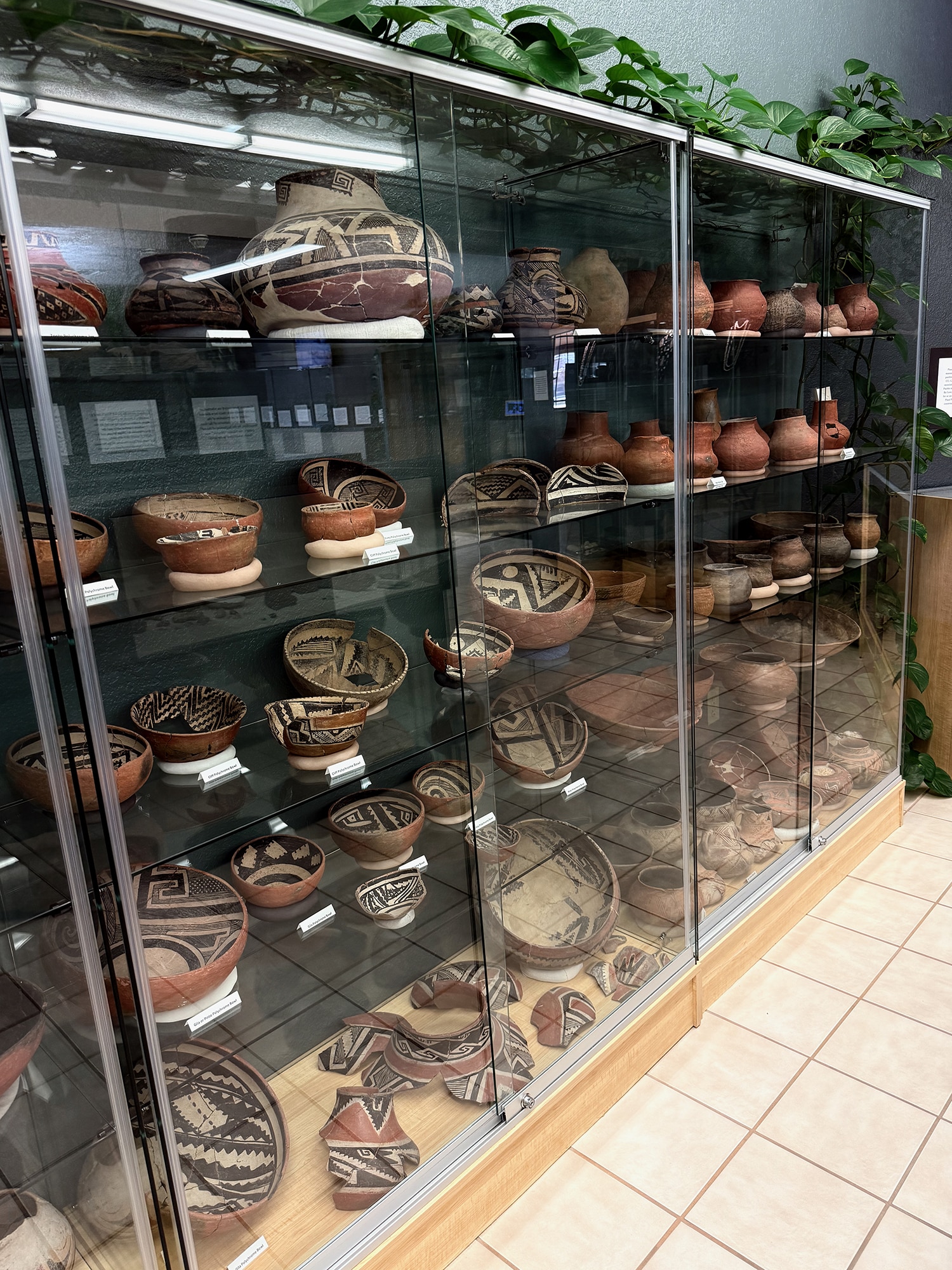
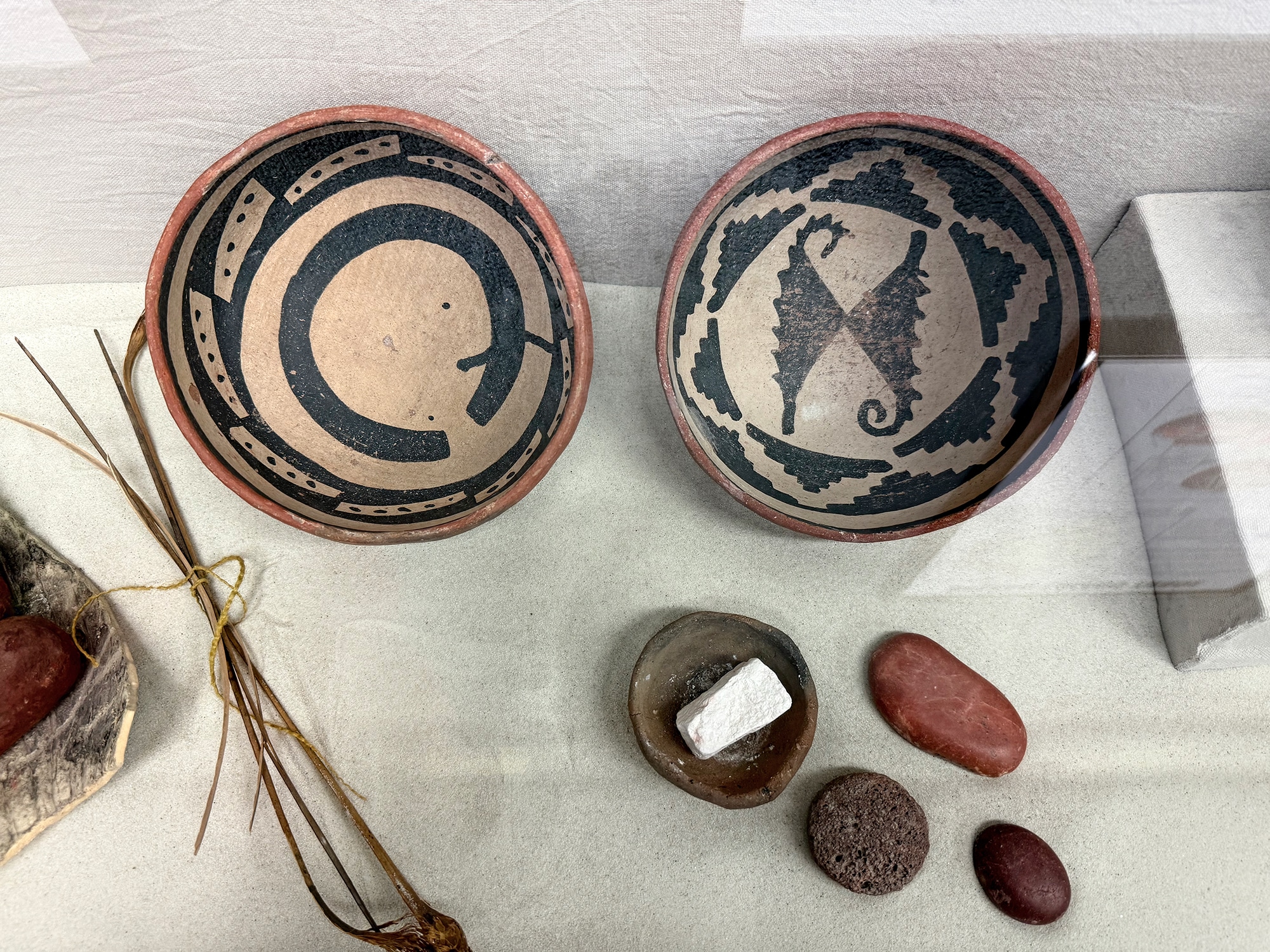
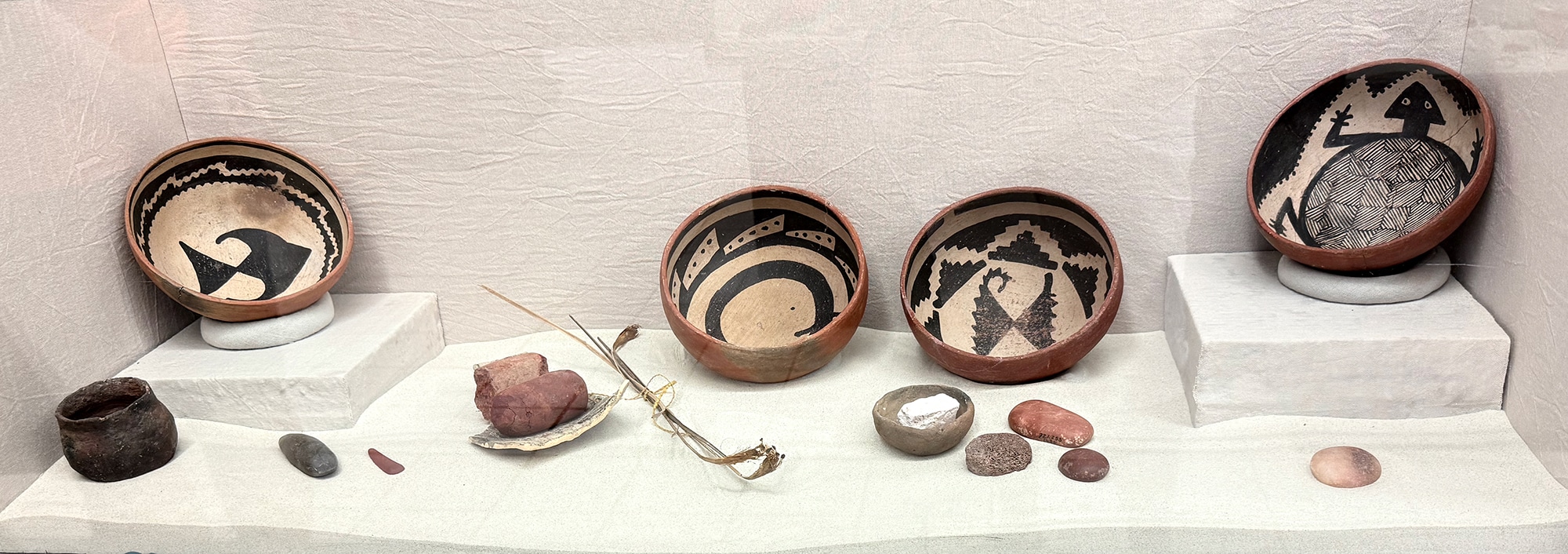
“Several cases house examples of Gila Polychrome pottery which not only have the traditional geometric patterns but also yield stylized bird, insect, and animal motifs more characteristic of the eastern Mimbres region.” ~ from signs in the Museum
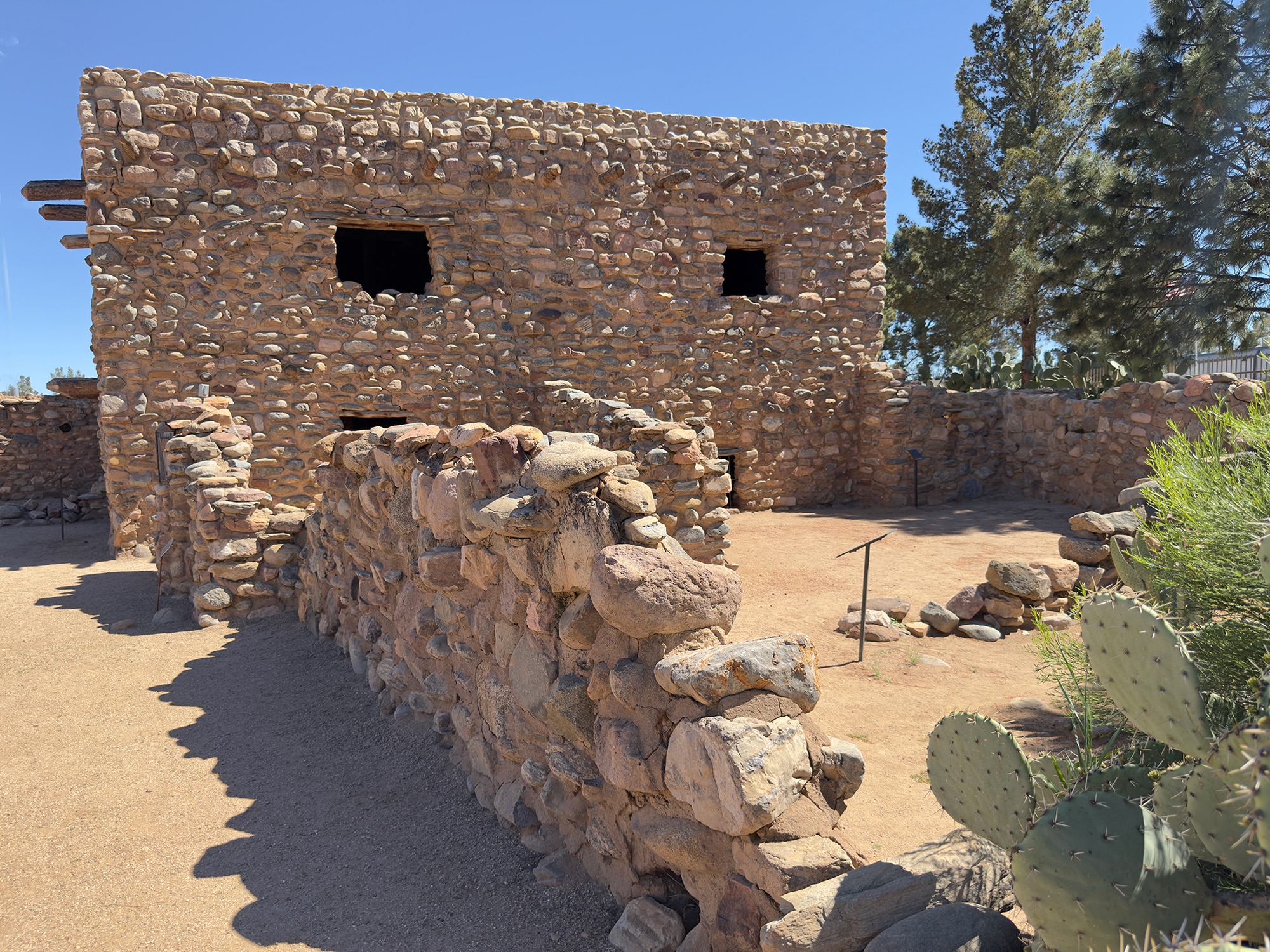
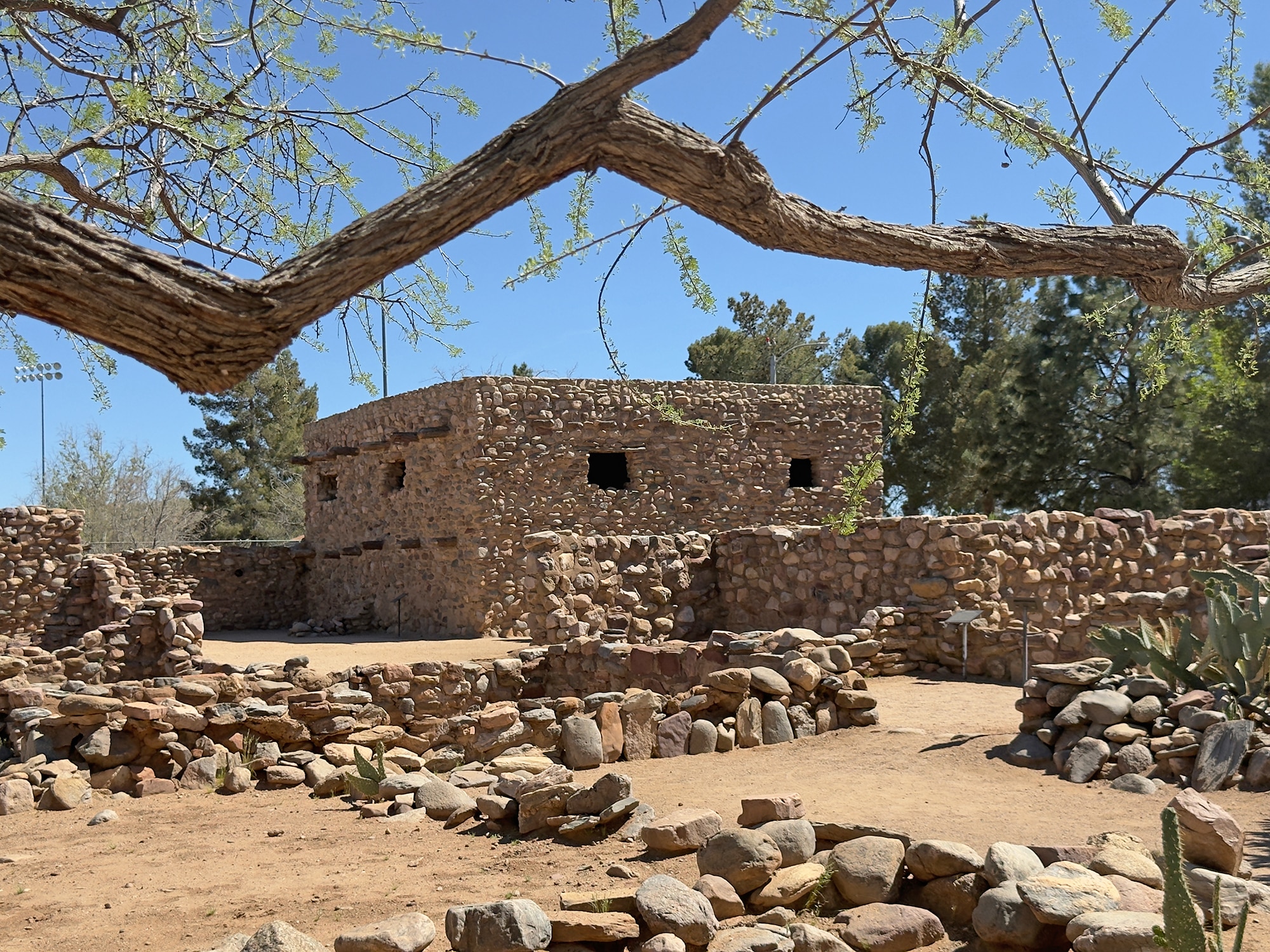
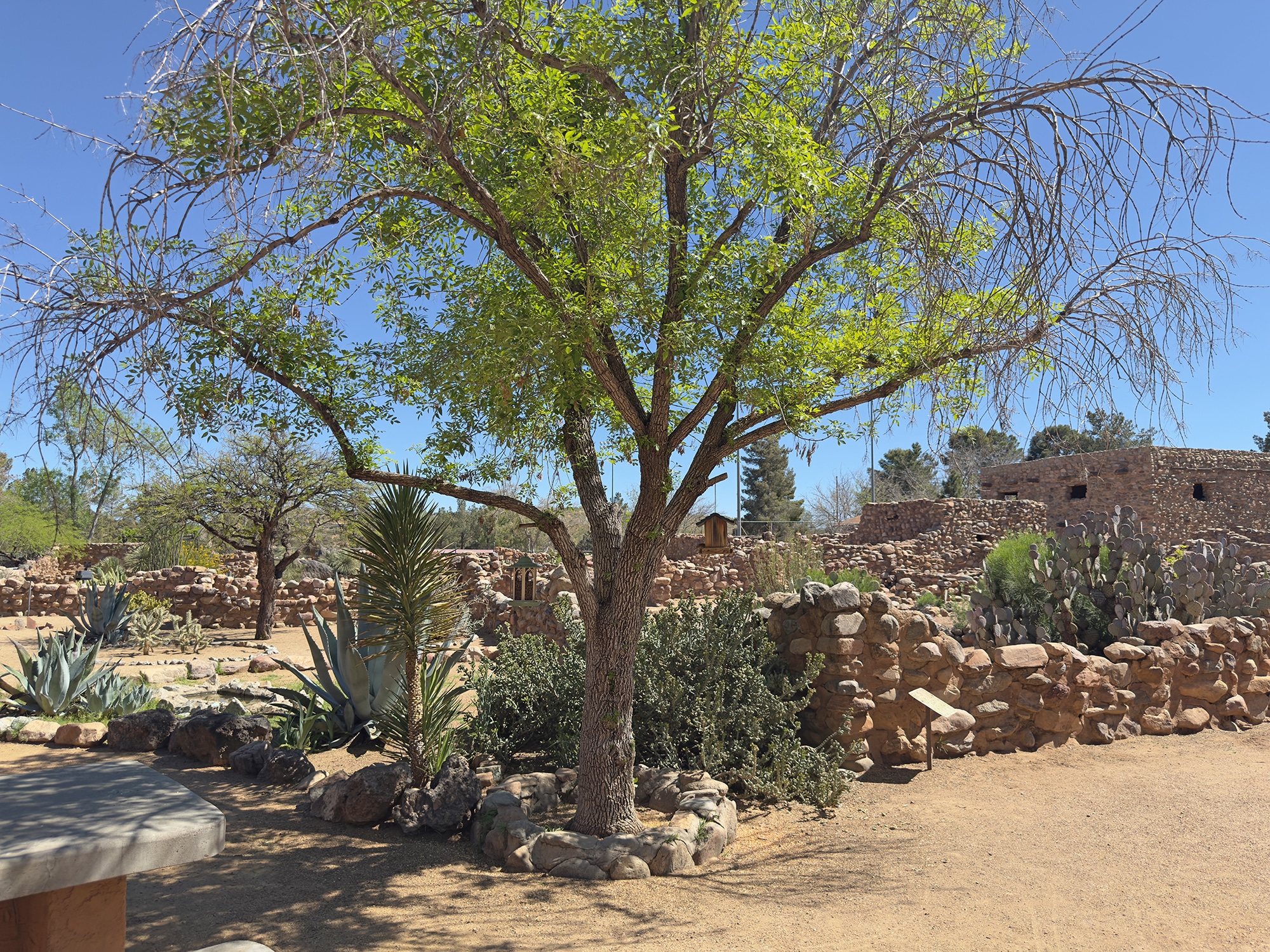
And then the Ruins
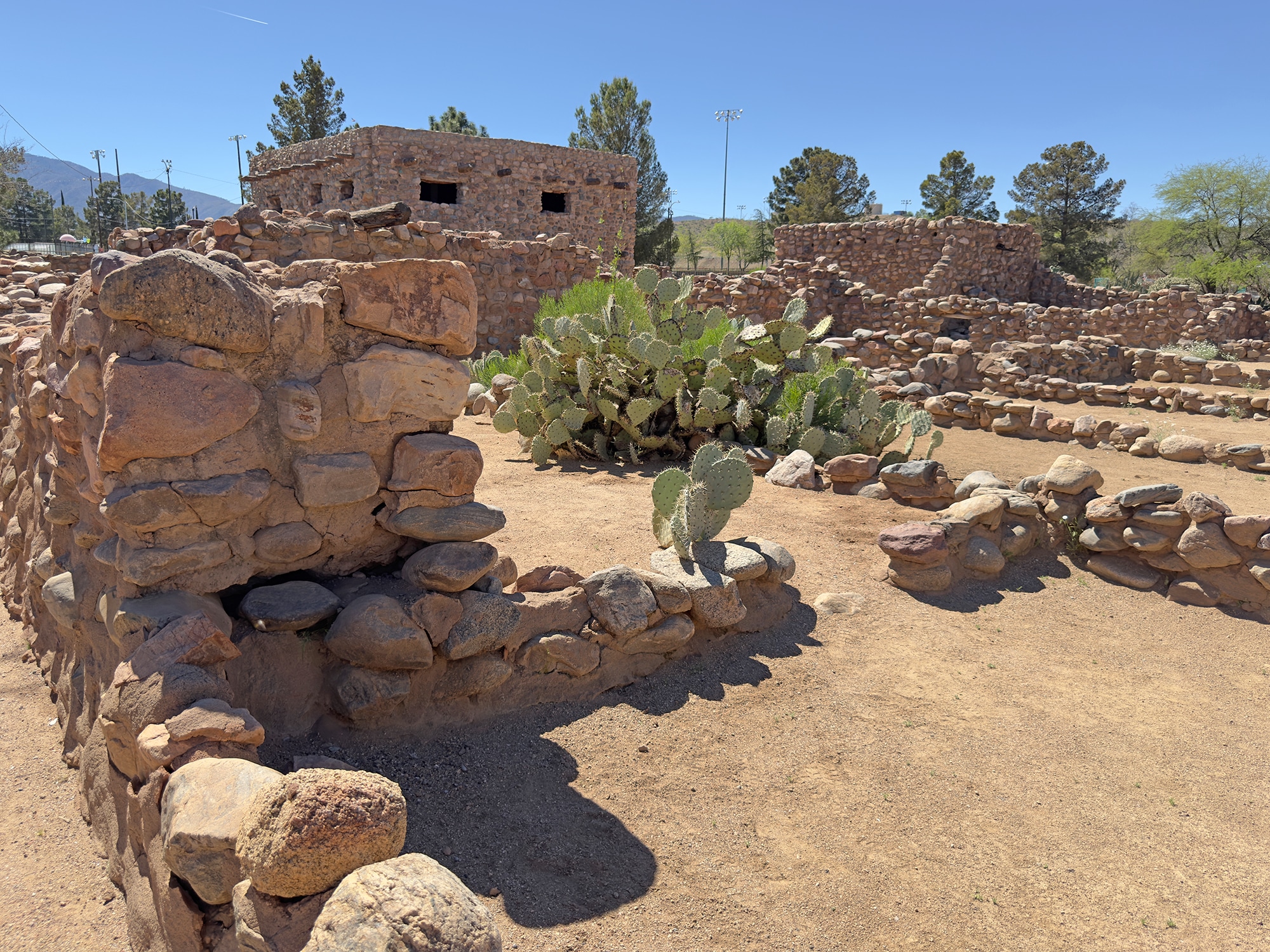
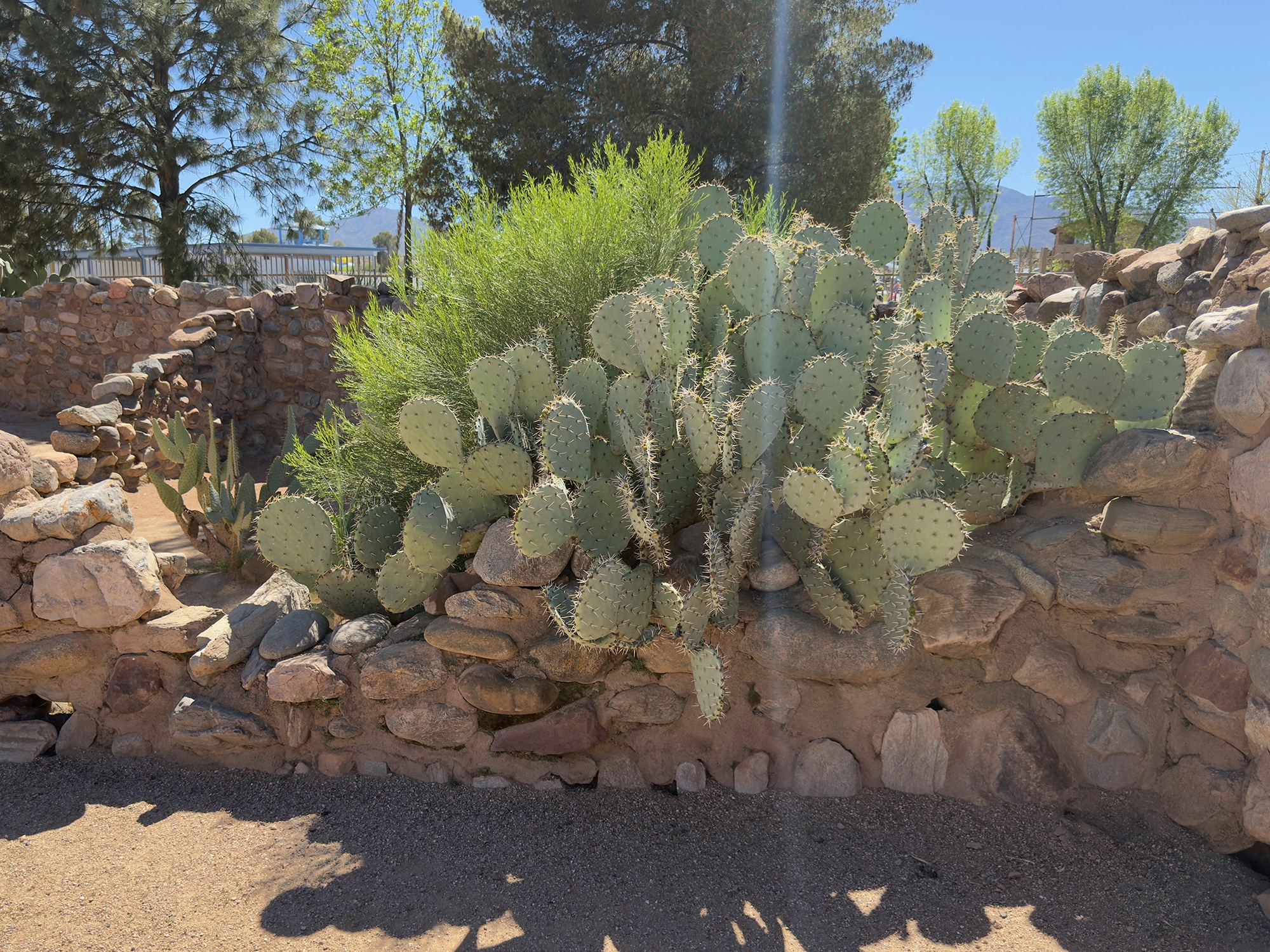
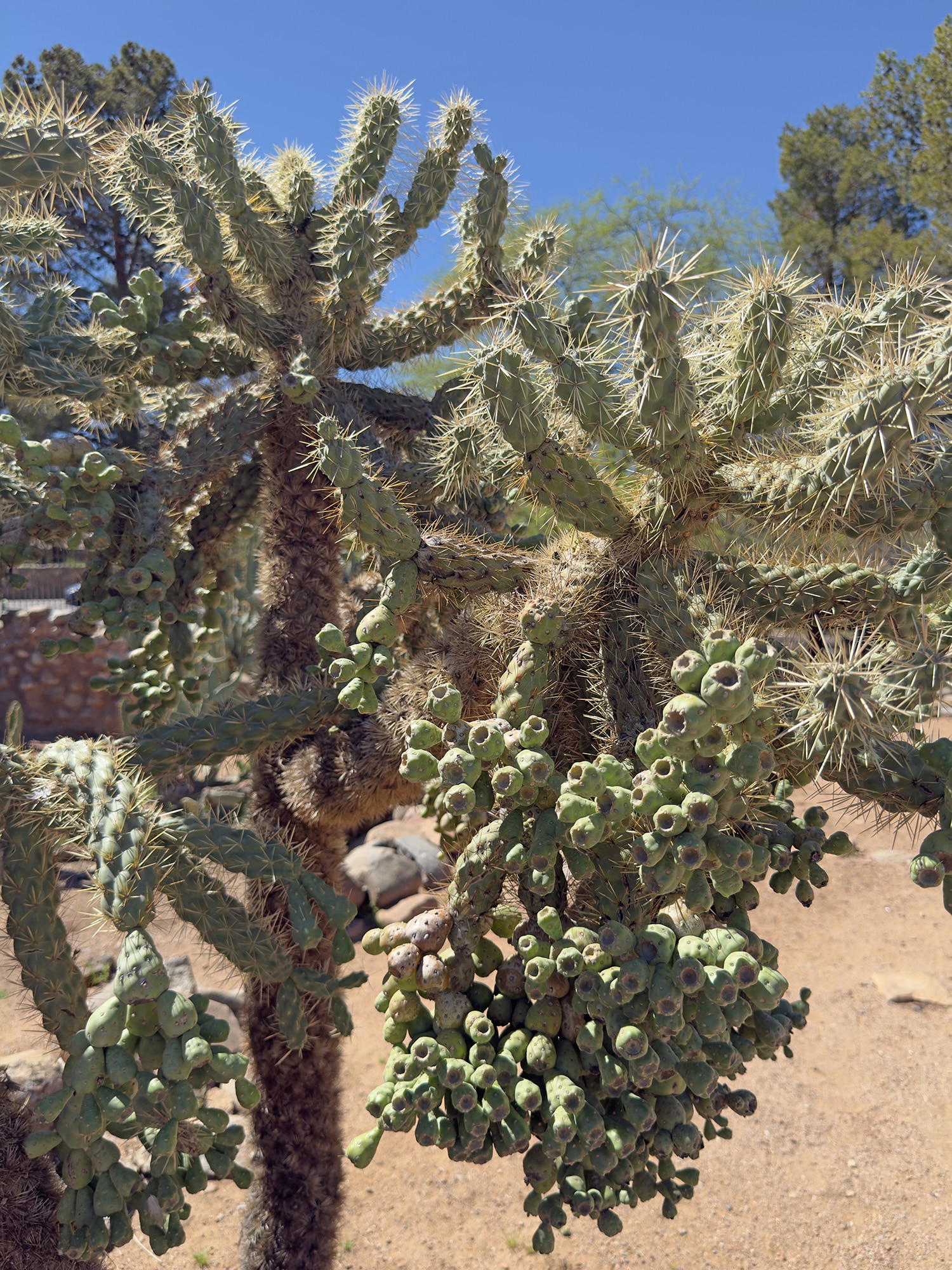
The combination of the stones and cactus made for a beautiful finish. Be sure to visit the Besh Ba Gowah website for more information, along some fabulous pictures of cactus flowers (one with a hummingbird) and the park aglow in Japanese lanterns!
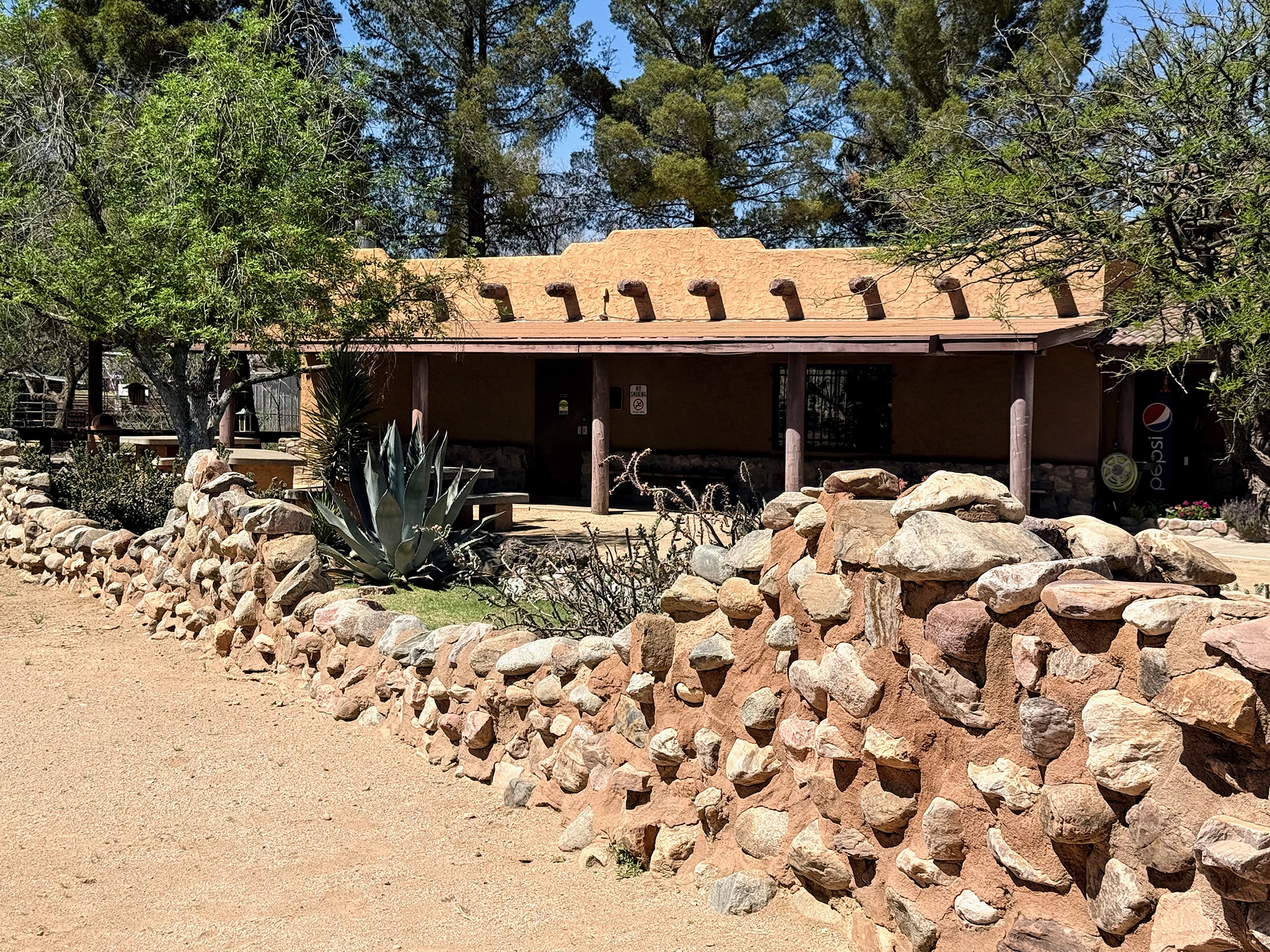
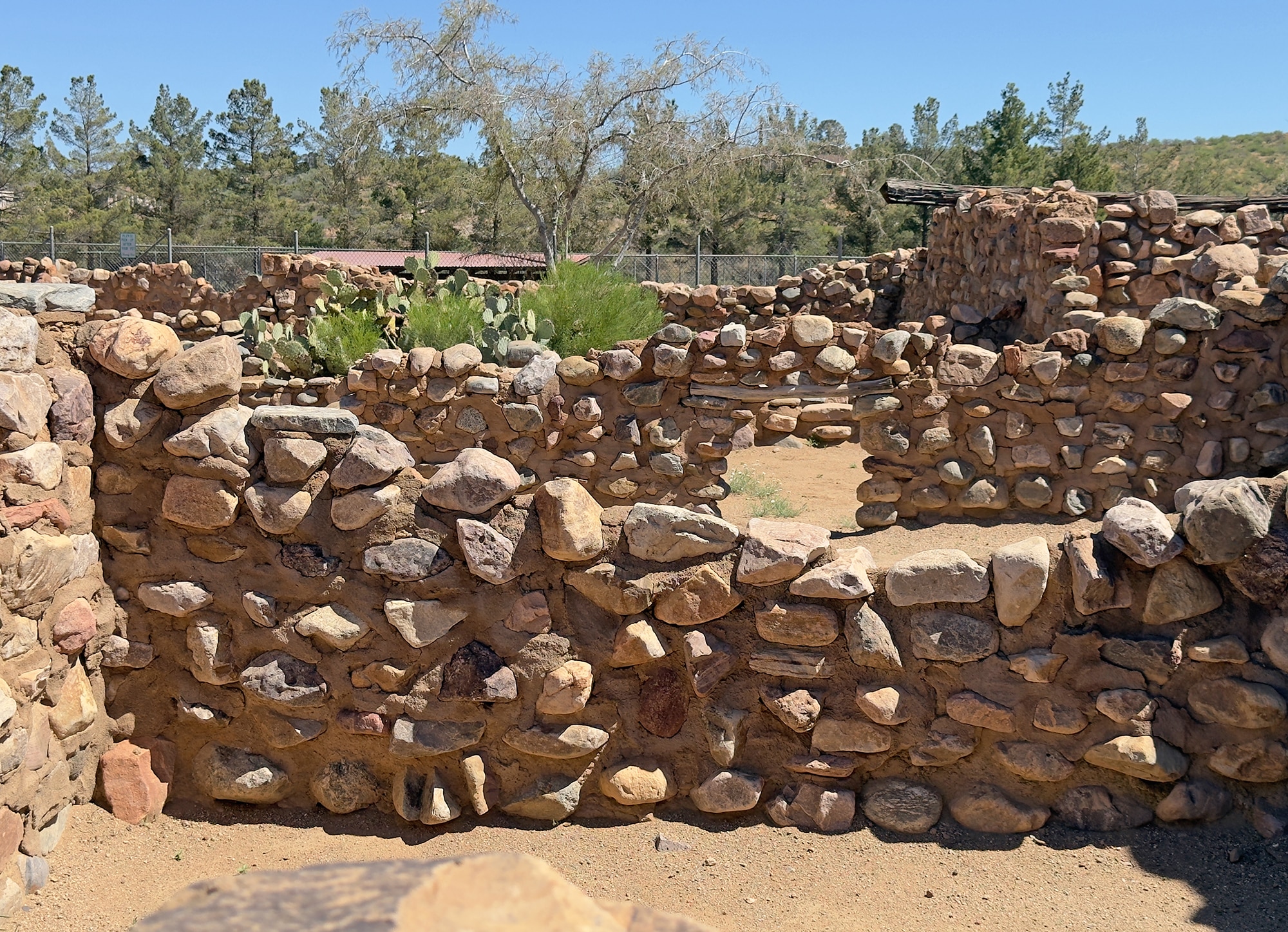
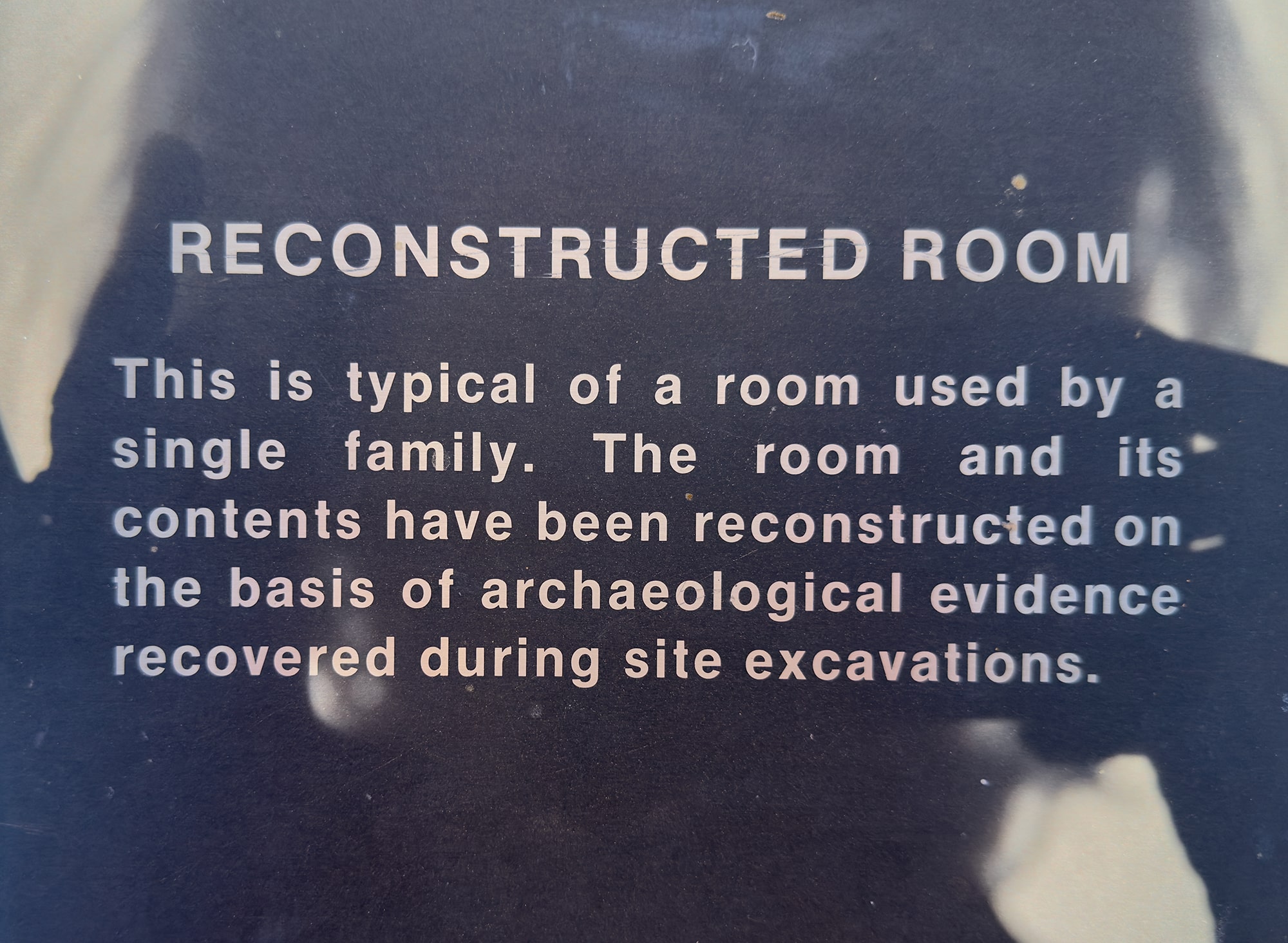
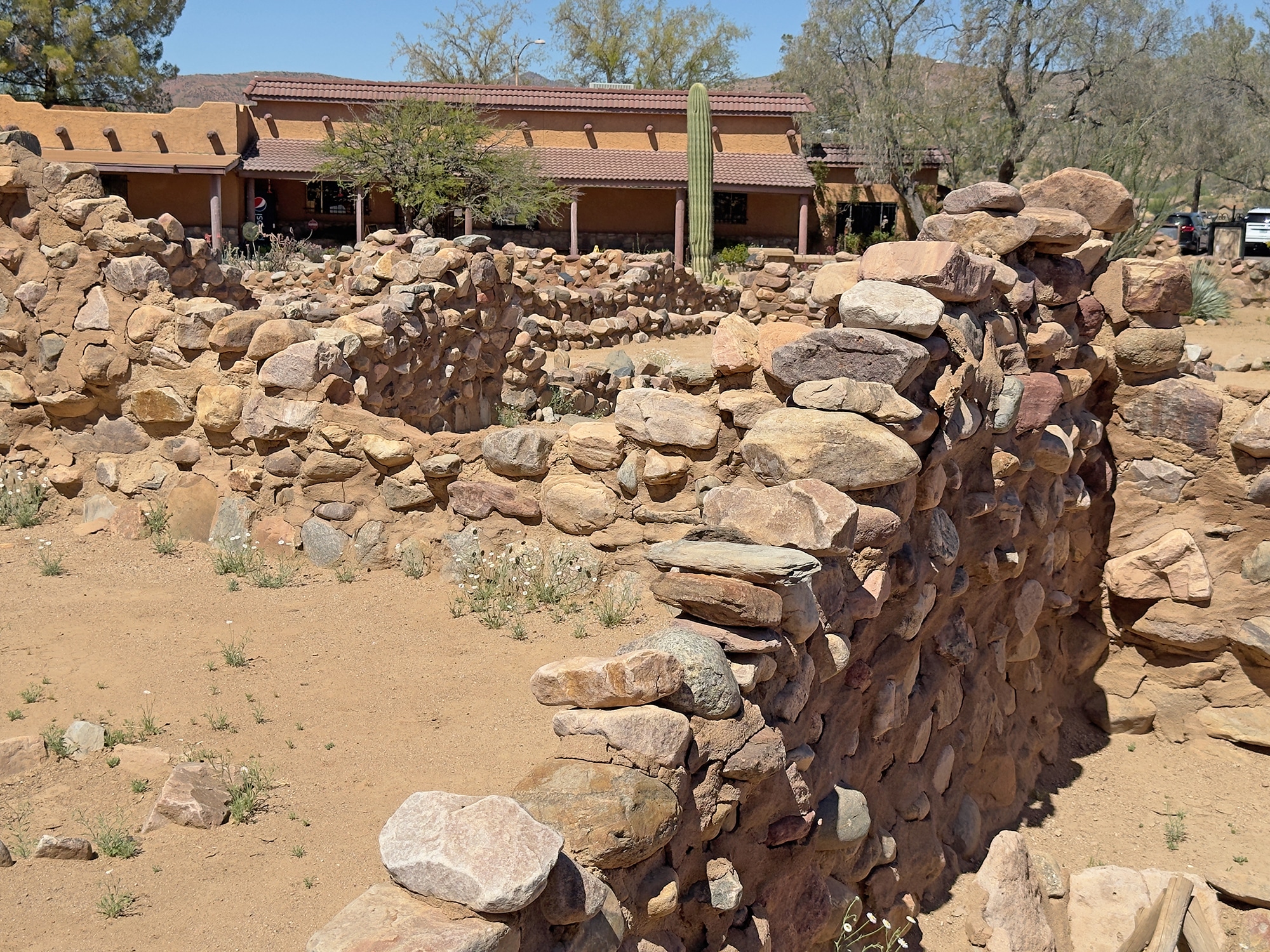
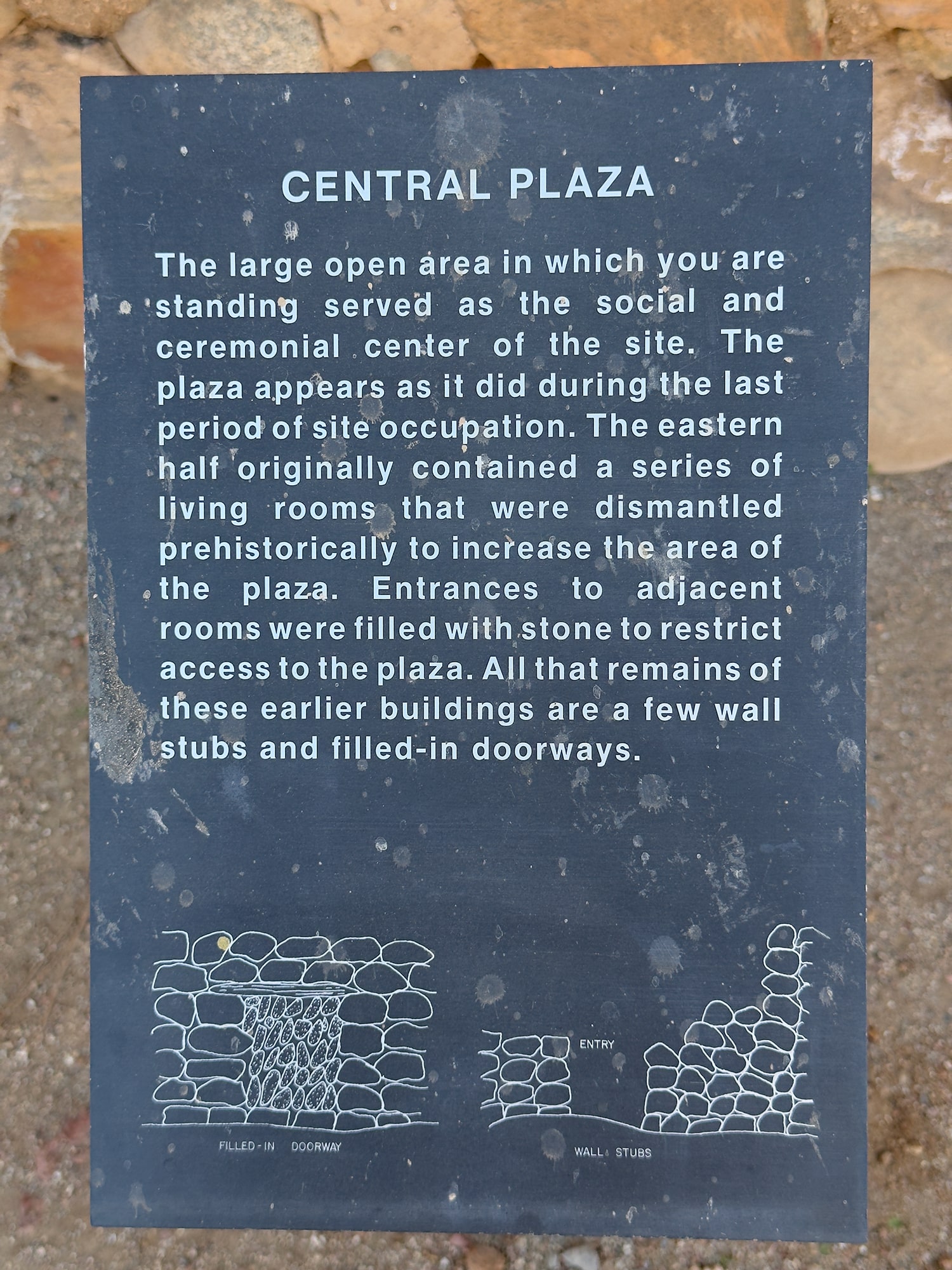
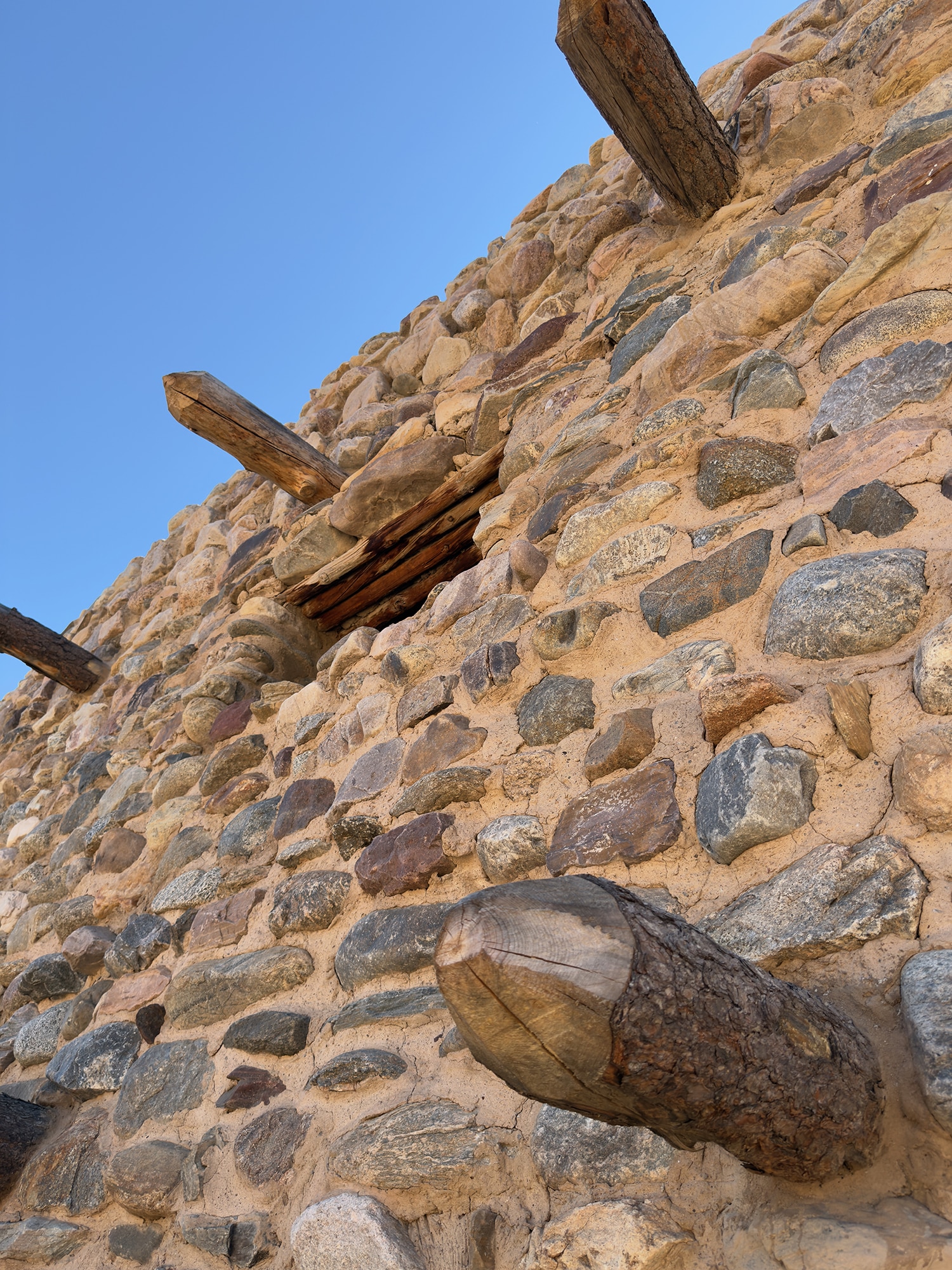
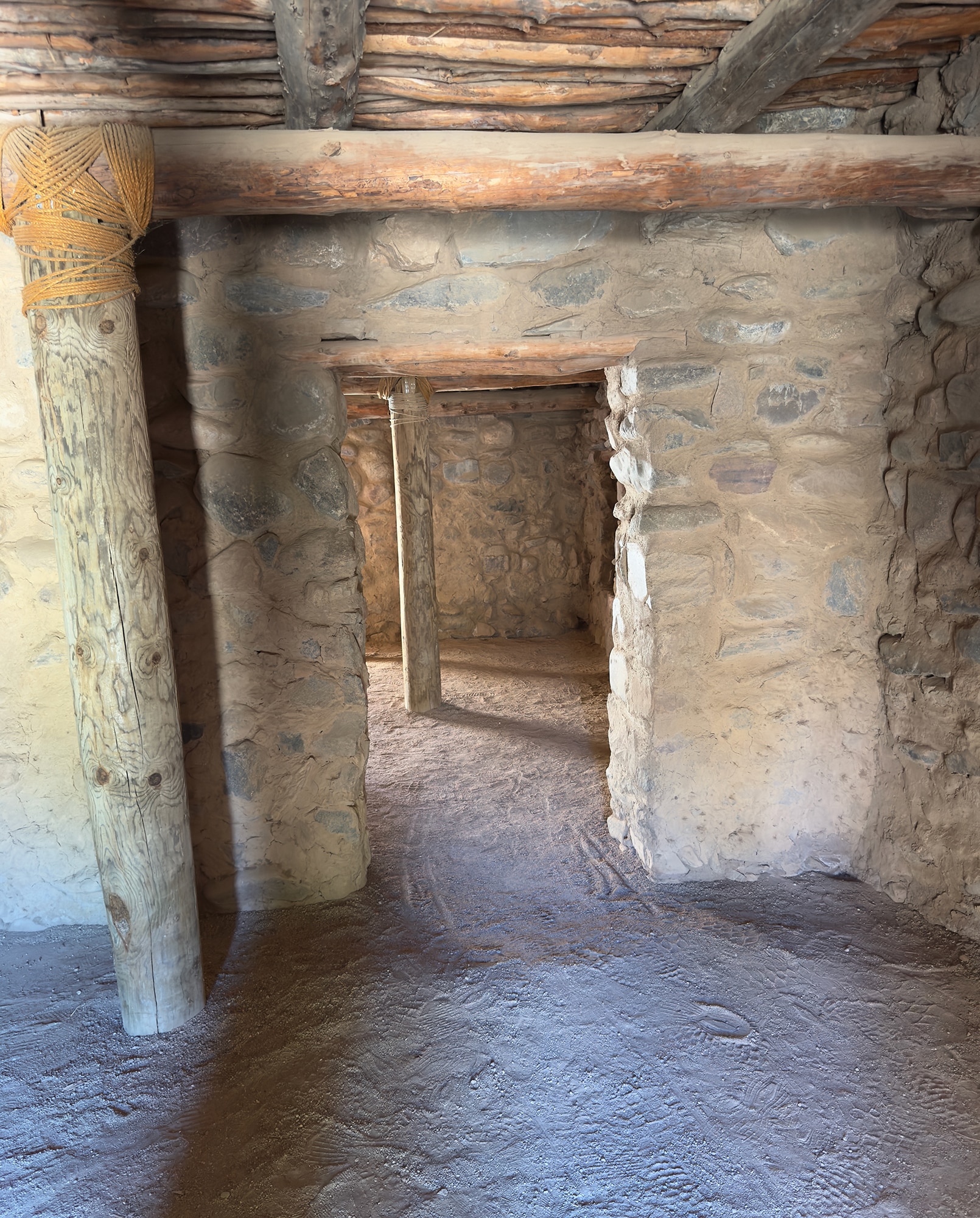
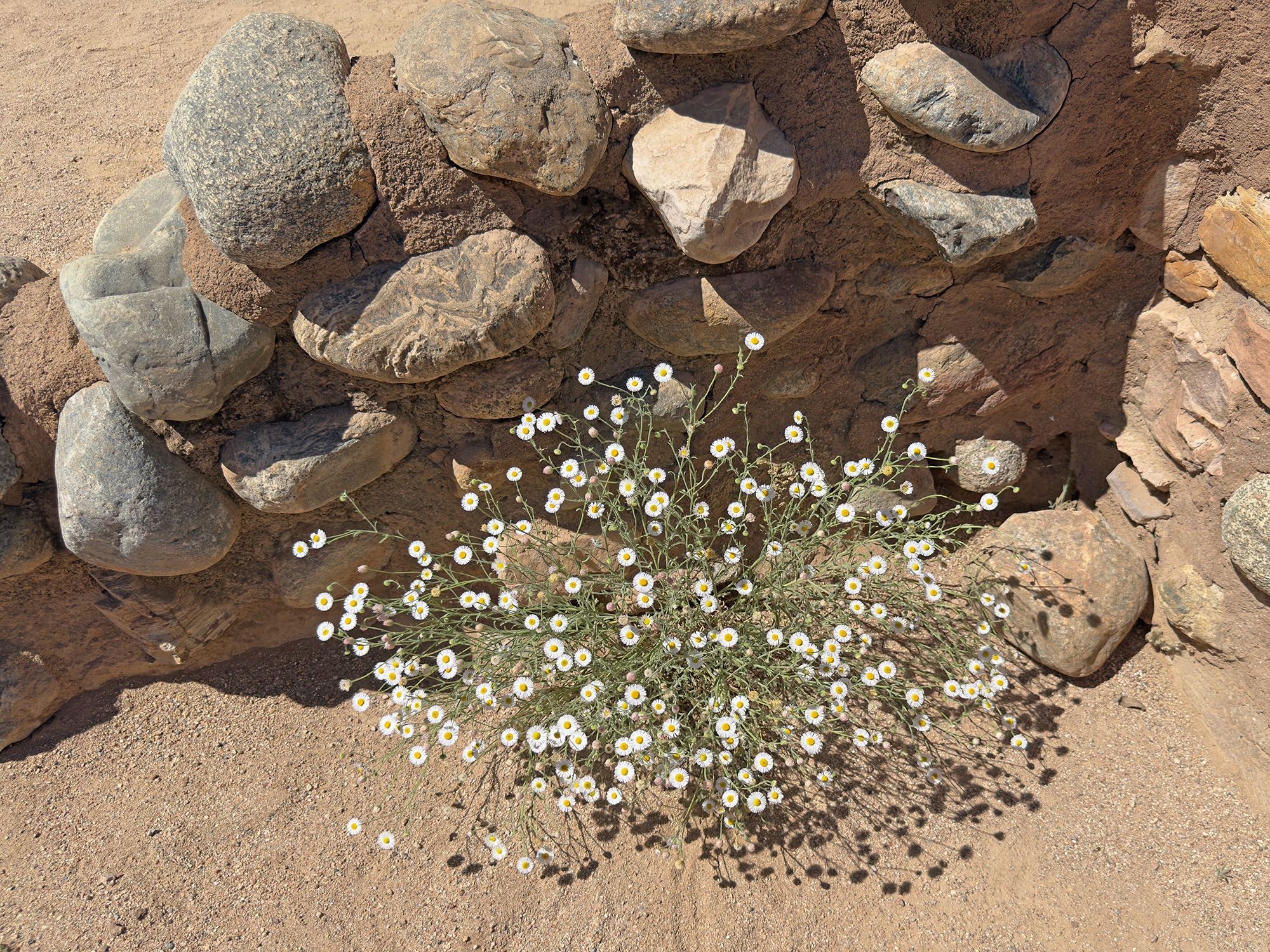
“Besh-Ba-Gowah is a 200-room prehistoric Salado masonry pueblo located atop a broad ridge overlooking Pinal Creek… “Salado” is the term applied to the complex of cultural attributes of the prehistoric peoples who inhabited the Globe/Miami and Tonto Basin regions between AD 1150 and AD 1450.
Besh-Ba-Gowah architecture consists of multi-storied, masonry room block clusters connected by long, narrow corridors or elongated plazas. These room blocks and corridors are situated around a large communal plaza area measuring 12 meters north–south by 27 meters east/west.
Material recovered from Besh-Ba-Gowah has formed the foundation for the profession’s current understanding and definition of the Salado culture concept. Thus, Besh-Ba-Gowah is considered one of the Salado culture “type sites”. ~ READ MORE
Theodore Roosevelt Lake
When we visited some friends in Roosevelt Lake, AZ nearly four years ago (day trip #4 of Day Trips x4) it was quite a haul there and back from our condo in Peoria.
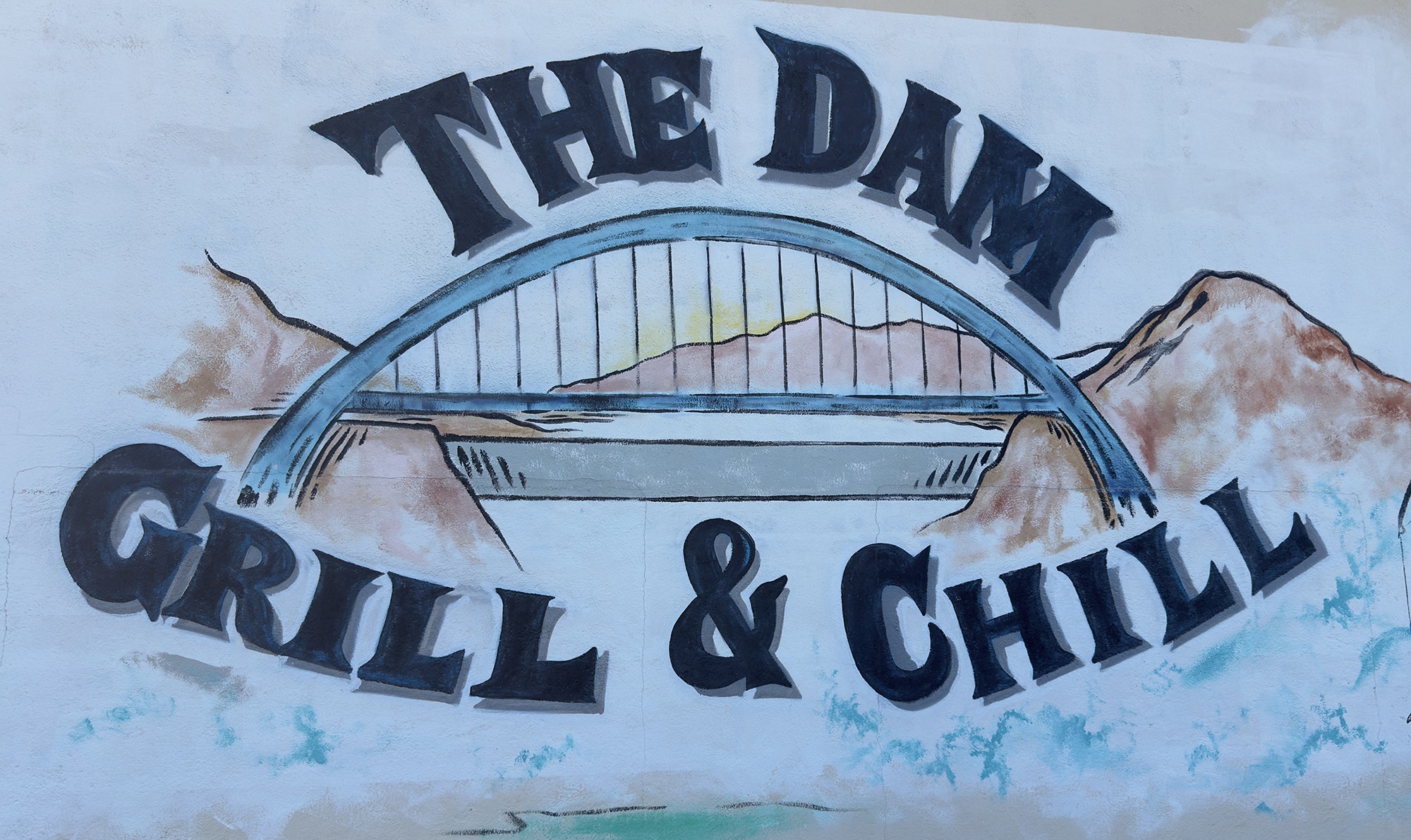
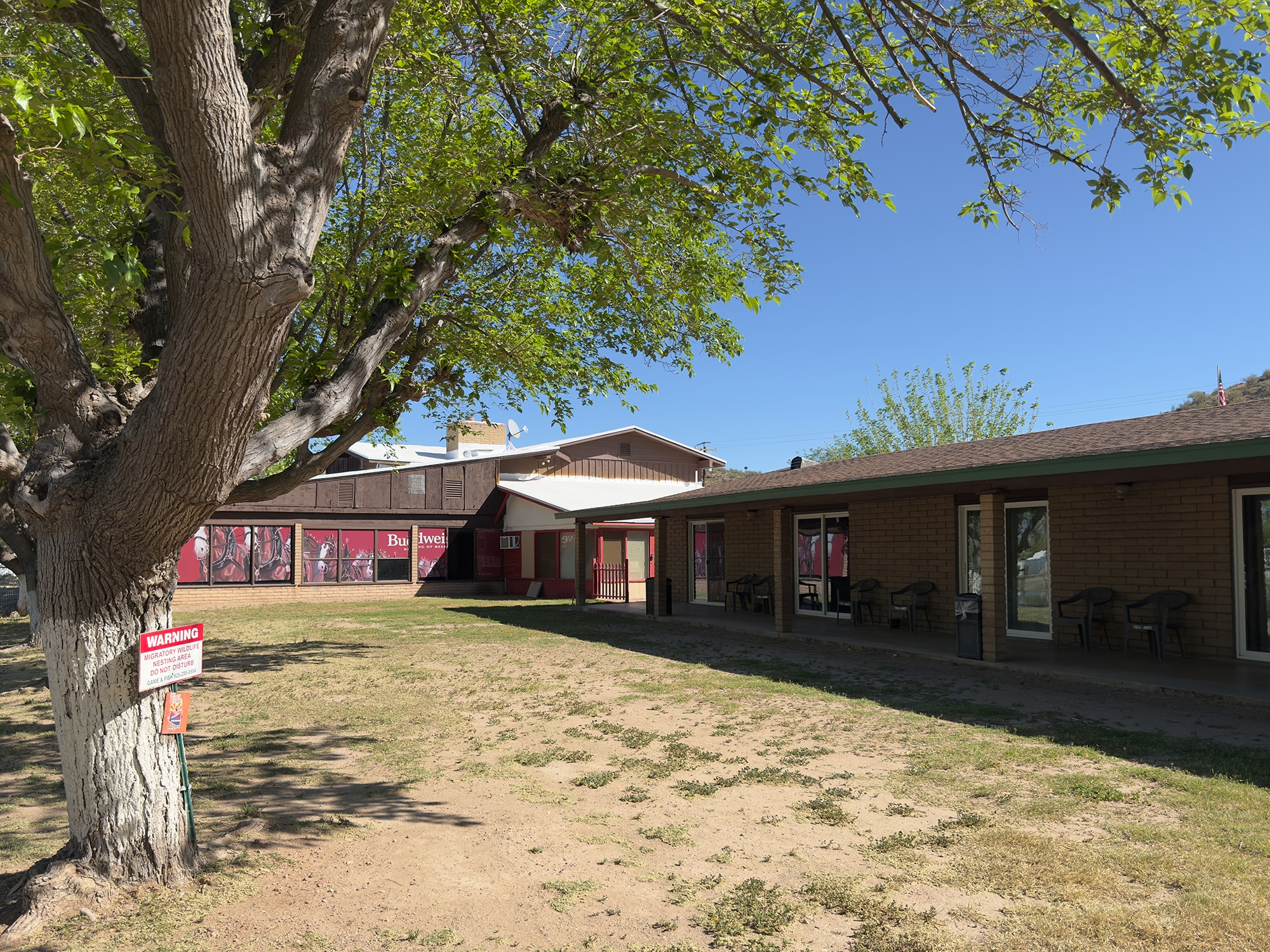
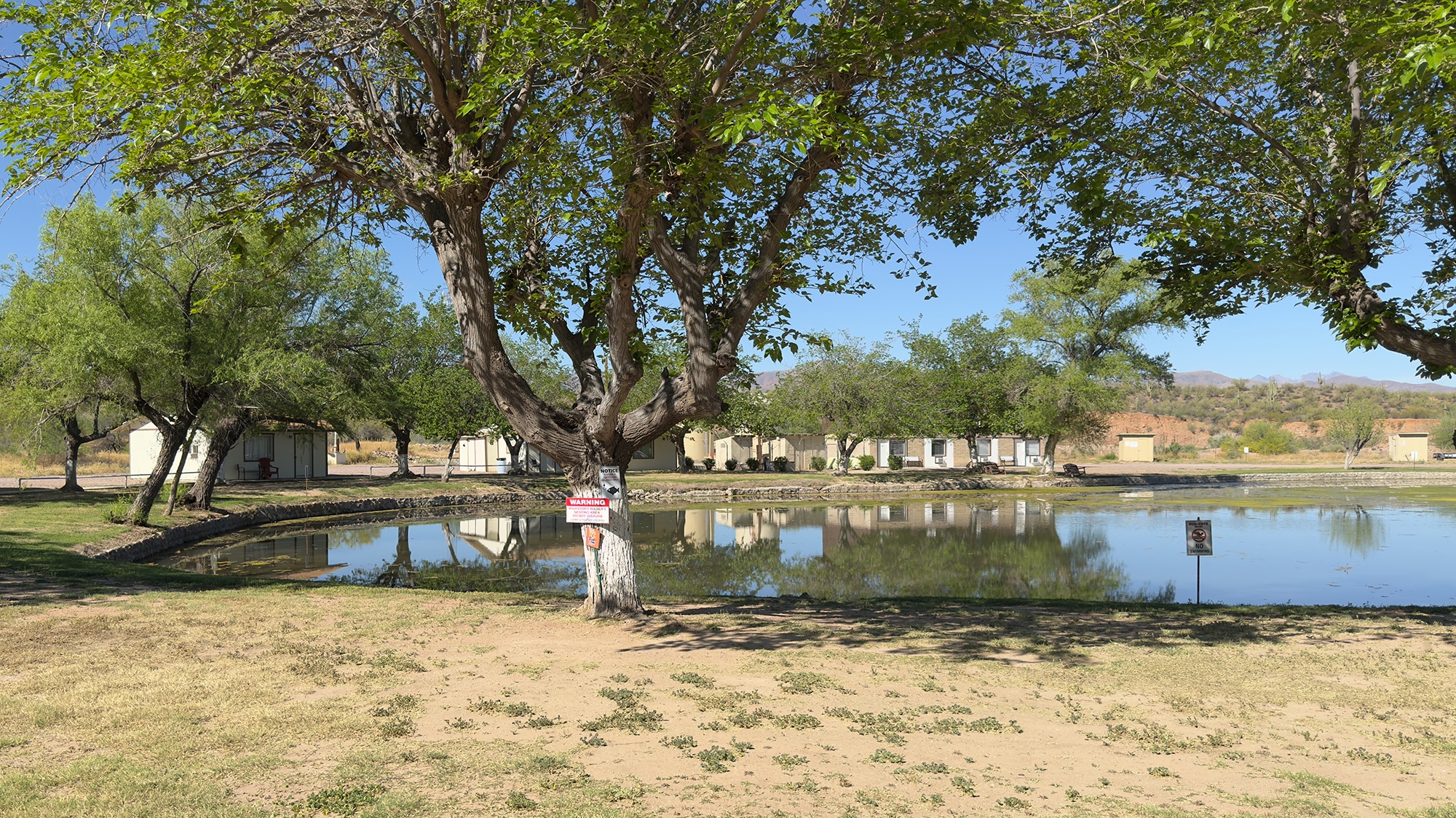
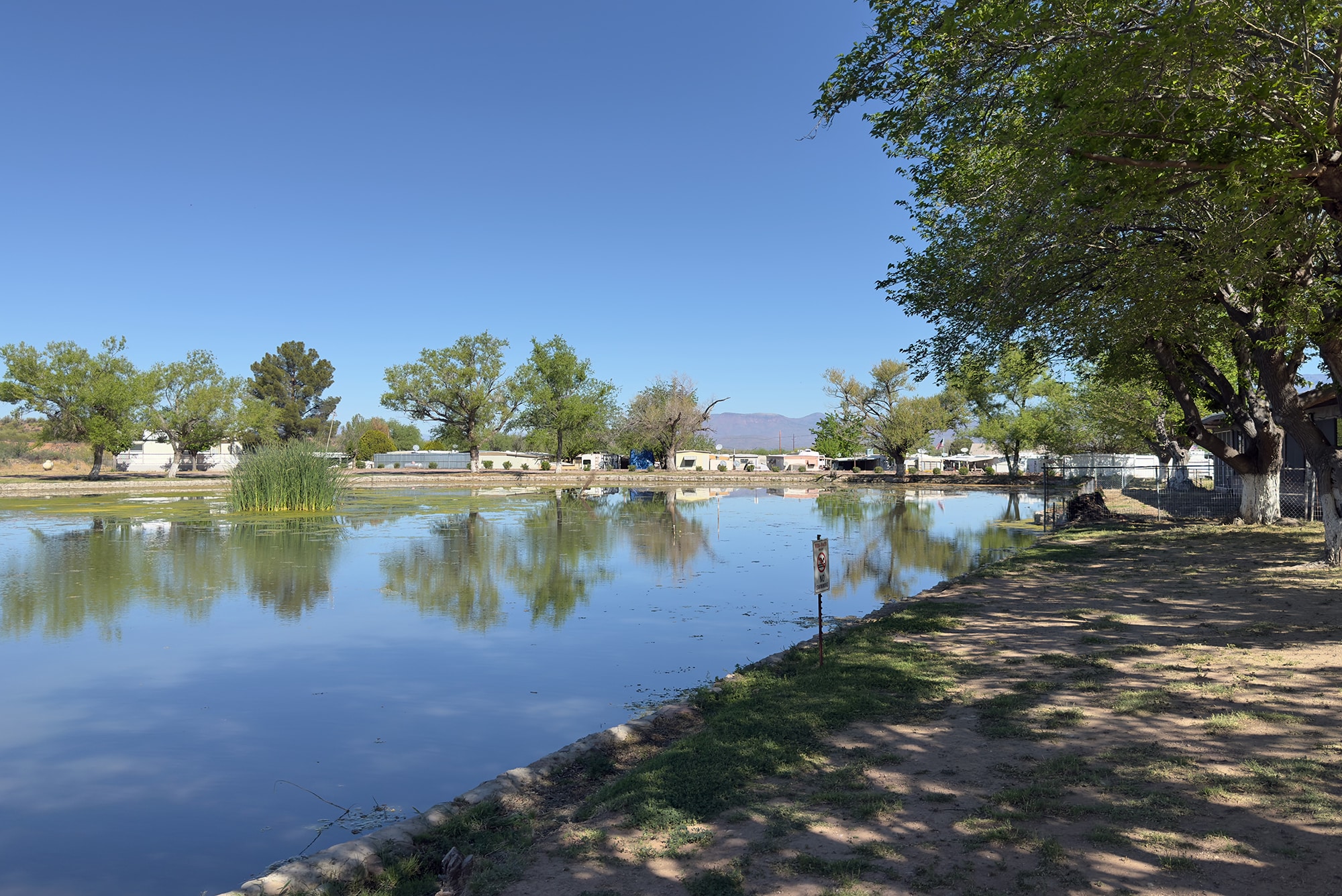
On this trip – since we were already pretty far east – we decided to visit again, but stay overnight at the Roosevelt Resort Park. Although the Resort Park was a pretty old motel, it was clean, updated and our room was pretty large with a “lake” view. Although not a Roosevelt Lake view, its location still made this place a great choice. It was right around the corner from the Dam Grill & Chill where we enjoyed a beverage and some outstanding pizza. The next morning, we were very close to the rest of our stops in the area.
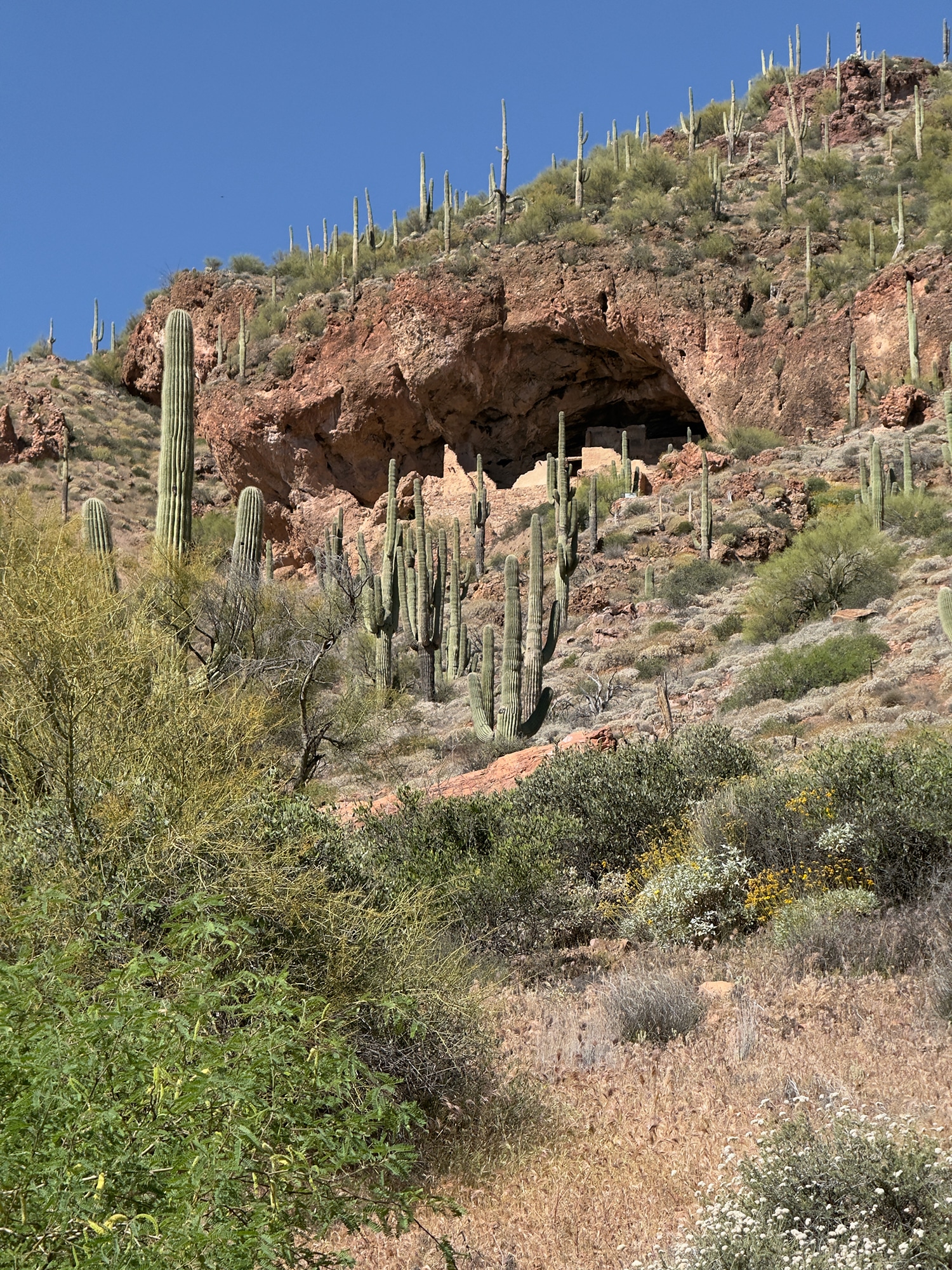
Tonto National Monument
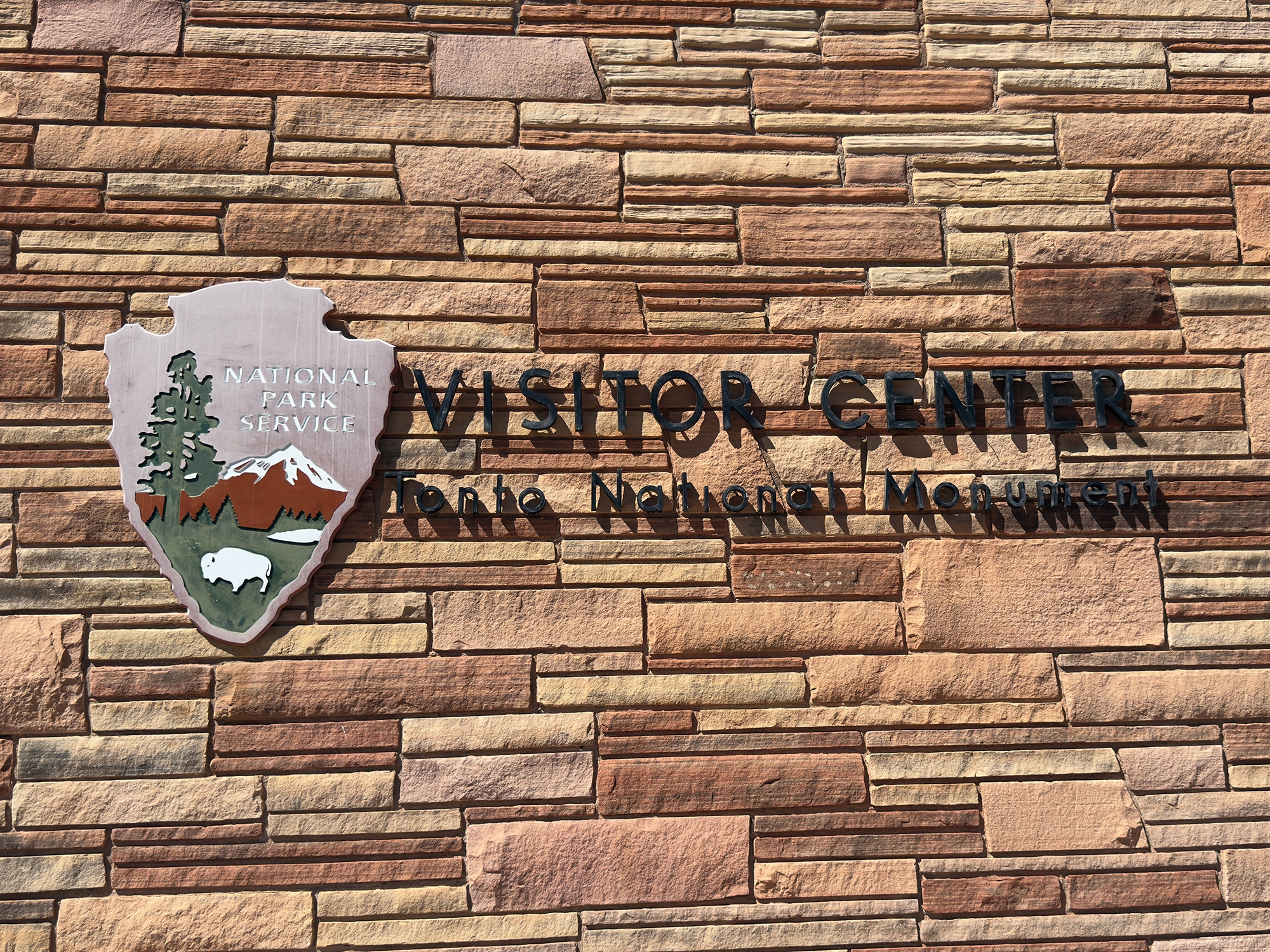
Of course we had road construction, but it didn’t affect us too much with only an 11-mile drive to the Tonto National Monument. We arrived safely and our normal m.o. is to start in the Visitor Center, to check out any must-haves and any extra information we might gather.
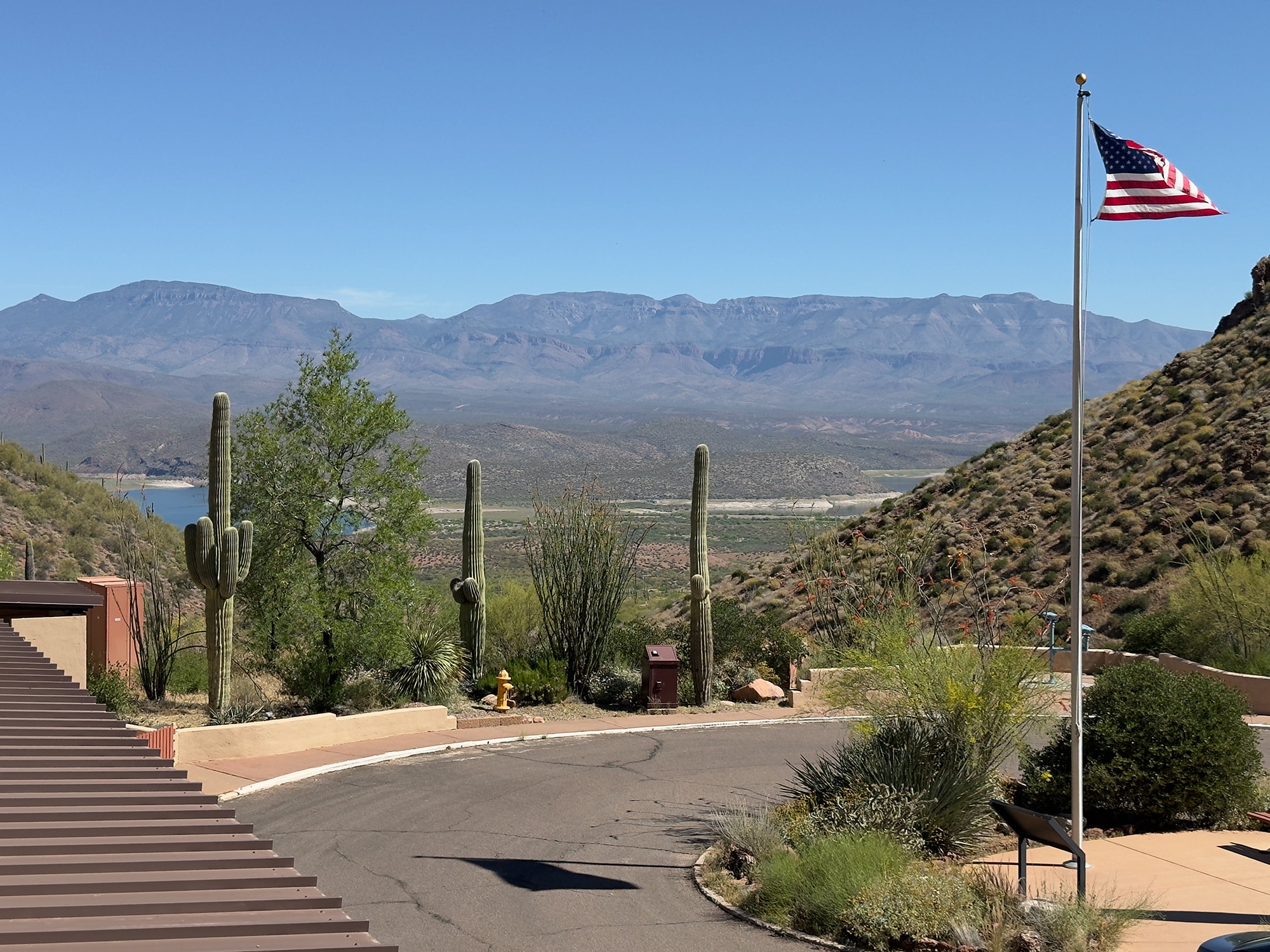
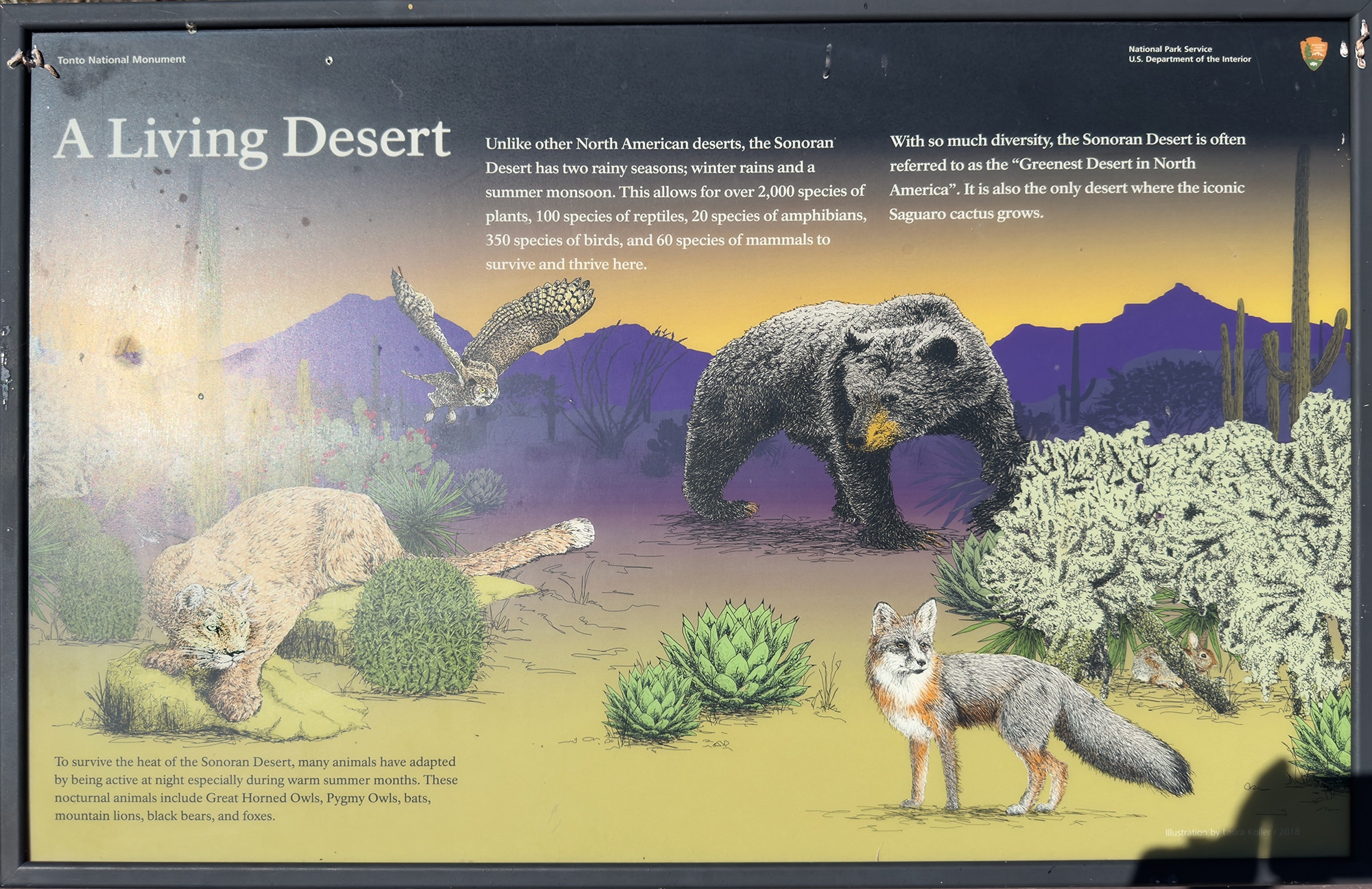
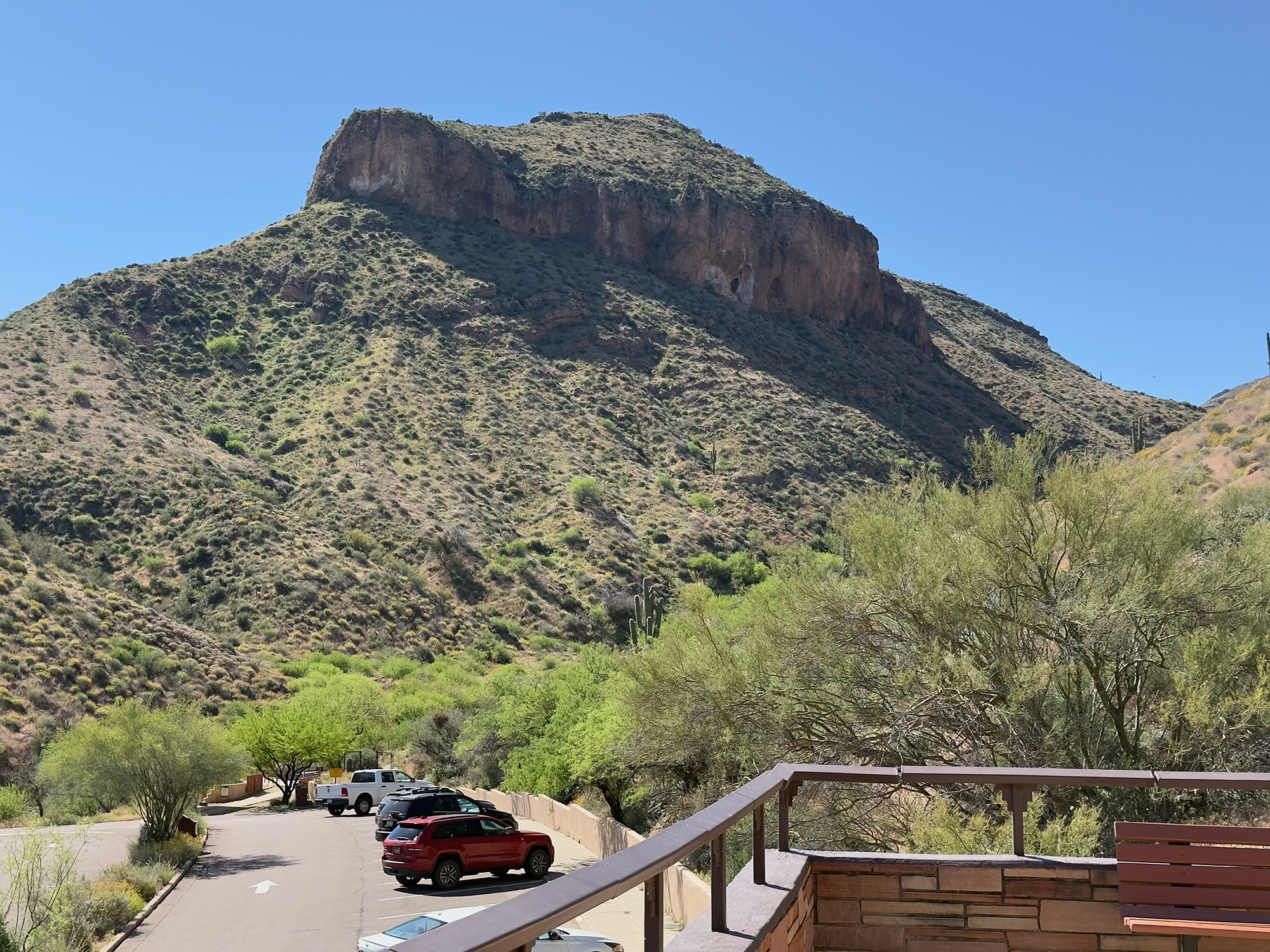
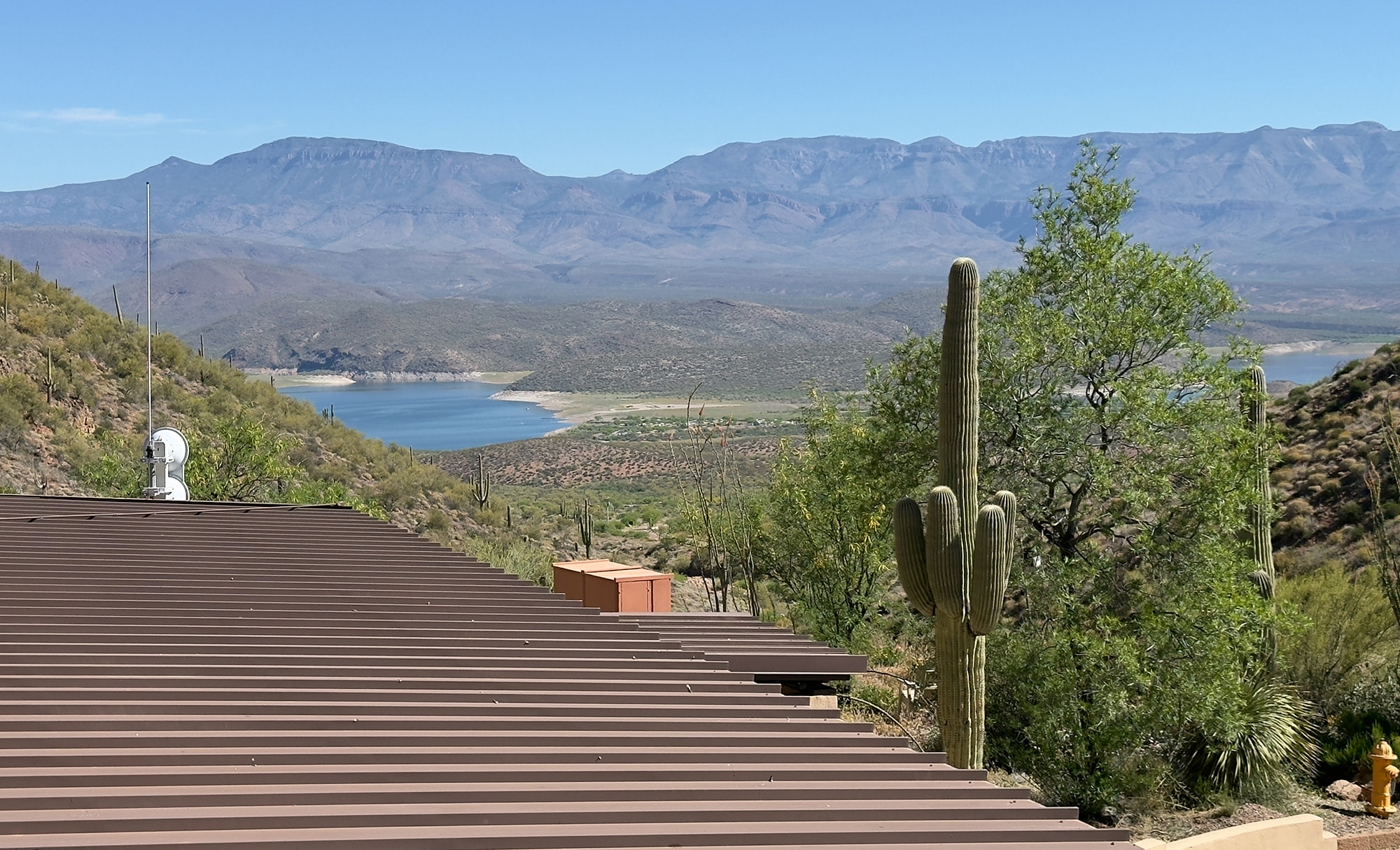
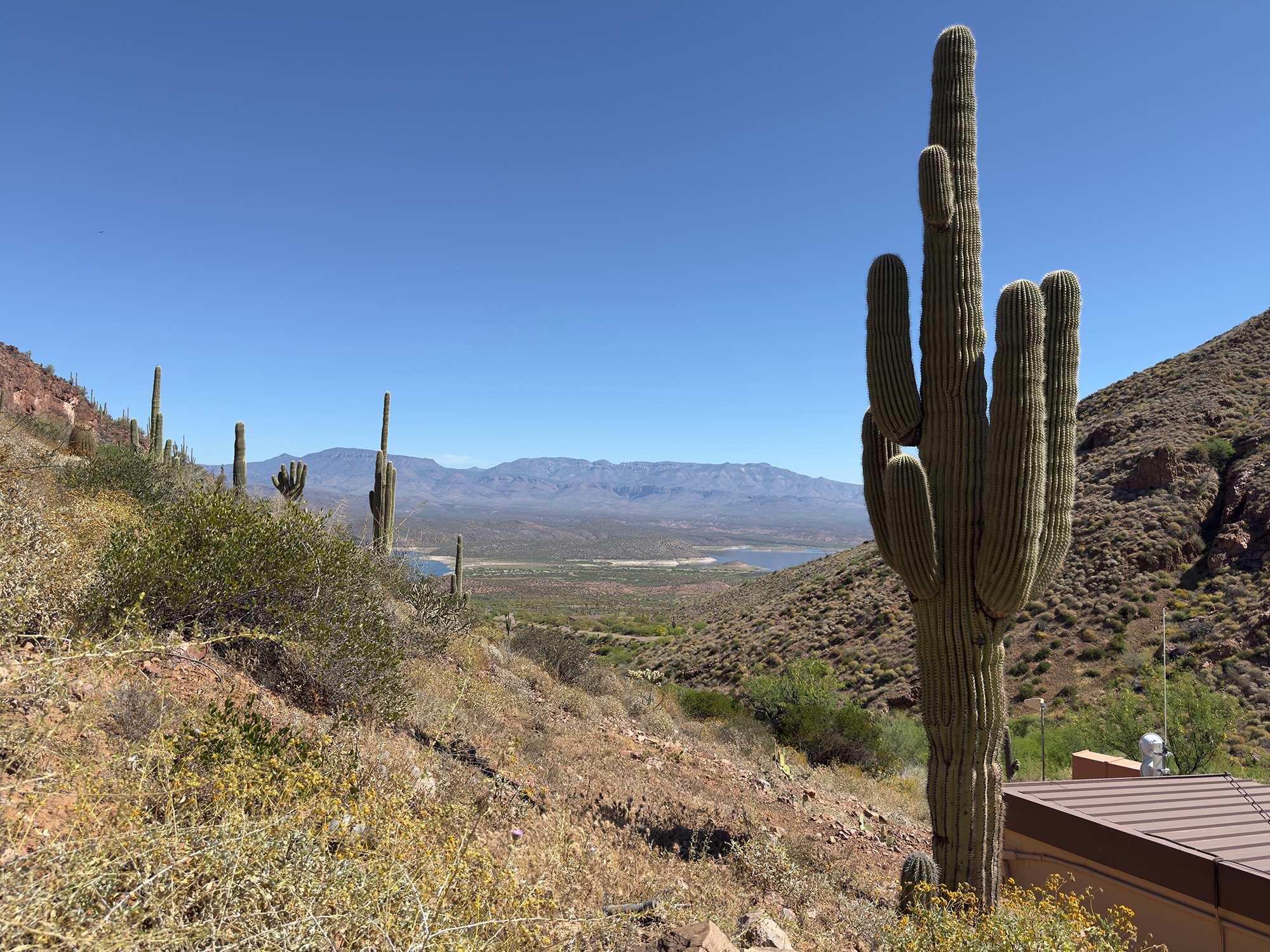
We were directed to the second floor where a video runs pretty continuously with lots of history regarding the inhabitants of the cliff dwellings over the years. There is more info on the website at Learn About the Park > History & Culture > People. Also, from the second floor vantage point, there are fantastic views of the lake and back up the mountain.
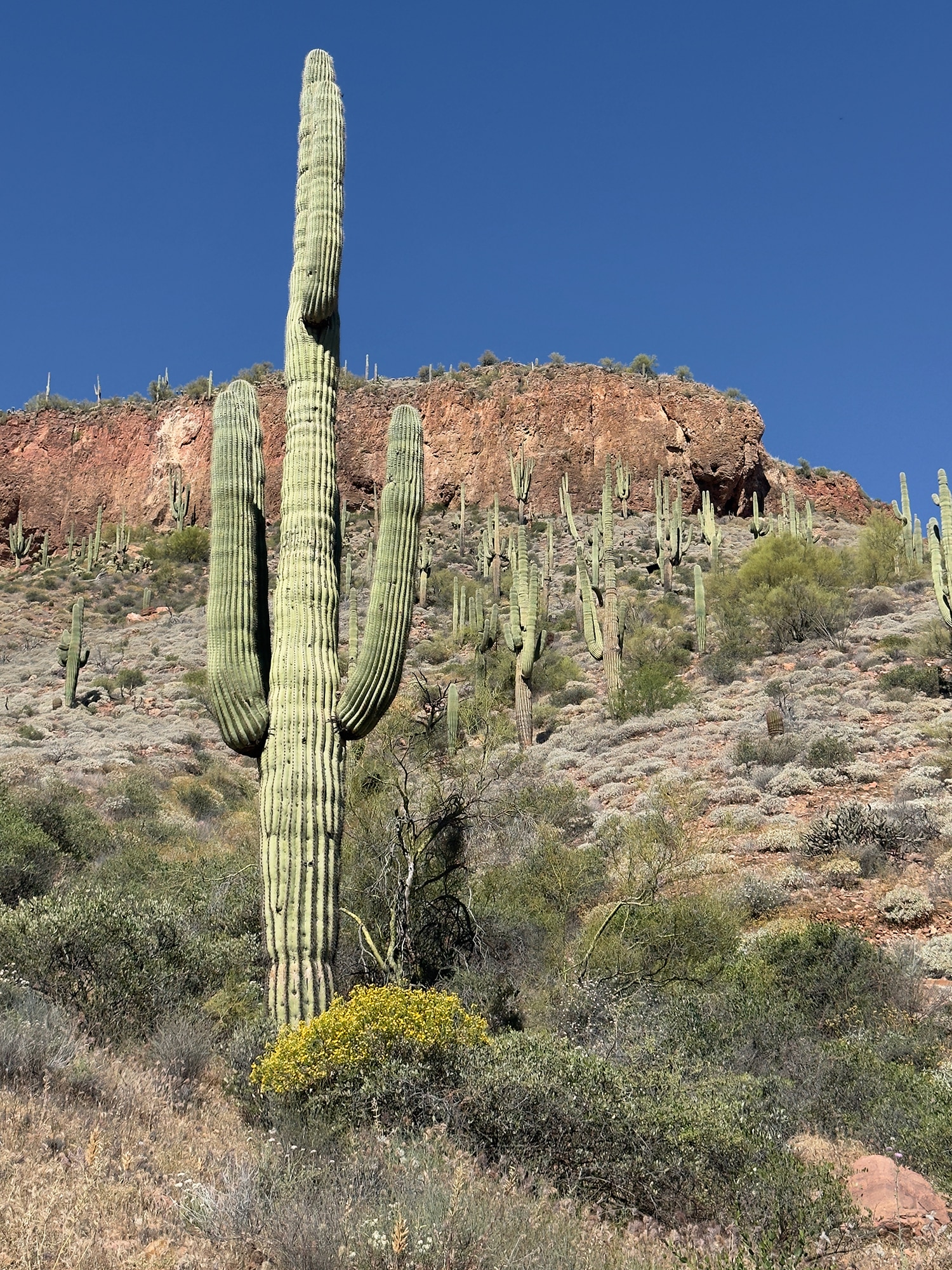
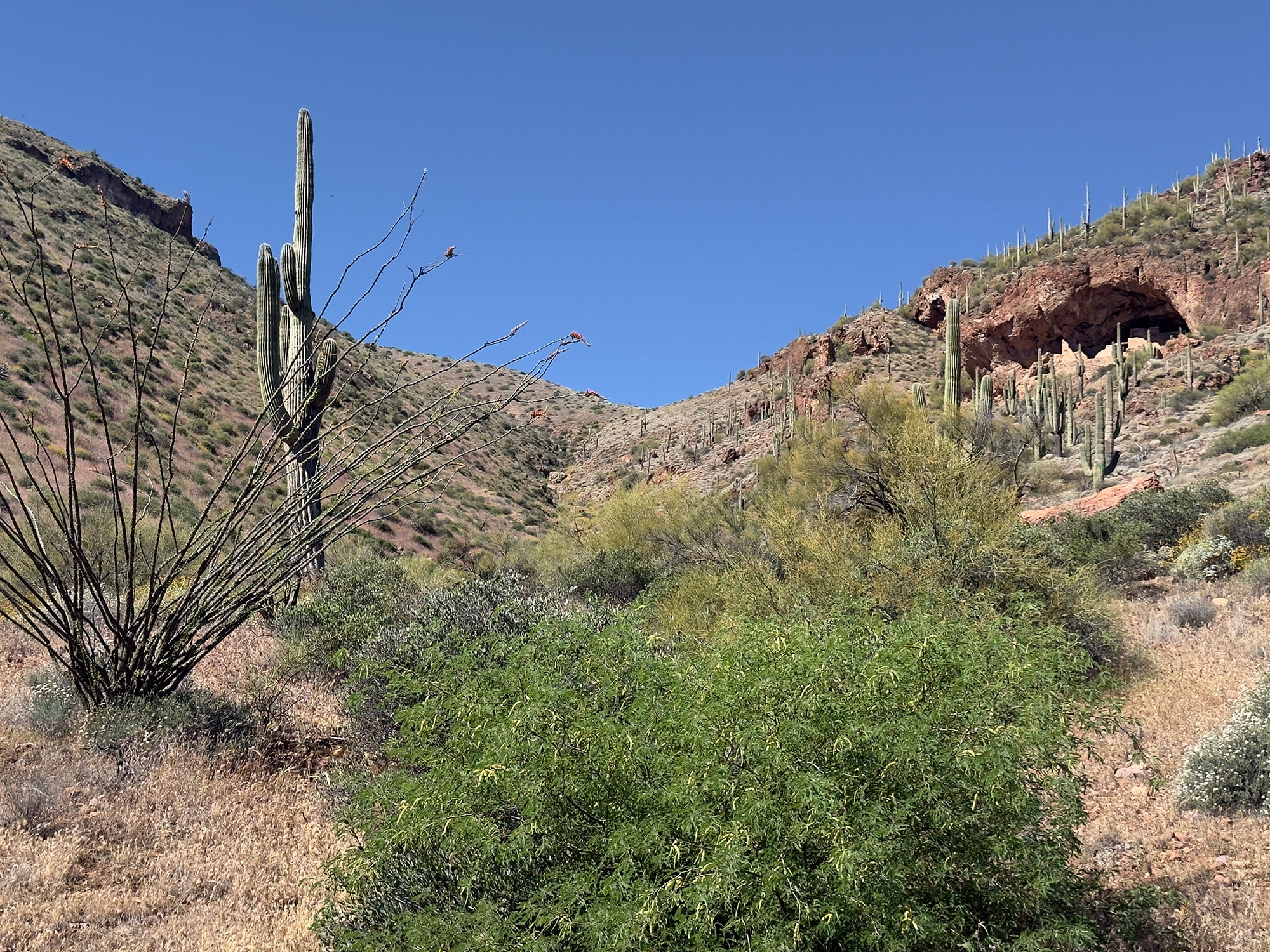
“Located within the northern range of the Sonoran Desert lie two cliff dwellings that were occupied from 1300-1450 CE (common era). They represent a vibrant culture consisting of local and immigrant groups that lived in the Tonto Basin. Together they formed a new ideology, which archeologists refer to as Salado. Today, descendants of the cliff dwellers continue to call Arizona home.” ~ READ MORE
Check the Website for Hours
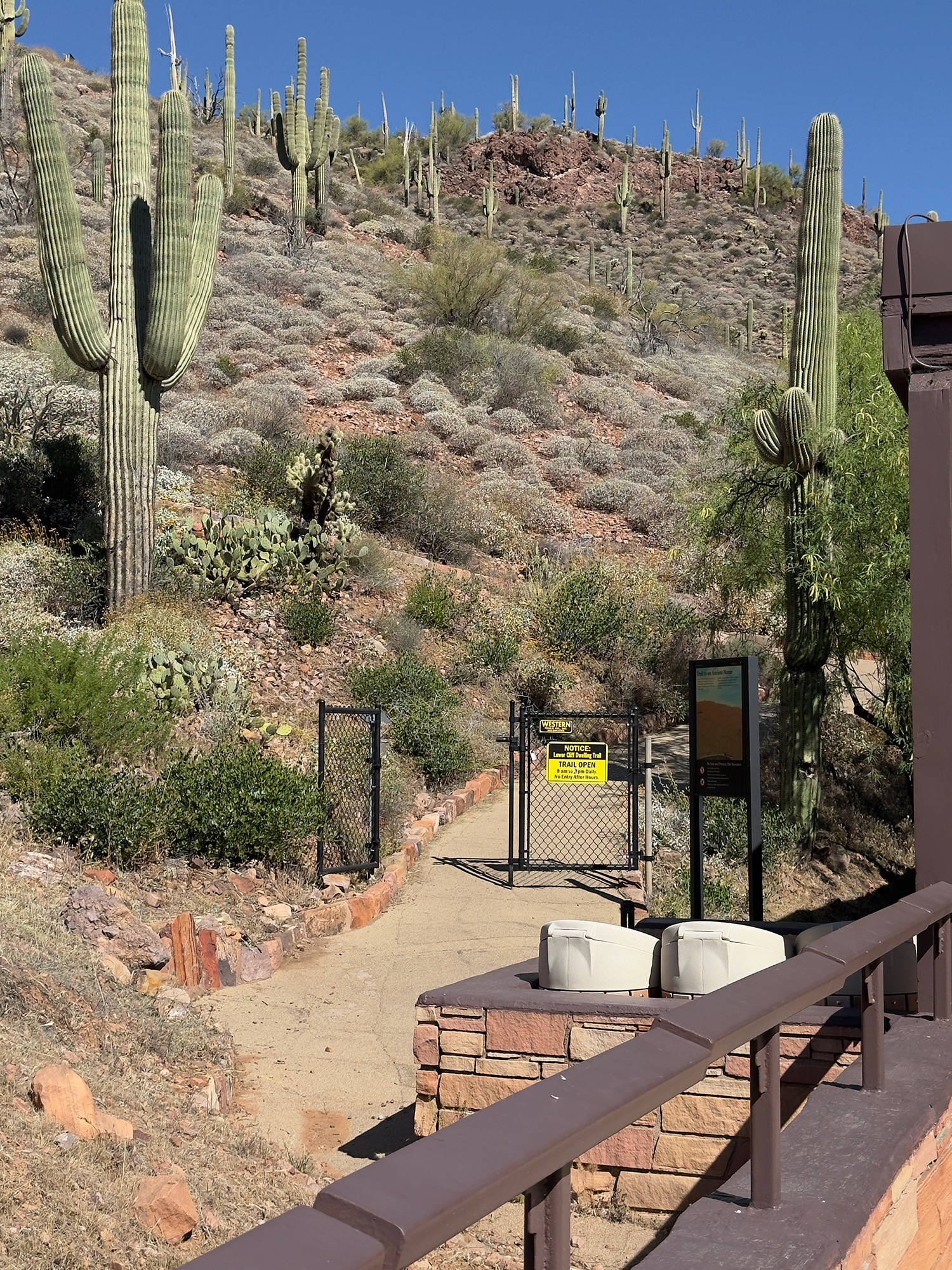
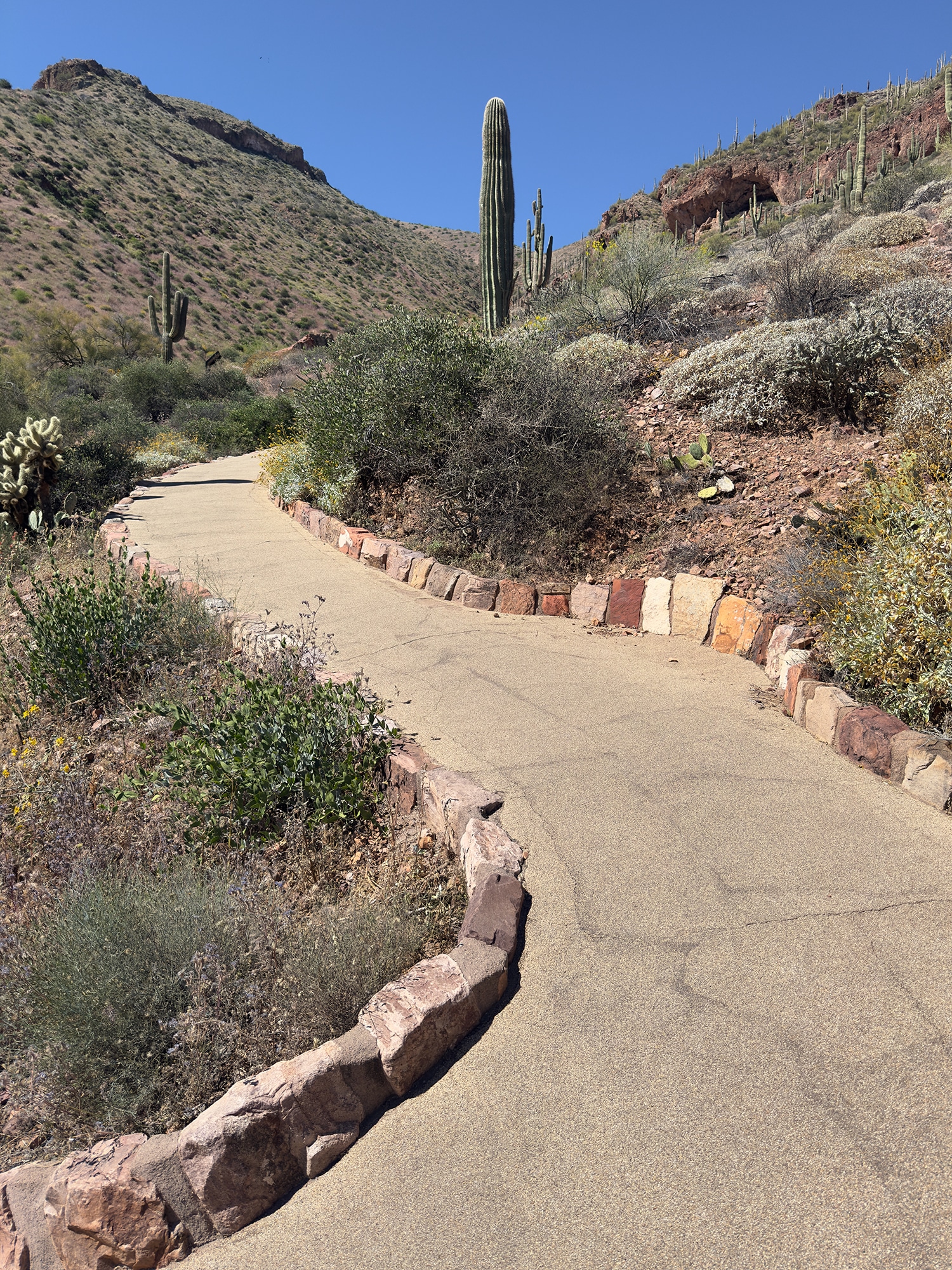
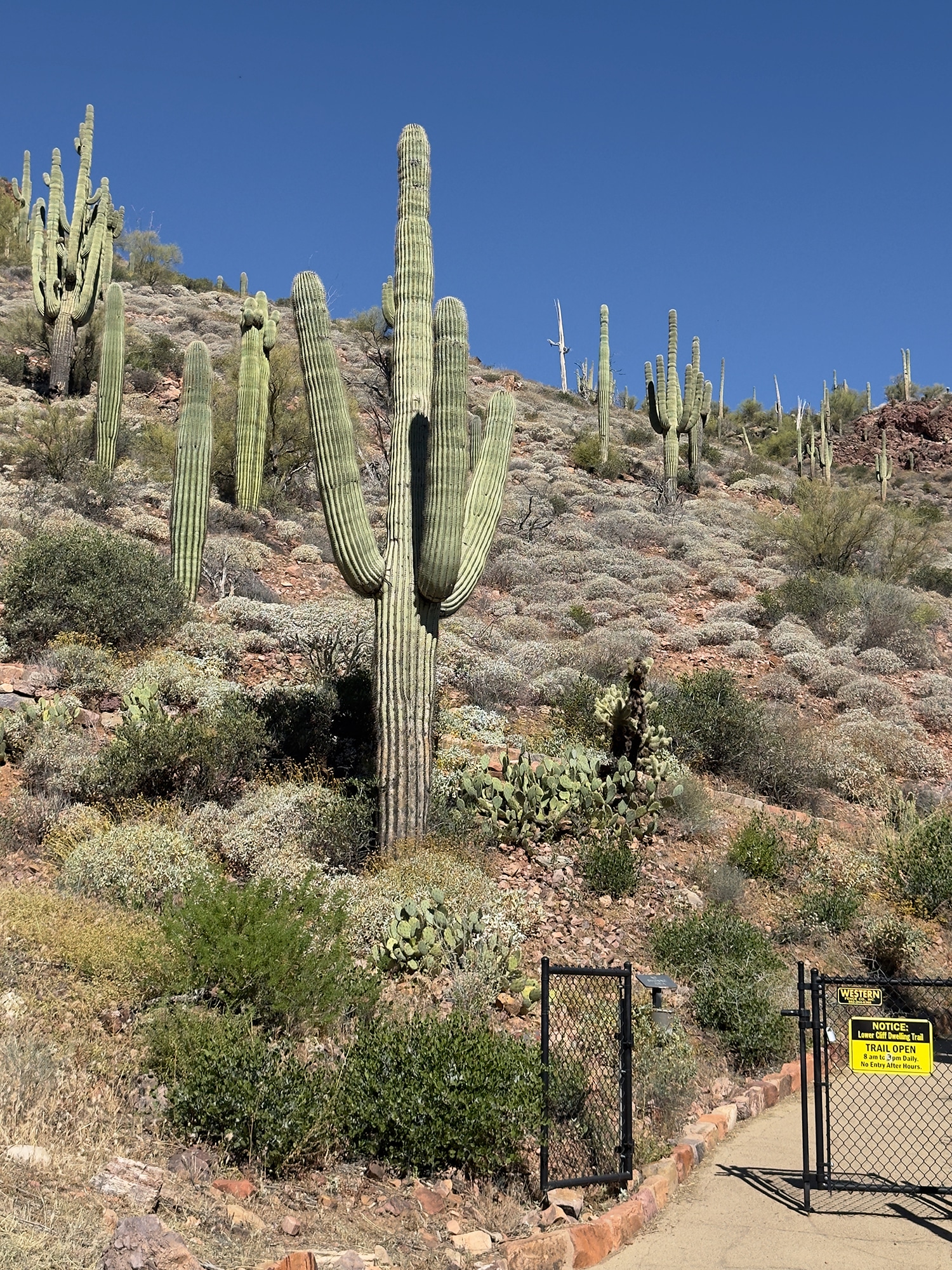
If you’re planning a visit during warmer months, be sure to check the website for trail hours because of a steep 12% grade on the lower trail. On our visit in late March all visitors hiking the Lower Cliff Dwelling Trail were required to have a water bottle with them with No Exceptions.
Right now (at the end of May) the trails may close at noon and I’m sure during the extreme heat during the summer, they may close even earlier. The Upper Cliff Dwelling is only available by guided tours November-April, Saturdays and Sundays by reservation only.
Roosevelt Lake
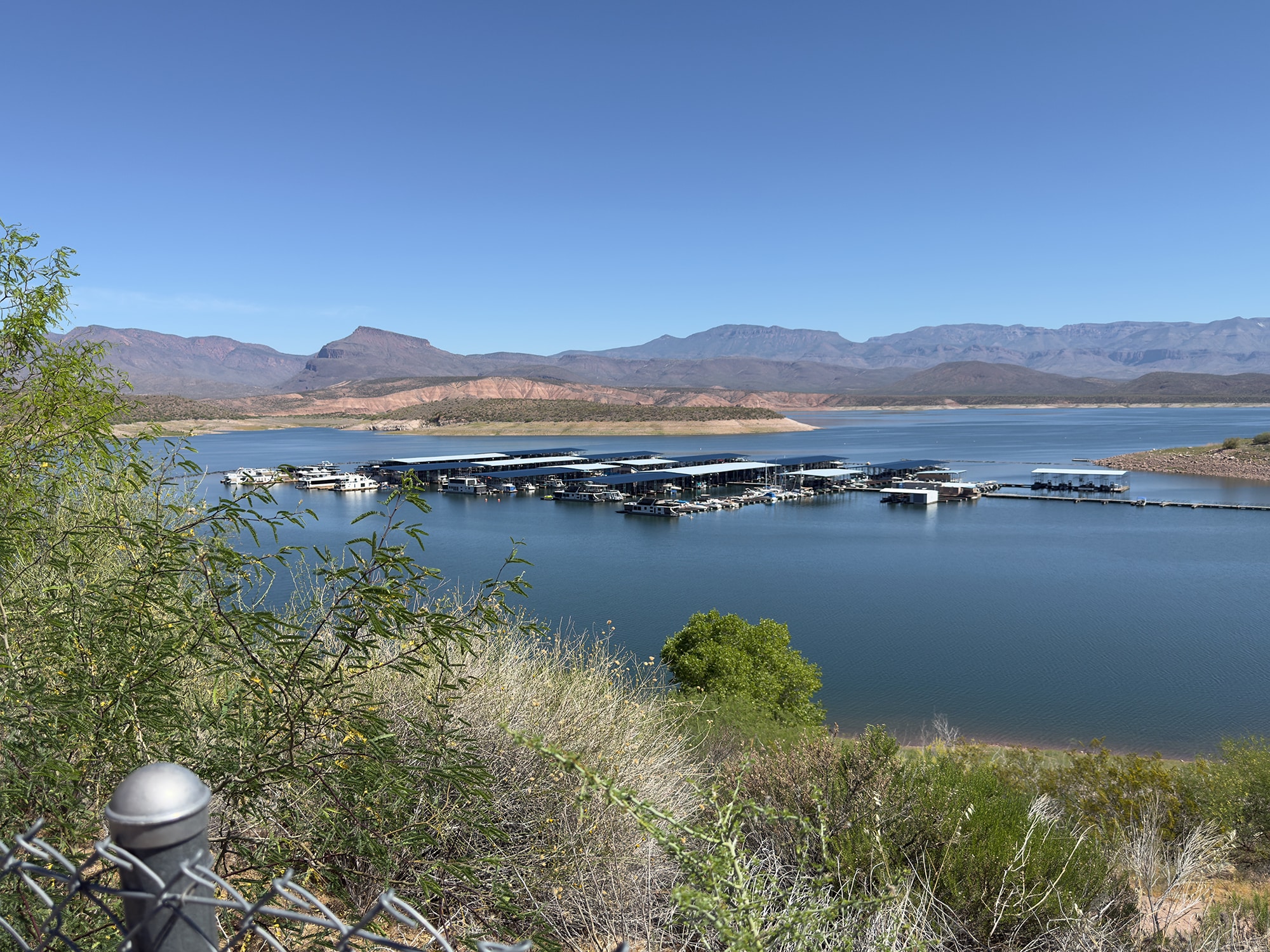
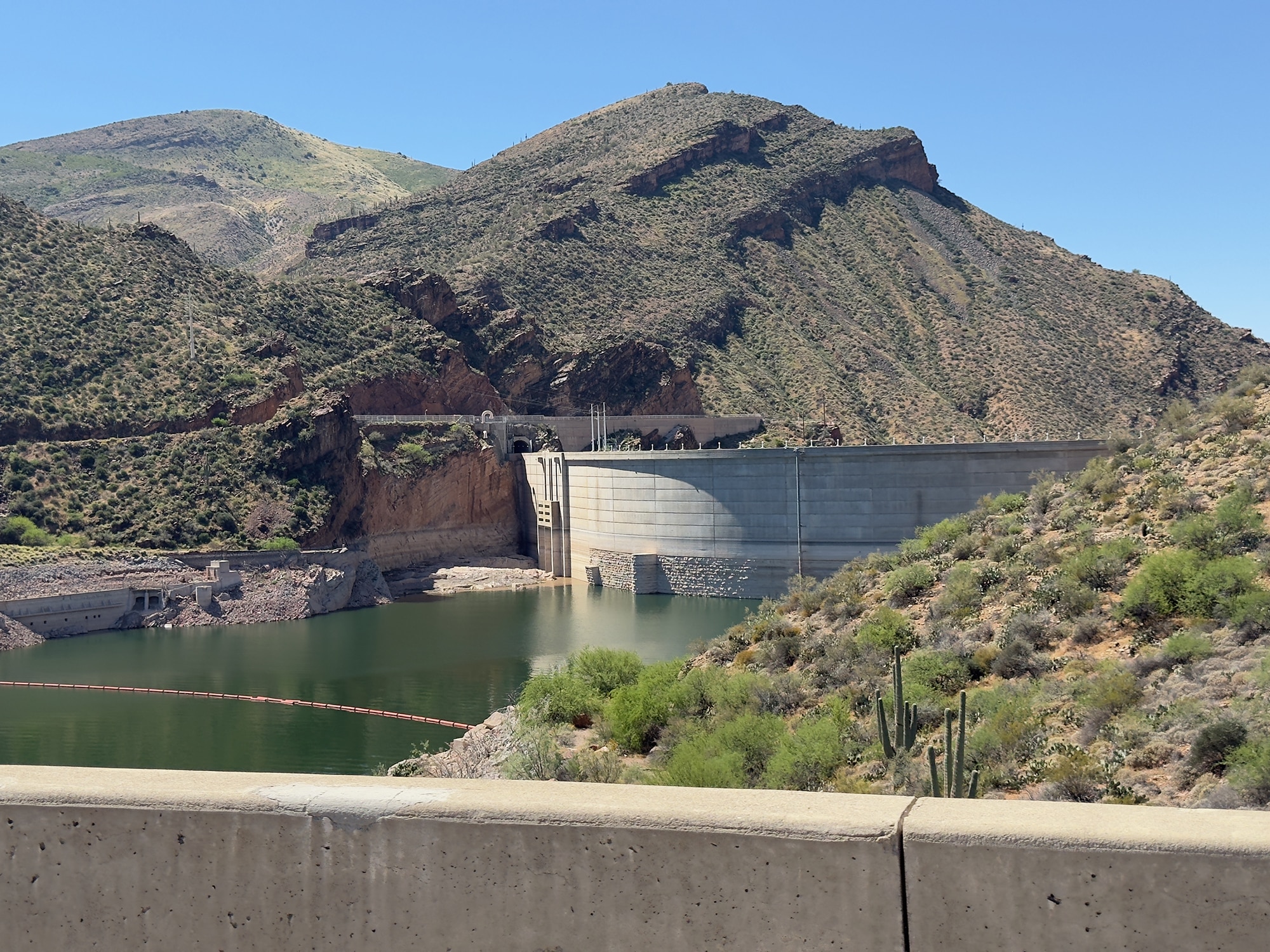
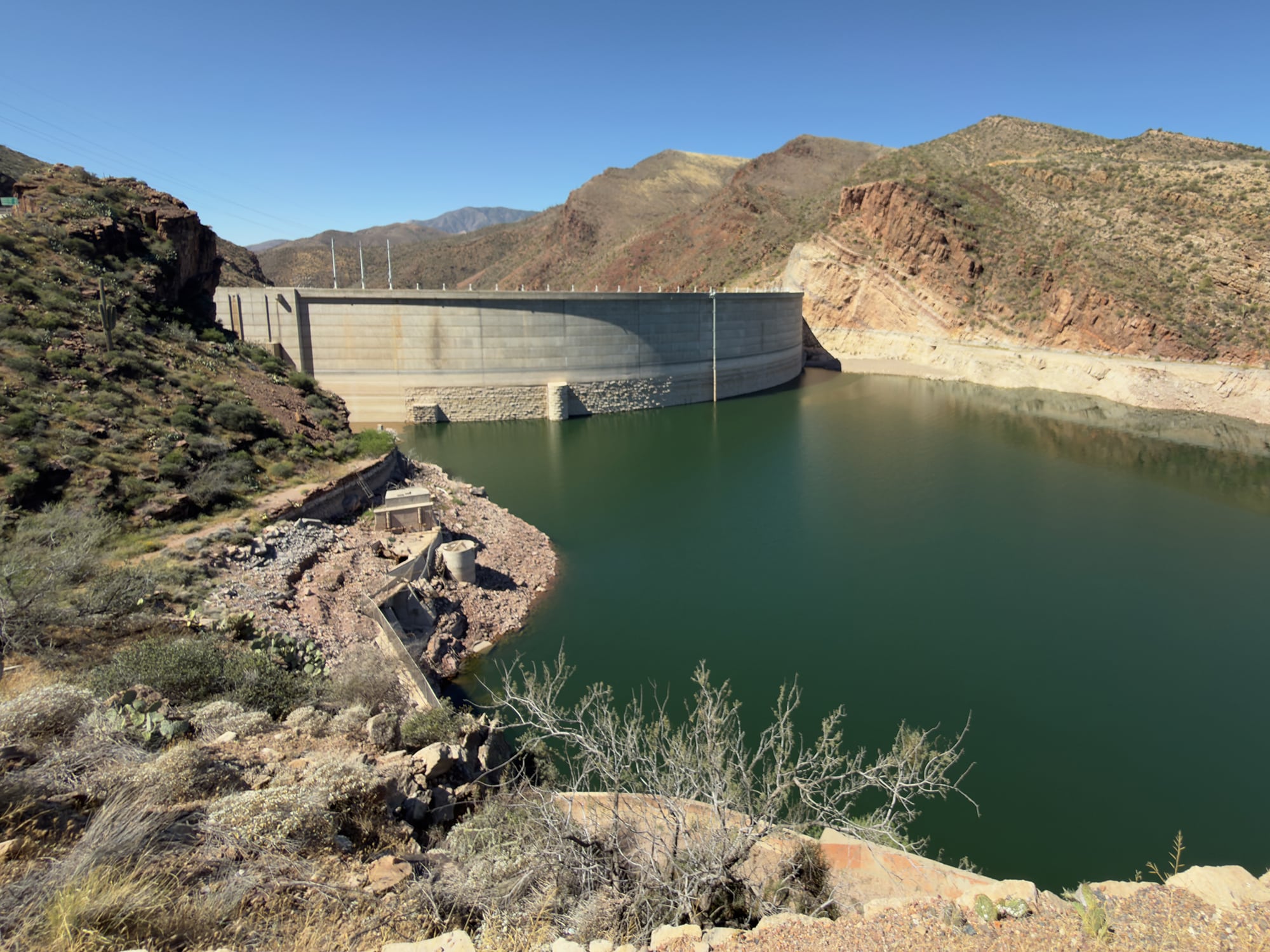
Theodore Roosevelt Lake was formed when the Roosevelt Dam was built on the Salt River between 1905 and 1911. The masonry dam and the reservoir it created were named after U.S. President Theodore Roosevelt, who dedicated the dam on March 18, 1911. Roosevelt Lake is the largest lake located entirely within the state of Arizona.
Although there are seven dams and lakes that were created by The Salt River Project (SRP), Roosevelt was the first, and the only one we’ll see today. There is great information at the SRP link if you’re interested in more history on the project. And be sure to take a look at our first road trip blog (Escape the Tundra) where we drove part of the Apache Trail and saw two more of the lakes along the SRP.
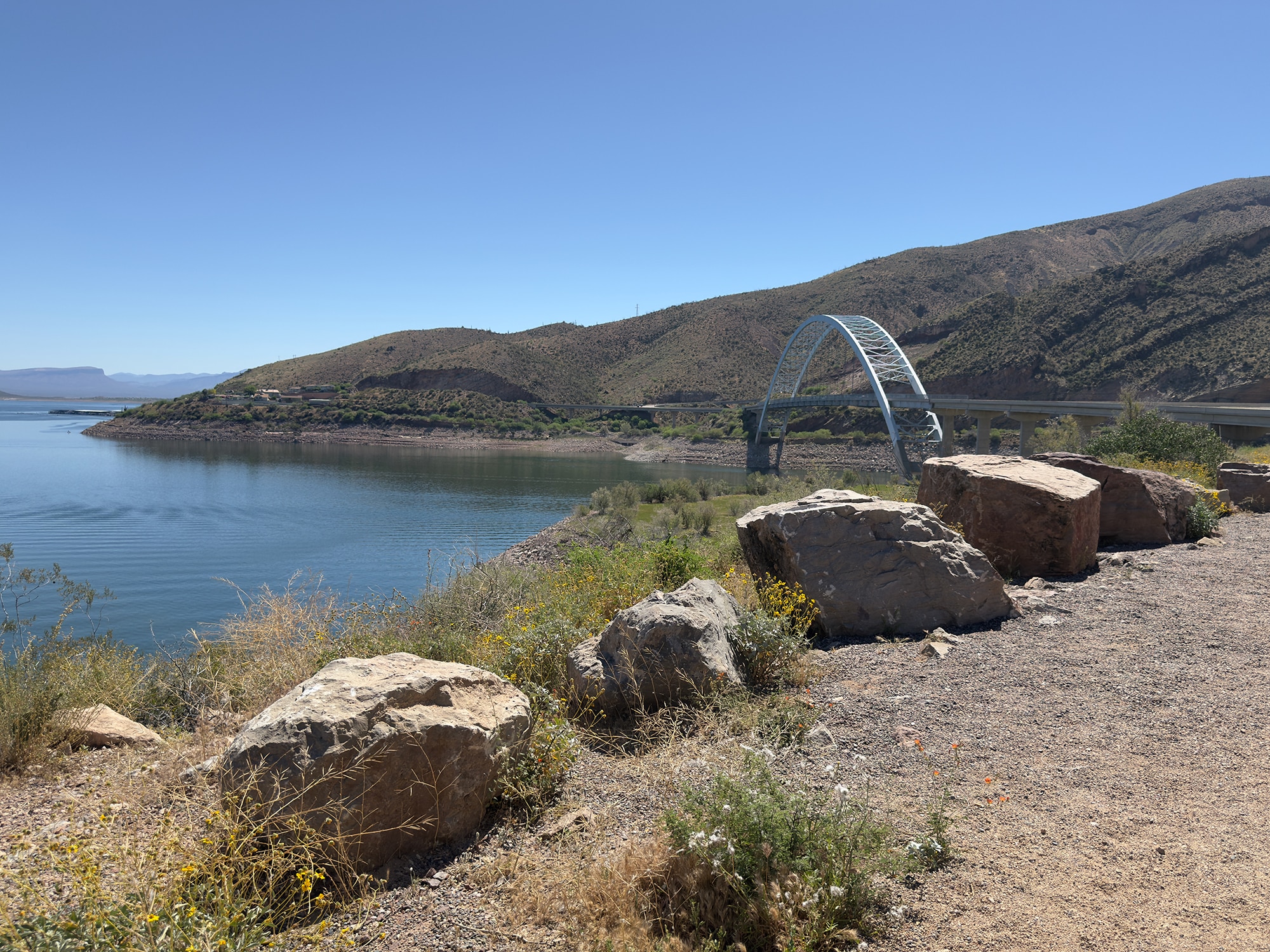
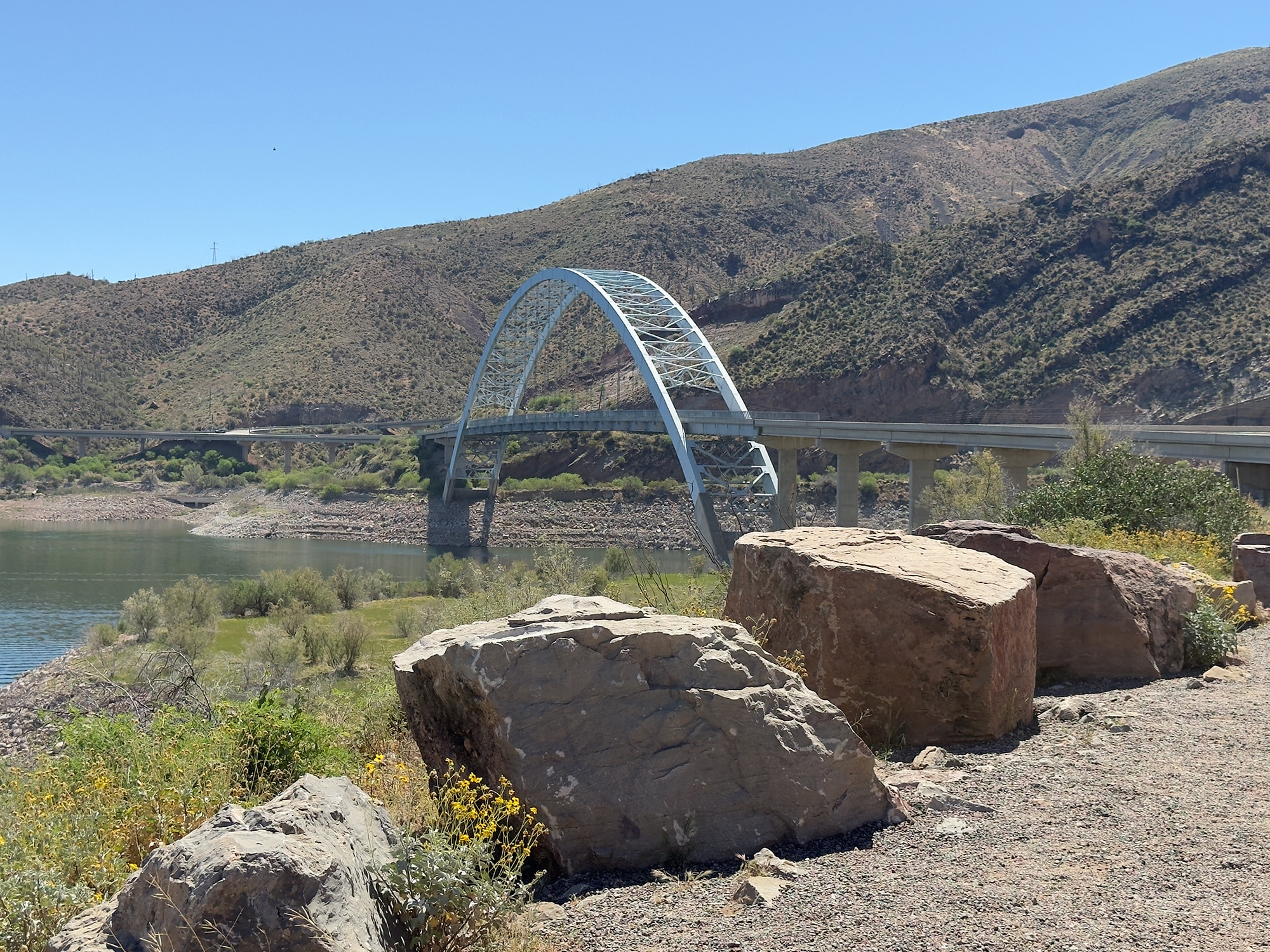
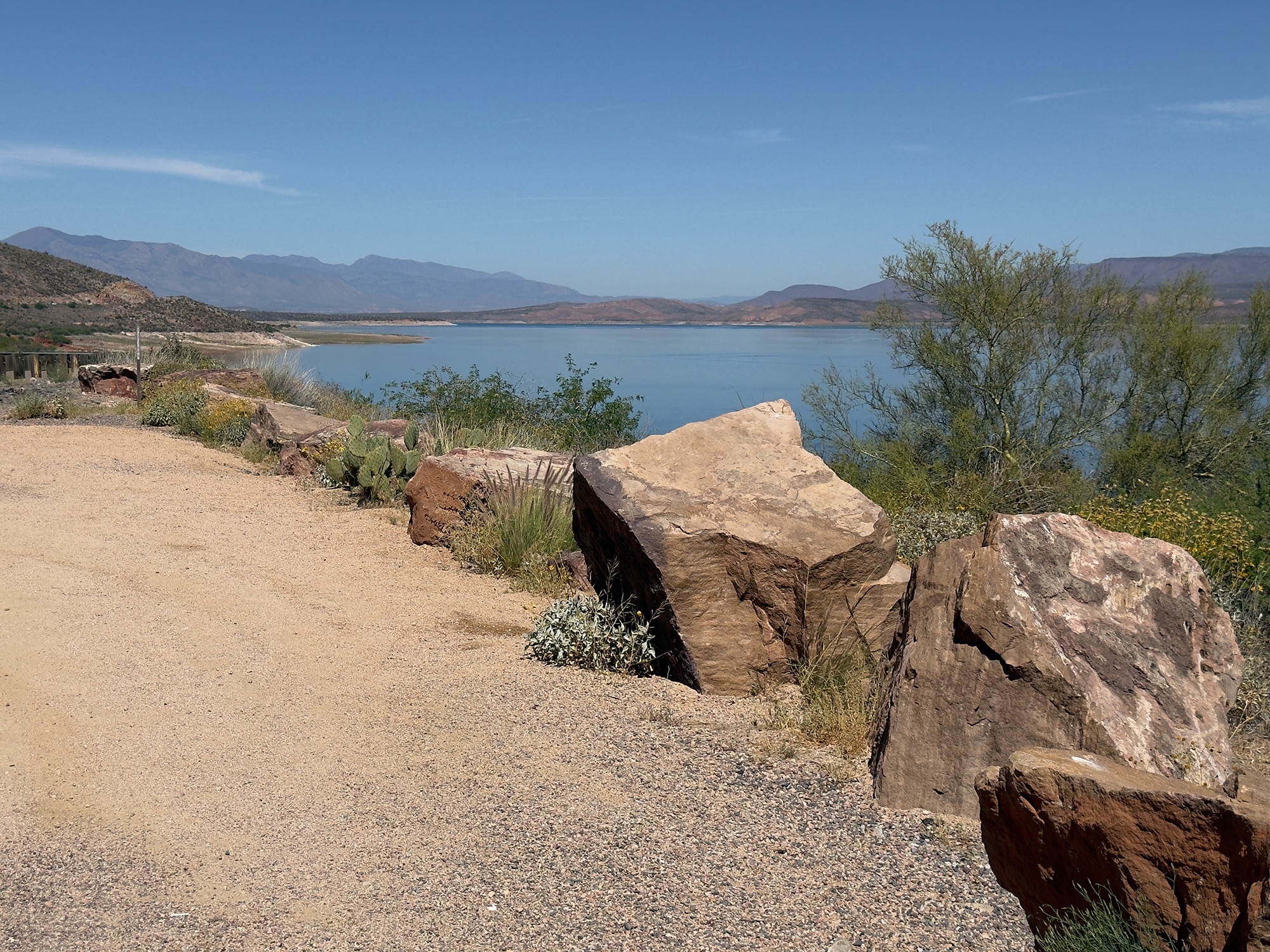
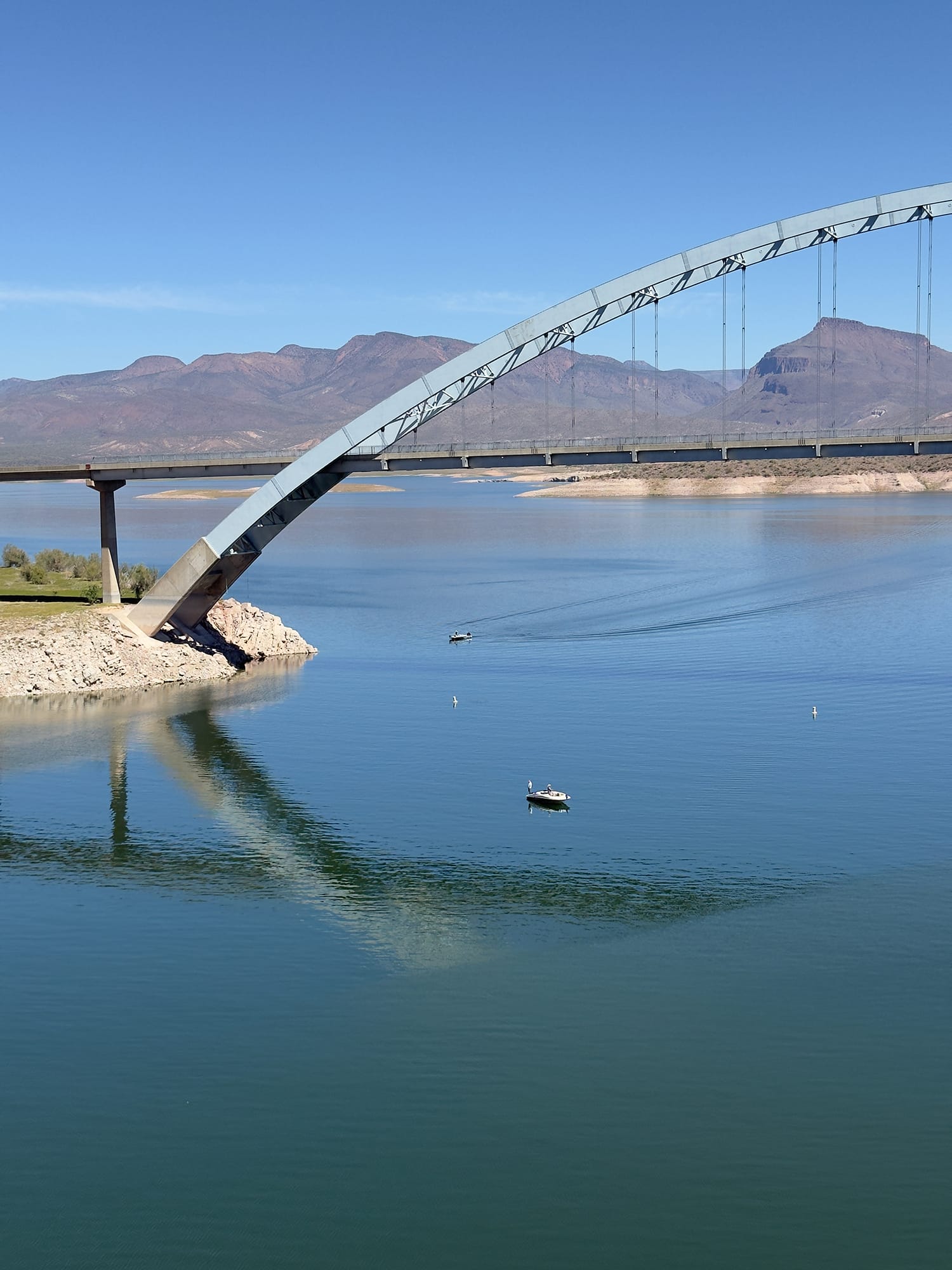
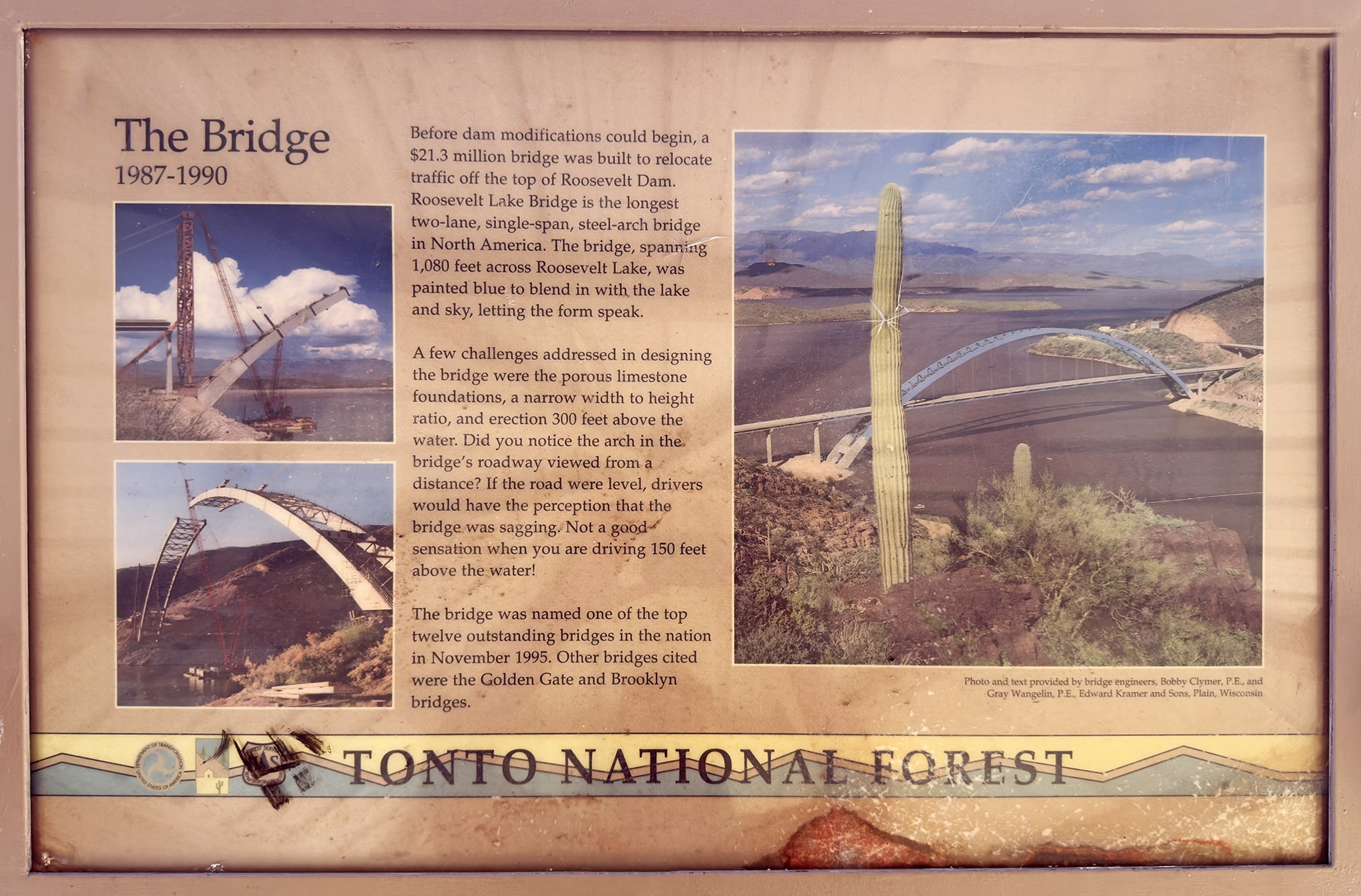
“The Theodore Roosevelt Lake Bridge is one of the most recognizable structures in Arizona. This graceful arch bridge, rising 300 feet above the water, is painted a light blue to blend with the sky. Construction of the bridge began in 1987 and was completed in 1990.
The bridge was and is the longest two-lane, single-span, steel-arch bridge in North America. The bridge spans 1,080 feet across Roosevelt Lake providing two-way traffic between Maricopa and Gila counties on State Route 188. Before the bridge was built, vehicle traffic on SR 188 traveled directly on top of the Theodore Roosevelt Lake Dam.” ~ see two great pictures!
Behind the Dam
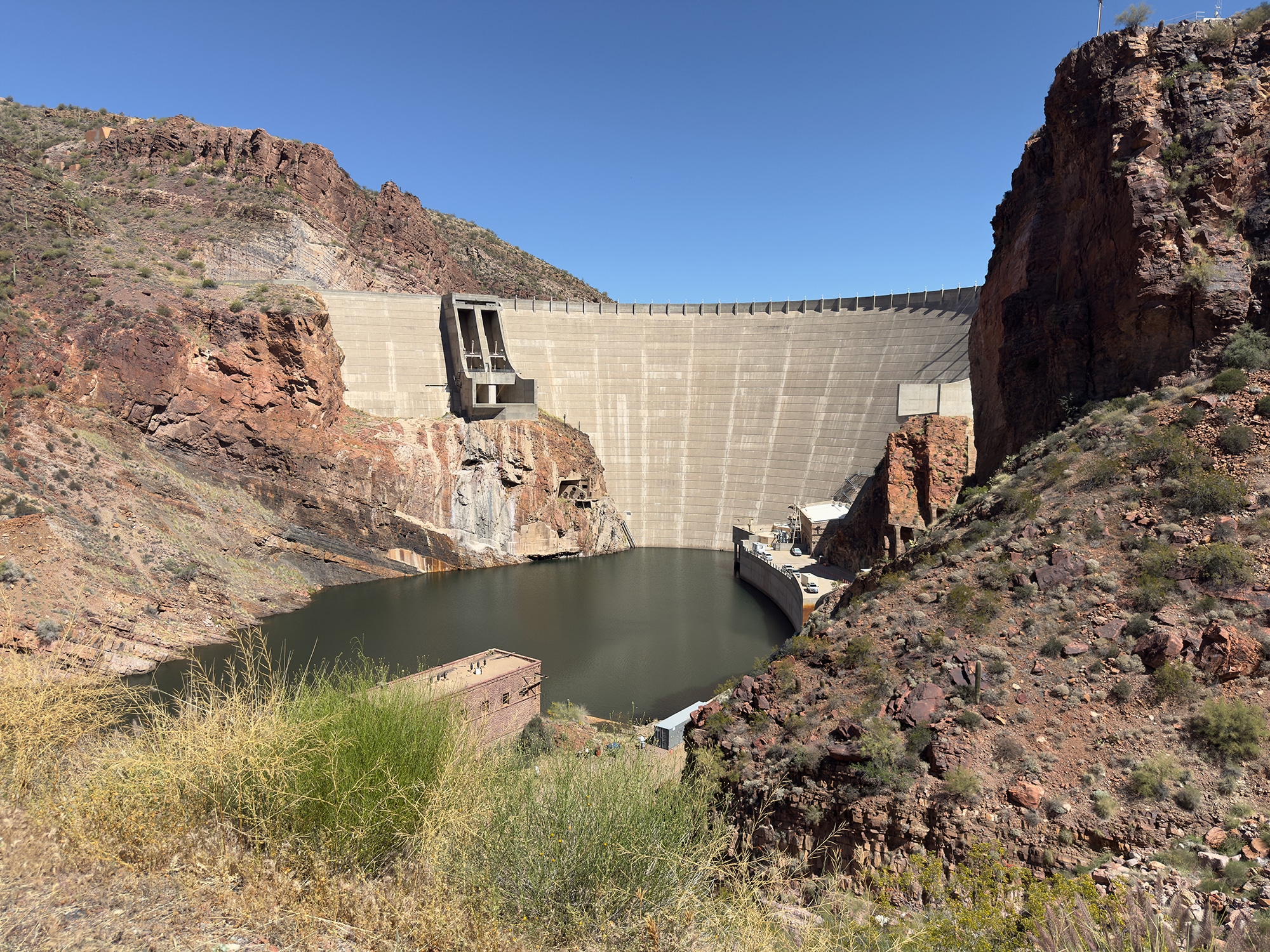
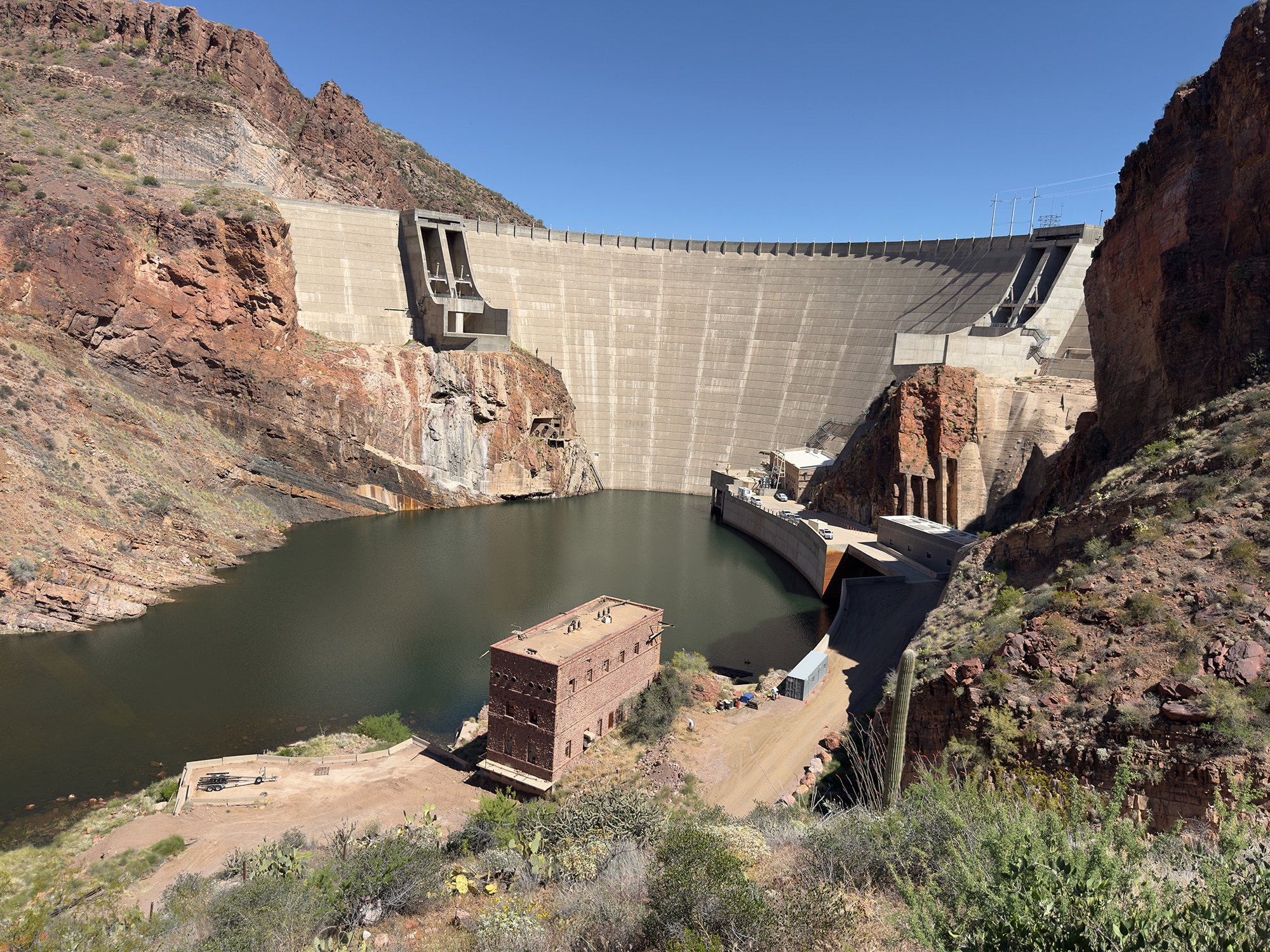
We took the road to Apache Lake and our plan was to check out the dam, make a stop at Apache Lake, drive the Apache Trail to Apache Junction, and head back to Peoria. We stopped at a great overlook with a fairly close-up view of the dam and signage about its construction.
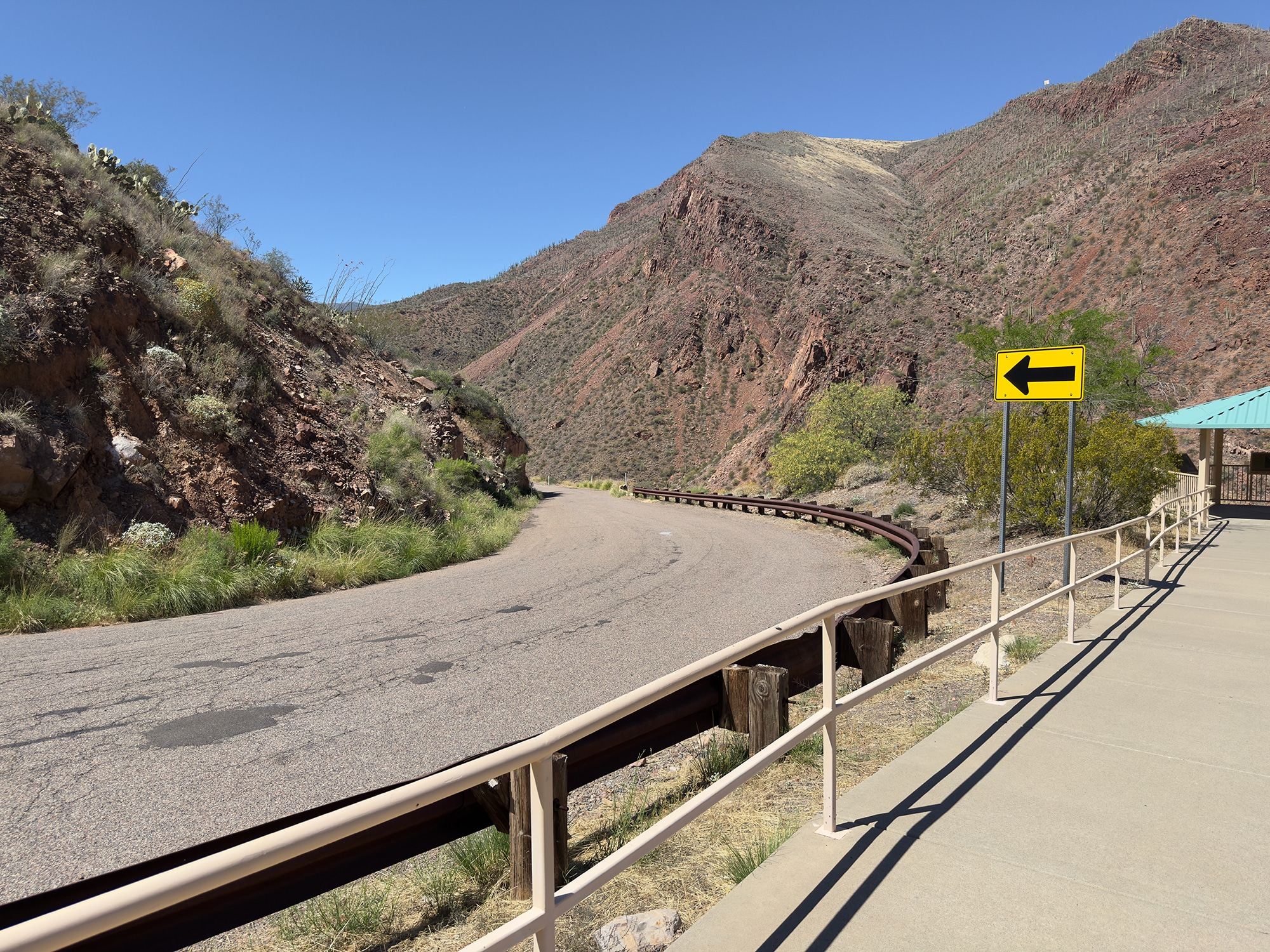
About that time, a motorcycle zoomed around the sharp curve in the picture above – followed by a cloud of dust. We had been skeptical in the past about driving the stretch of dirt road that meets the pavement in Tortilla Flat, and today we were skeptical again. We decided to pack it in and take the easy way home. Lots of regular cars take that wash-boardy dirt road all the time, and maybe someday we will – just not today.
One good thing we found on the easy way was Tonto Basin-Butcher Hook Restaurant and Saloon. Although we didn’t utilize the saloon section of this old-time establishment, they served up an excellent senior breakfast!
Another Great Road Trip (on a Road Trip) is in the Books!
Next up: Moving On Up!
Happy trails,
Barb