A Tybee Island Farewell
As our winter road trip winds down in Savannah, today we visited Tybee Island for a lighthouse/museum, a gorgeous sunset/dolphin cruise, and a delicious seafood boil. Since we were with friends for our last couple of stops, I will finish this series here, and what a great place to end!
To start at the beginning of this series, visit Southeast to Sunshine
Tybee Island Light Station
Today we ventured thirty minutes southeast to Tybee Island and our first stop was at the Tybee Island Light Station. If you’ve read this blog before, you know that we love Lighthouses so much, there’s a category in the menu! We became big fans when we moved to Wisconsin nearly 40 years ago, long before our road trips were even a thing.
So many organizations are making it a priority to restore lighthouses as the national treasures they are and they’ve turned some into museums to tell the stories of days gone by. The light keeper and his family had an extremely important job – to “keep the light on” to warn sailors of impending death along the world’s most treacherous coastlines.
So Much to See
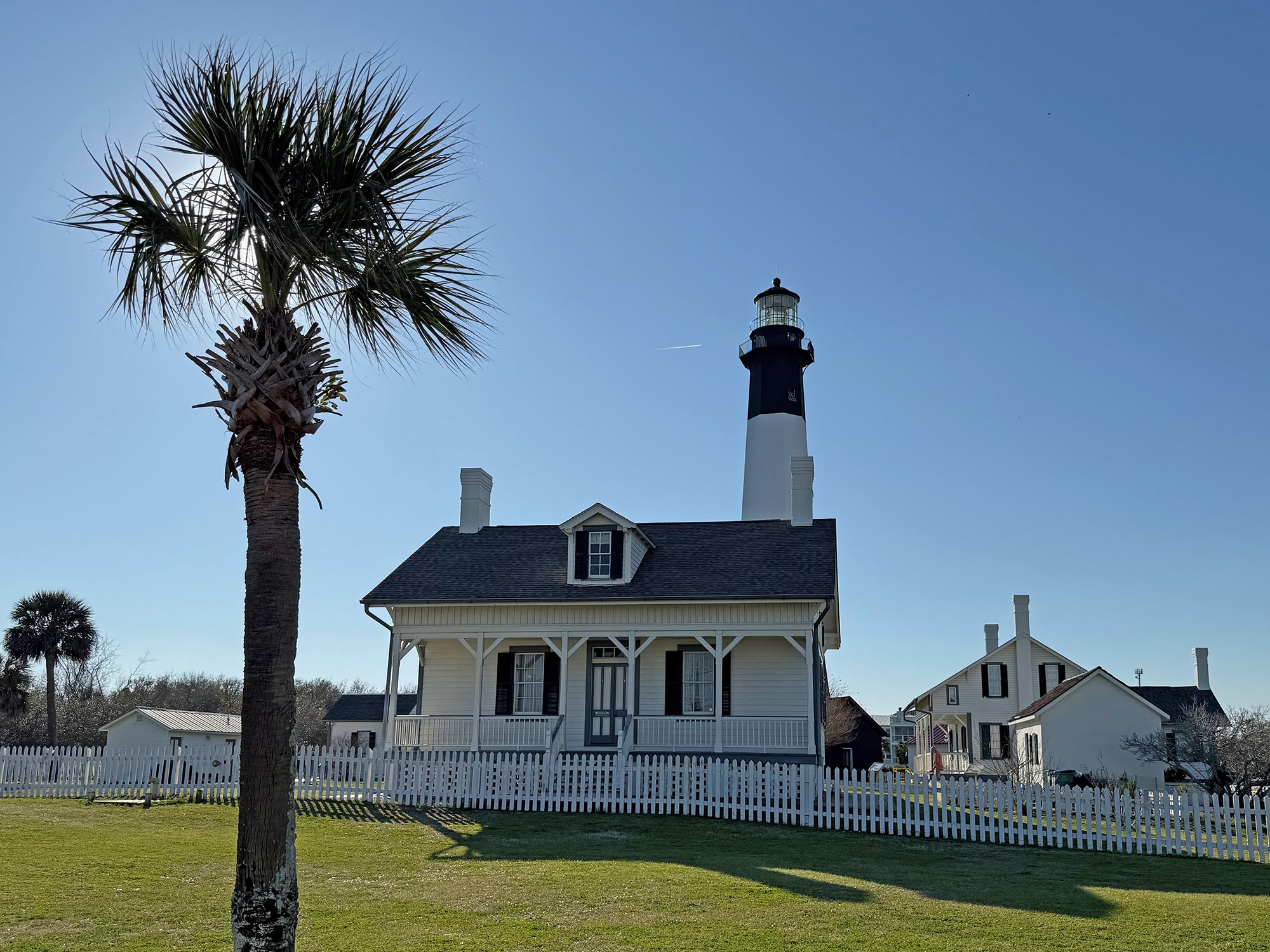
More than just a lighthouse, a light station is the property containing the lighthouse tower with several outbuildings. Tybee Island brings it to another whole level with a museum just across the street along the Atlantic Ocean – housed in Fort Screven’s Battery Garland. This is one of the few complete light stations left in the United States, and it is fantastic. To see the entire campus and some captions, click on the photos below.
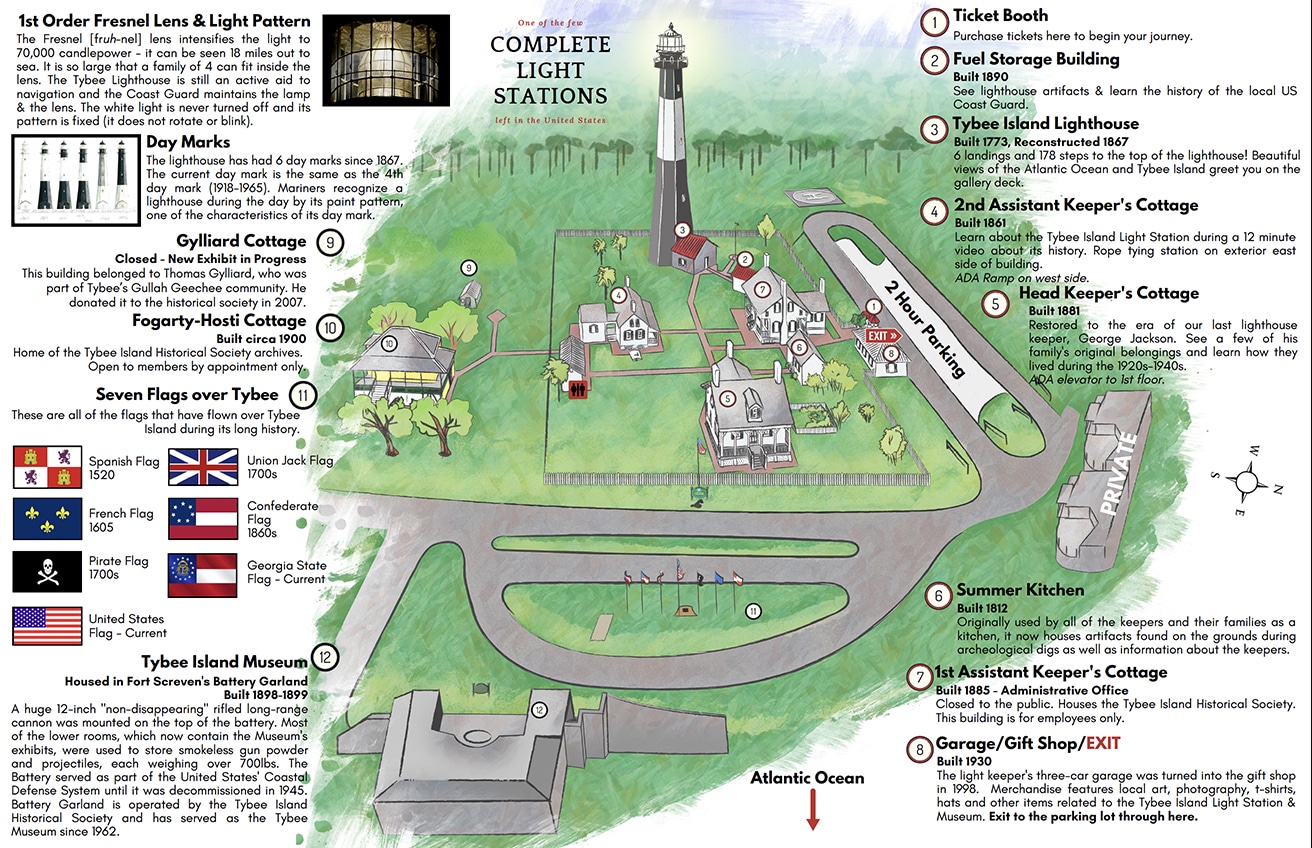
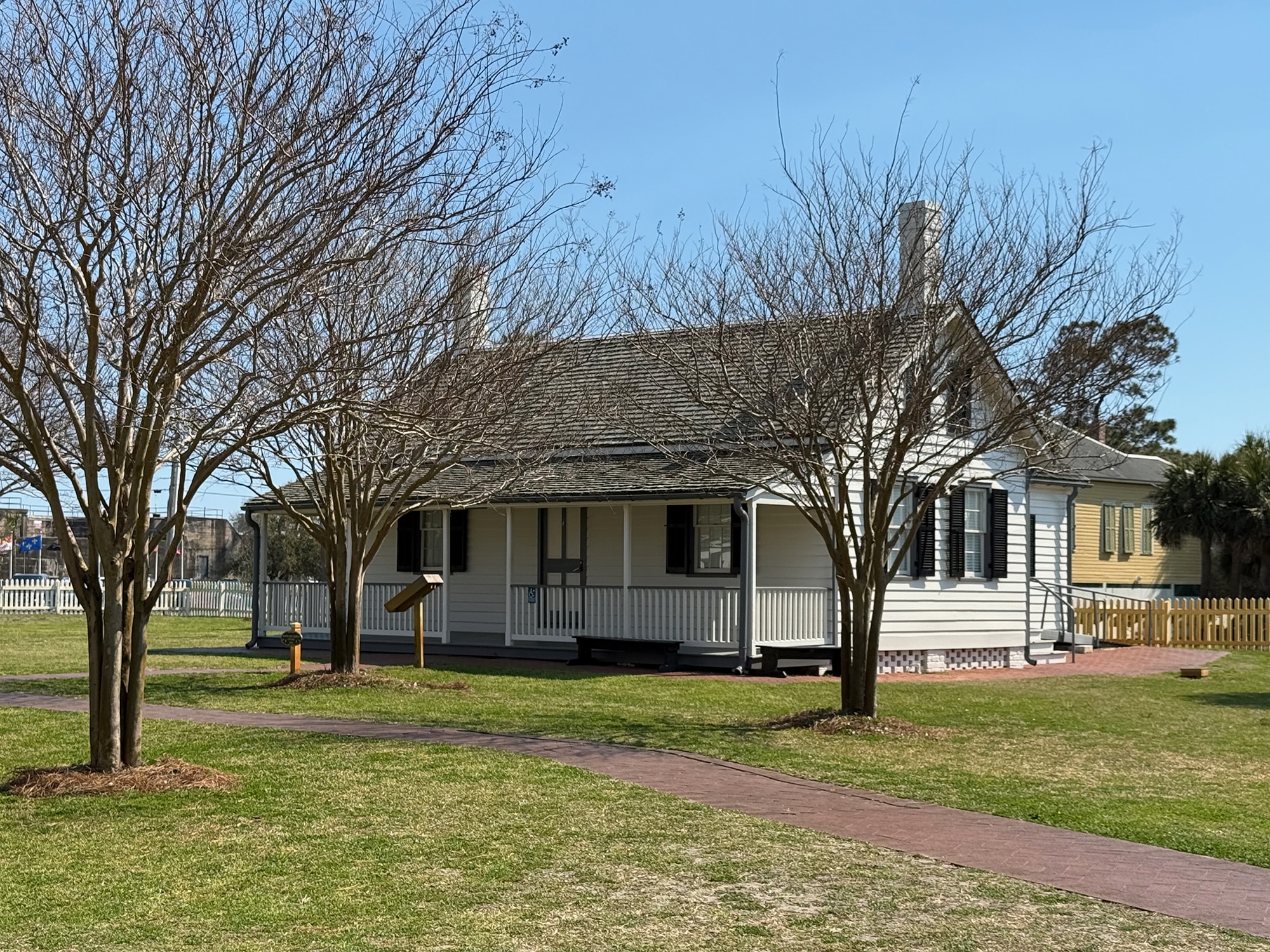
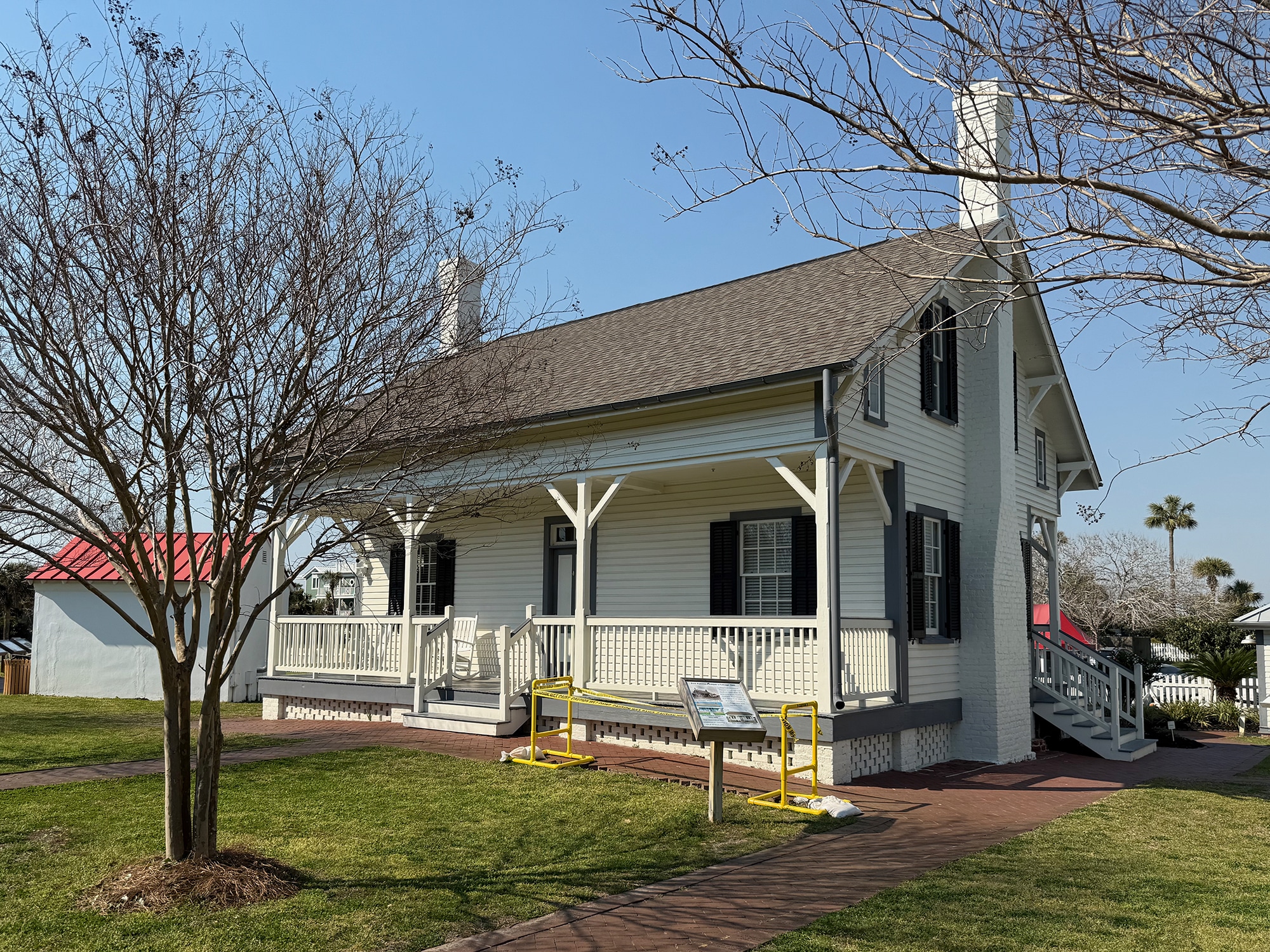
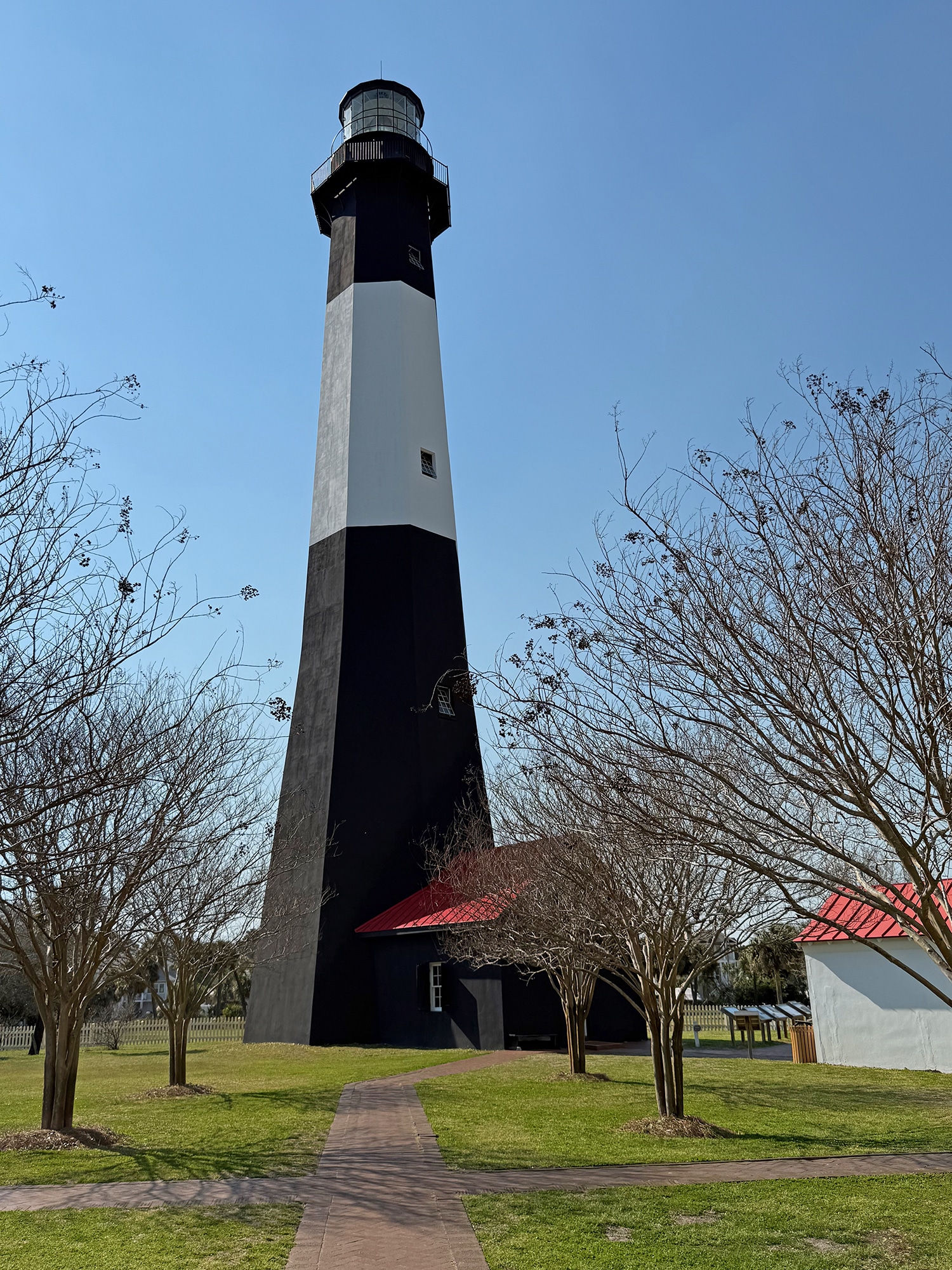
“Ordered by General James Oglethorpe, Governor of the 13th colony, in 1732, the Tybee Island Light Station has been guiding mariners safe entrance into the Savannah River for over 285 years. The Tybee Island Light Station is one of America’s most intact light stations having all of its historic support buildings on its three-acre site. Rebuilt several times, the current Lighthouse displays its 1916 day mark with 178 steps and a First Order Fresnel Lens.” ~ READ MORE
Live and Learn
The quote above mentions several rebuilds through Tybee Lighthouse’s 285 years. Like most lighthouses built in the 1700s, the builders had a lot to learn about violent storms, erosion, and the proper materials that could withstand whatever life might throw at them.
Note: this part is paraphrased from Tybee’s History.
Although General Oglethorpe ordered up a structure in 1732, the first day-mark (a lighthouse without a light) wasn’t built until 1736. Octagonal in shape and ninety feet tall, it was the tallest structure of its kind in America at that time. Unfortunately storms took that one down and another was completed in 1742. At ninety-four feet, it “was the best of its kind in America”, but this is where erosion comes into play. In 1768, “with the sea lapping at its foundation” a new day-mark was needed – and fast!
“This time a site well removed from the sea was chosen and the building was completed in early 1773. In 1791, the hundred-foot brick and wood structure was lit with spermaceti candles.” Fast forward to 1861, the wooden stairs and the top 40 feet of the tower were destroyed during the Civil War when Confederate troops, retreating to Fort Pulaski, set fire to the tower to prevent Union troops from using it as guidance into port.
After the Civil War, since the lower sixty feet of the old lighthouse was still intact, it was decided to add to the top instead of starting over. The lighthouse was now to be a first order station*, consisting of masonry and metal only. It was completely fireproof, and here it stands today.
*Developed in the 1820s by French physicist Augustin-Jean Fresnel, the lens uses a system of concentric prisms to bend and concentrate the light source into a single, powerful beam. This method dramatically increased the efficiency and visibility of lighthouses around the world.
“The Fresnel [fruh-nel] lens intensifies the light to 70,000 candlepower – it can be seen 18 miles out to sea. It is so large that a family of 4 can fit inside the lens. The Tybee Lighthouse is still an active aid to navigation and the Coast Guard maintains the lamp & the lens. The white light is never turned off and its pattern is fixed (it does not rotate or blink).” ~ from the map above
Ready for a Climb?
Our style of vacationing works out pretty well – especially where there’s lots of history involved. Jim loves to read all (and I do mean all) of the available information on places that we visit. I usually set out to capture the visit in photos, but not before snapping a few of what he’s reading, which gives my photos some substance once I get ready to share. This time I snapped, then headed up the 178 steps to the top of this beautiful landmark where I snapped some more!
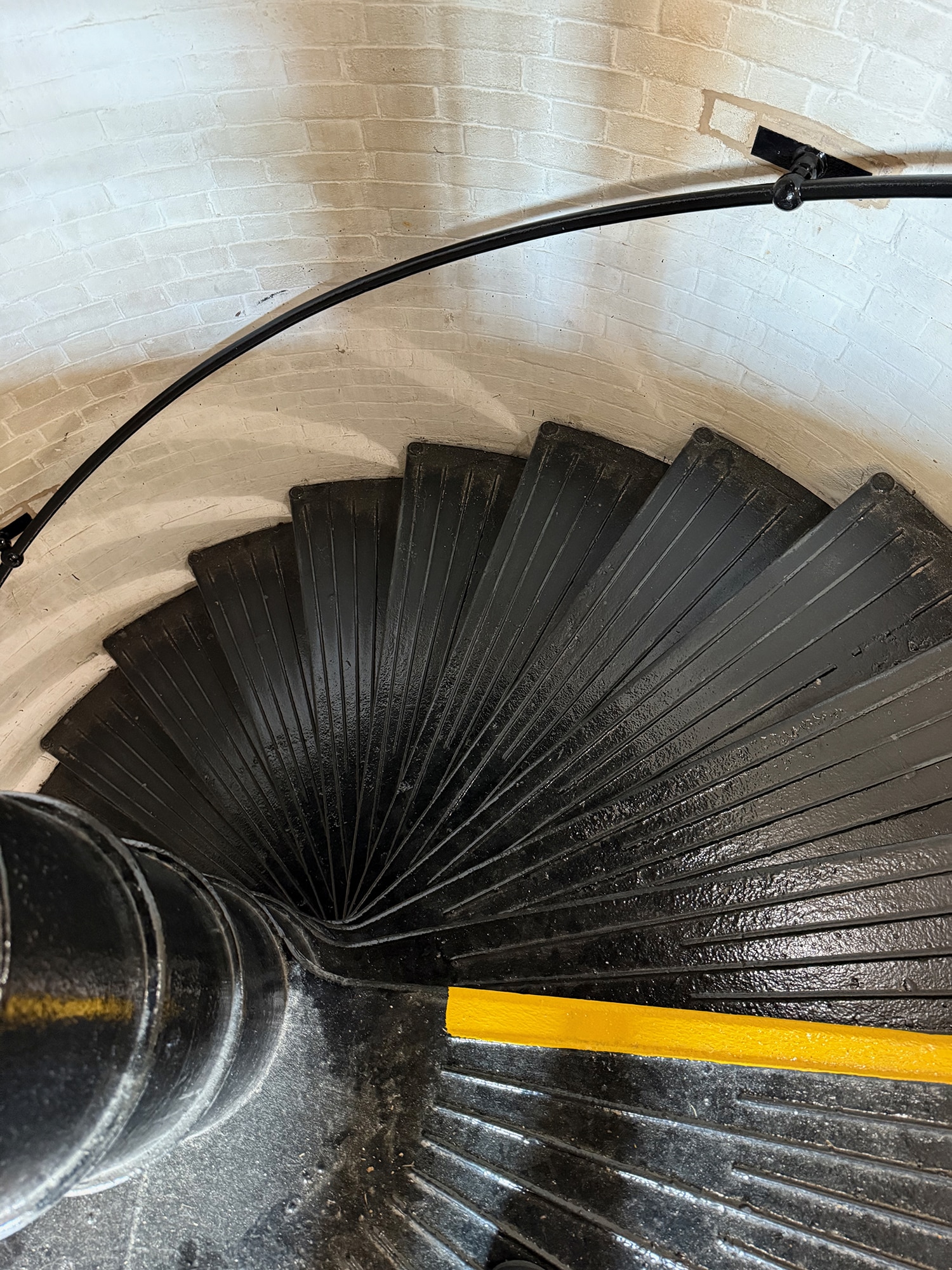
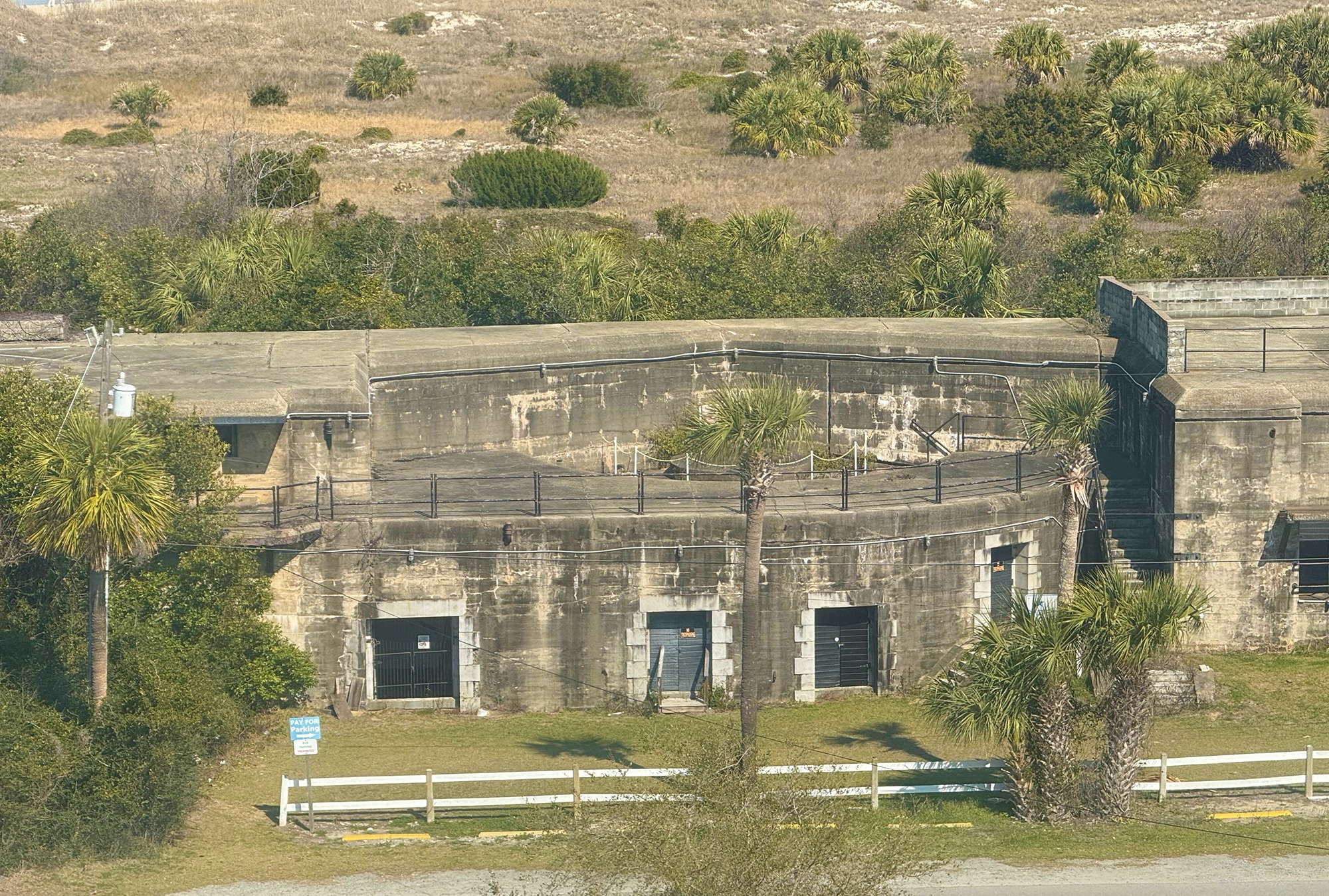
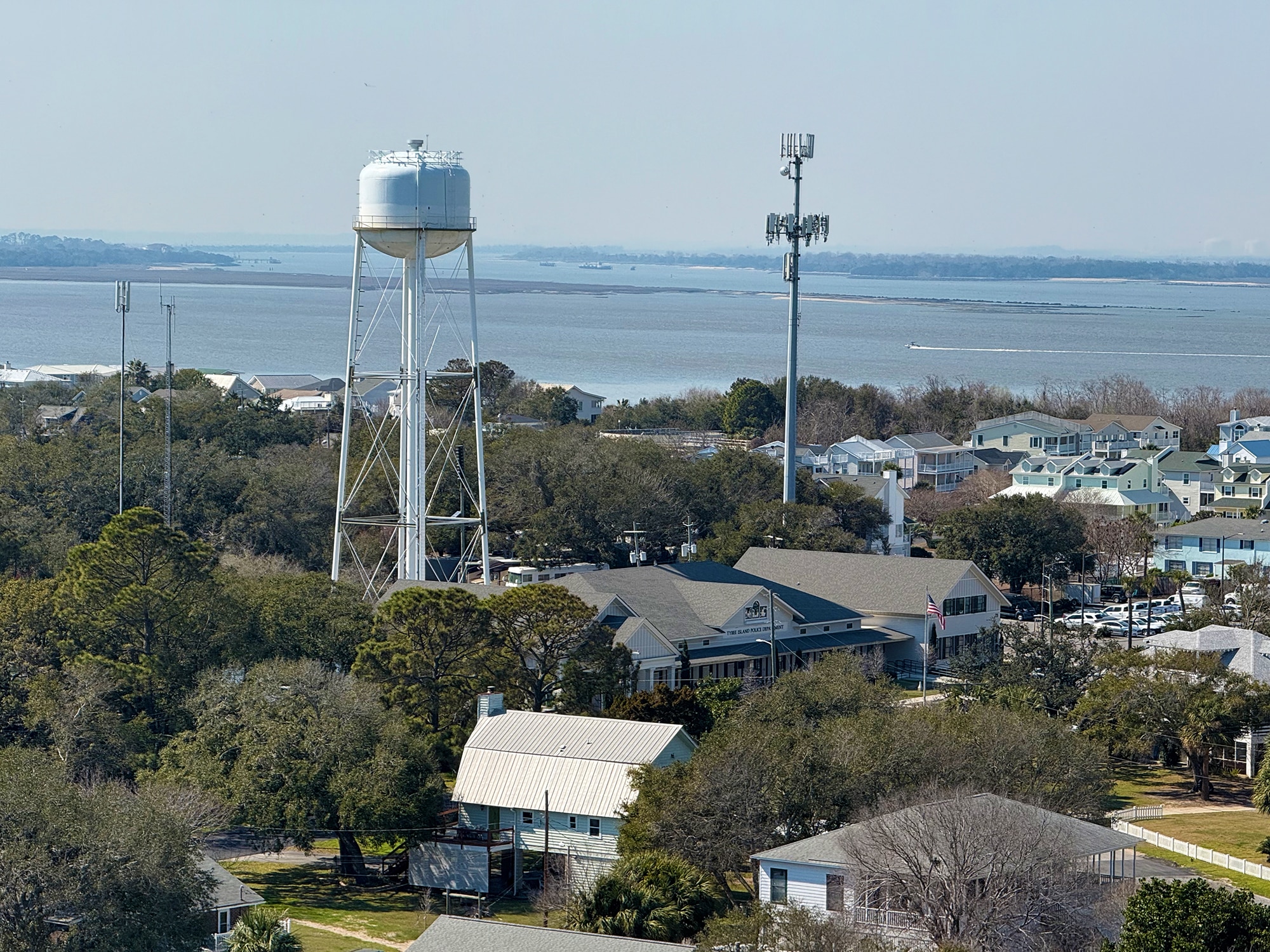
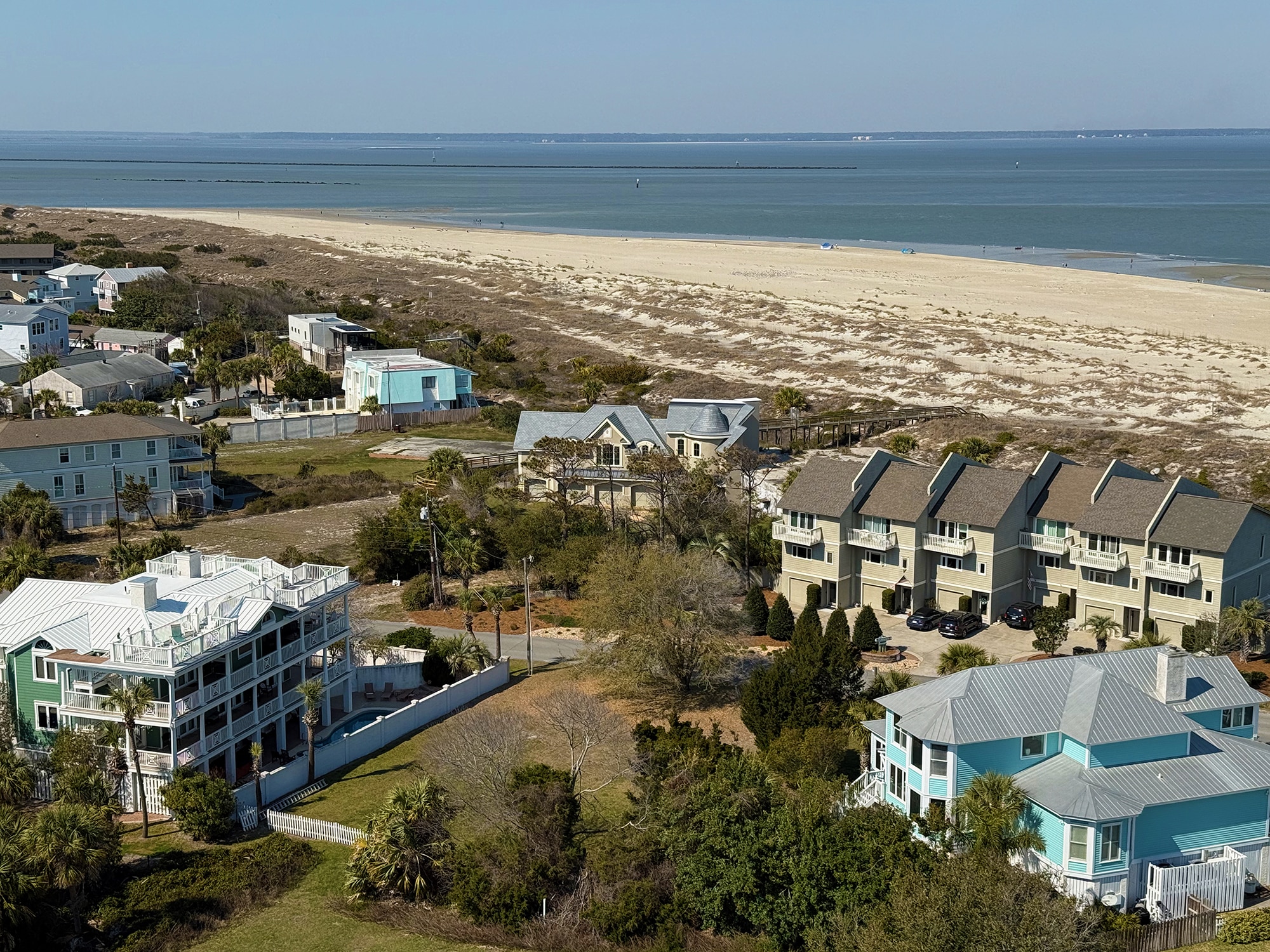
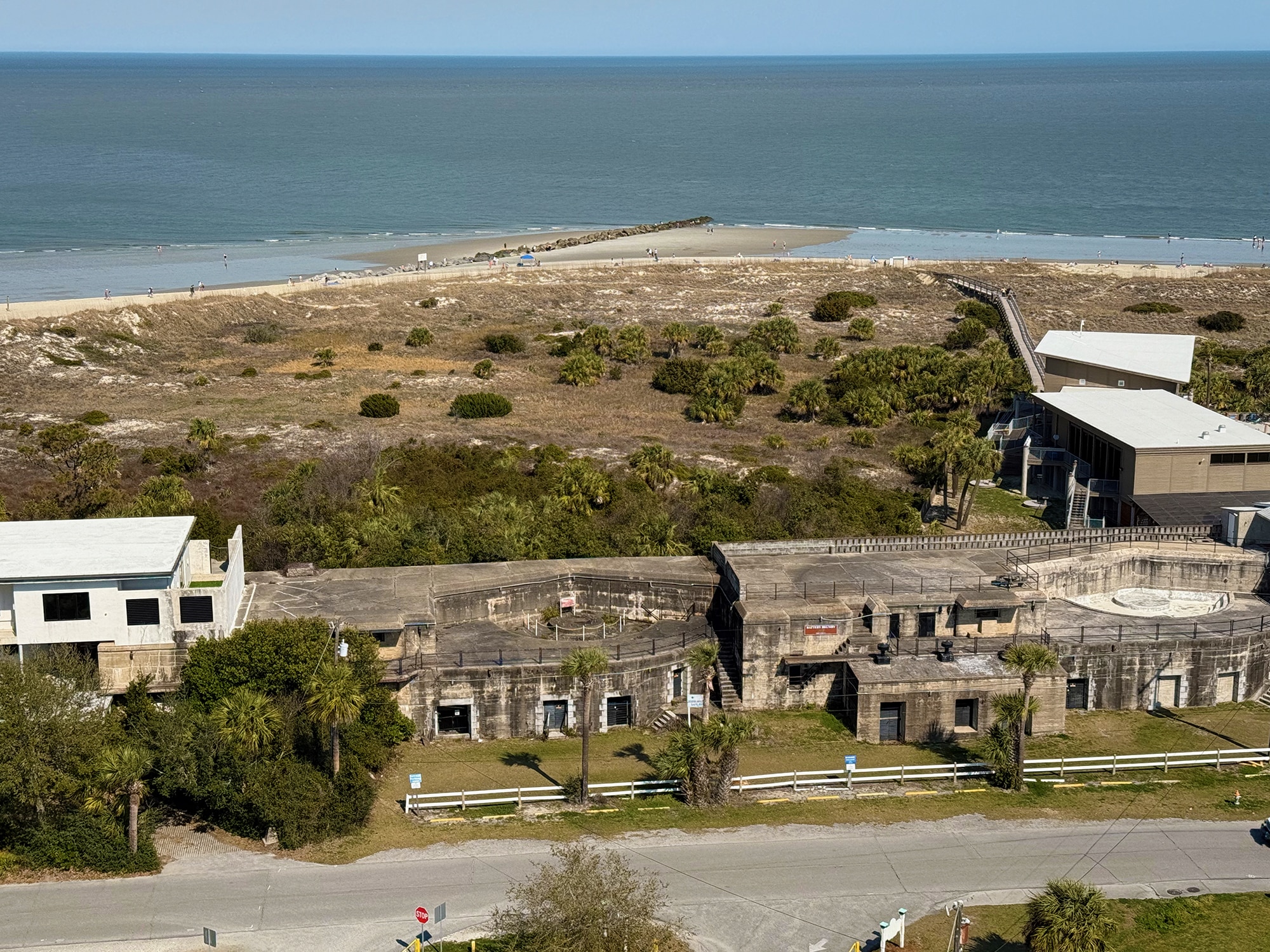
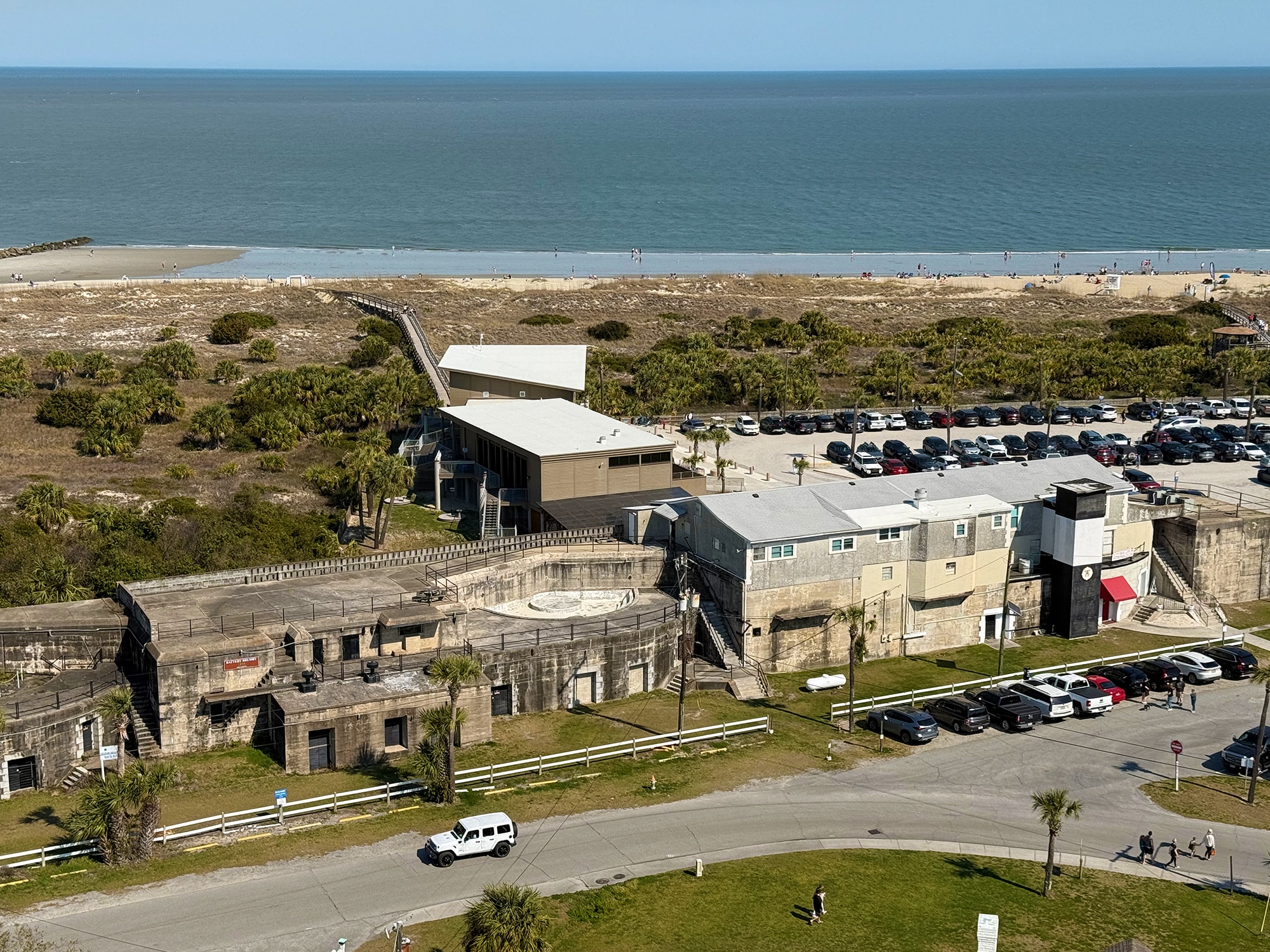
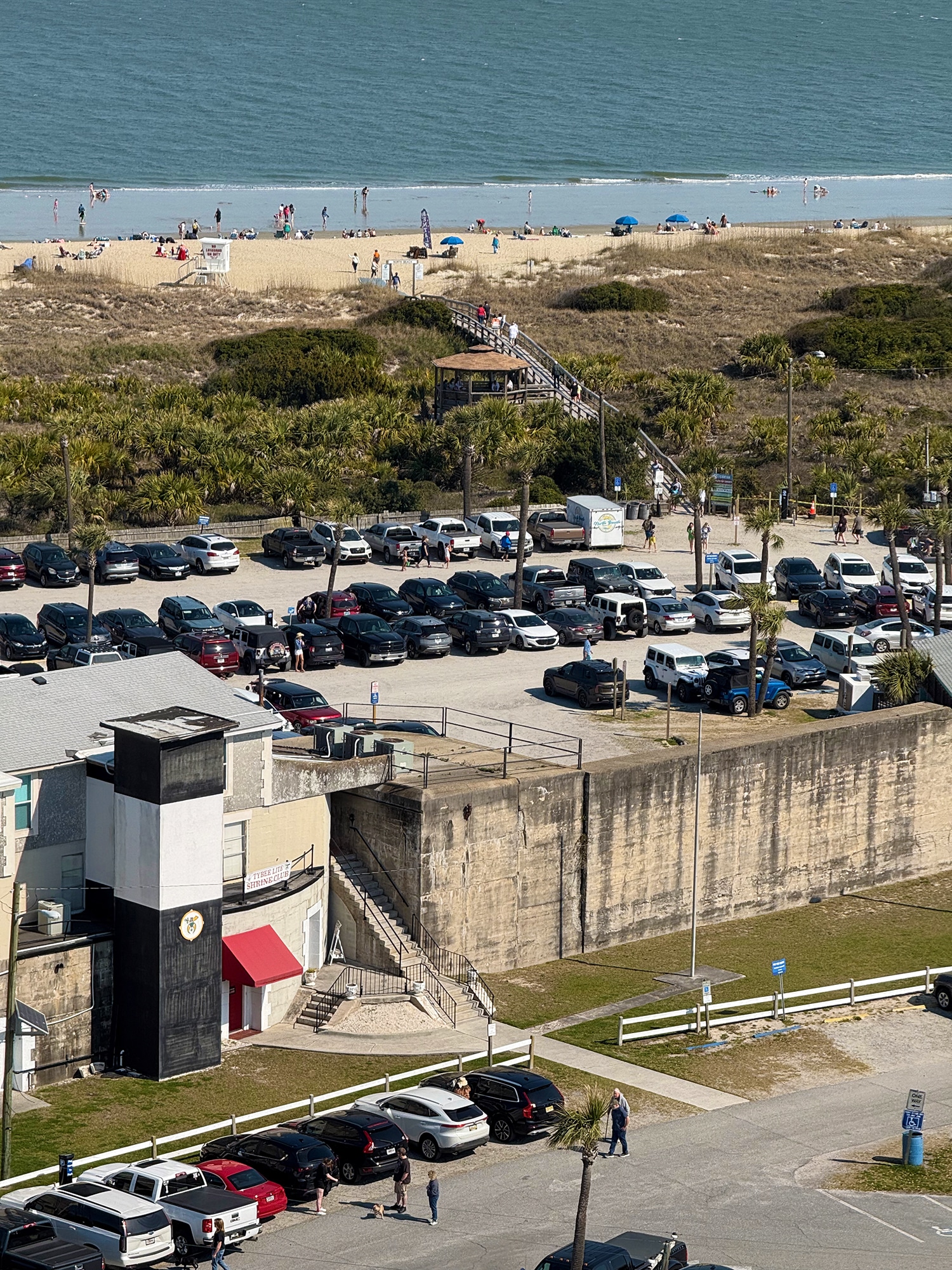
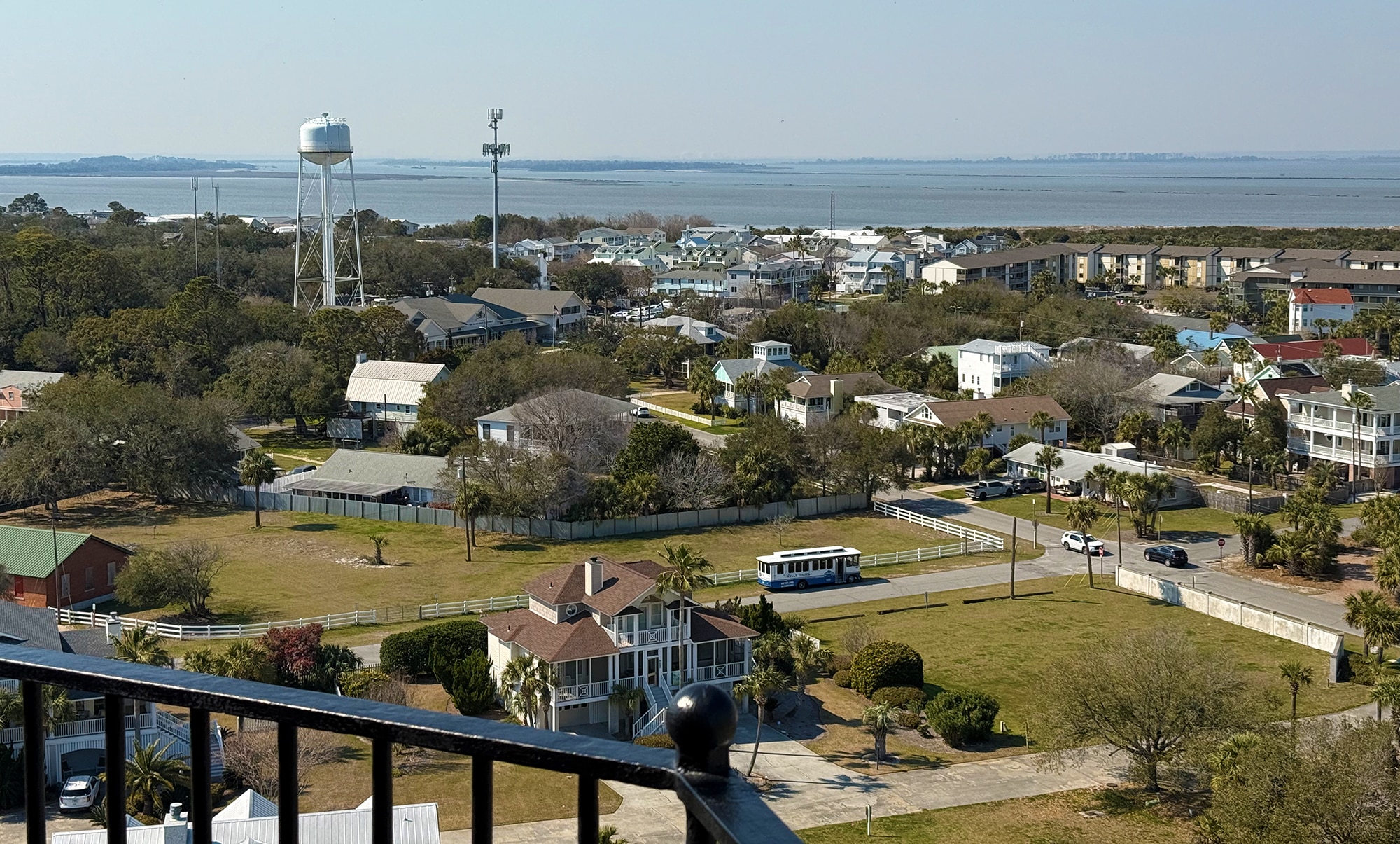
Battery Garland / Tybee Island Museum
The walk across the street gave us some great overall views of the light station and up-close views of the museum, as well as the seven flags that have flown over it: Spanish, French, Pirate, Union Jack, Confederate, U.S. and the state of Georgia. And, we could not have asked for a better day for this outing on the first day of March! I don’t have a lot of photos of the interior, so you’ll have to visit to take some of your own.
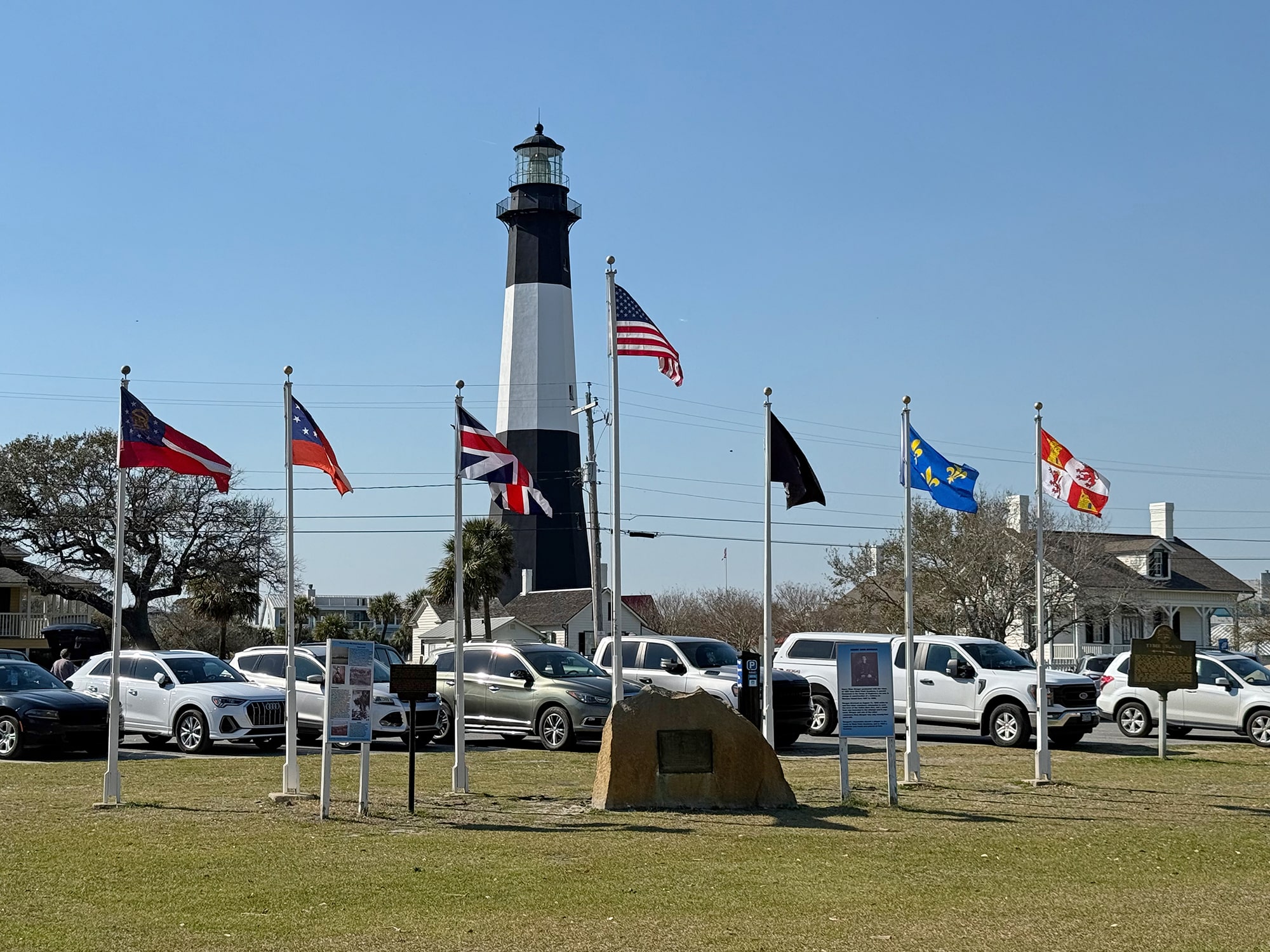
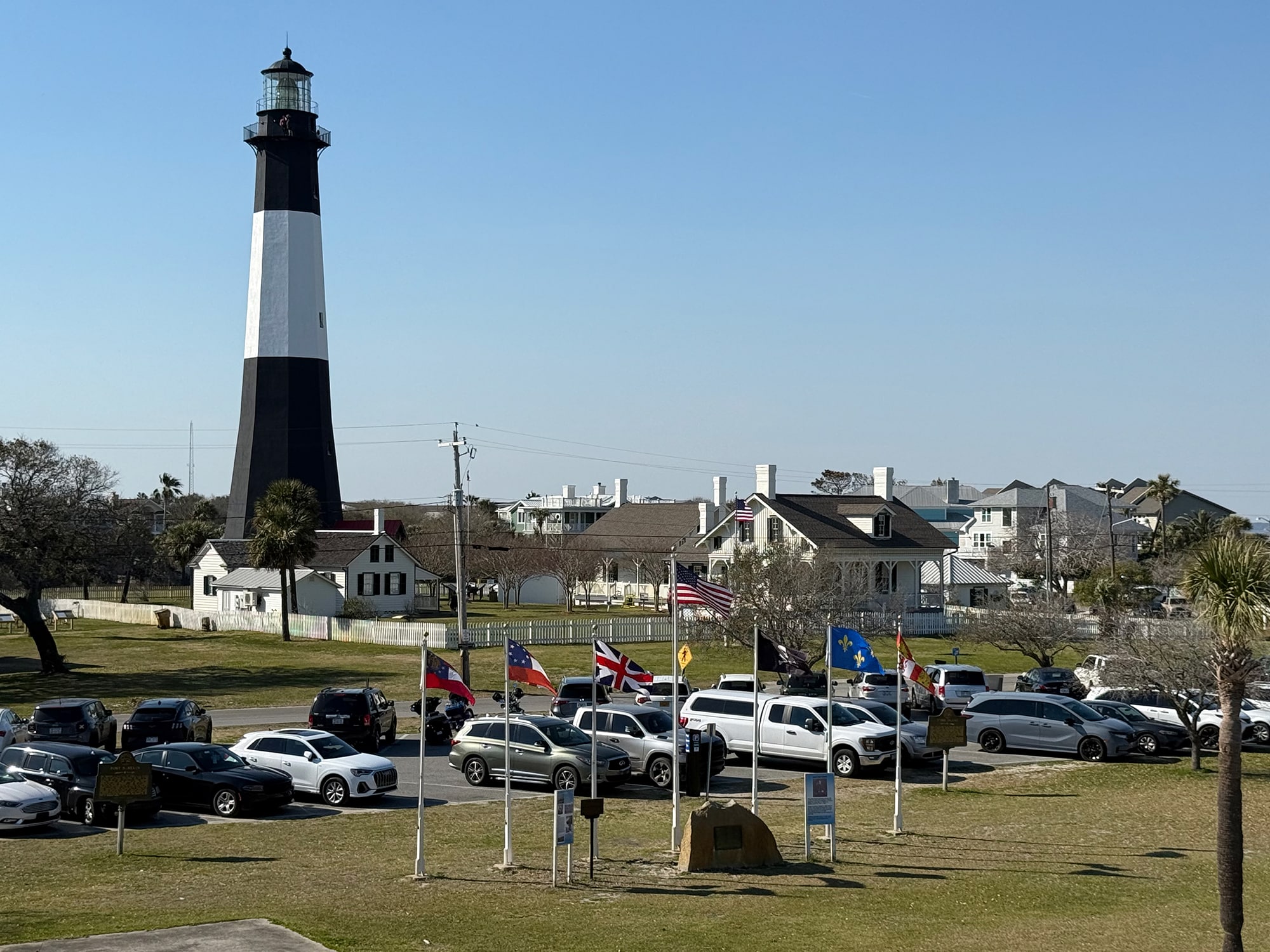
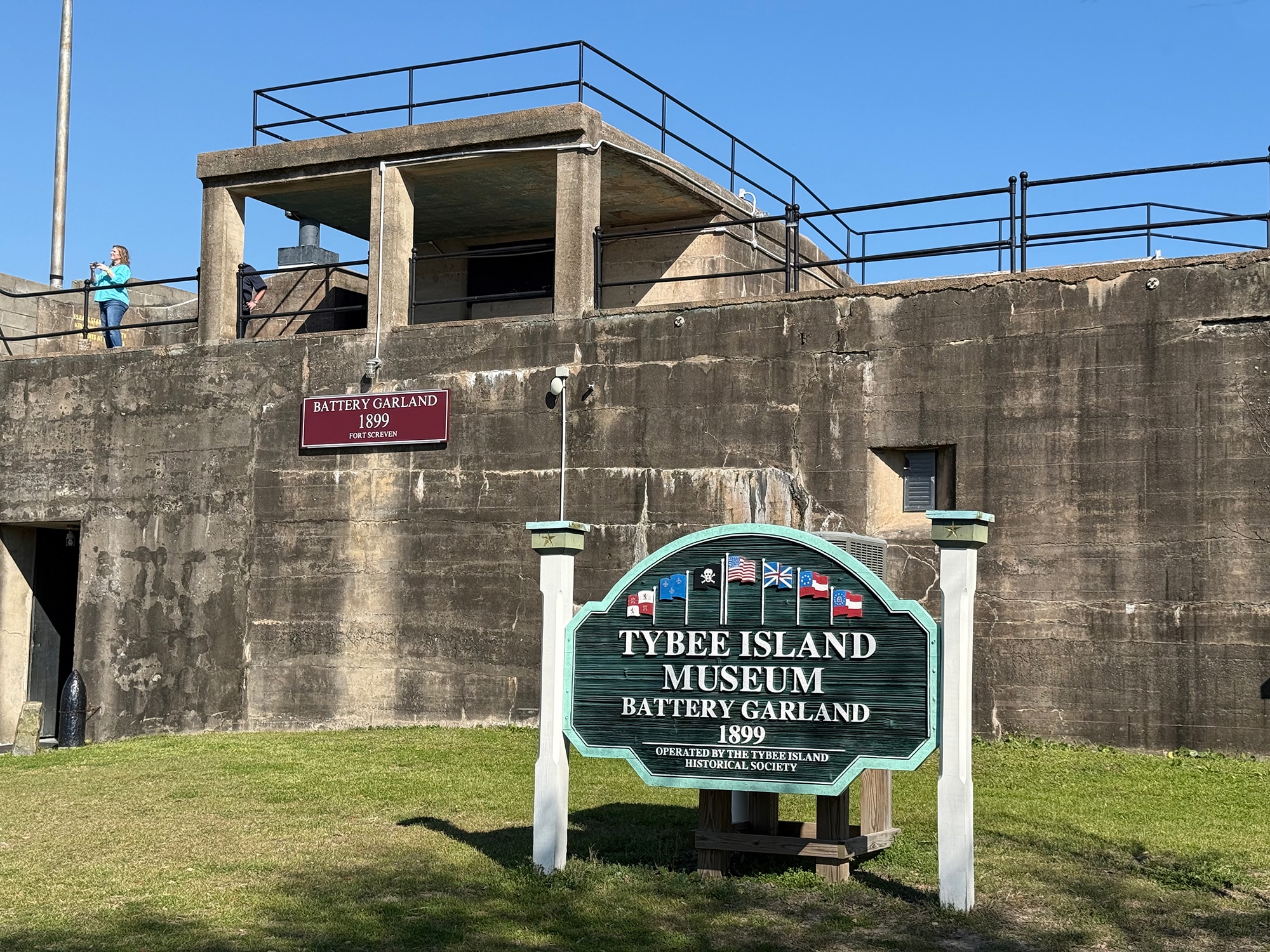
“In 1786, the Georgia Legislature approved the creation of a fort on Tybee Island to be named after Revolutionary War Hero, General James Screven. Due to delays, the fort did not come to fruition until almost 100 years later. Originally ordered by General James Oglethorpe, the founder of Georgia, Fort Screven was designed to guard the mouth of the Savannah River until the end of World War II.”
“Located on Tybee Island’s north end, Fort Screven’s Battery Garland served as the gun battery and magazine for a 12-inch long-range gun. The room that formally stored over six hundred-pound projectiles and two hundred-pound bags of gun powder, now serves as the Tybee Island Museum. In 1950, the Tybee Island Museum opened its doors and now exhibits more than 400 years of Tybee Island history.” ~ READ MORE about Fort Screven Historic District
“Tybee’s Golden Era – 1920s-1930s. During this time after Tybee Road was built Tybee Island continued to grow at an even faster pace than before. More hotels and vacation homes were built, the big bands started to come and play, and there were more bathhouses and pavilions than ever before.
Tybee was trying to accommodate as many travelers to the island as possible by hard surfacing Tybee Road from 14th through 18th streets, from the railroad to the Strand; and parking was provided for 3,000 automobiles total, 1,000 of which would have an ocean view parking space. At the opening of the 1932 season Tybee was the only resort north of Florida that offered oceanfront parking.” ~ from a sign in the museum
Keeping the Light On!
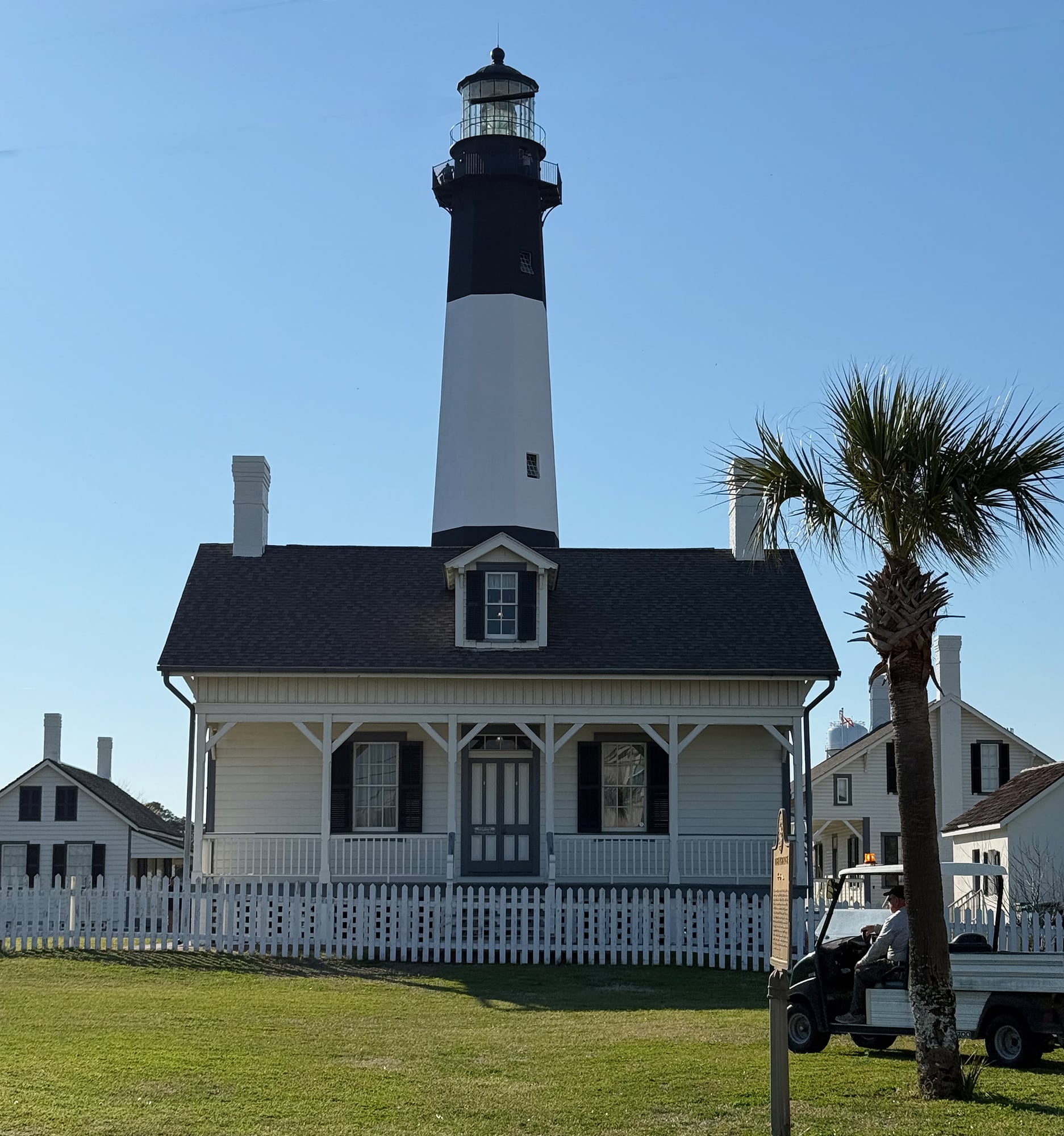
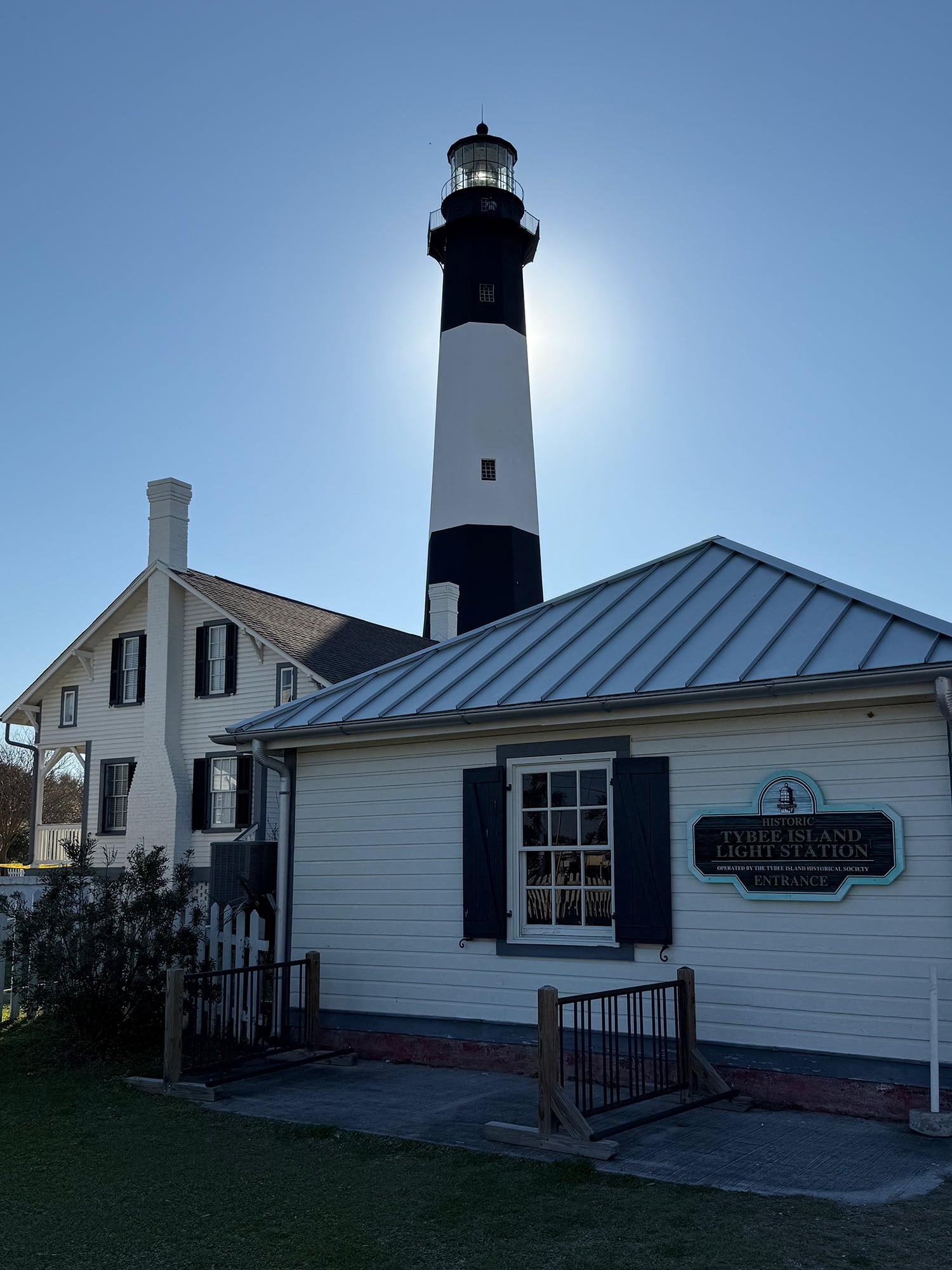
On the way back to our car, I had another chance for pictures of the lighthouse. In an effort to block the sun, I moved behind a tree a little, but when I moved back over, I was able to place the sun just where it needed to be! I love it when a plan comes together!
Captain Derek’s Dolphin/Sunset Adventure
We had a fantastic time aboard Captain Derek’s vessel! As we were waiting to board, the wind picked up and we grabbed our jackets out of the car to stave off a chill. A few girls were quite scantily dressed and I felt bad for them, but not bad enough to give up my jacket! We are always aware of the saying “cooler by the lake” since Wisconsin is next to a Great one, so I always assume that applies to rivers and oceans as well.
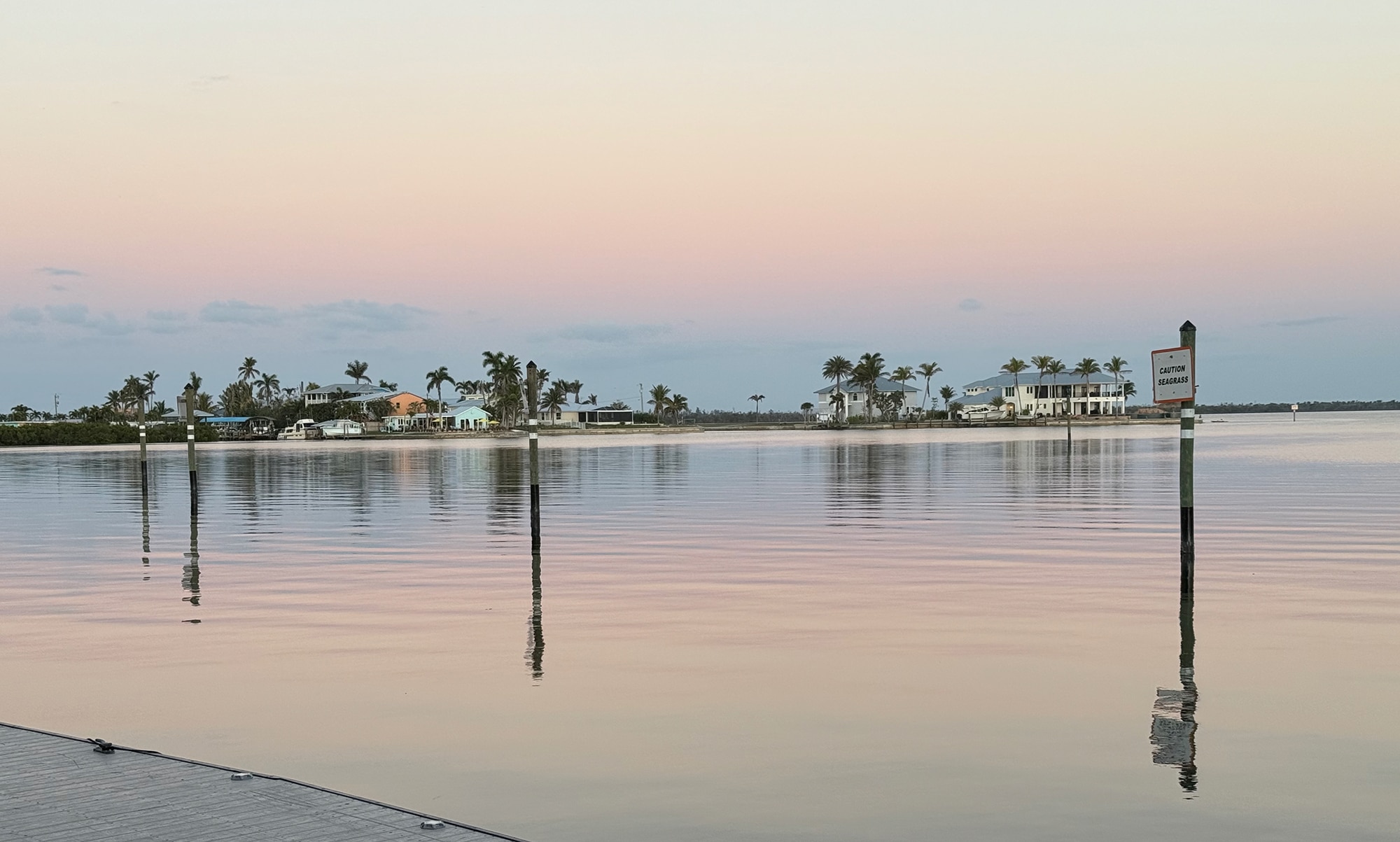
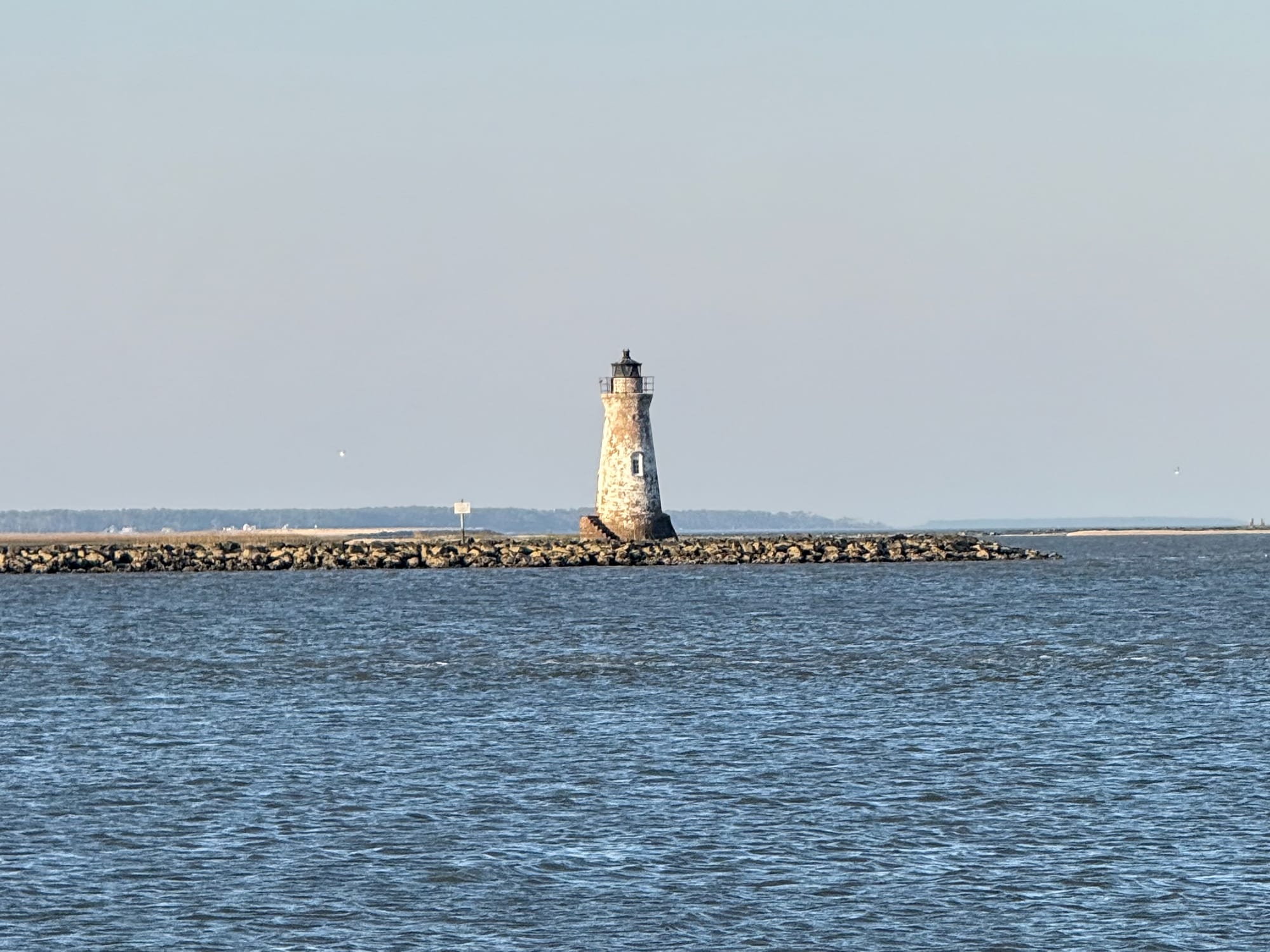
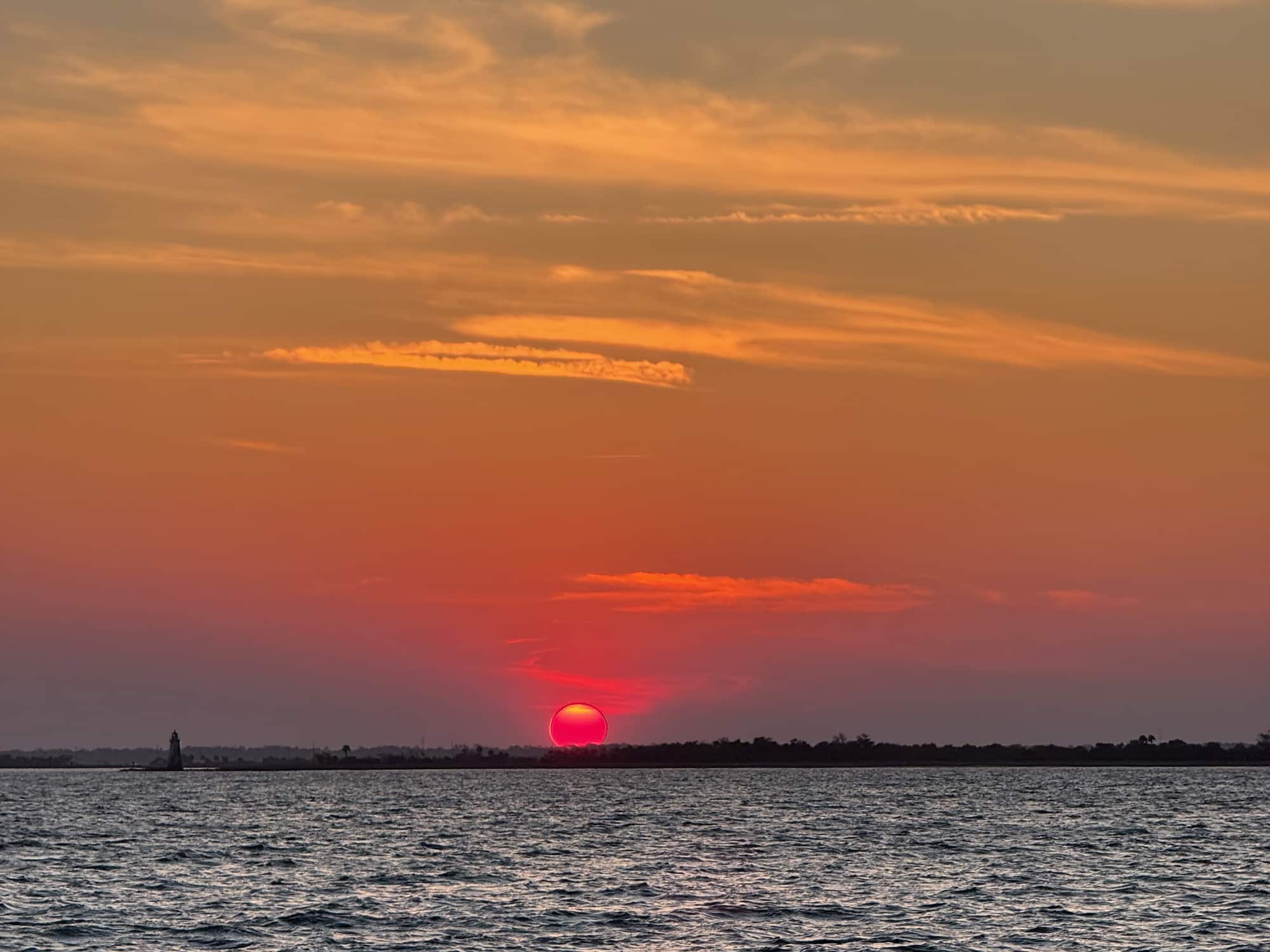
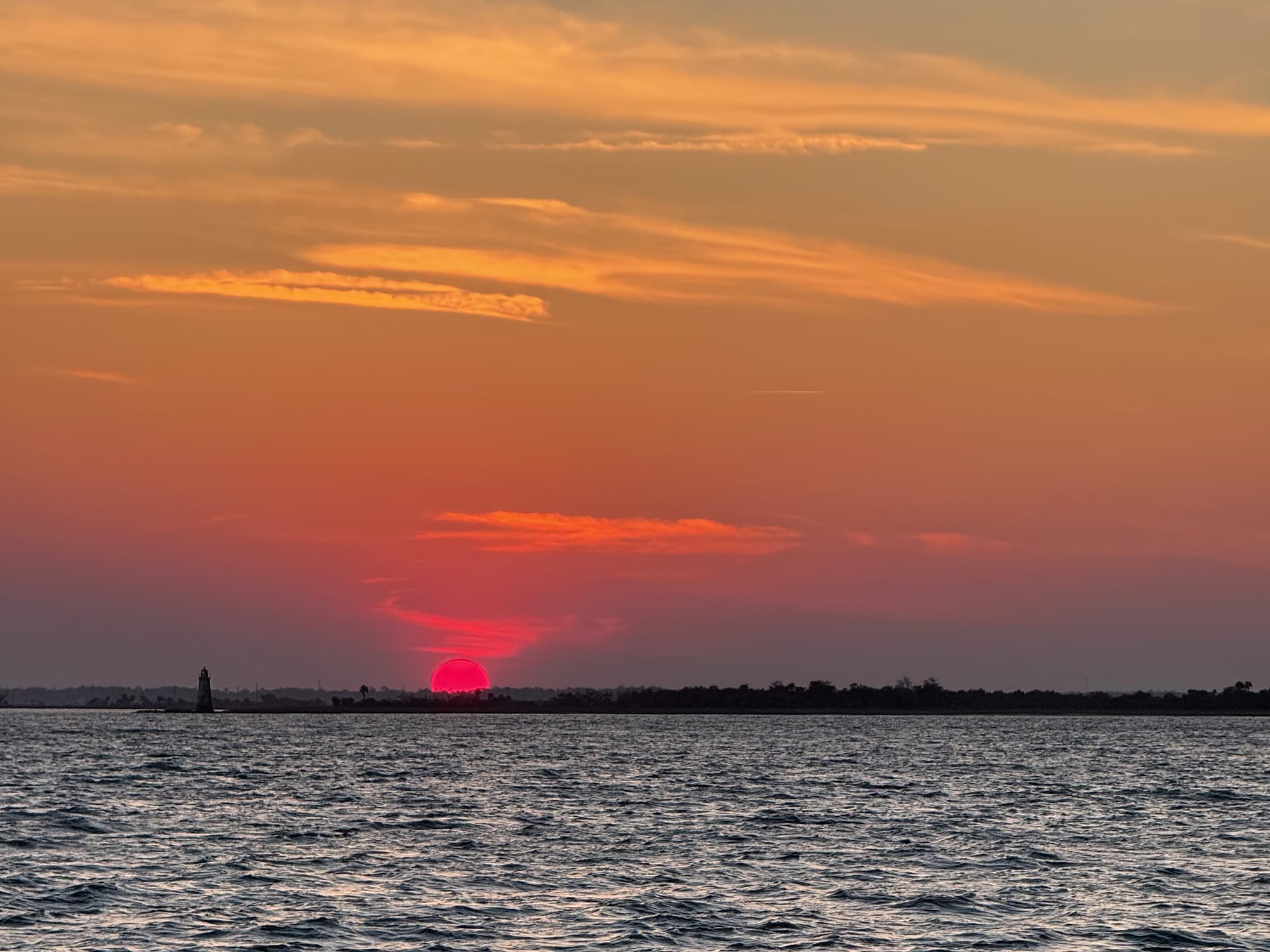
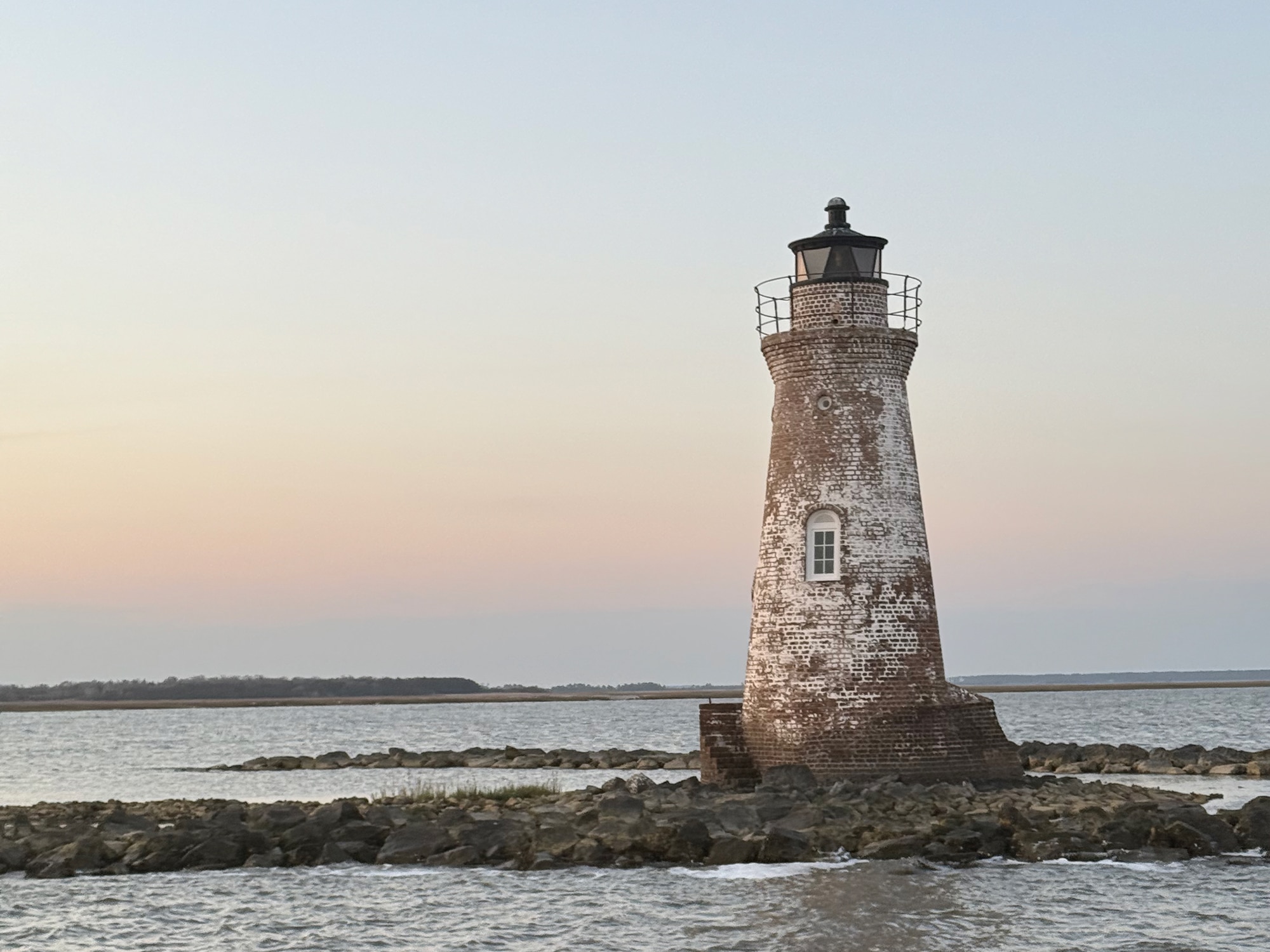
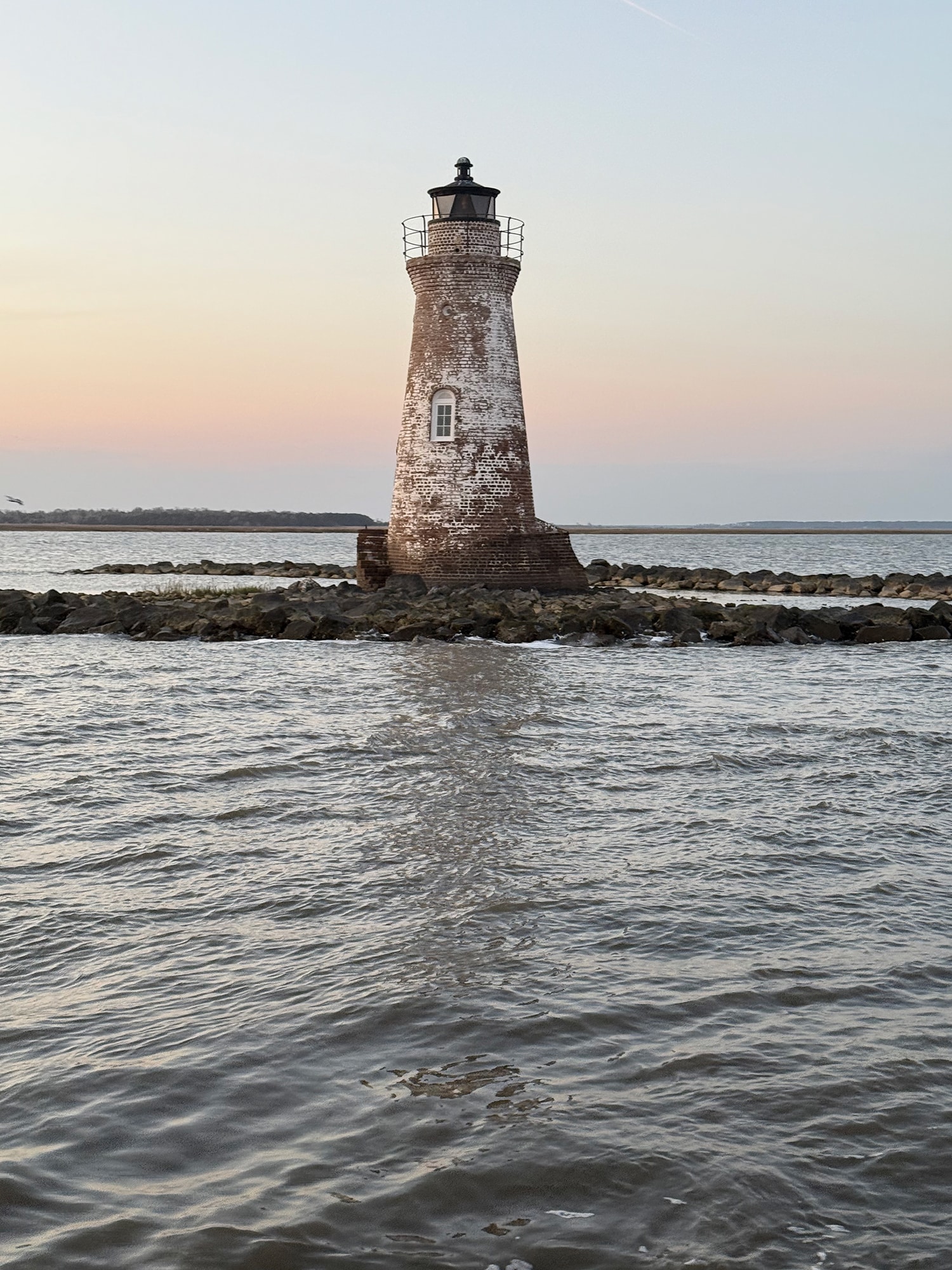
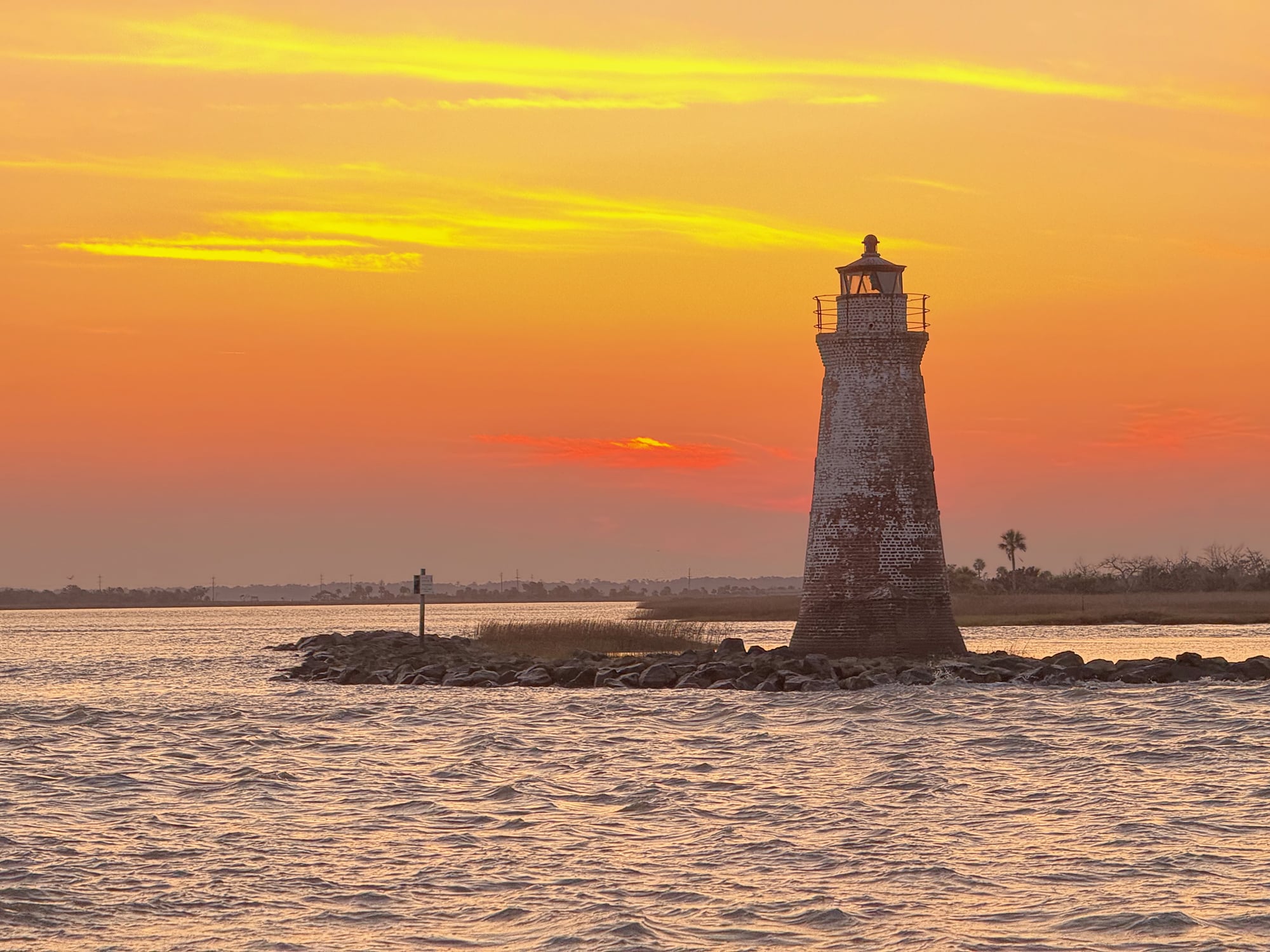
We went out past this lighthouse as the sun was sinking a bit and went almost to the Atlantic in search of dolphins. Although we didn’t see many dolphins, on our return trip the sunset was fantastic and our tour guides were very entertaining. I would do this trip again!
Cockspur Island Lighthouse
Note: this part is paraphrased from Cockspur Island Lighthouse History.
Situated on an islet off the southeastern tip of Cockspur Island marking Savannah River’s south channel, the Cockspur Lighthouse stands strong. The islet is often covered by high tide and is covered with oyster shells and marsh grass. This is the third lighthouse to stand here.
“At the start of the Civil War, the light was temporarily extinguished. On April 10, 1862, Union forces in eleven batteries stretching along the beach at Tybee Island, started a long range bombardment of Fort Pulaski. Thirty-six guns participated in a thirty-hour siege of the fort with the Cockspur Lighthouse in direct line of fire.”
“One theory suggests to effectively hit the Fort walls approximately 1,500 yards distant, Union artillerists had to fire shots at a high angle, thus passing over the 46-foot tower. This strategy, coupled with the short duration of battle could explain why the tower was spared. Soon after war’s end, April 25, 1866, the beacon was relit and painted white for use as a daymark.
“The lighthouse was decommissioned in June 1909, when the north channel was designated as the primary shipping channel of the river and ownership was transferred from the US Coast Guard to the National Park Service in August, 1958.”
It’s Dinner Time!
After a fabulous day, we headed on over to The Original Crab Shack, “Where the Elite Eat in their Bare Feet” for a Captains Sampler Platter for two. Although I passed off my half of the mussels to Jim, and neither of us are big fans of crawfish, I did NOT share my half of the snow crab. There was plenty of shrimp, corn, potatoes and sausage to go around with a large to go container for tomorrow.
Although we had a few things planned for our last day in Savannah, we stayed in and did a little laundry and got packed up before enjoying our leftovers from last night’s wonderful dinner at the Crab Shack!
The Remainder of this Trip
We traveled to North Carolina to visit some friends and then they joined us for several days at Blue Ridge Village in Banner Elk, NC. We had a great time shopping and dining about town. We did have a couple of outings including a wonderful afternoon at Grandfather Mountain. Unfortunately going there in March does not show off the beauty that I’m sure would be on full display a few months later. Therefore, I’m going to wait and revisit several of the things we saw when we return and there are leaves on the trees and flowers on the rhododendrons that were plentiful everywhere we went!
Next up: Southeast to Sunshine Recap
Happy trails,
Barb