Henry Flagler’s Legacy
In my last post we visited the church that Henry Flagler built in memory of his daughter and newborn granddaughter. Today we’ll visit two more of Flagler’s beautiful creations, as he built this city from the ground up in the late 1880s – each with its own amazing Tiffany stained glass display.
To start at the beginning of this series, visit Southeast to Sunshine
“If you stroll through the area of St. Augustine immediately west of downtown, you will experience the extraordinary influence of New Yorker Henry Morrison Flagler – a co-founder of Standard Oil with John D. Rockefeller. Flagler stepped back from daily responsibilities of this successful venture and launched a second career in Florida.
Over the next thirty years, he built resort hotels from Jacksonville to Miami and the Florida Keys linked by his Florida East Coast Railway. Steamships took visitors to his resorts at Nassau in the Bahamas and to Havana, Cuba. His Overseas Railway through the Florida Keys was recognized as the “Eighth Wonder of the Modern World.” Ultimately, Flagler was regarded as the “Father of Modern Florida” for his investments in the sunshine state.
St. Augustine exhibits some of his most lasting contributions and was his chosen location for his final resting place…” ~ READ MORE
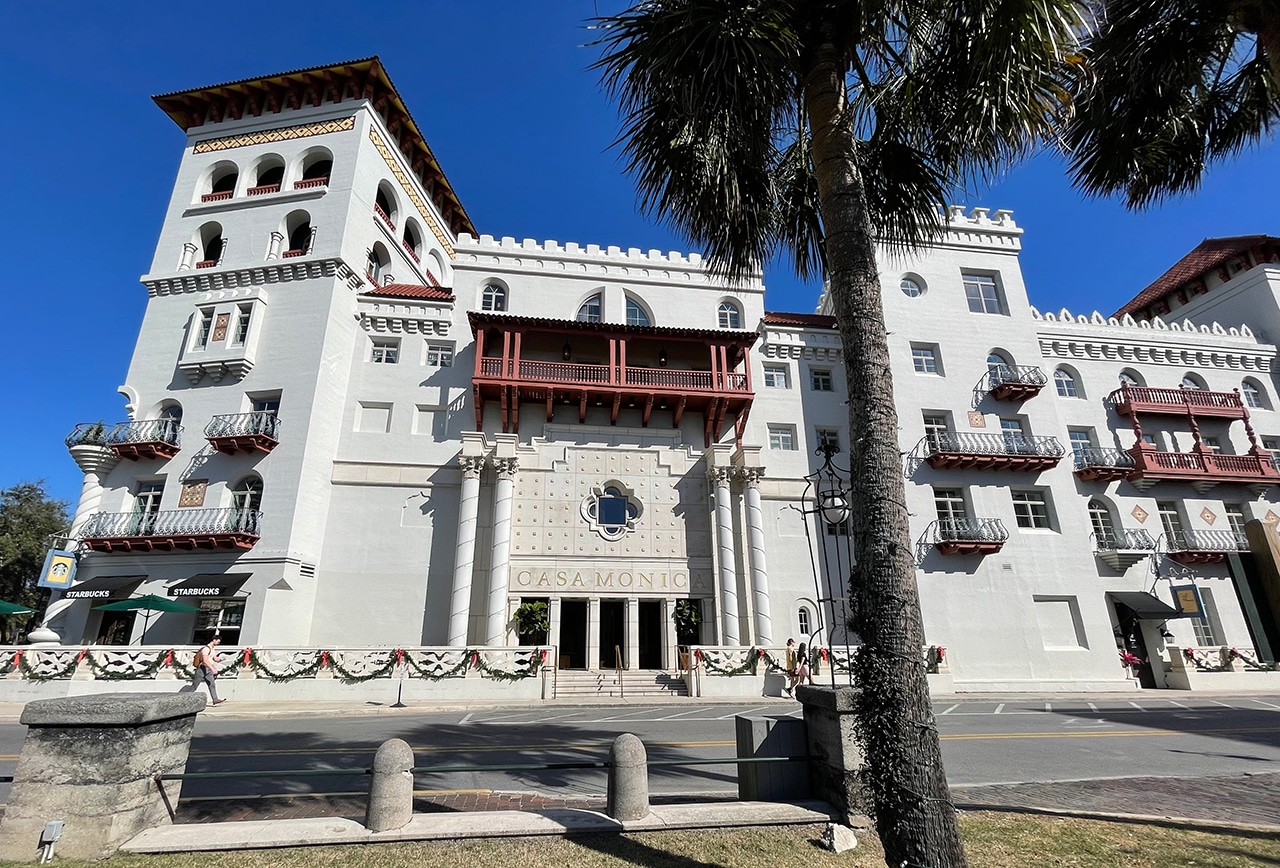
Three Notable Buildings
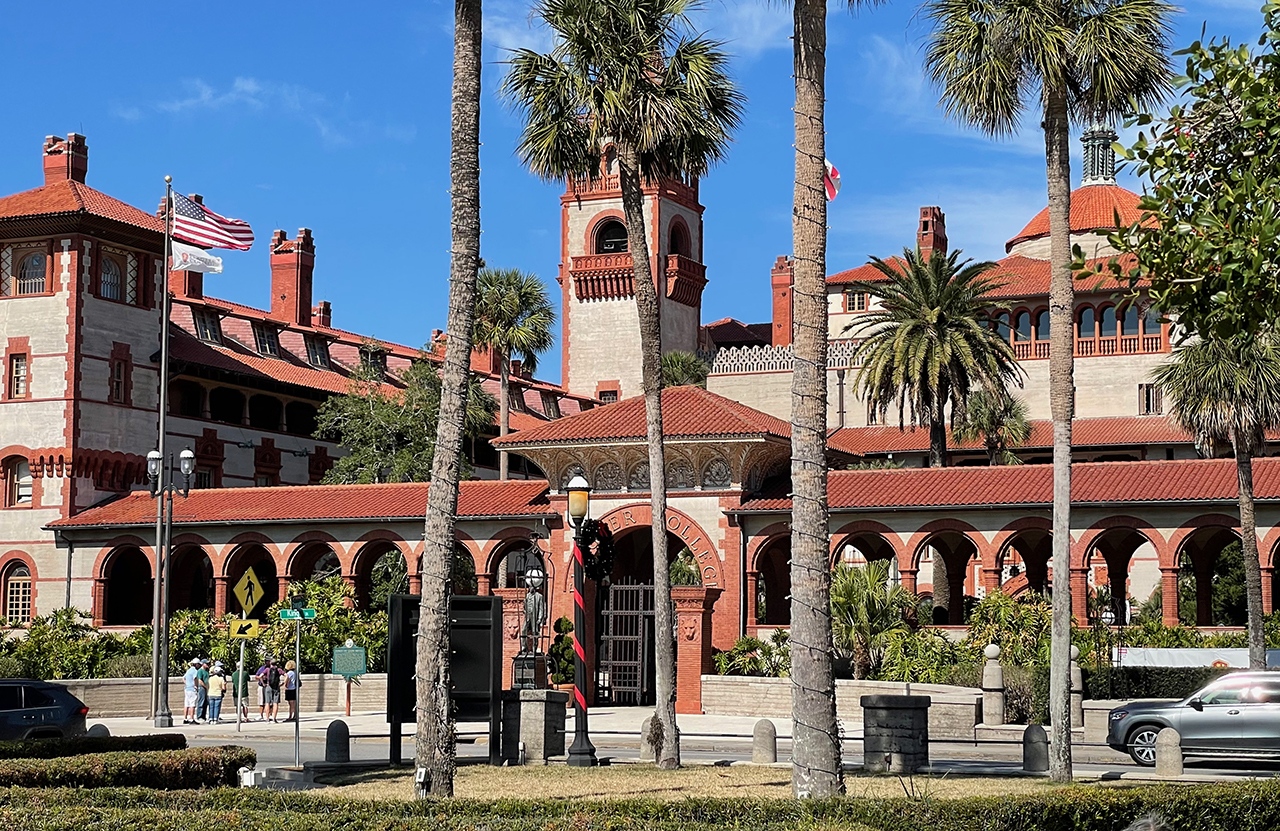
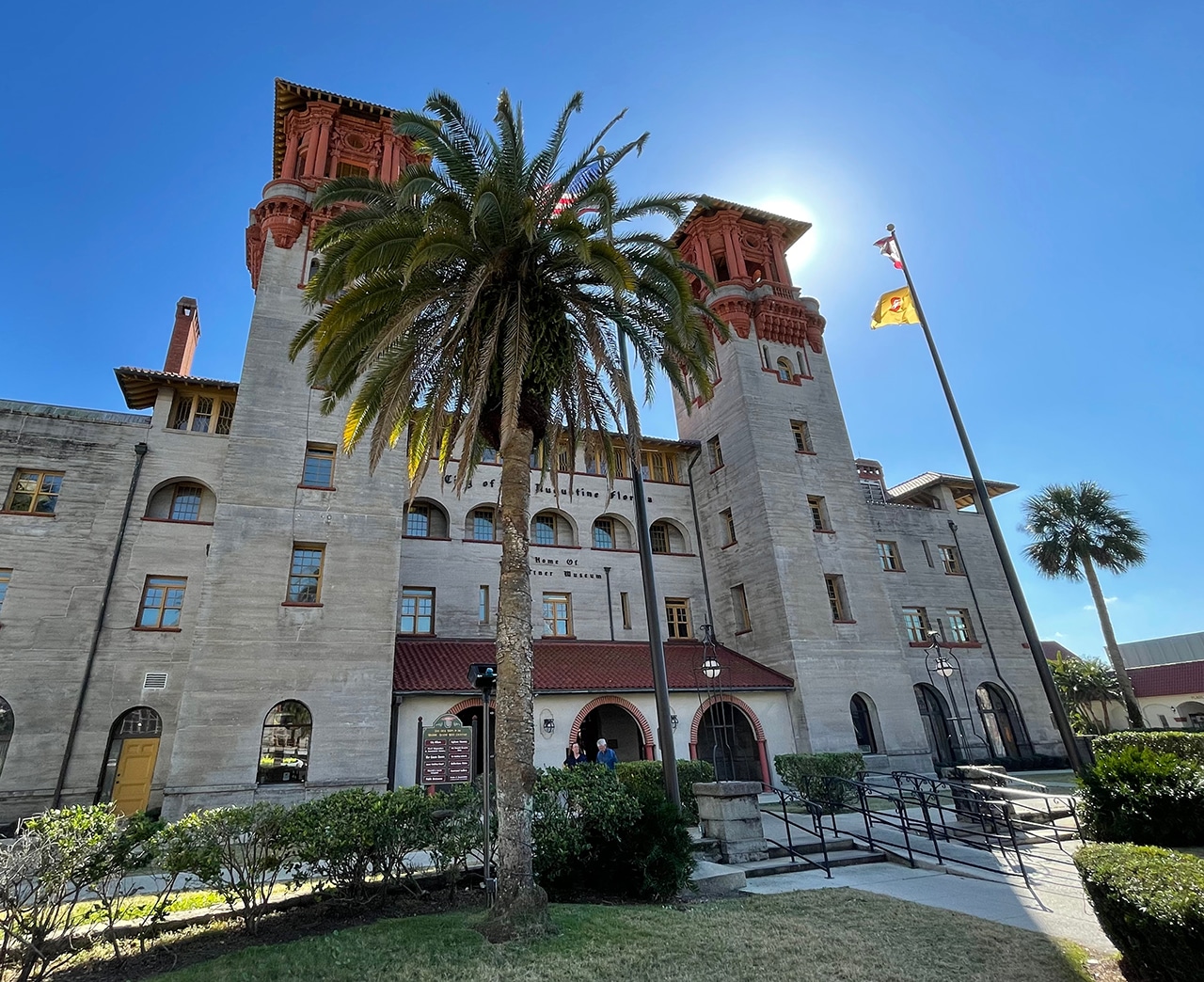
The captions in the photos above indicate that all three buildings were built as hotels. Two of the three buildings were originally built by Henry Flagler and have since been repurposed. The third was bought by Flagler at a huge discount after he “helped” the original builder – Franklin W. Smith – out of some financial trouble.
Flagler College
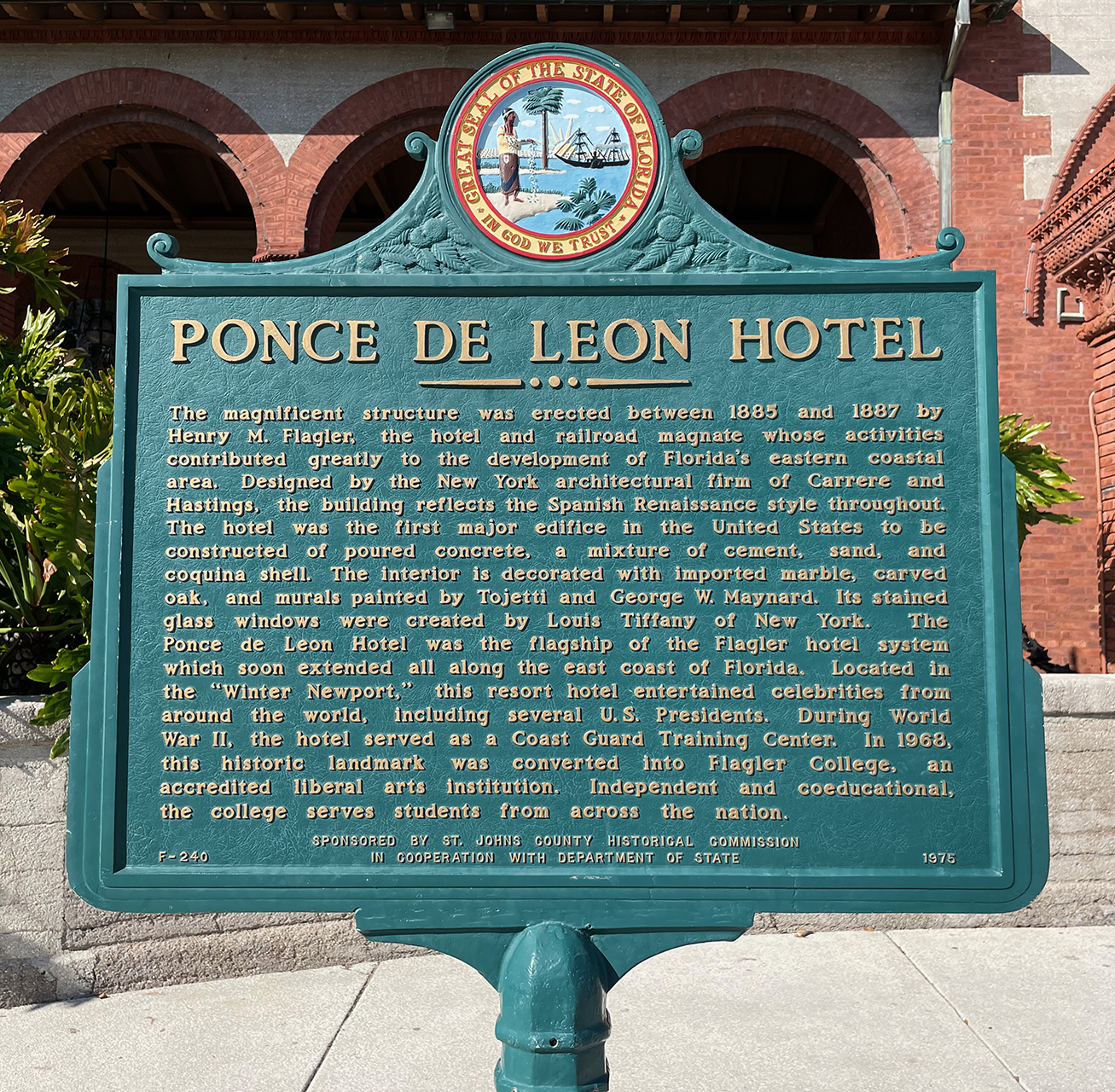
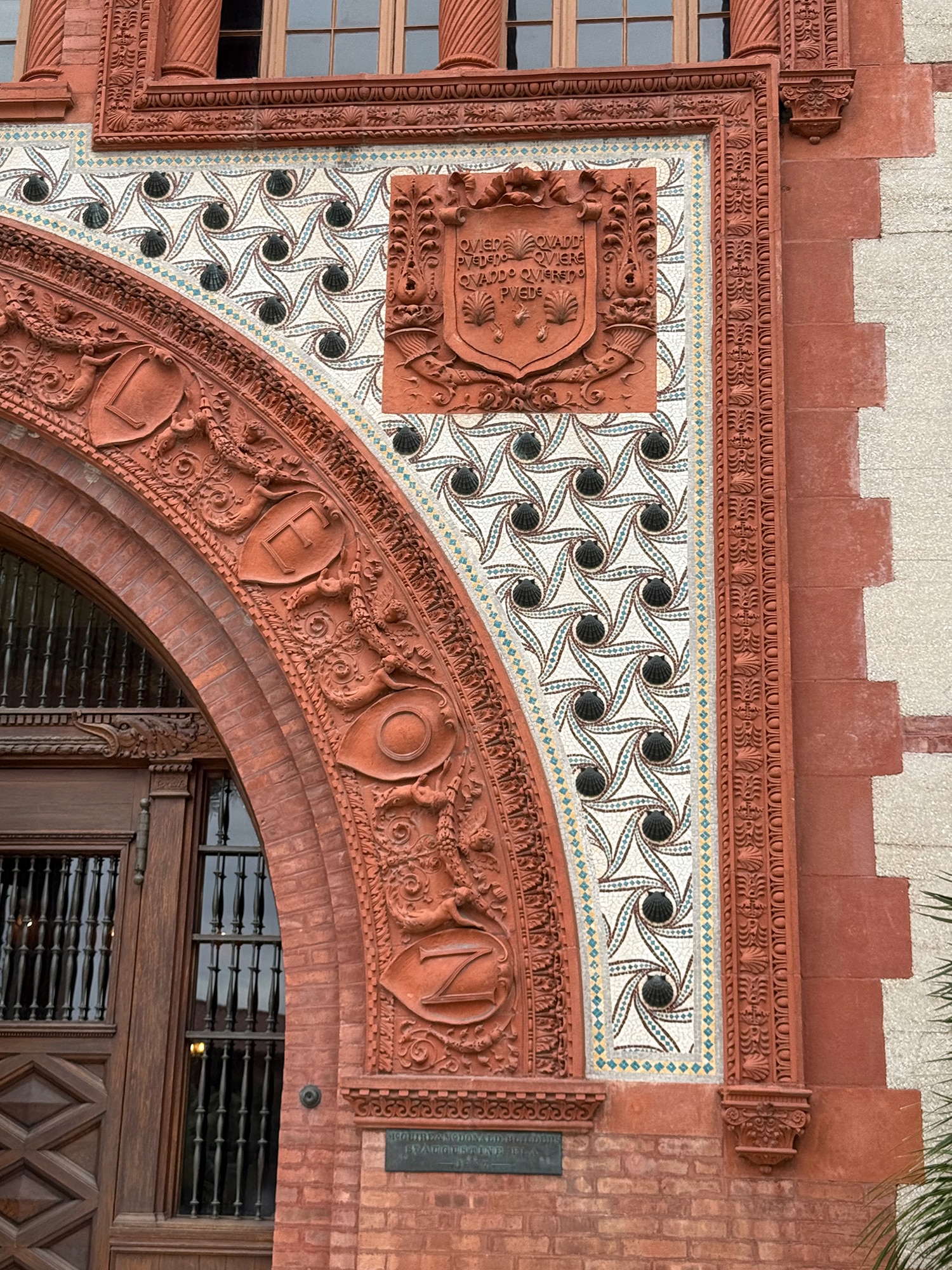
The Ponce de Leon Hotel is a beautiful example of Spanish Renaissance architecture. Completed in 1887 by Henry Flagler, this hotel was the first sizable structure in the U.S. to be constructed of a mixture of cement, sand, and coquina shells.
The interior is decorated with imported marble and carved oak, with murals painted by Tojetti and George W. Maynard. Its stained glass windows were created by Louis Tiffany of New York. The Ponce de Leon Hotel was the flagship of the Flagler hotel system which soon extended all along the east coast of Florida.
Located in the “Winter Newport,” this resort hotel entertained celebrities from around the world, including several U.S. Presidents. During World War II, the hotel served as a Coast Guard Training Center and in 1968, this historic landmark was converted into Flagler College, an accredited liberal arts institution. ~ Paraphrased from the green sign below:
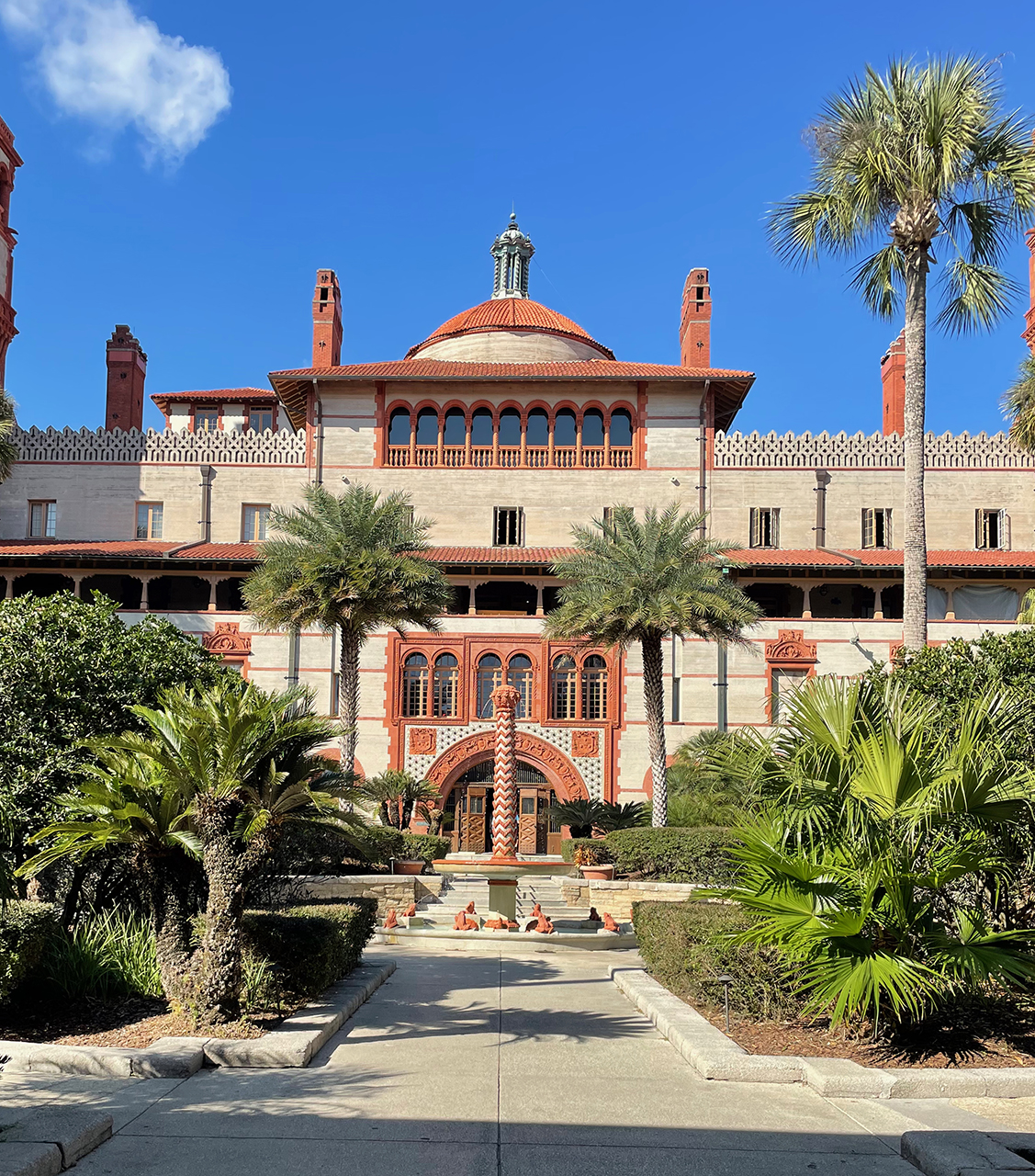
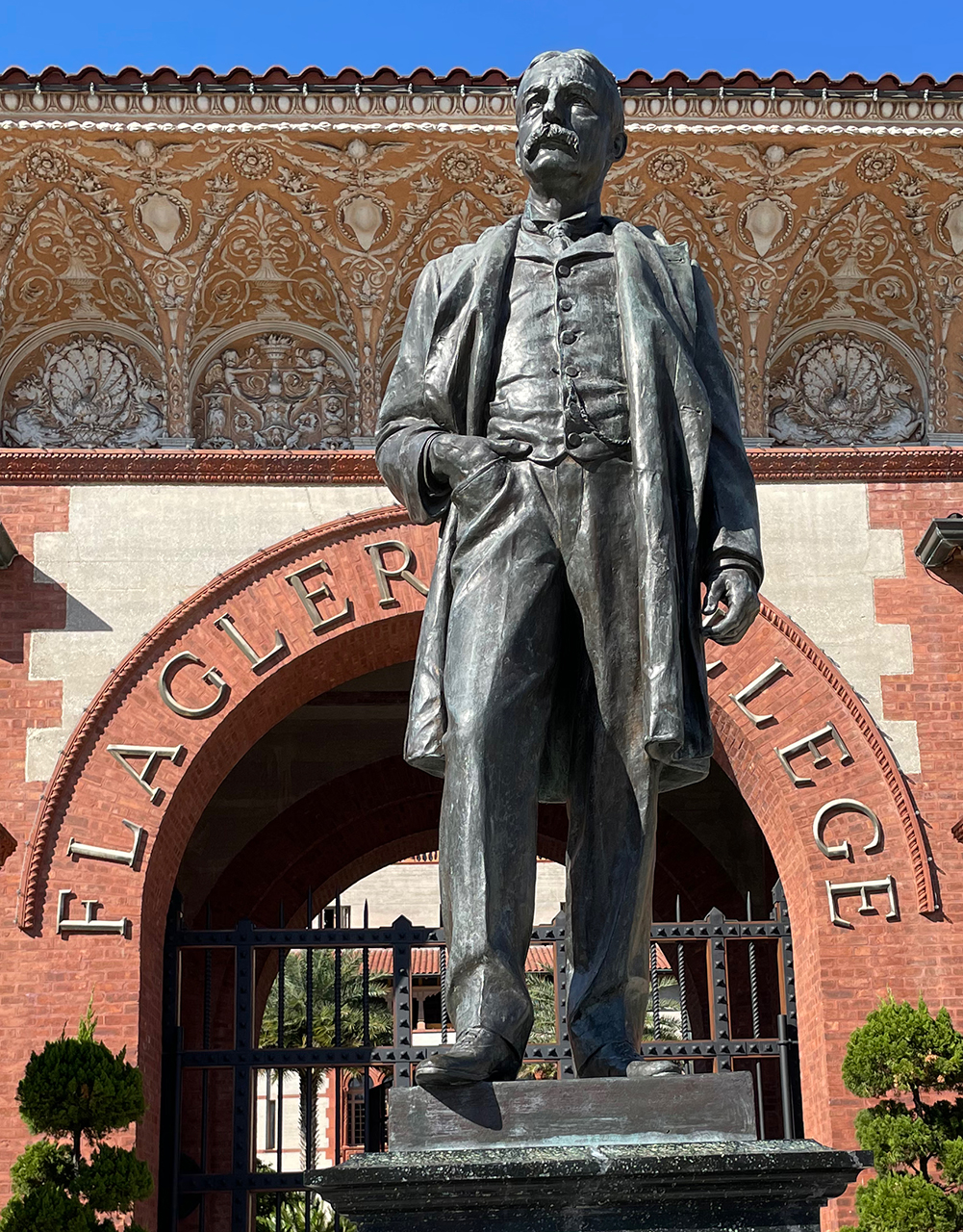
“Flagler College offers an exceptional education through a challenging, inclusive, and supportive academic community integrated with the thriving culture and history of this unique place, St. Augustine. We foster intellectual, social, and personal transformation in our students. We prepare them for a diverse world that will always need discerning individuals, responsible citizens, and visionary leaders. The College is committed to the preservation of the former Hotel Ponce de Leon and other historic structures that grace its world-renowned campus.” ~ READ MORE
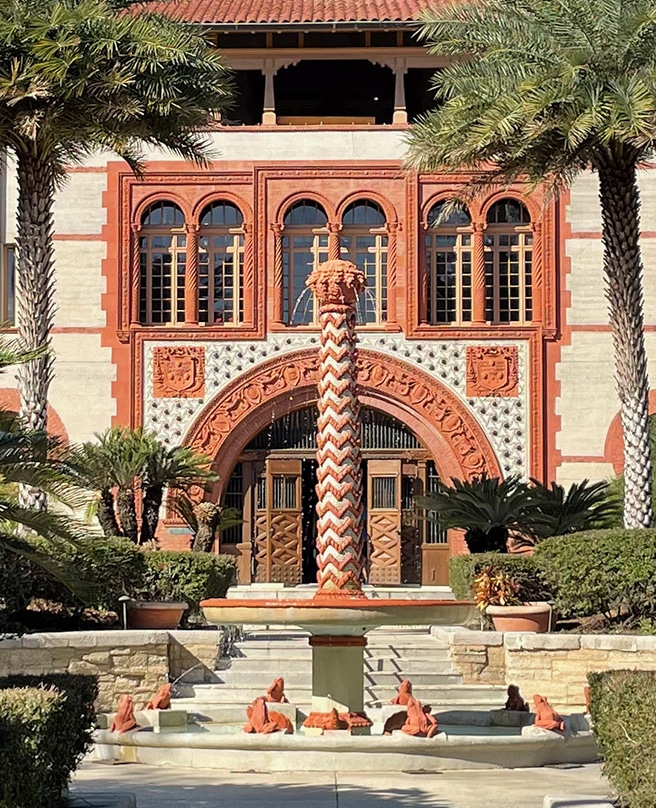
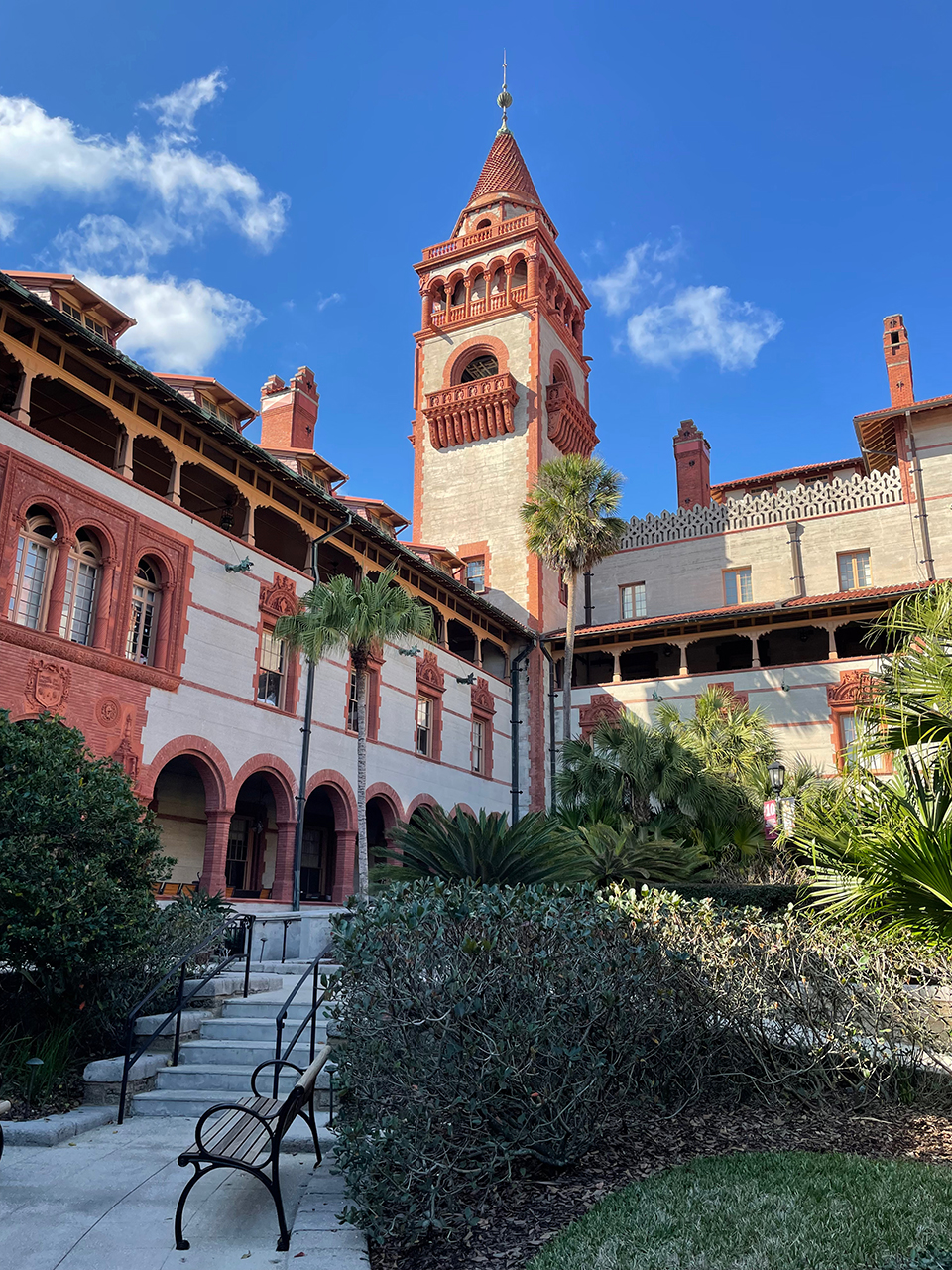
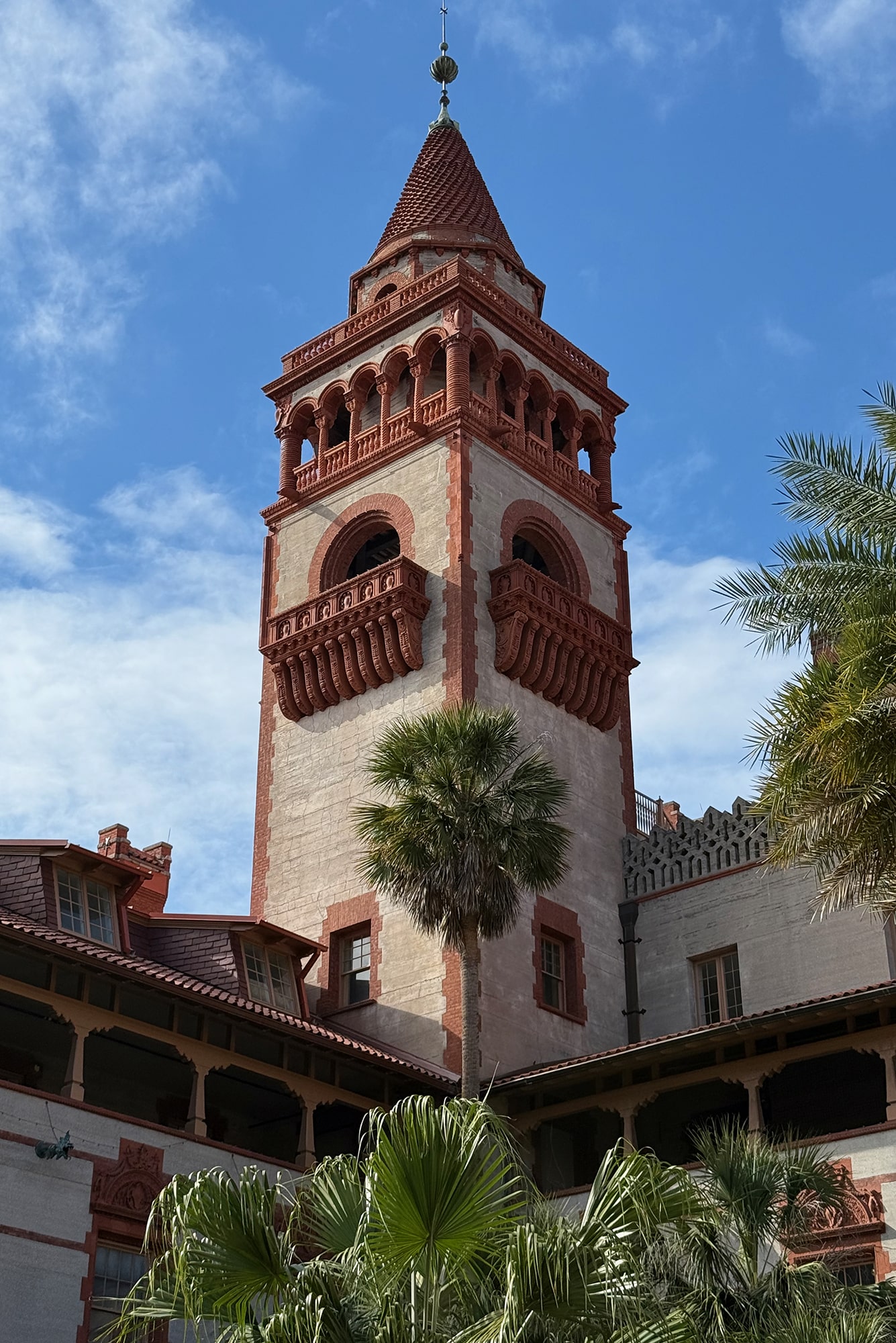
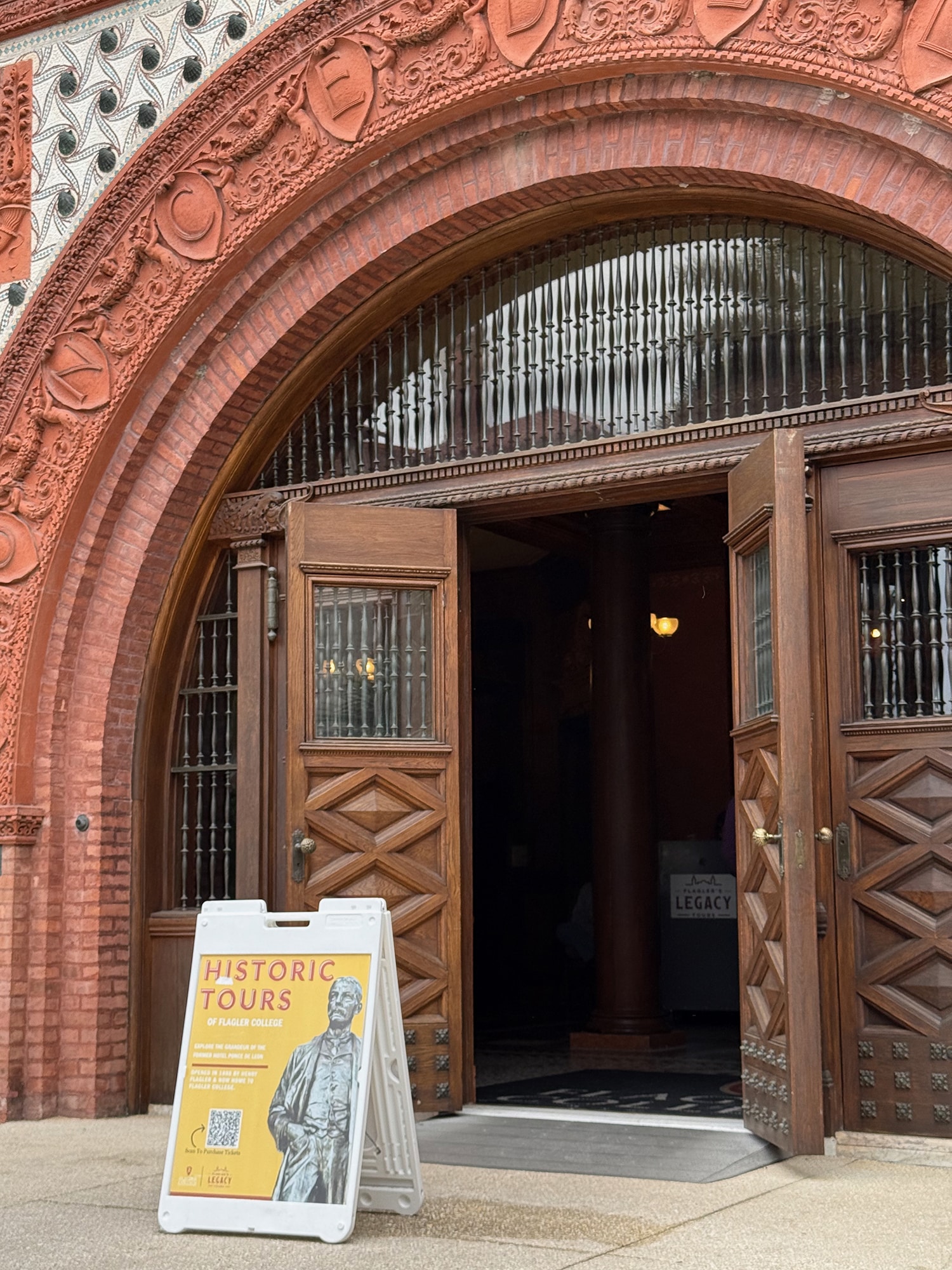
Fantastic Design Elements
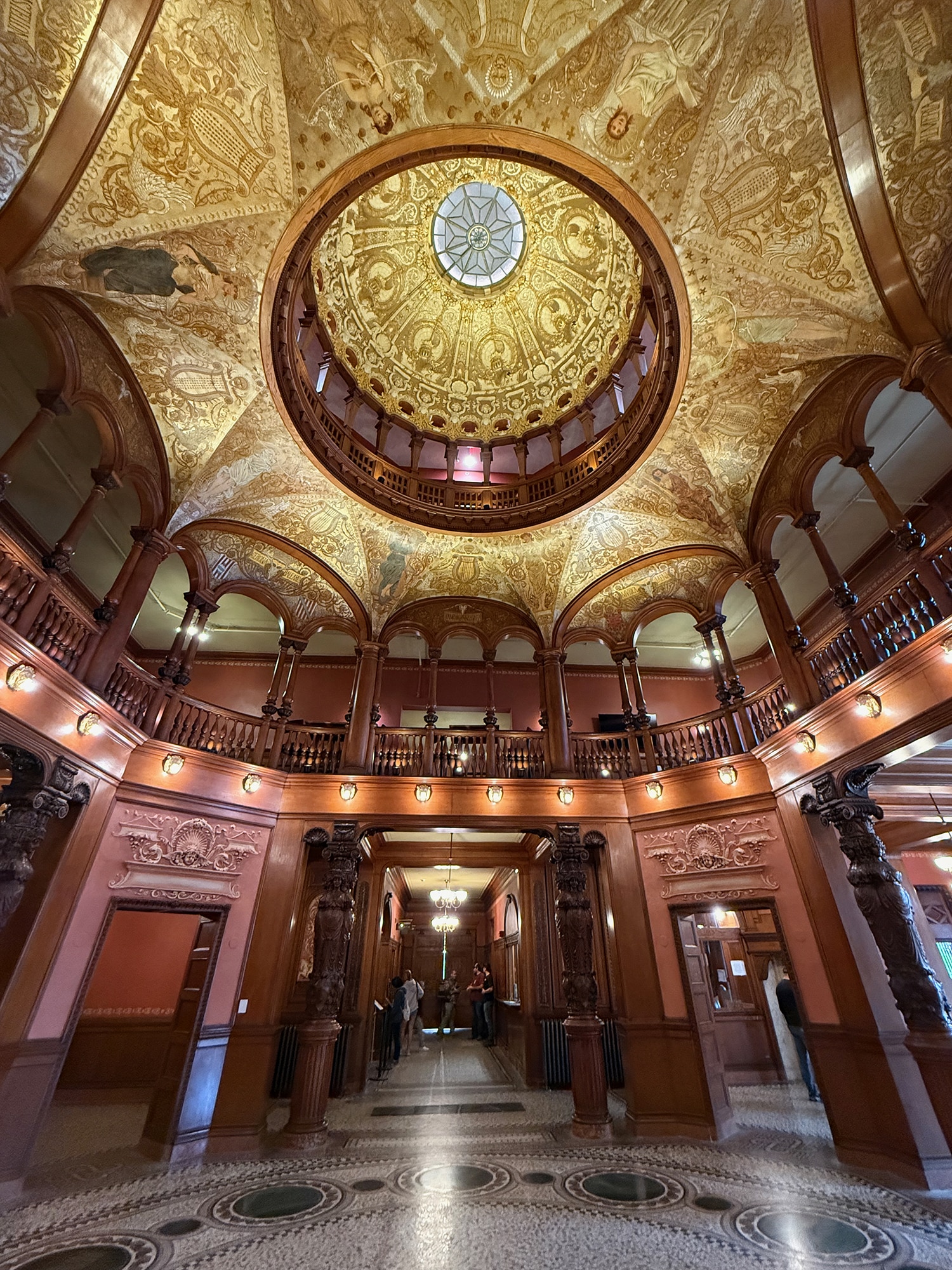
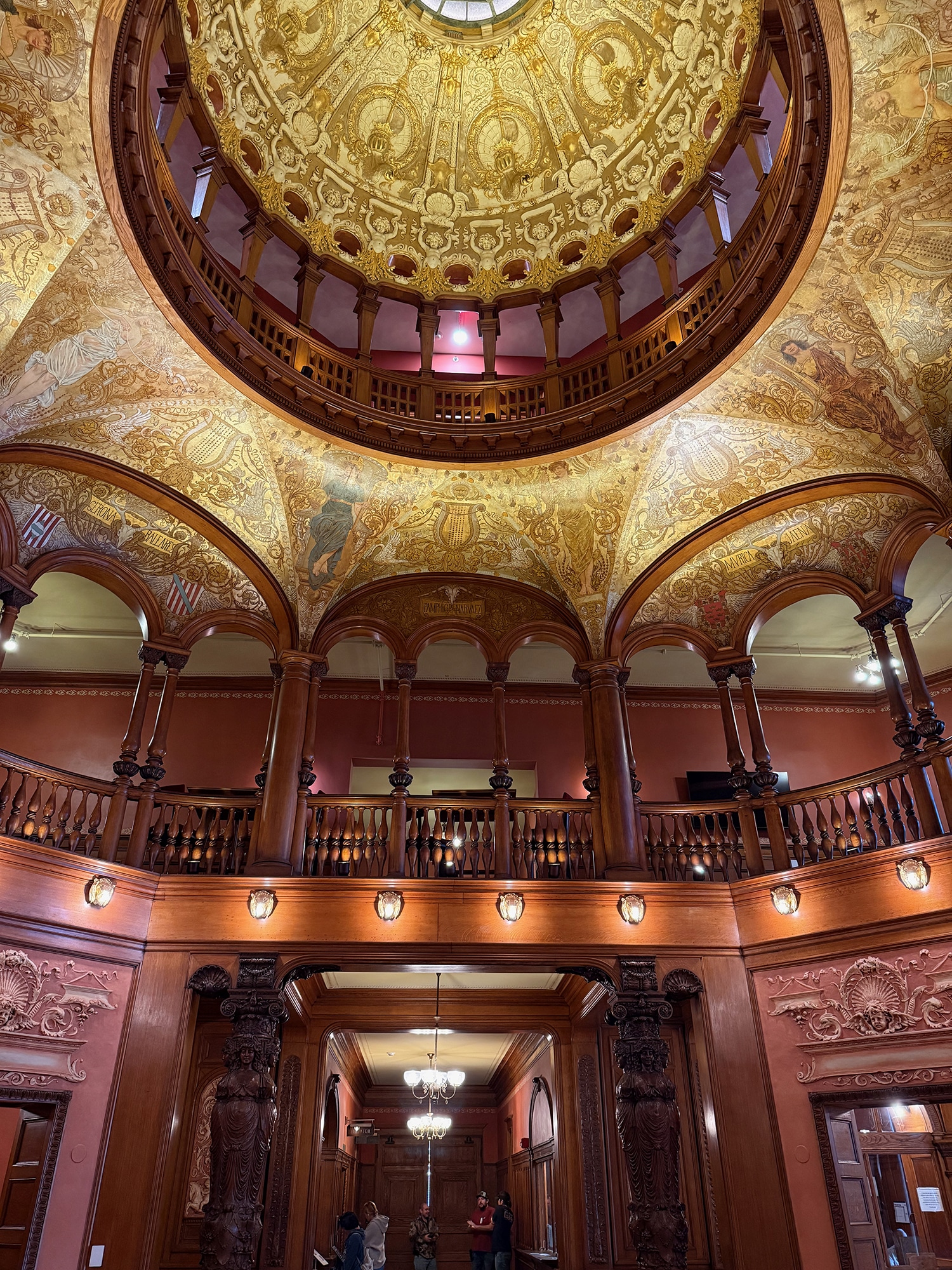
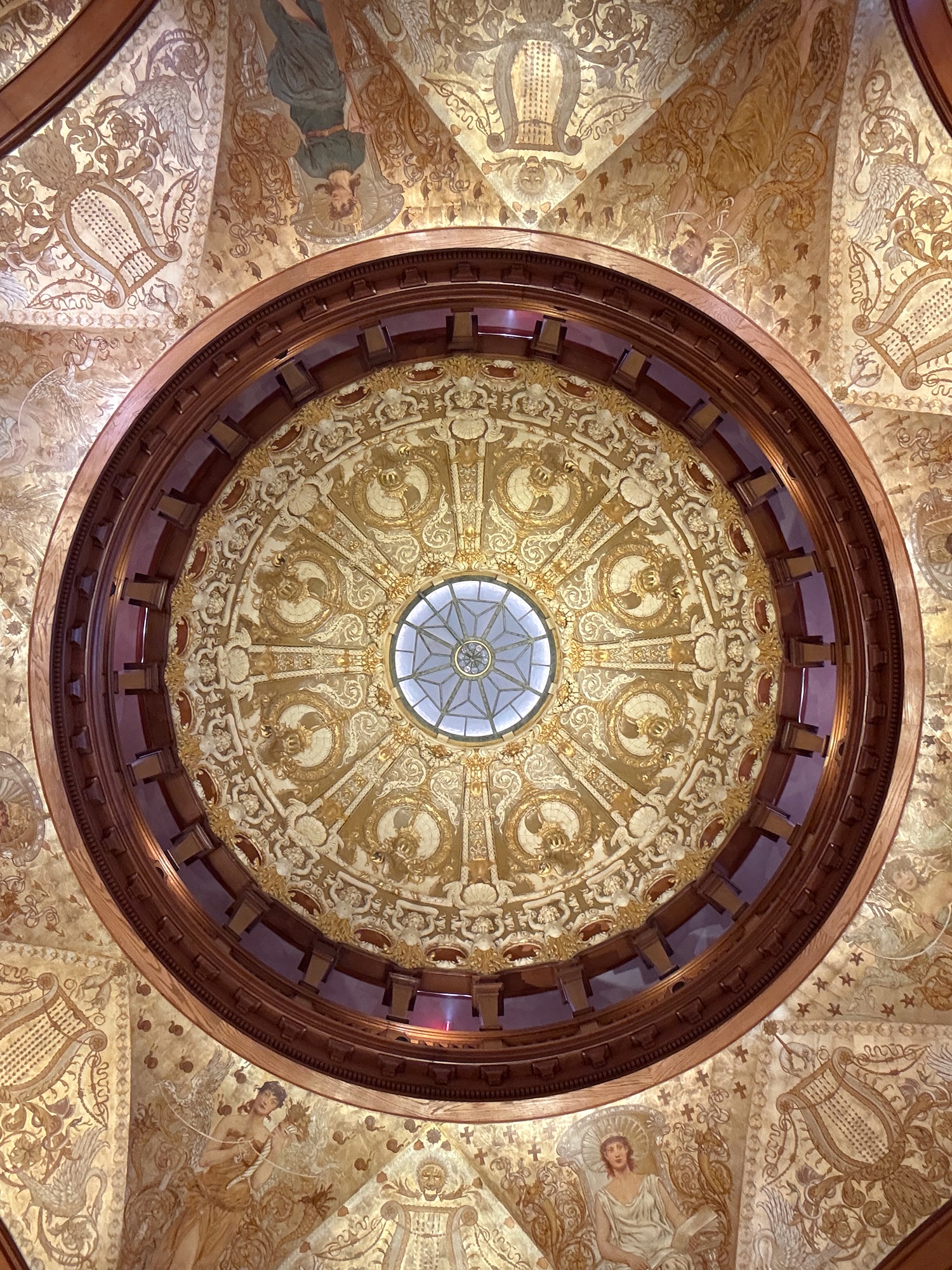
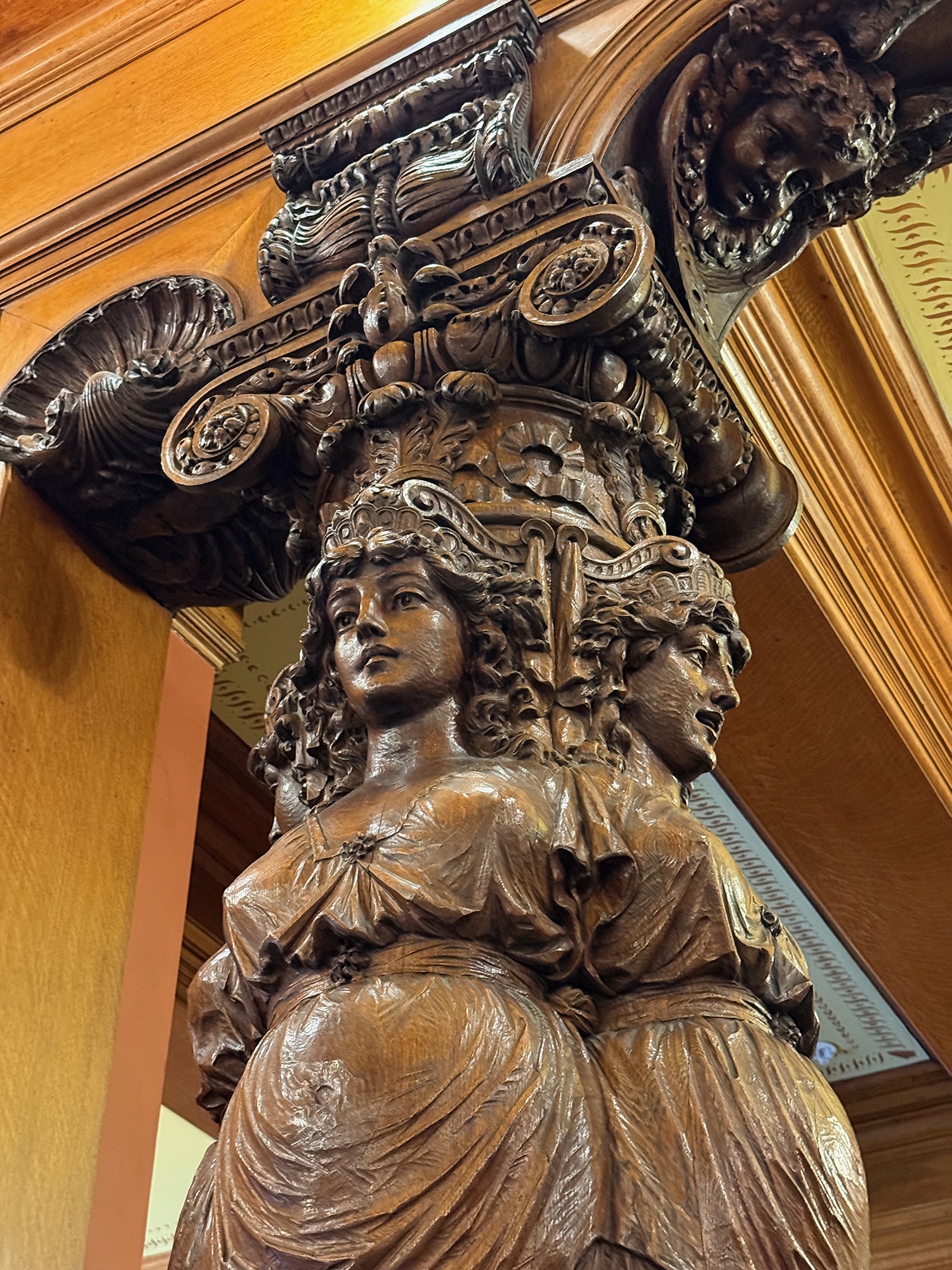
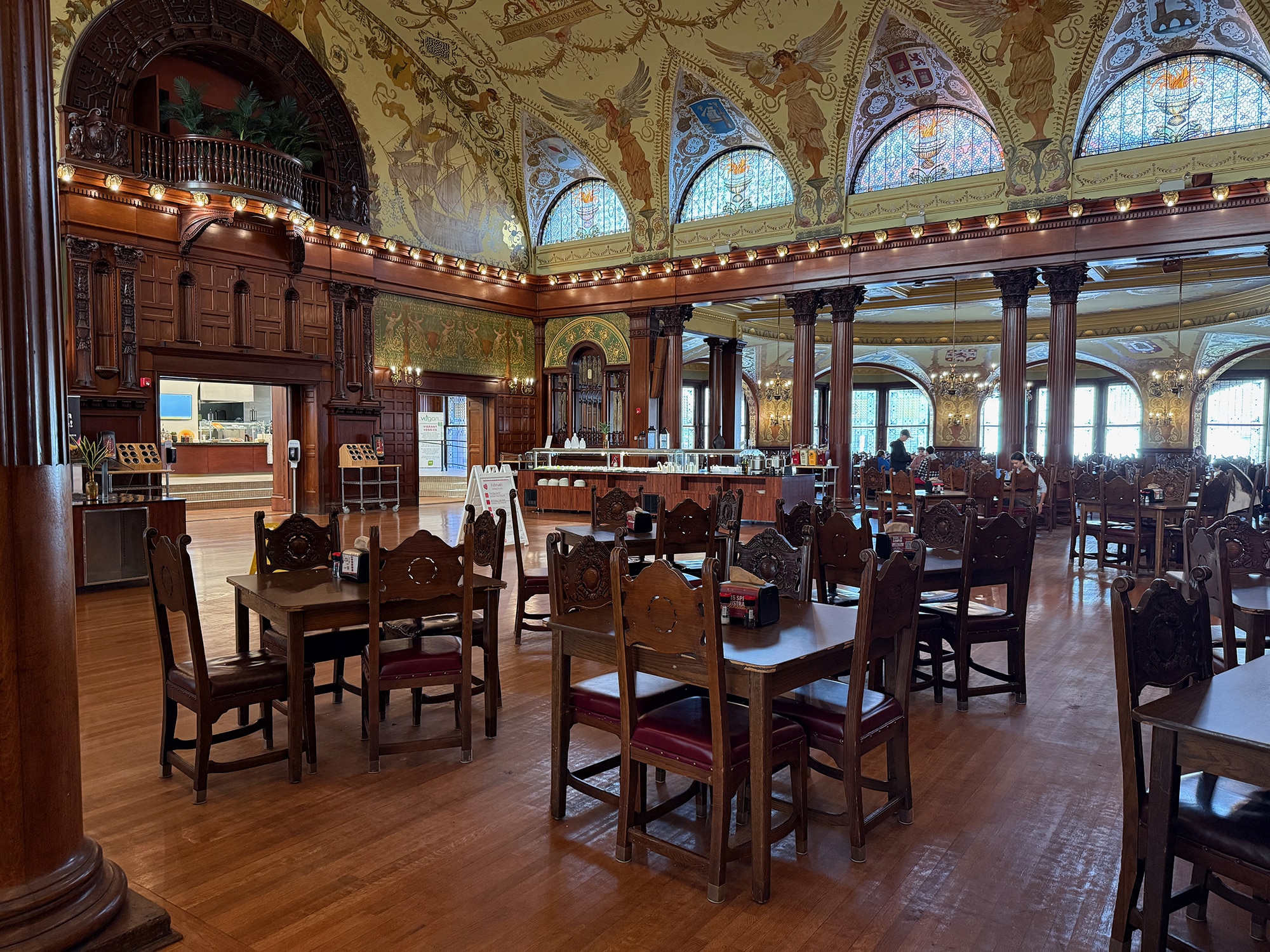
While the exterior and courtyard are pretty impressive, the interior is filled with magnificent design elements. Our tour started in the rotunda (pictured above). The floor is just gorgeous with its hand-laid African Mosaic Tile – not in sheets like you’ll find at Home Depot. The 68-foot domed ceiling displays murals that are embellished with 23K gold leaf, and the eight lovely ladies (each unique) that surround it were hand-carved from oak beams.
Since it pays to have friends in high places, Thomas Edison himself initiated the installation of electricity to this structure a full three years before the White House got theirs.
The Magnificent Dining Hall
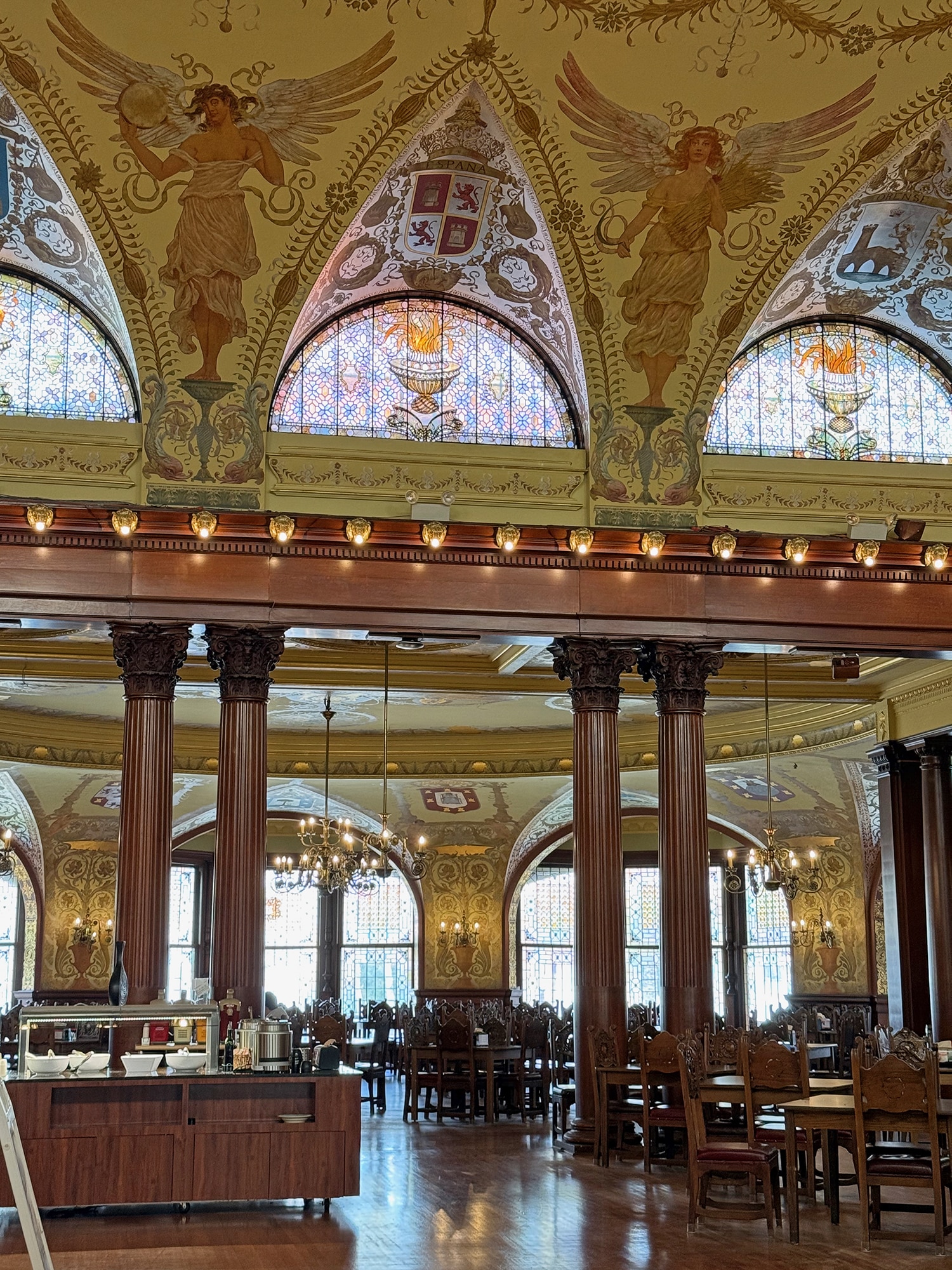
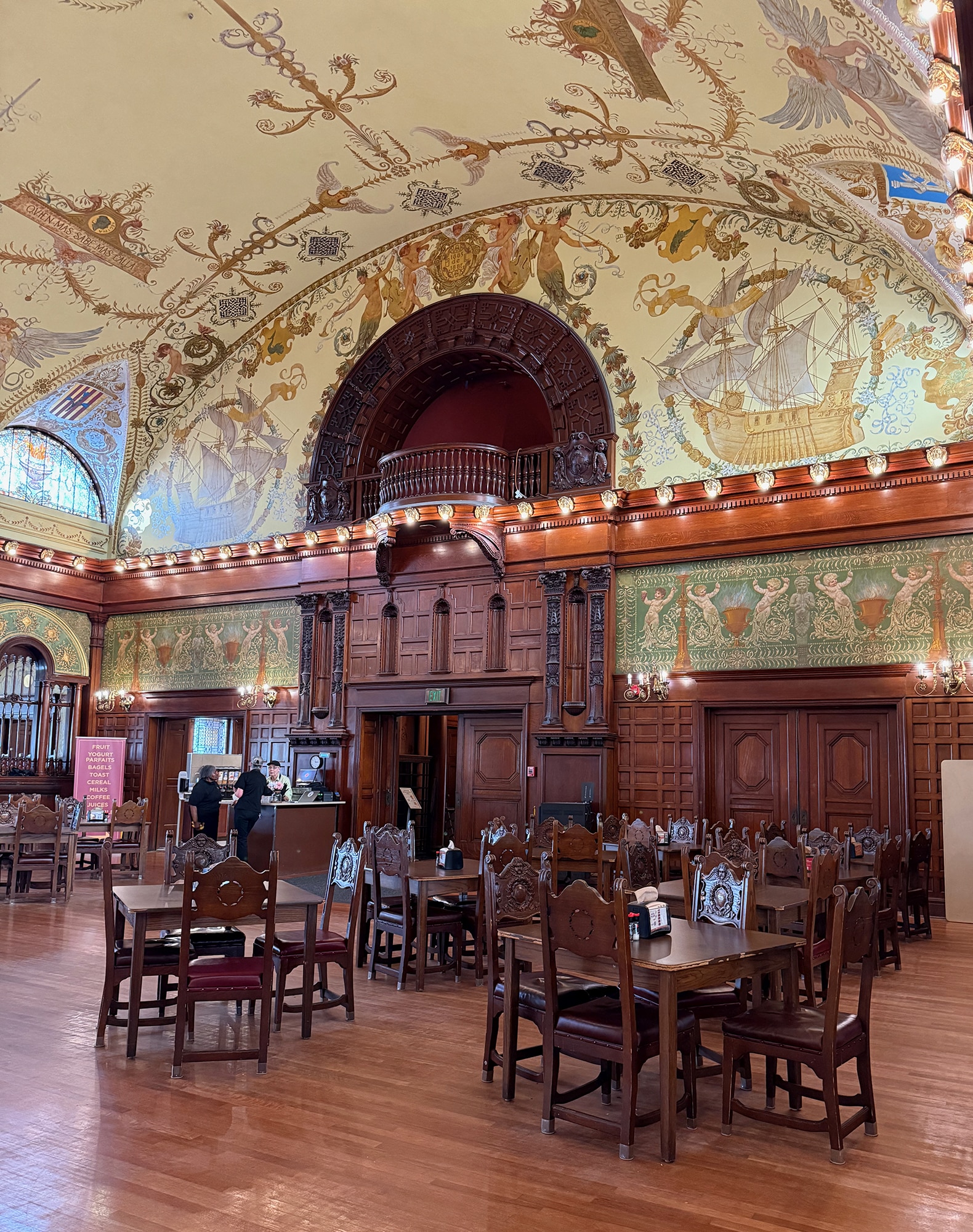
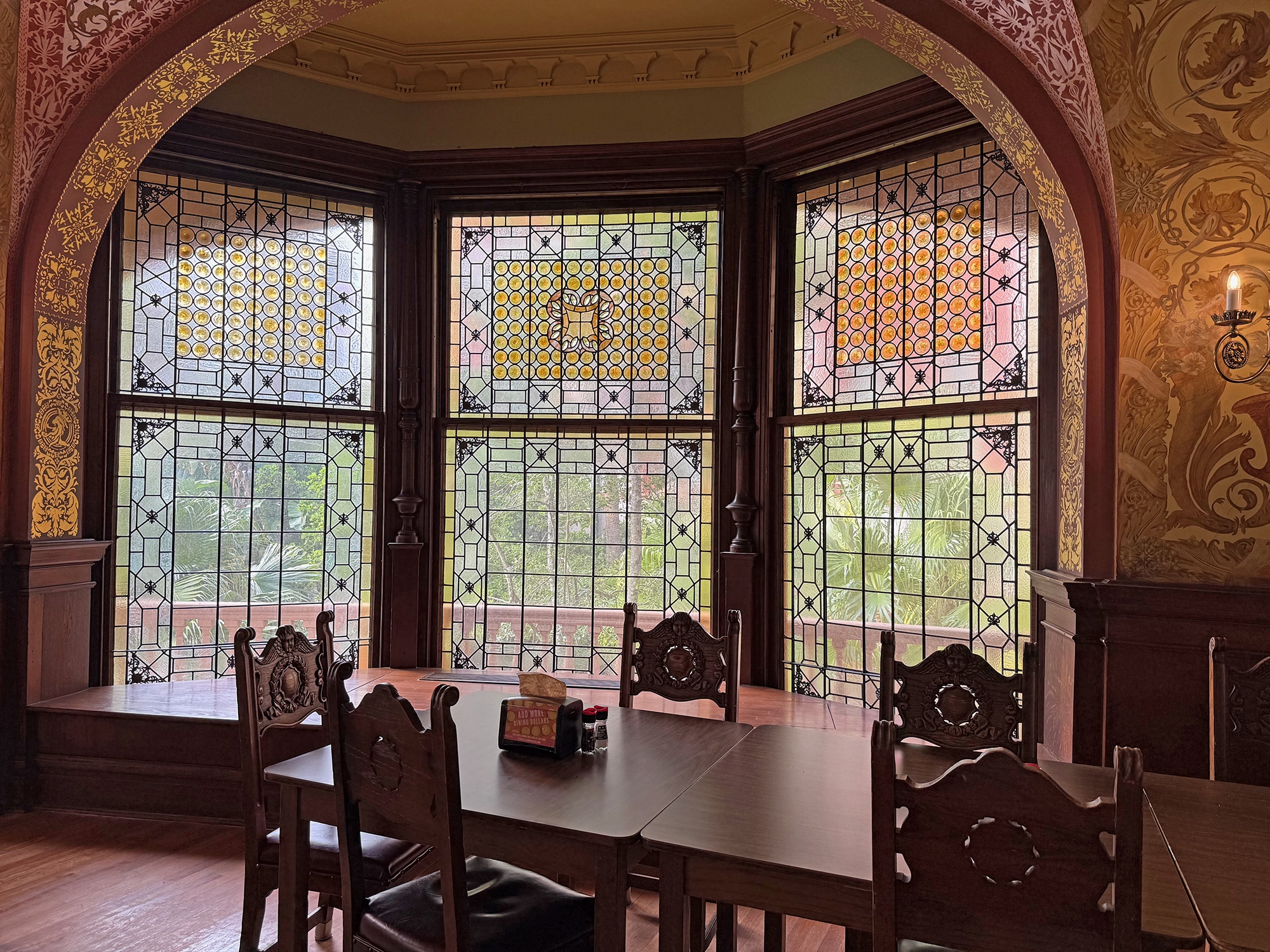
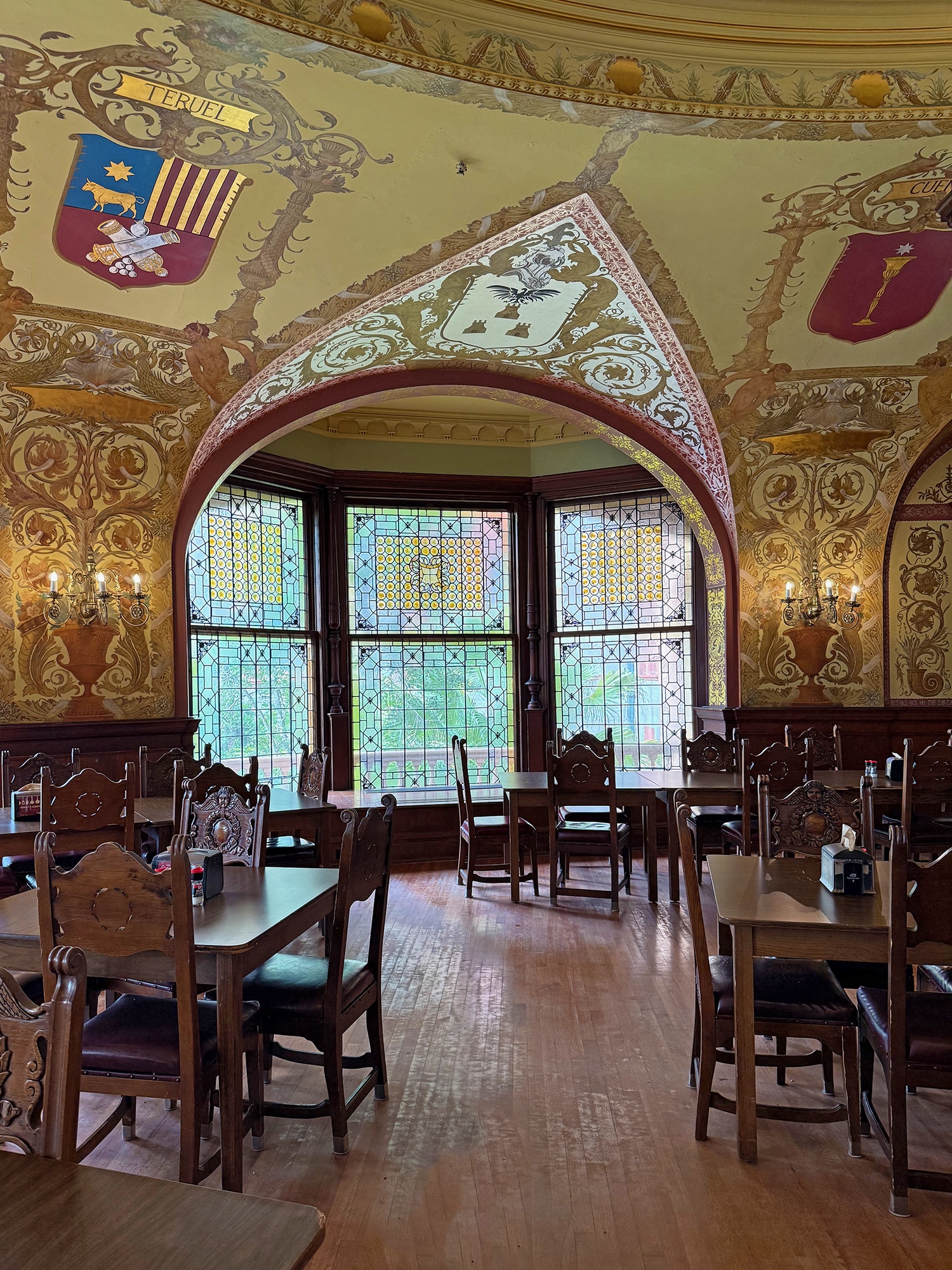
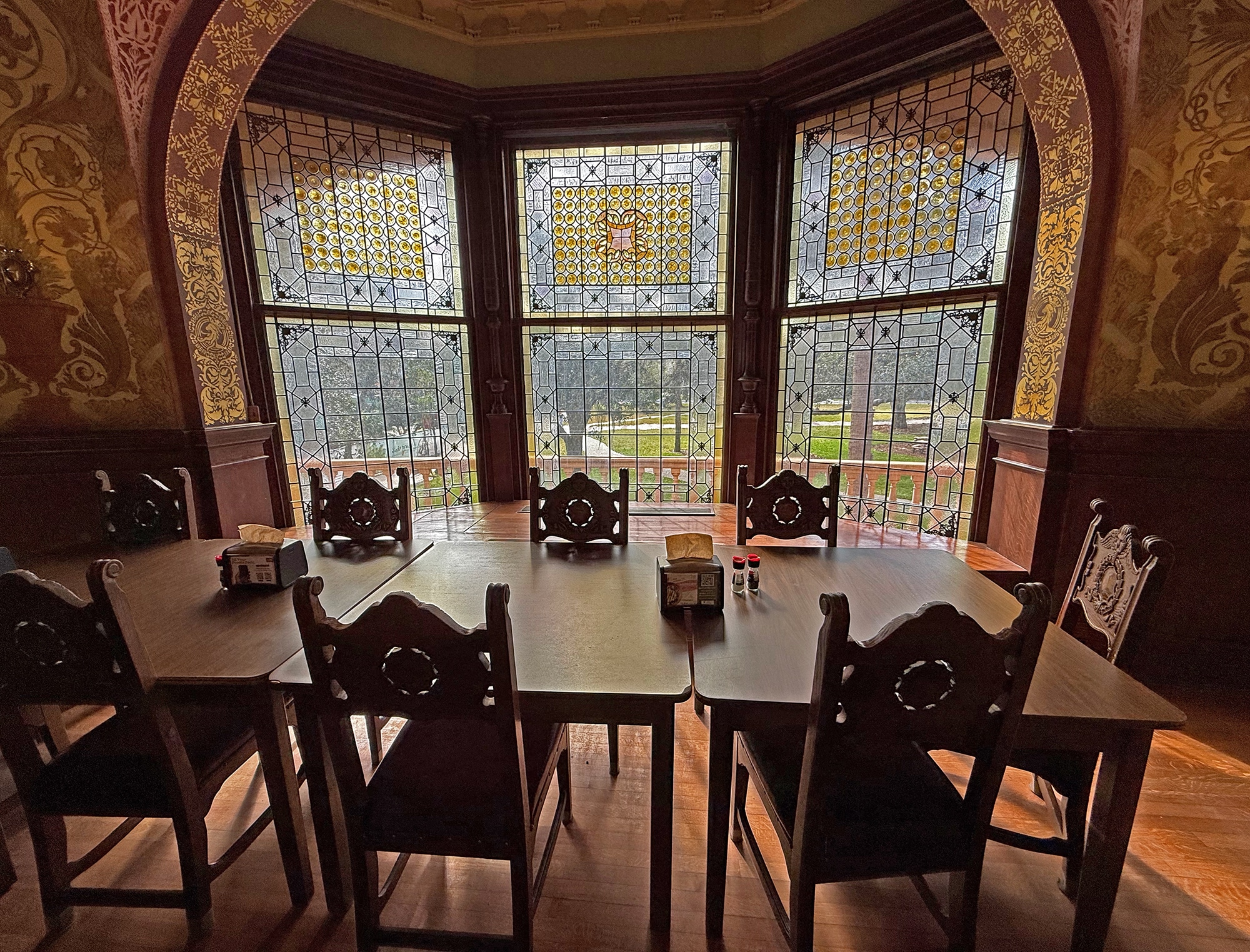
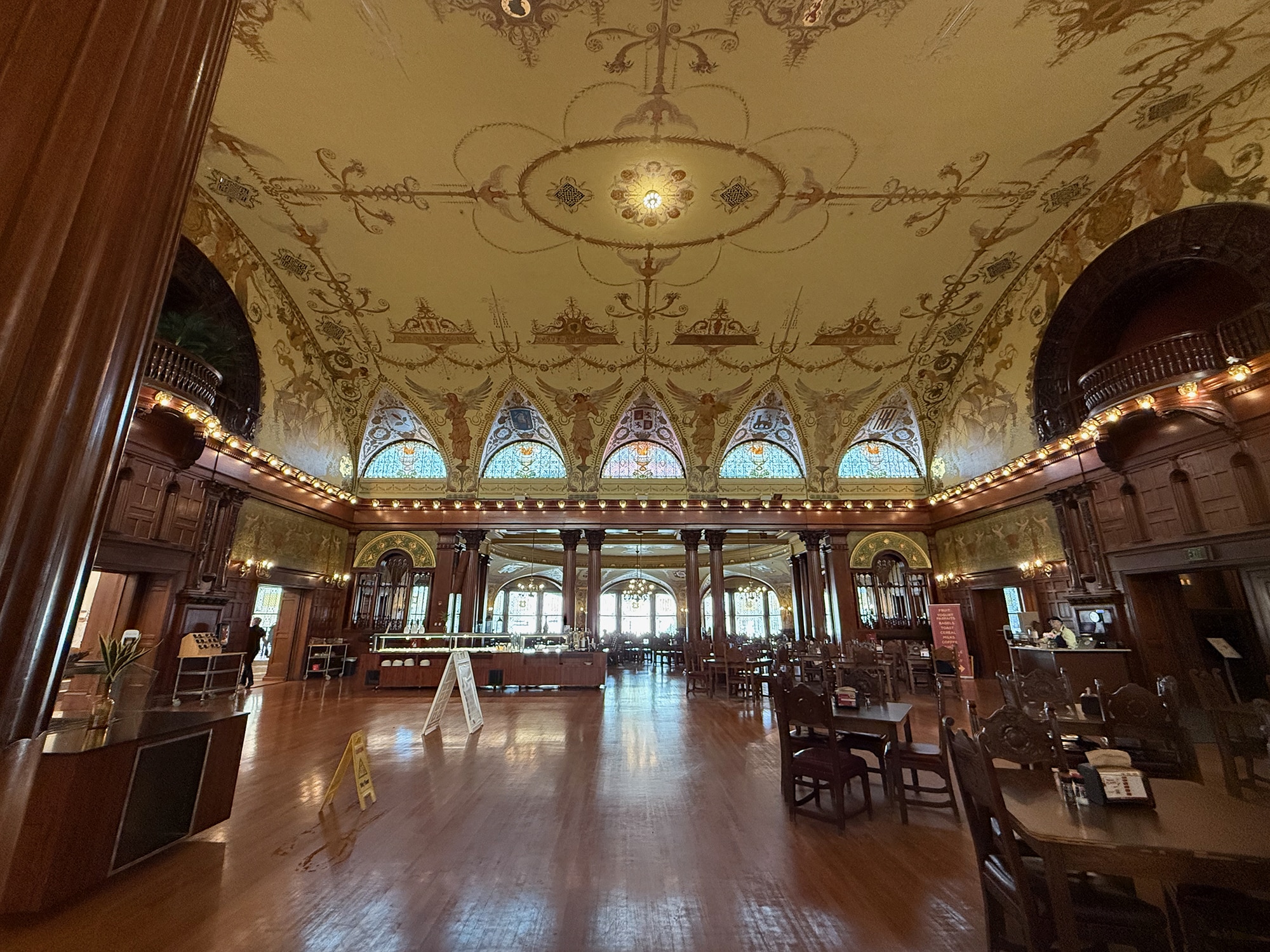
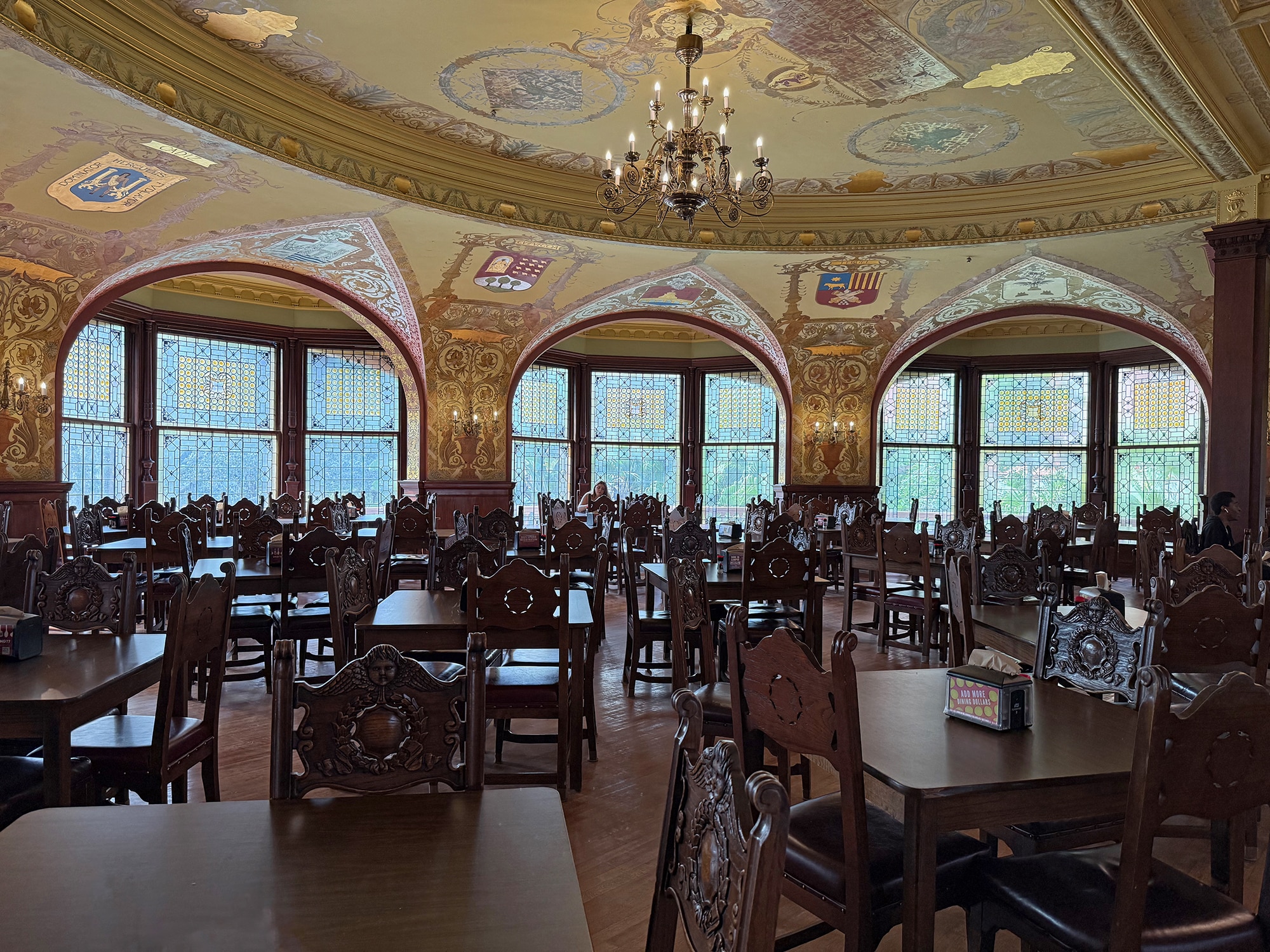
Complete with Tiffany stained glass windows, the Dining Hall is only accessible on a tour. Here is a link to a virtual tour, which is not nearly as impressive as seeing and feeling the opulence of this place in person. When we were here two years ago, we could check out the rotunda, but our timing did not allow for a tour, so this time we made sure it happened. Seeing the Dining Hall was definitely worth the price of admission! And our tour guide was a student here, so she was well-versed in her everyday life and the history of this beautiful campus.
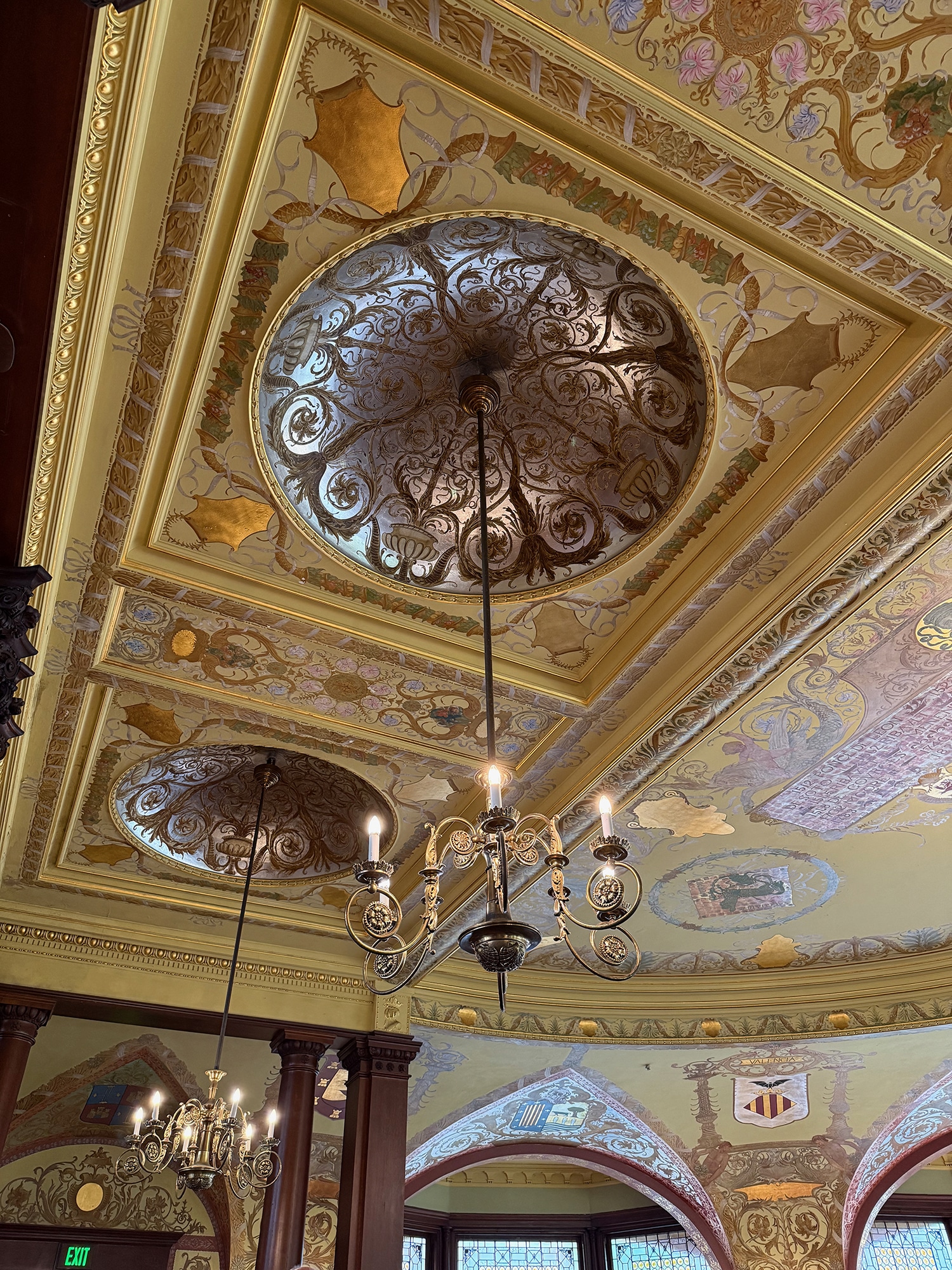
“Considered the most remarkable room, the Hotel Ponce de Leon’s Dining Room is 14,212 square feet with a forty-eight-foot barrel-vaulted ceiling and includes semicircular east and west venidos. The Dining Room once held 300 seated guests; each table having their own waiter for the duration of their stay.
In this room, there are forty Louis Comfort Tiffany stained glass windows, featuring clear and colored glass in geometric patterns and filigree designs. Also, the barrel-vaulted ceiling features additional allegorical females and murals by George W. Maynard.” ~ READ MORE
The Lightner Museum
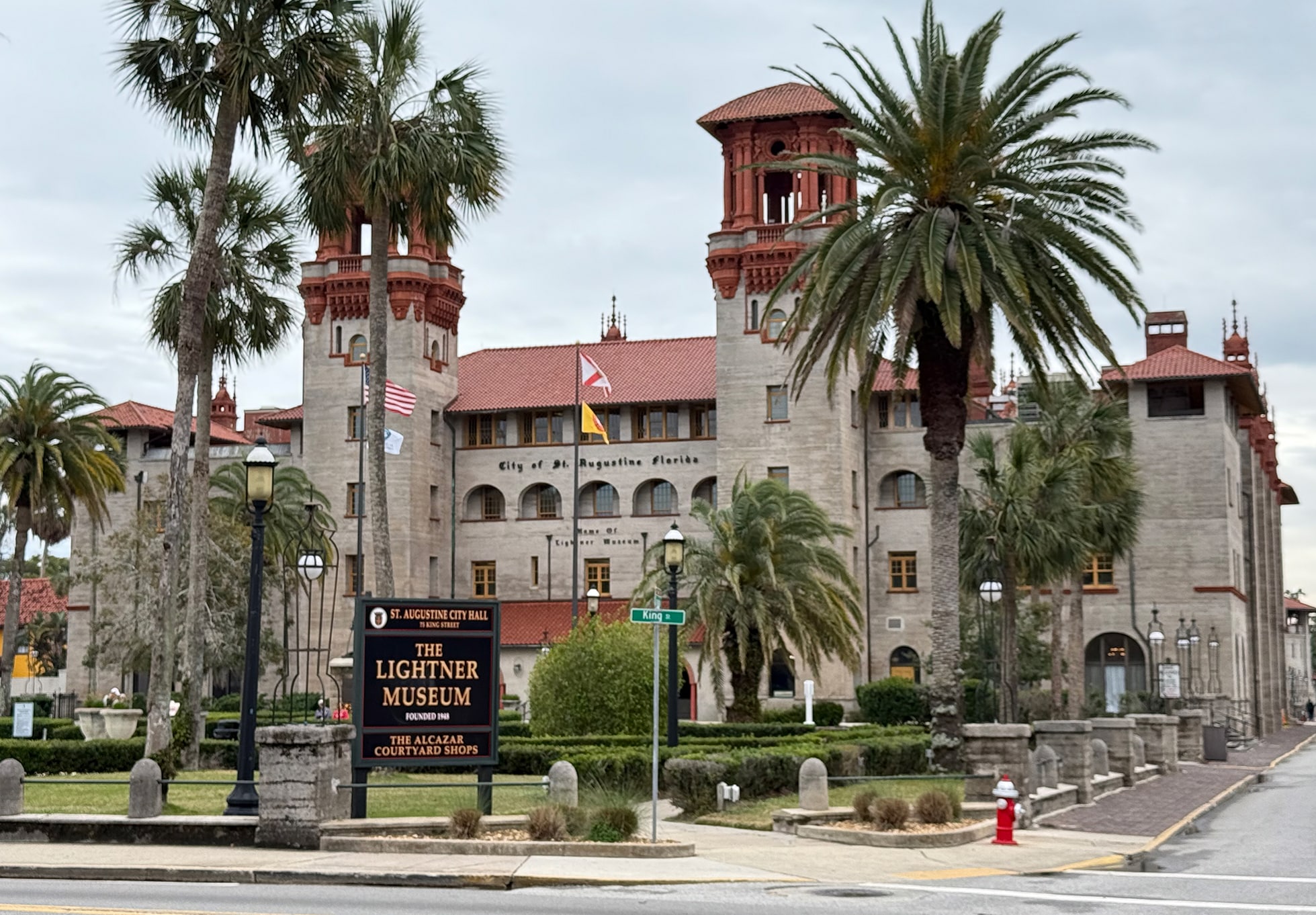
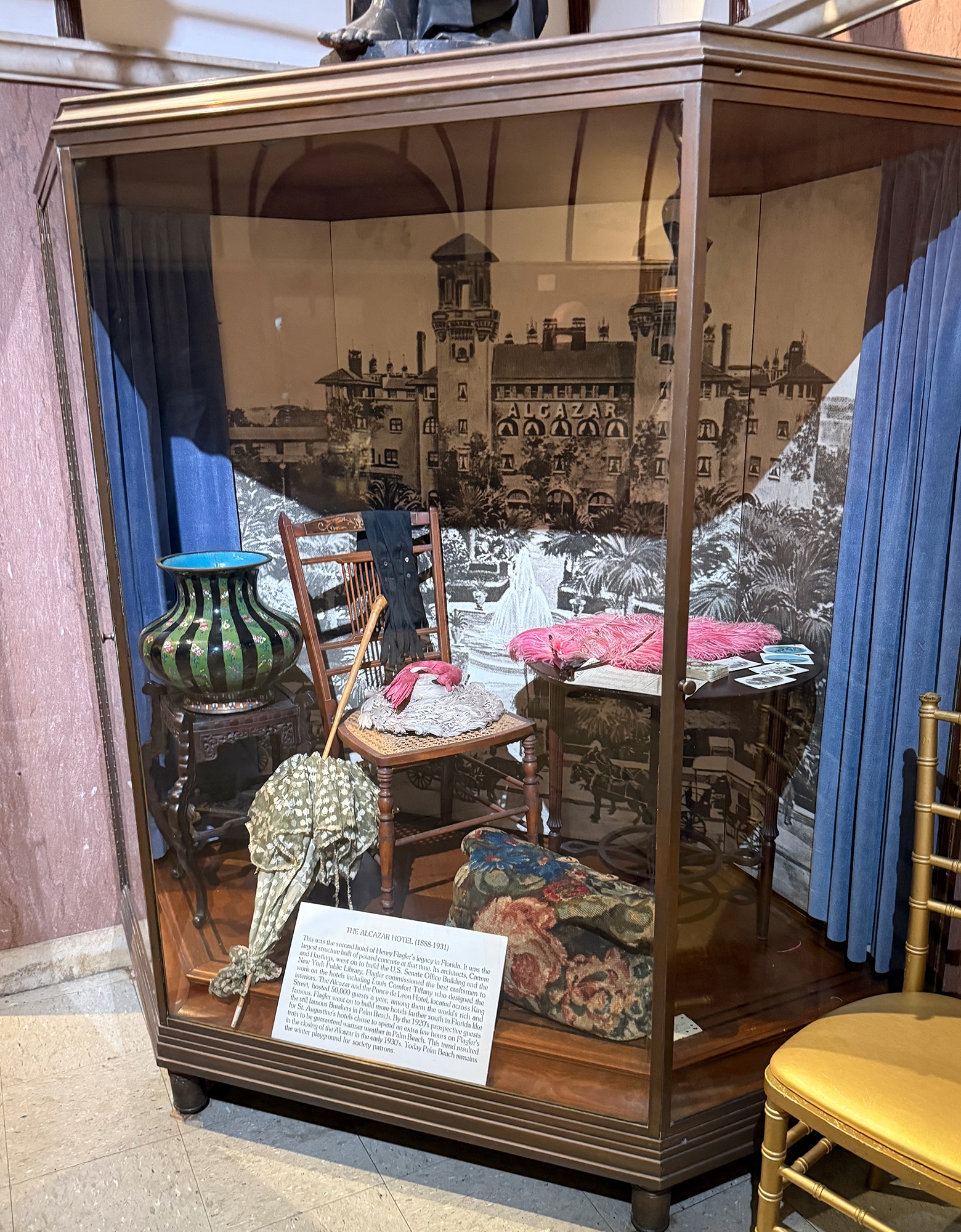
The Alcazar Hotel (1888-1931)
The Alcazar Hotel became the second hotel of Henry Flagler’s legacy in Florida. Between the Alcazar and the Ponce de Leon Hotel (located on either side of King Street), Flagler hosted 50,000 guests a year, among them the world’s rich and famous. There is a fabulous old photo at the link with a horse and carriage staged along the road outside the hotel.
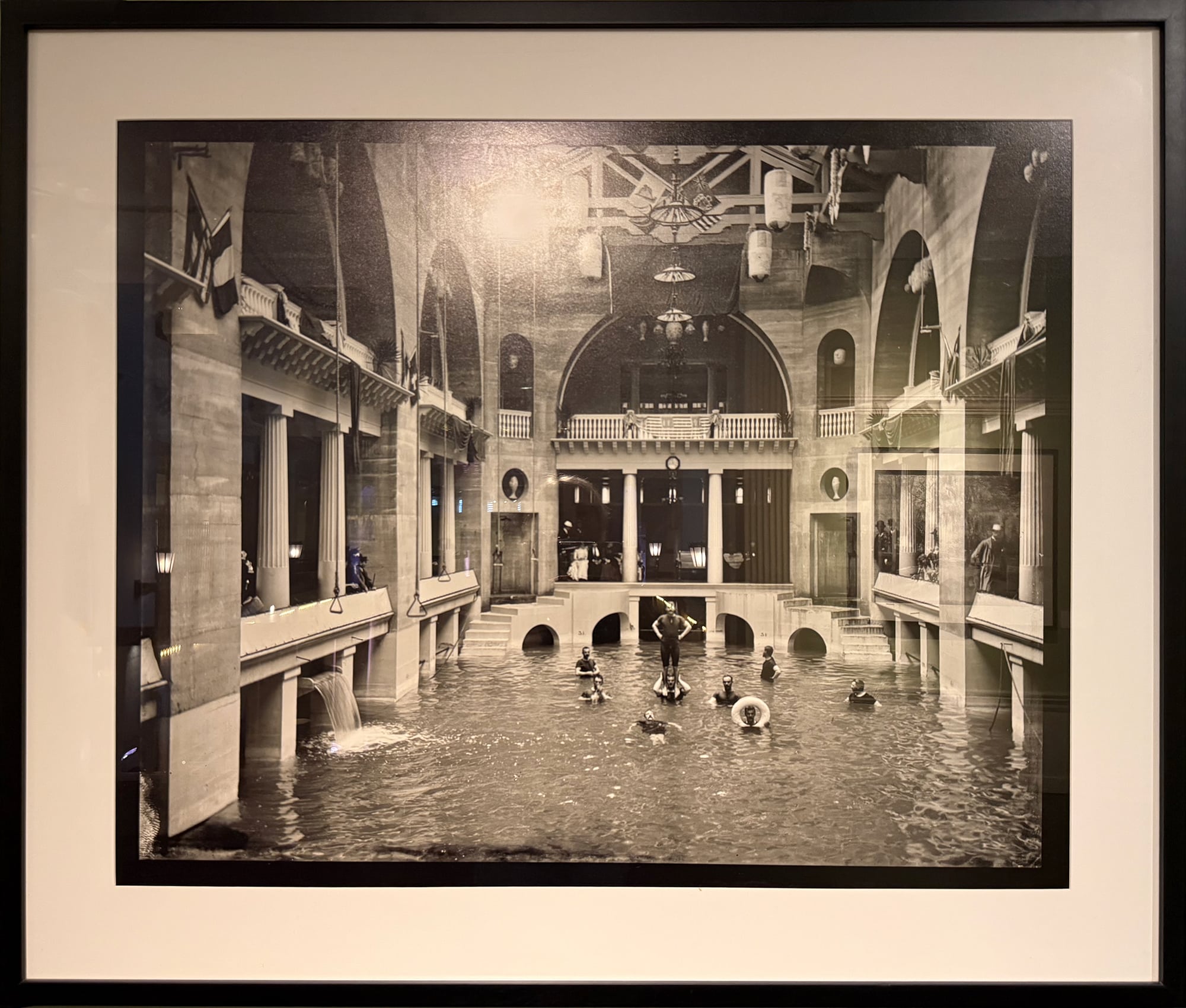
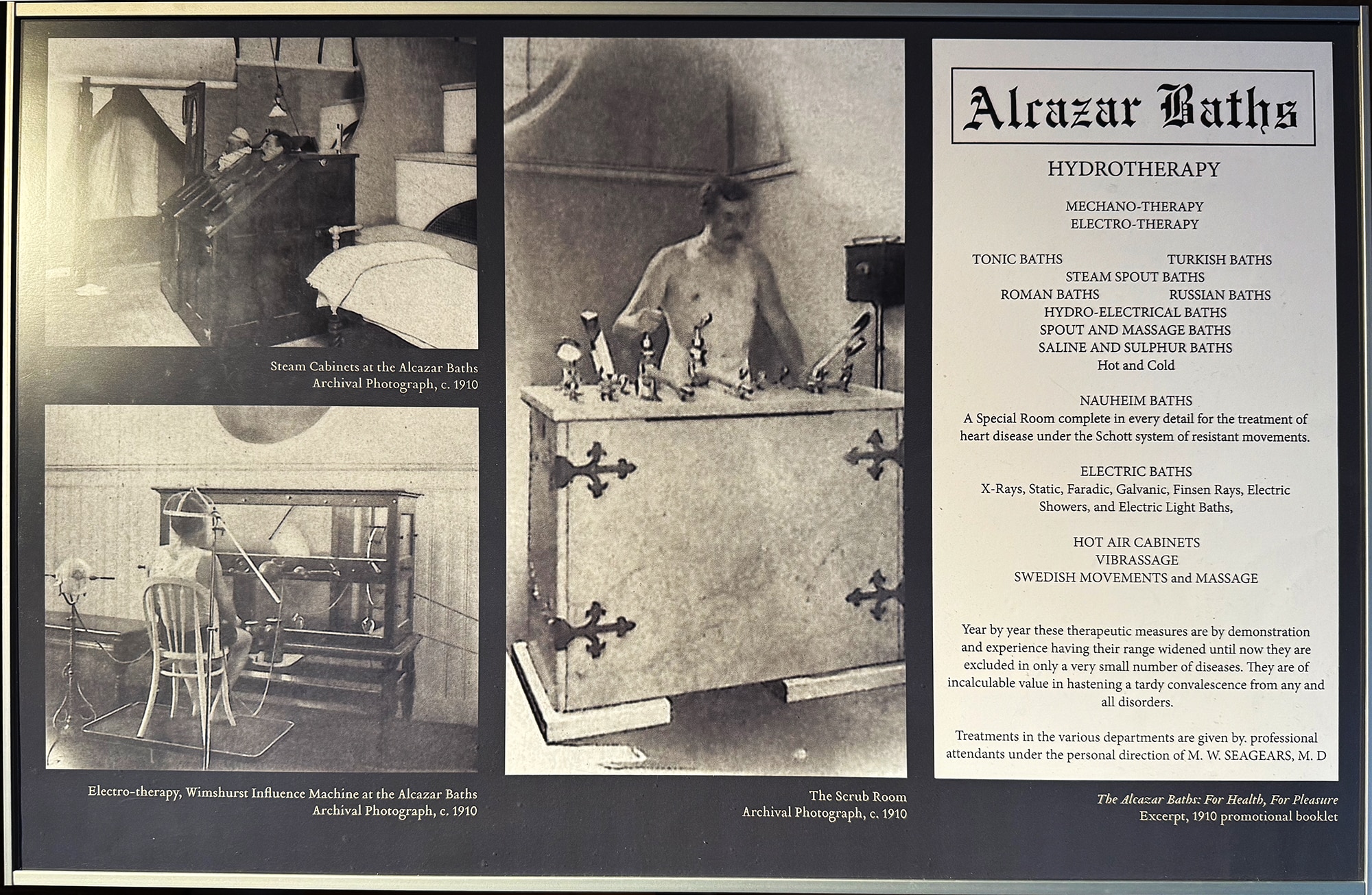
The hotel had a steam room, massage parlor, sulfur baths, gymnasium, a three-story ballroom, and the world’s largest indoor swimming pool.
A Little Farther South
Since St. Augustine may still be a little chilly in the winter, Flagler built more hotels farther south in Florida, including The Breakers in Palm Beach. “By the 1920’s prospective guests for St. Augustine’s hotels chose to spend an extra few hours on Flagler’s train to be guaranteed warmer weather in Palm Beach. This trend resulted in the closing of the Alcazar in the early 1930’s. Today Palm Beach remains the winter playground for society patrons.”
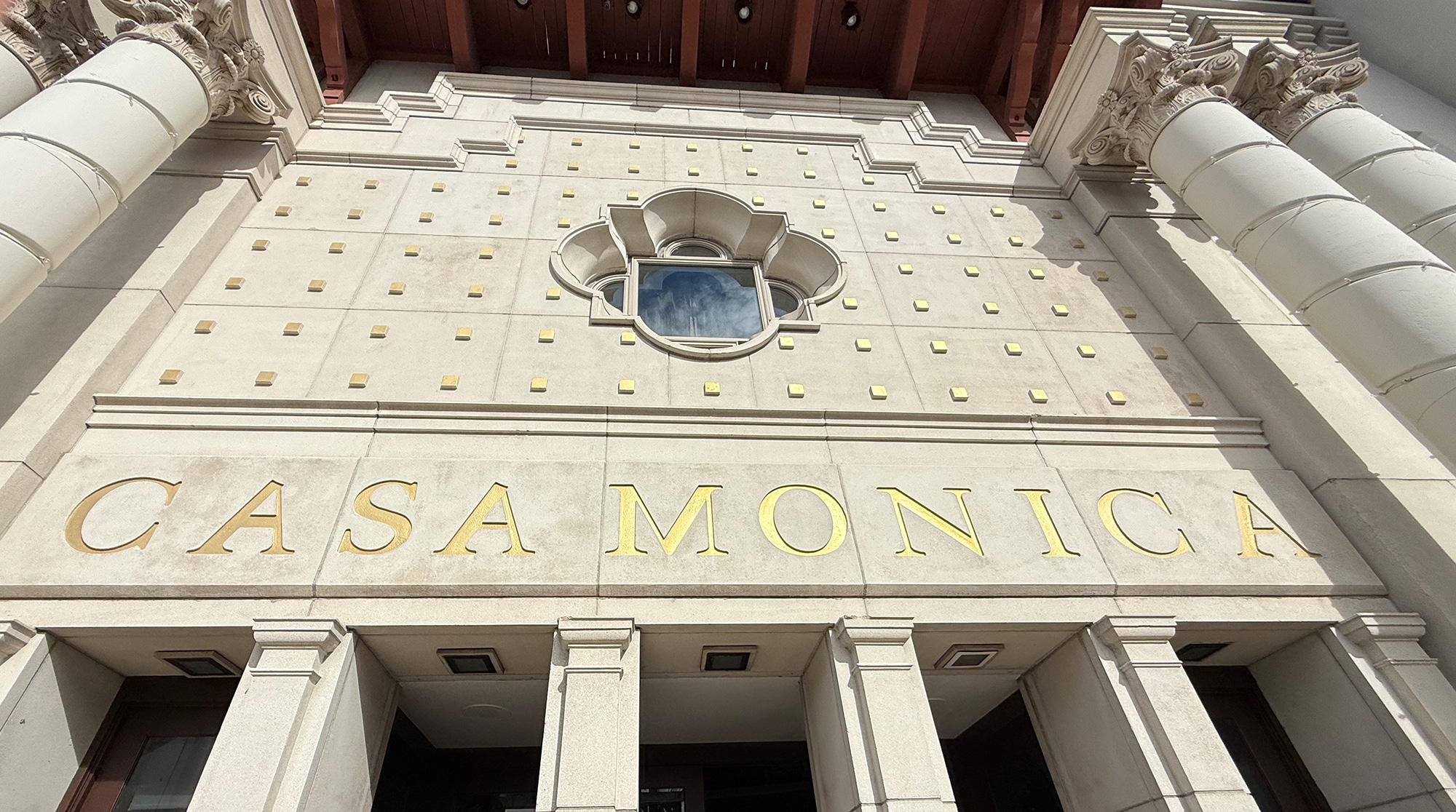
If that still wasn’t far enough south for you, Flagler’s train could get you all the way down to Key West, where the fabulous Casa Marina opened on New Year’s Eve, 1920 and still exists today. For more history of The Alcazar, click here.
The Current Exhibits
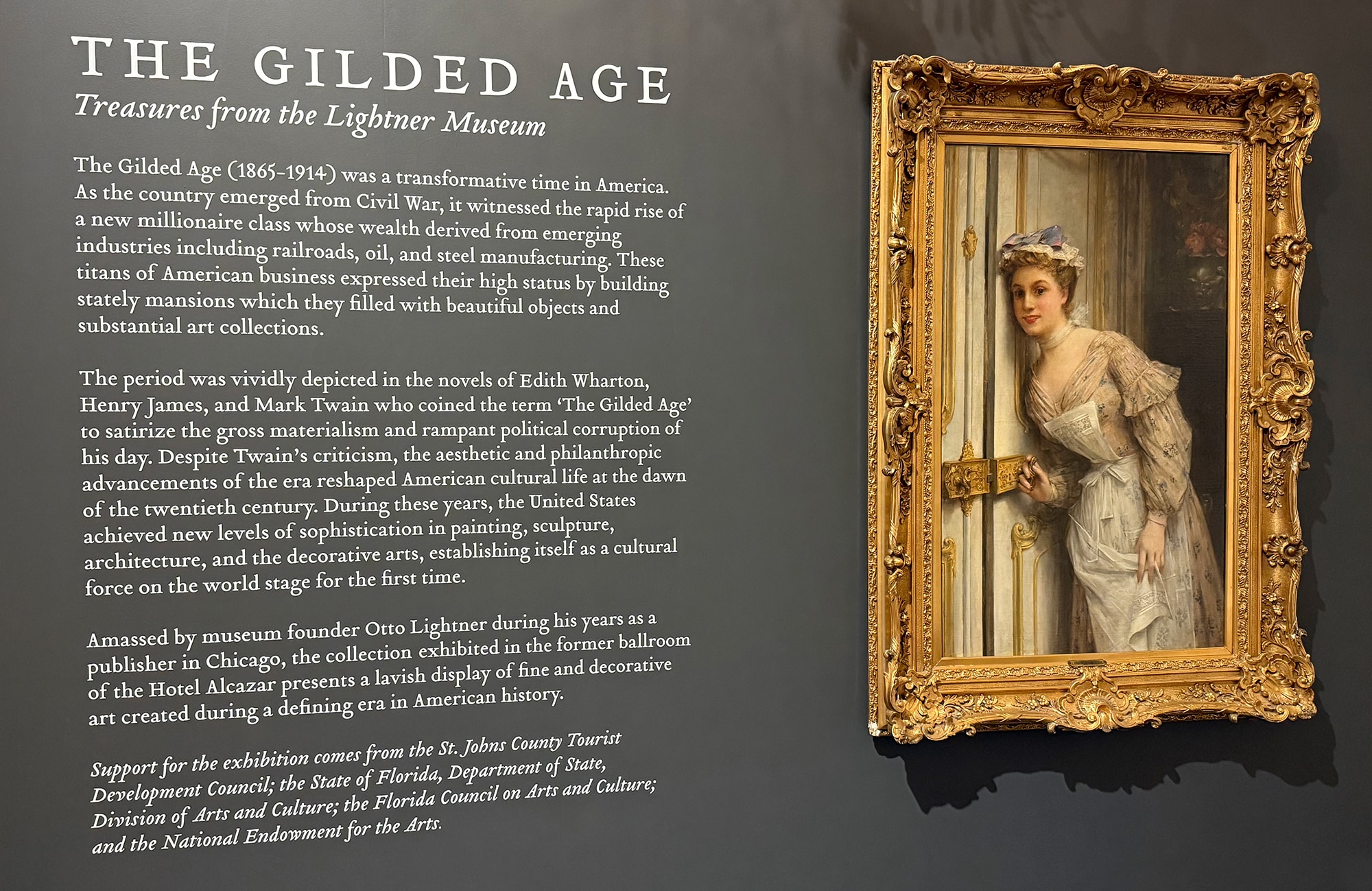
On August 20, 1947 Chicago publisher Otto C. Lightner purchased the building to convert the old hotel into a hobbies museum. He used the space to house several collections, including his own extensive collection of Victorian era art. He then turned it over to the city of St. Augustine and the museum opened to the public in 1948.
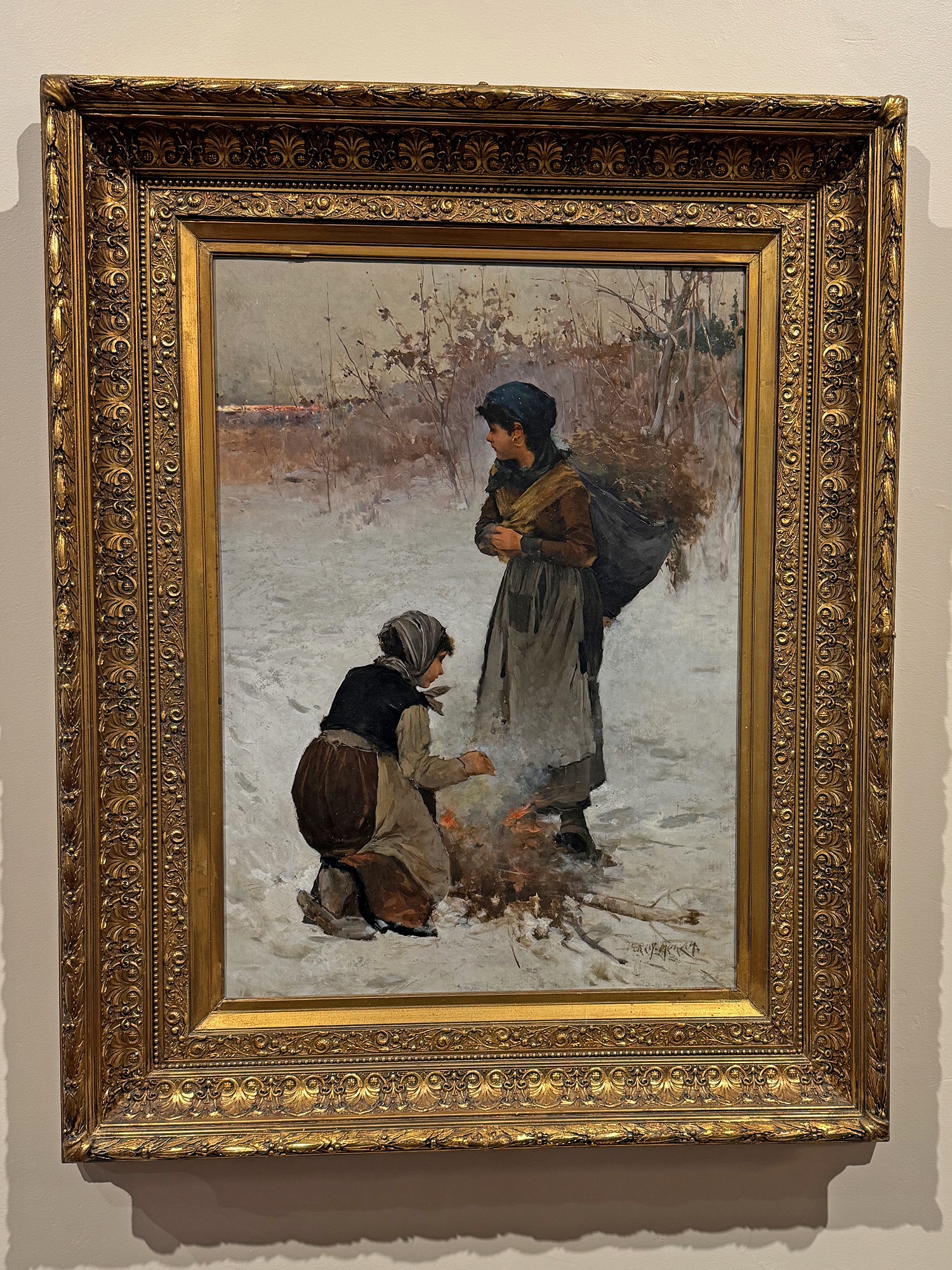
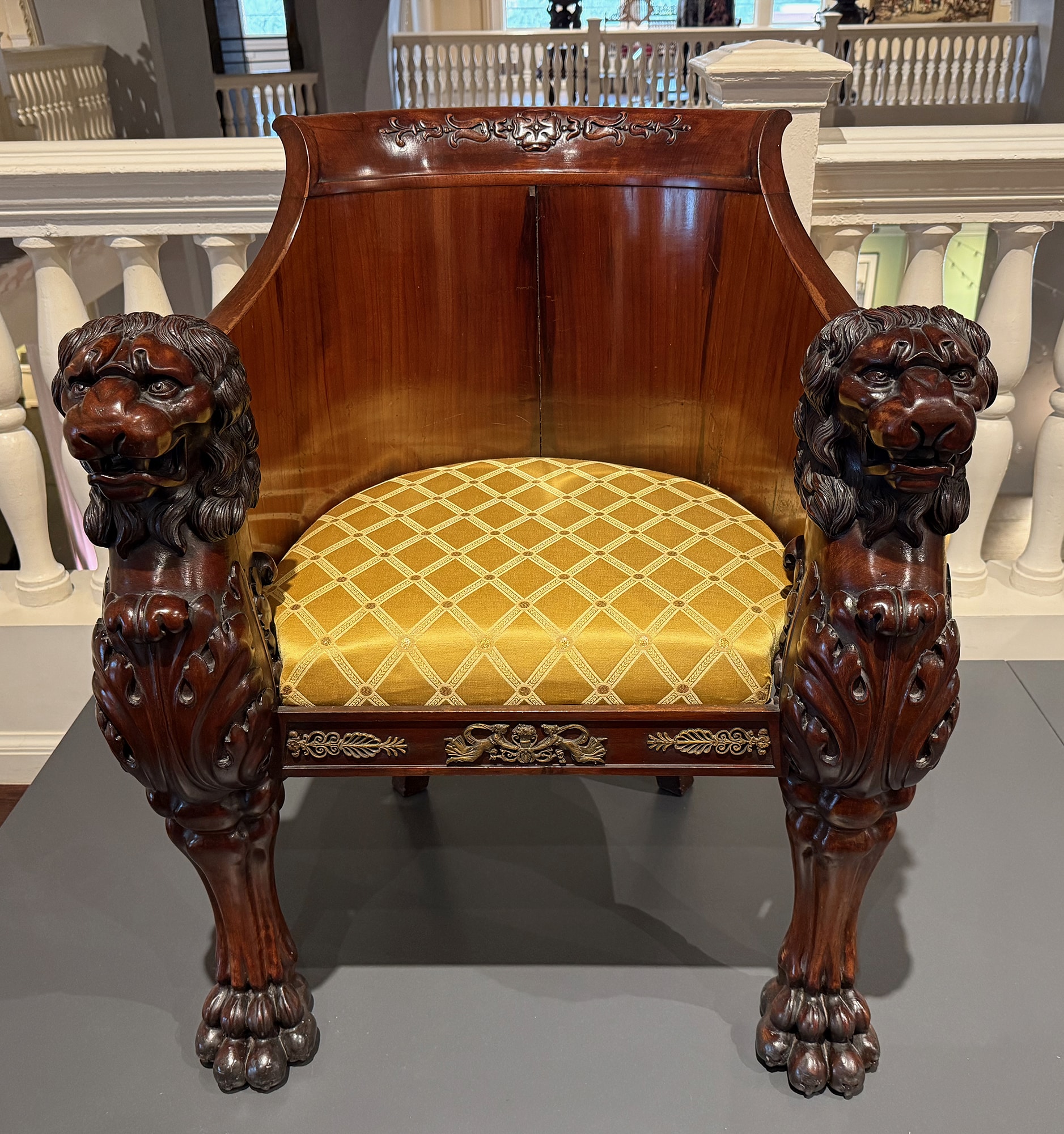
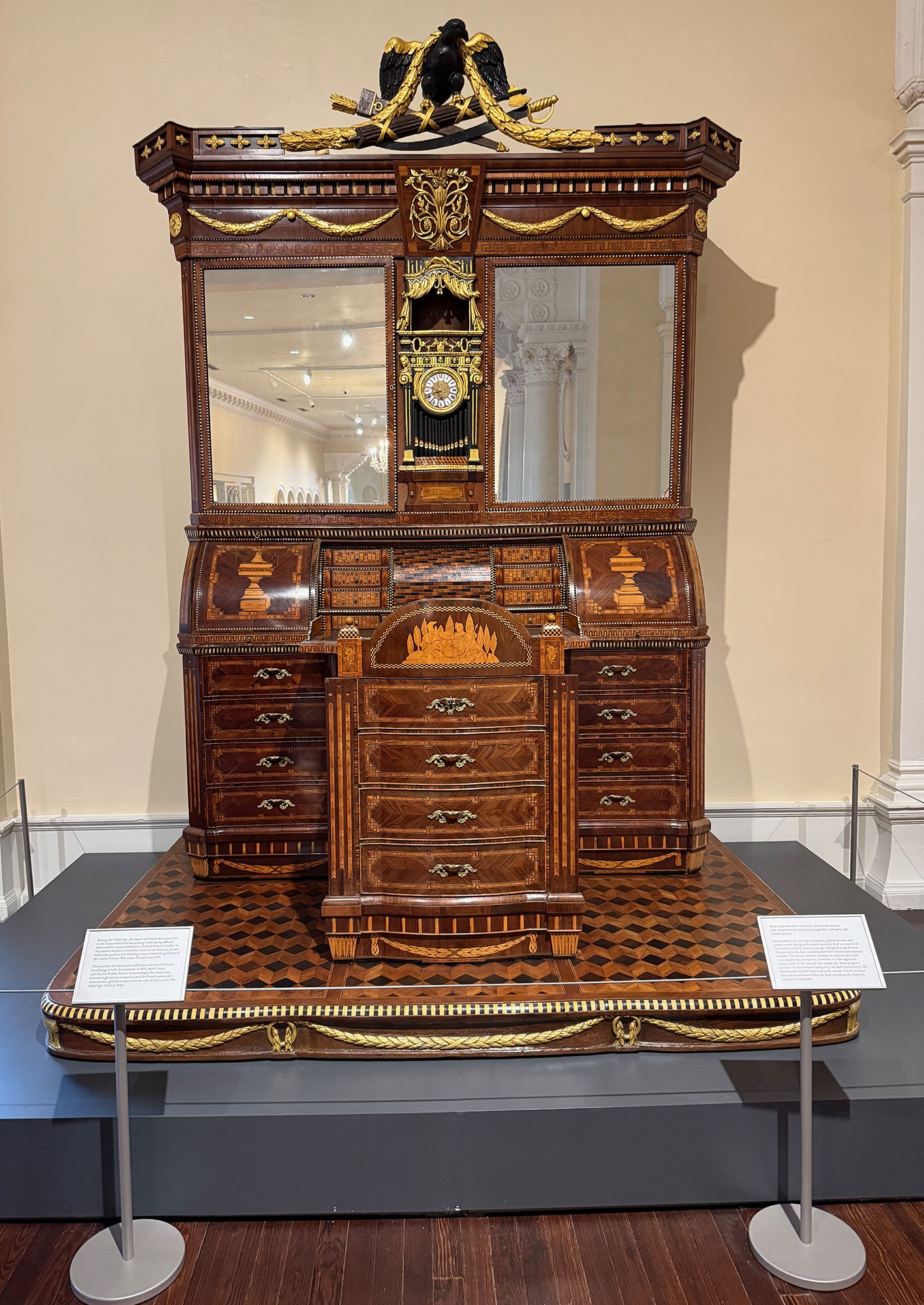
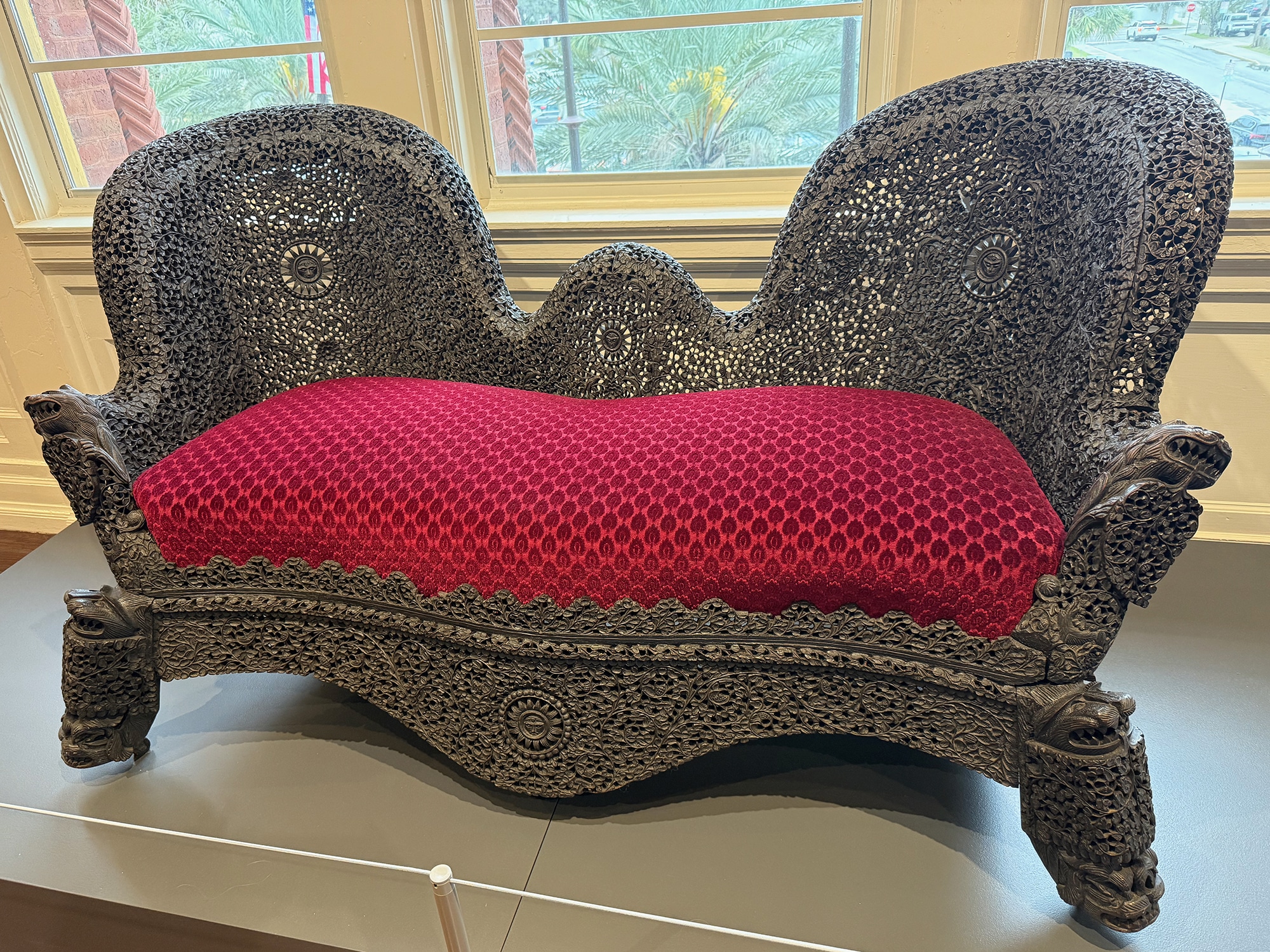
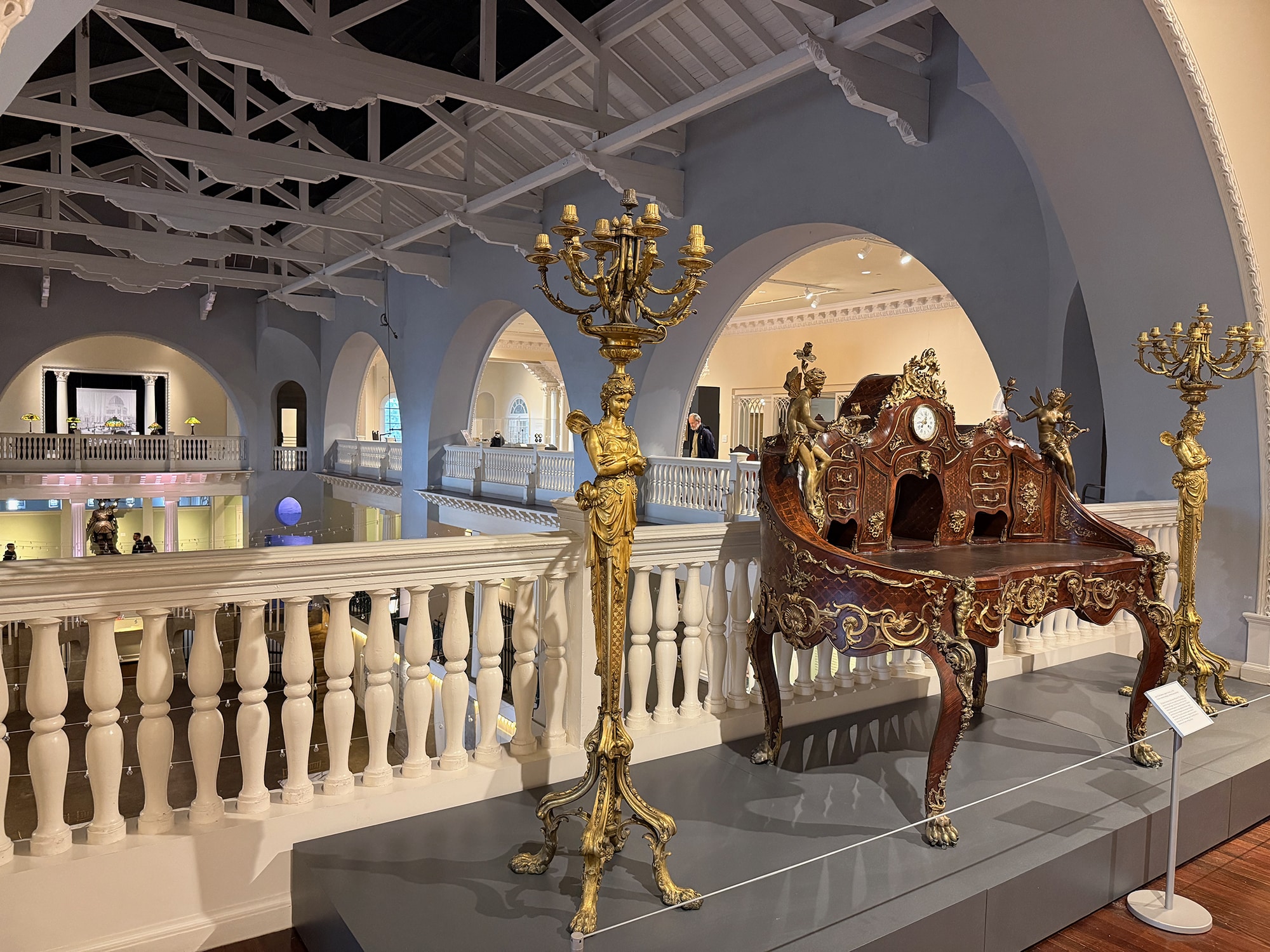
Along with several changing exhibits, there are several permanent exhibits that are quite fascinating. The Gilded Age – Treasures from the Lightner Museum was the most interesting – although disturbing in the political turmoil that is 2025.
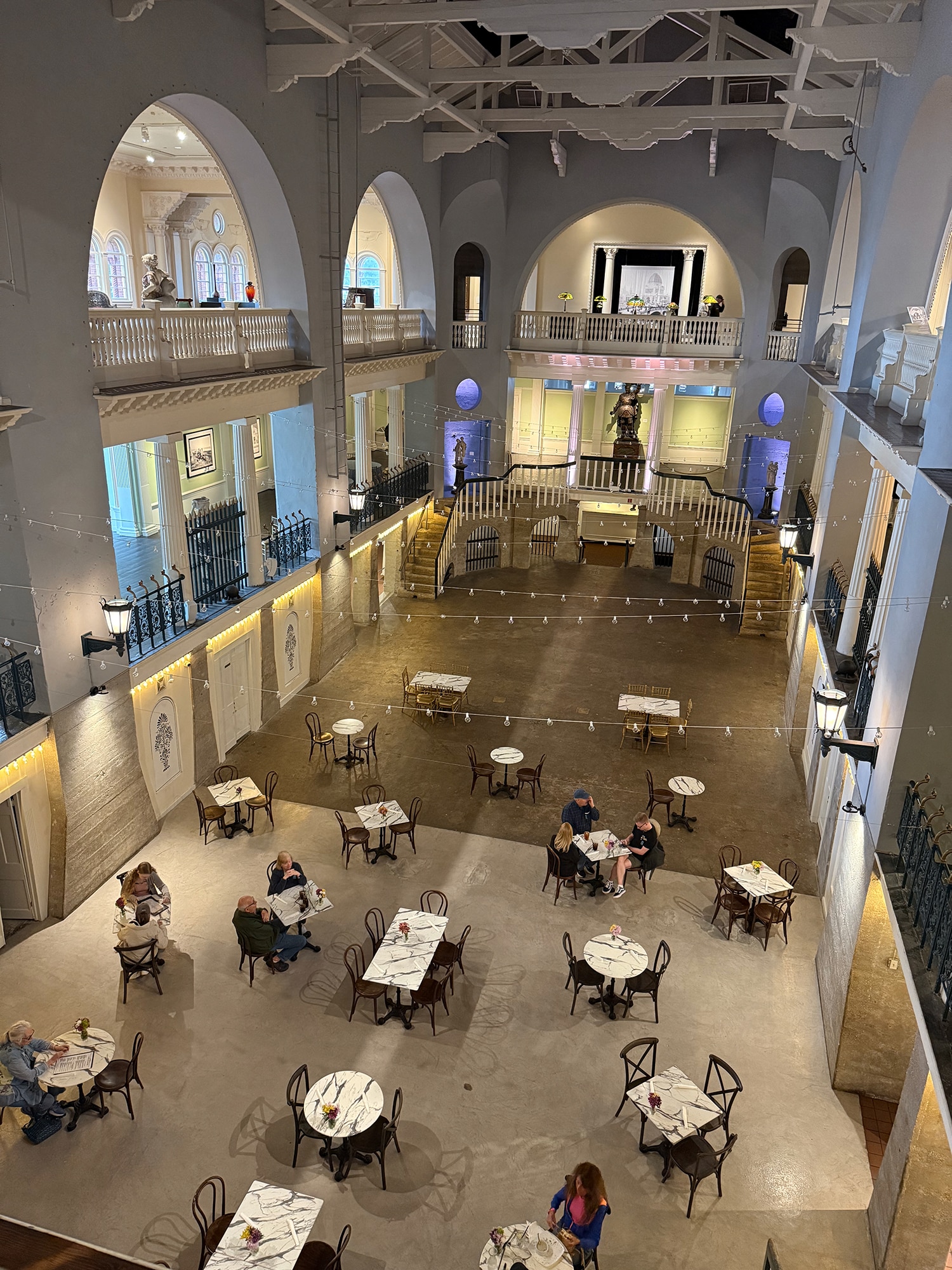
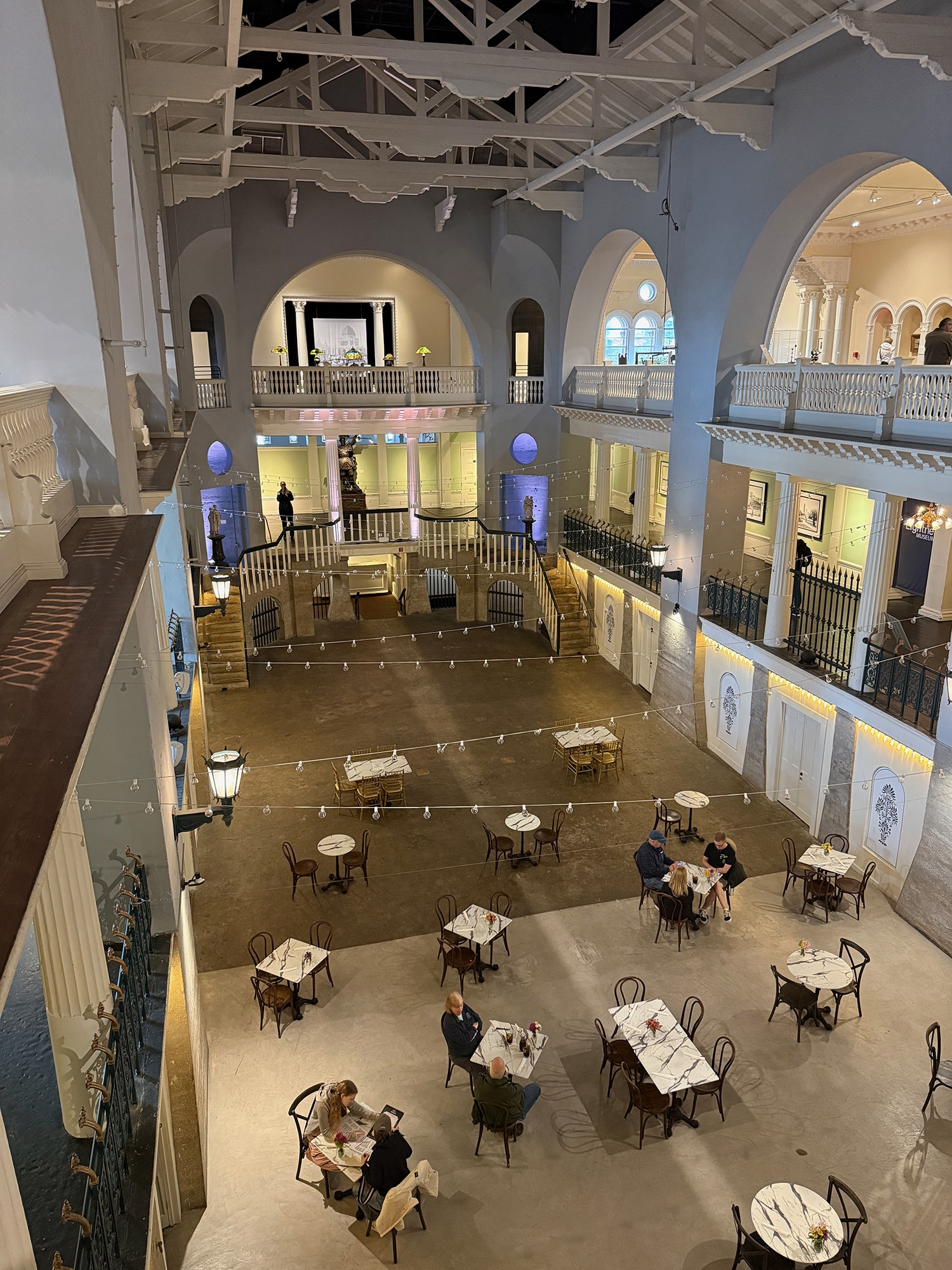
Once a Pool, now The Alcazar Café
From the third-floor vantage point of the Gilded Age exhibit, we had a bird’s eye view of the former pool which is also shown in the header photo at the top of this post. We had hoped to have lunch in the Café, but without a reservation that didn’t happen. We now have one more reason to return to St. Augustine!
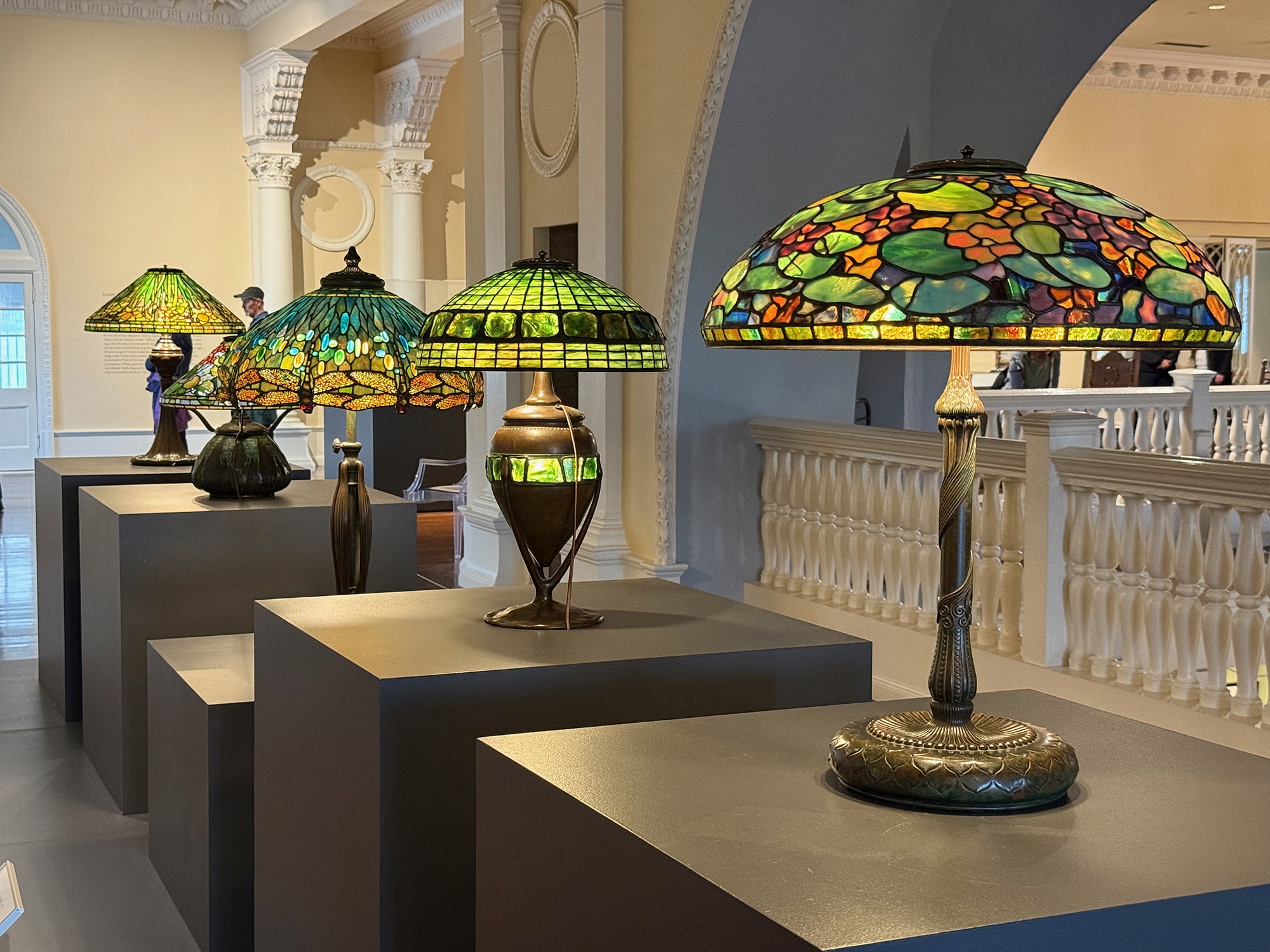
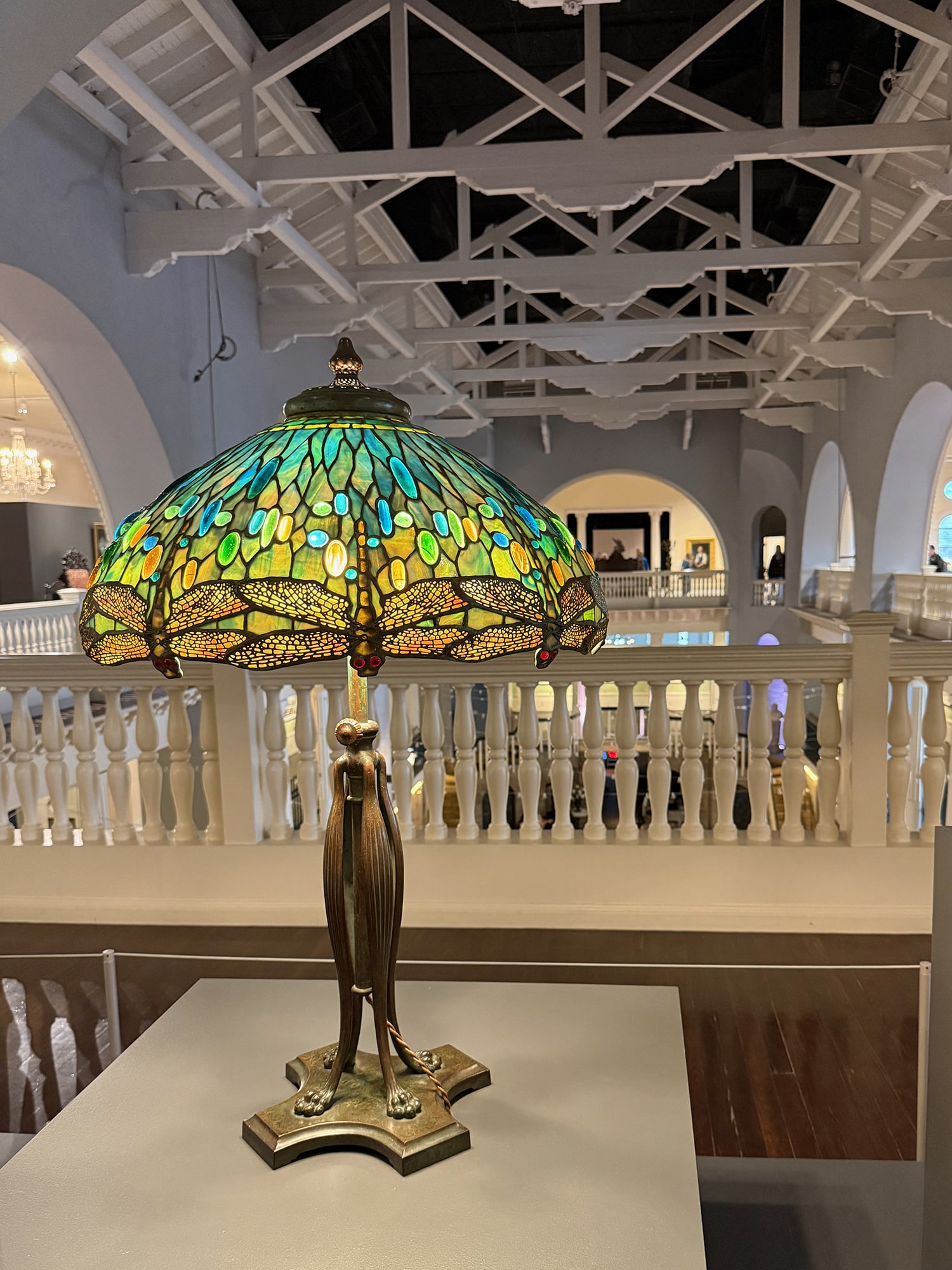
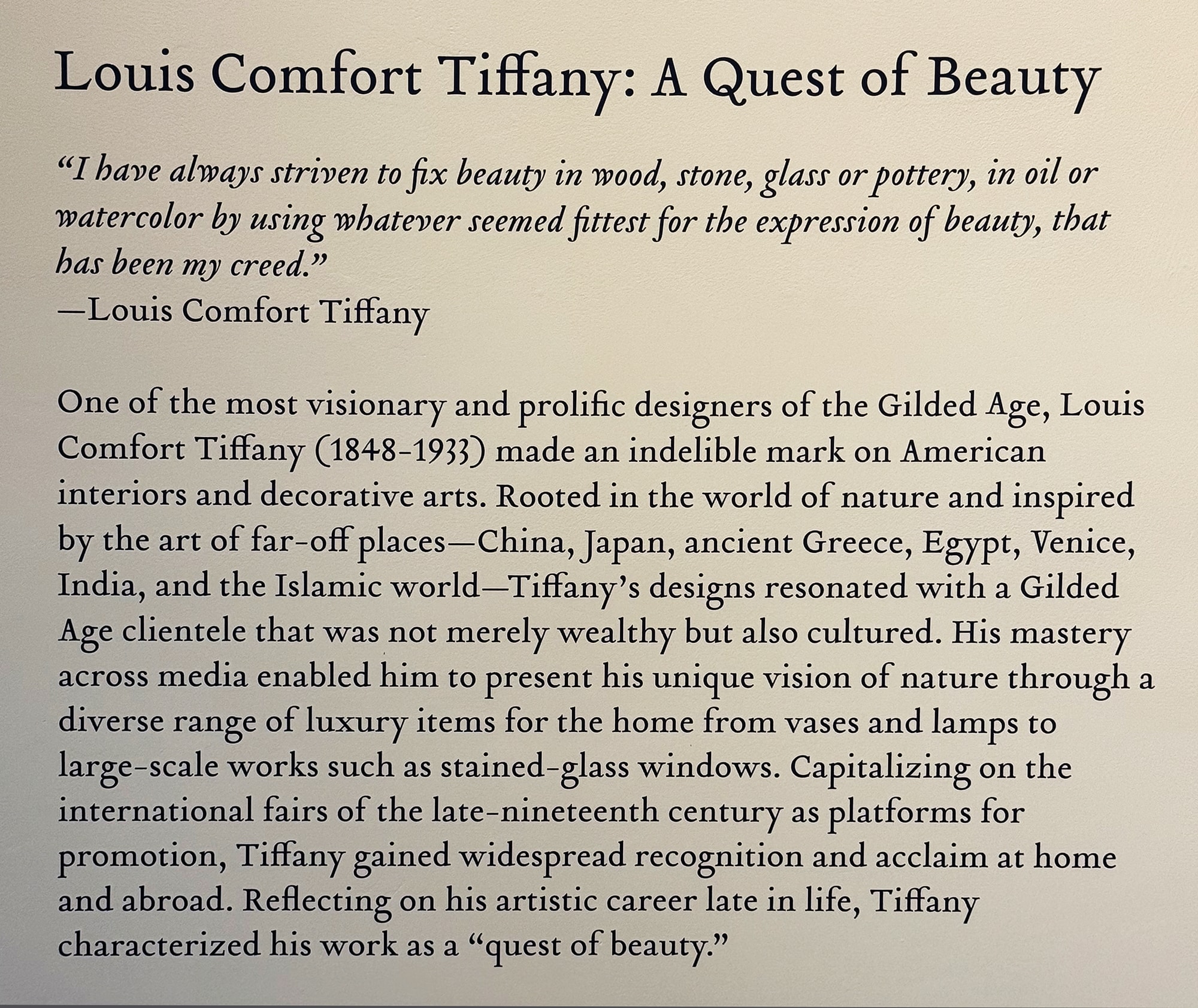
Yet another Tiffany Display!
From Tiffany’s Chapel at the Morse Museum in Winter Park (Laid Back in Orlando), the fabulous stained glass windows of Flagler College above, to this beautiful display at the Lightner – we have certainly seen a lot of works by Louis Comfort Tiffany on this trip! Yes, I do know how lucky we are!
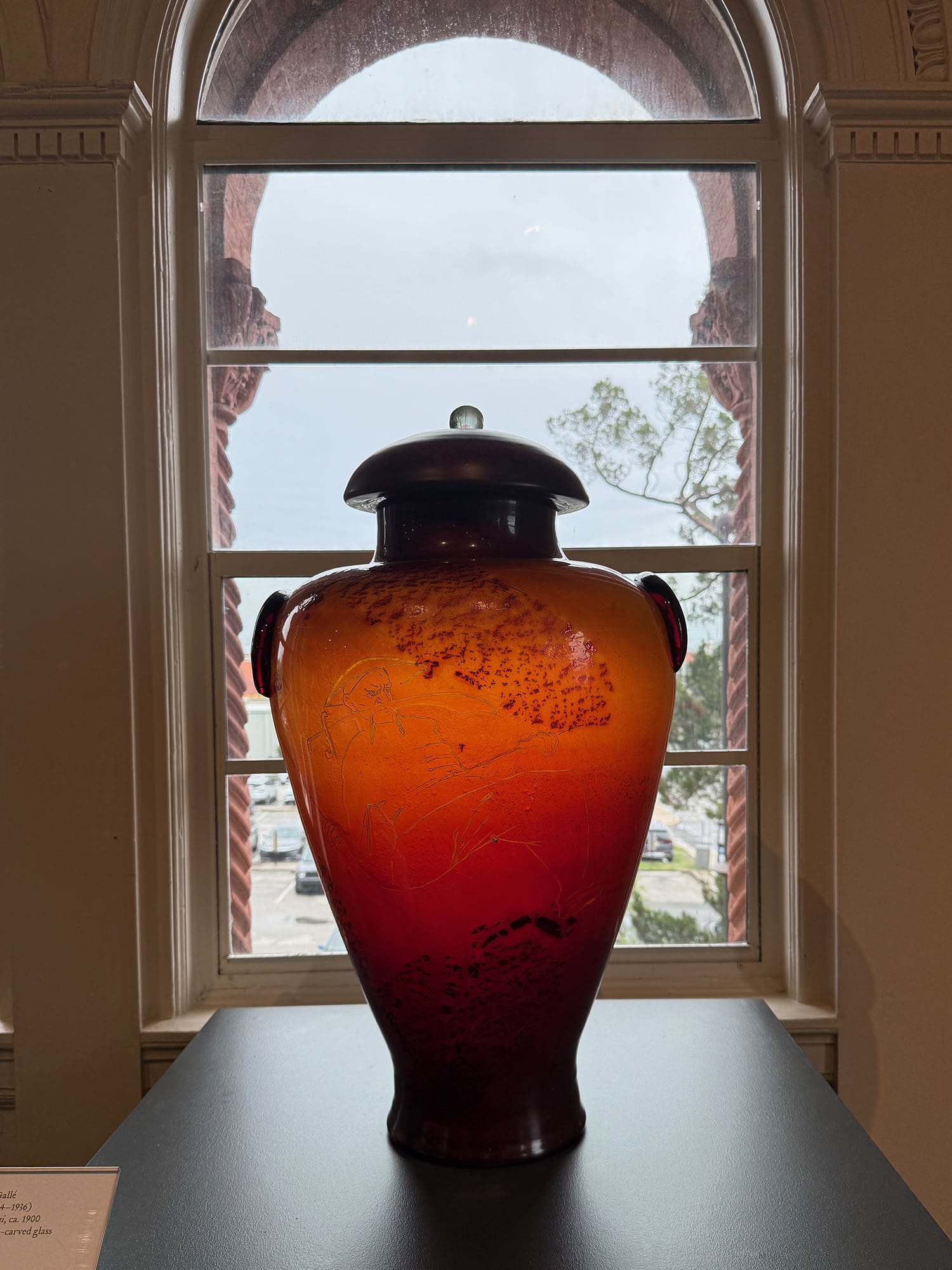
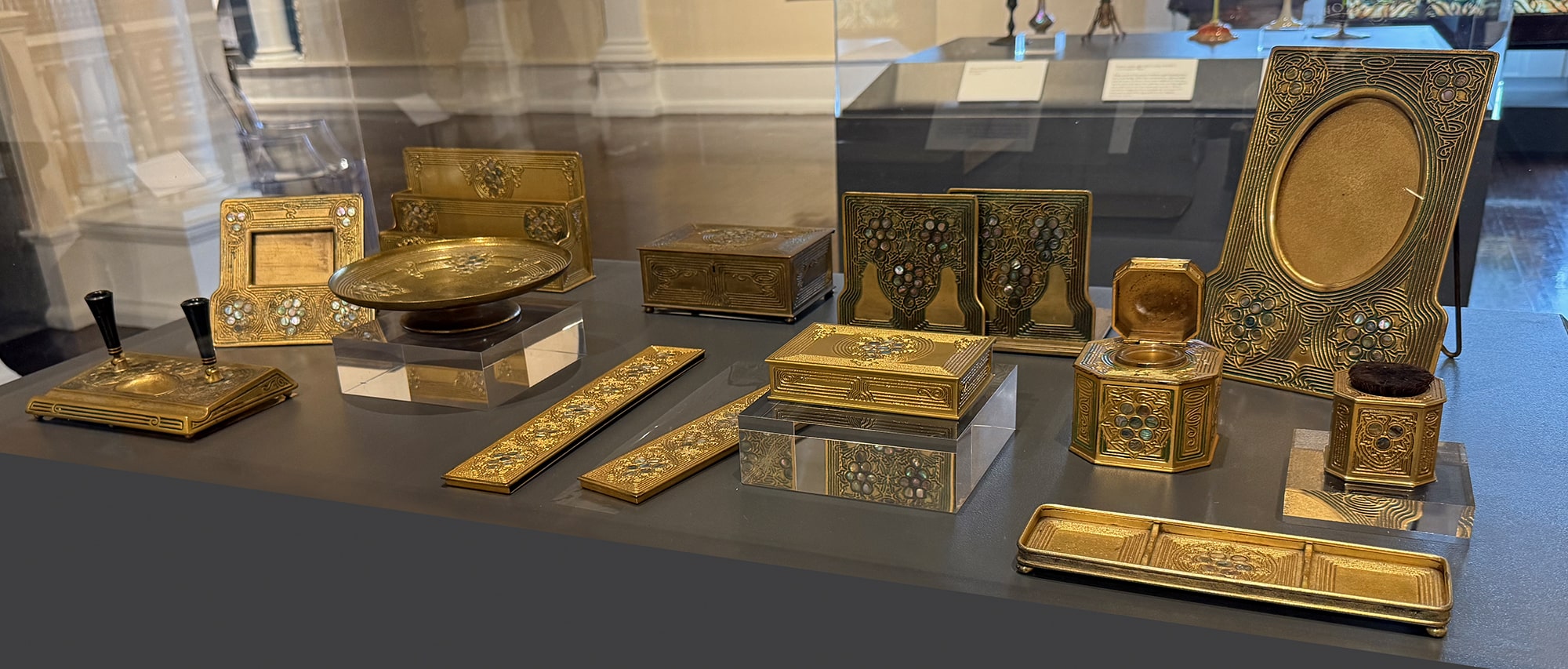
“The desk sets produced by Tiffany Studios demonstrate how the firm’s high-art aesthetic was applied to objects for everyday use. Over the course of its history, Tiffany Studios produced approximately twenty different desk sets. The accessories were not mass-produced. Rather they were fabricated individually in small lots and pieces were priced and sold separately so there was no such thing as a standard set – customers could pick and choose based on their specific needs.” ~ from an informational card
Final Photos
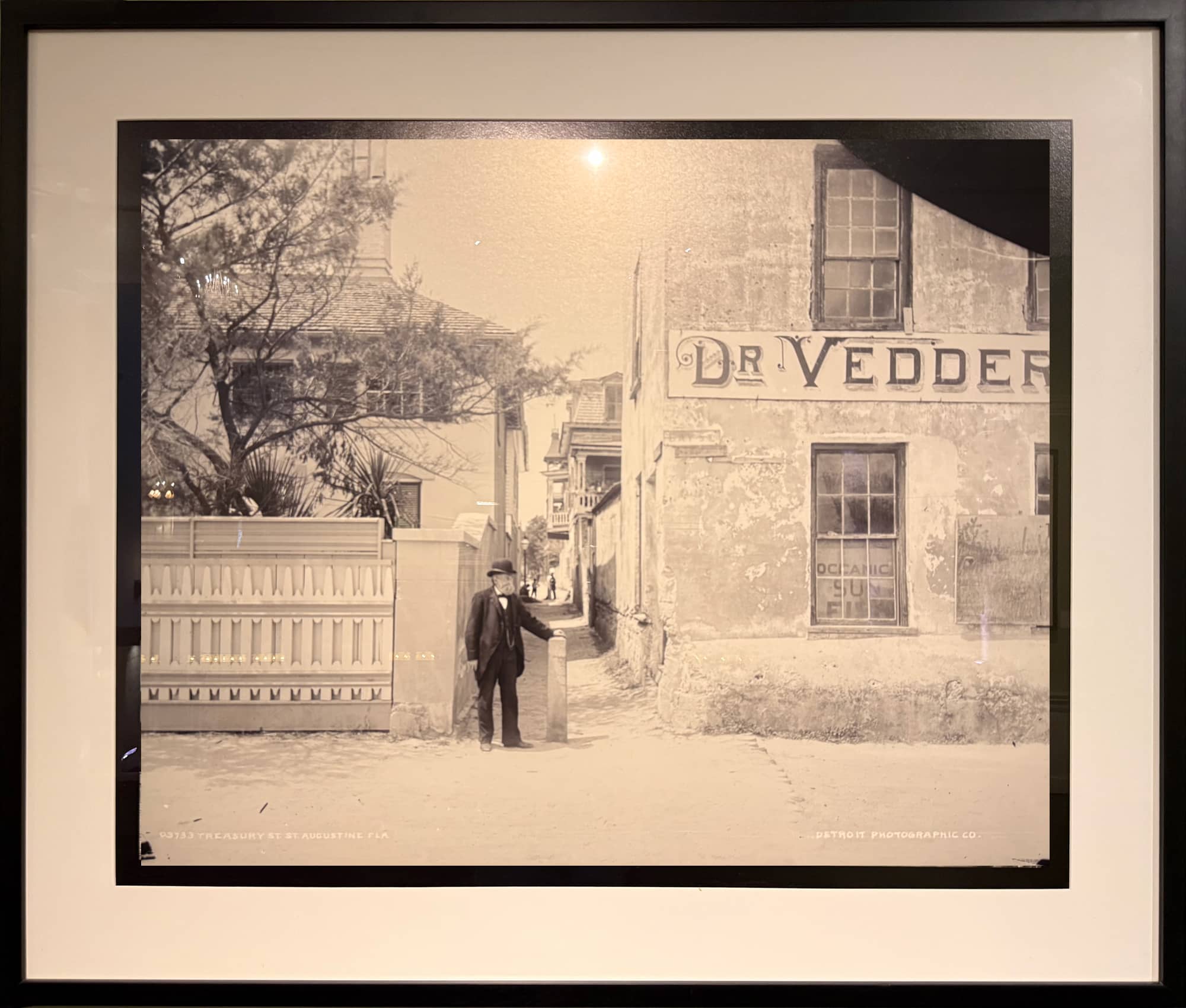
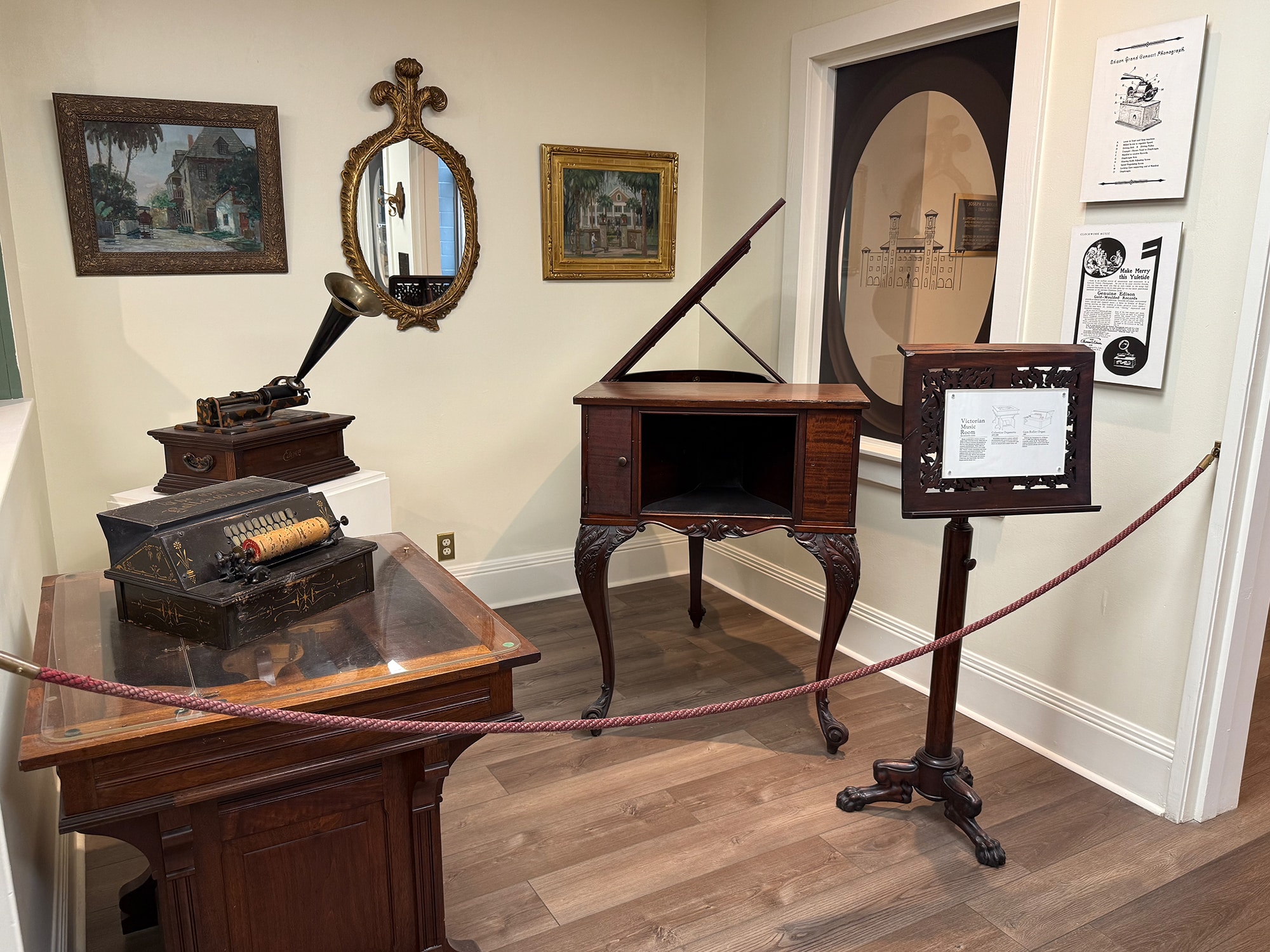
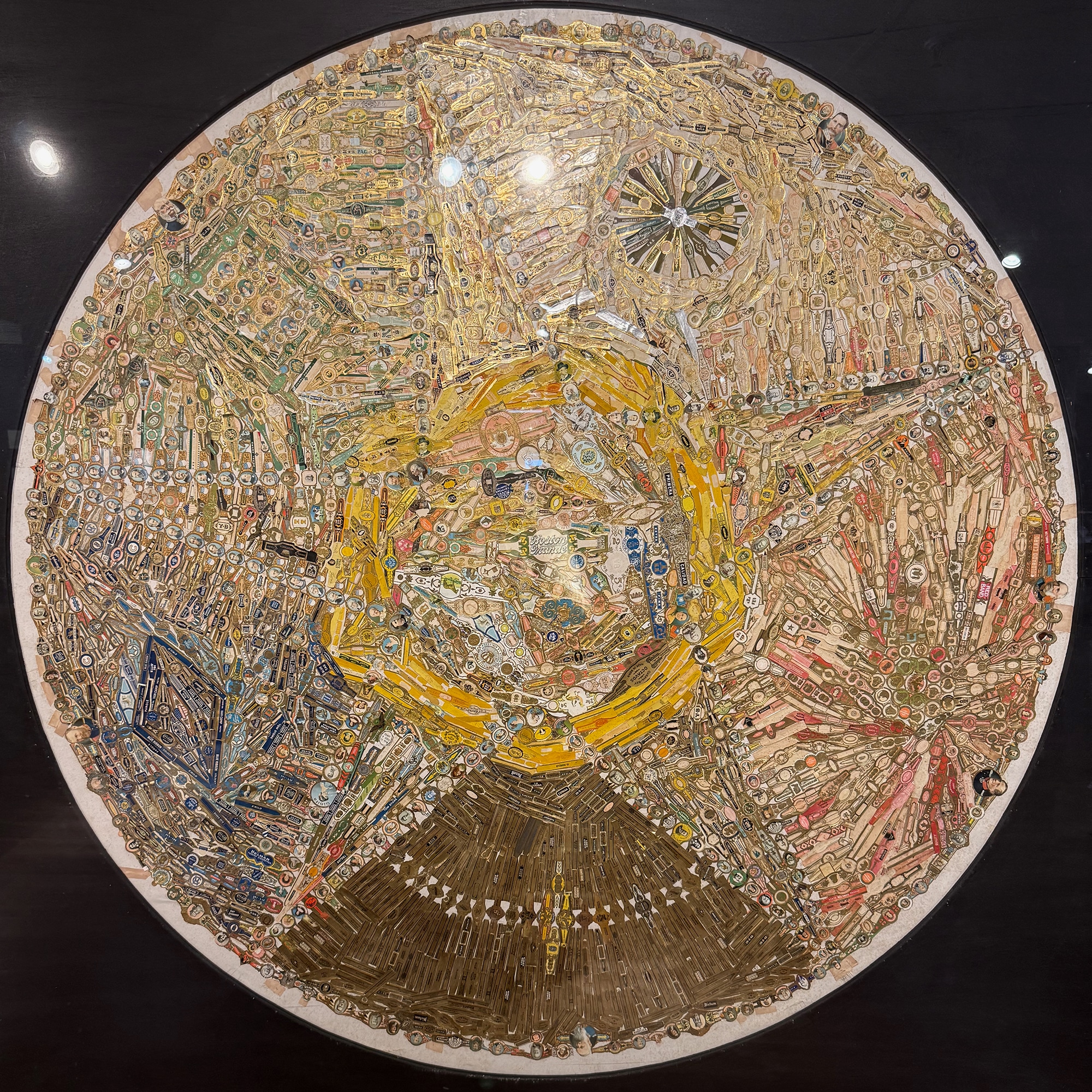
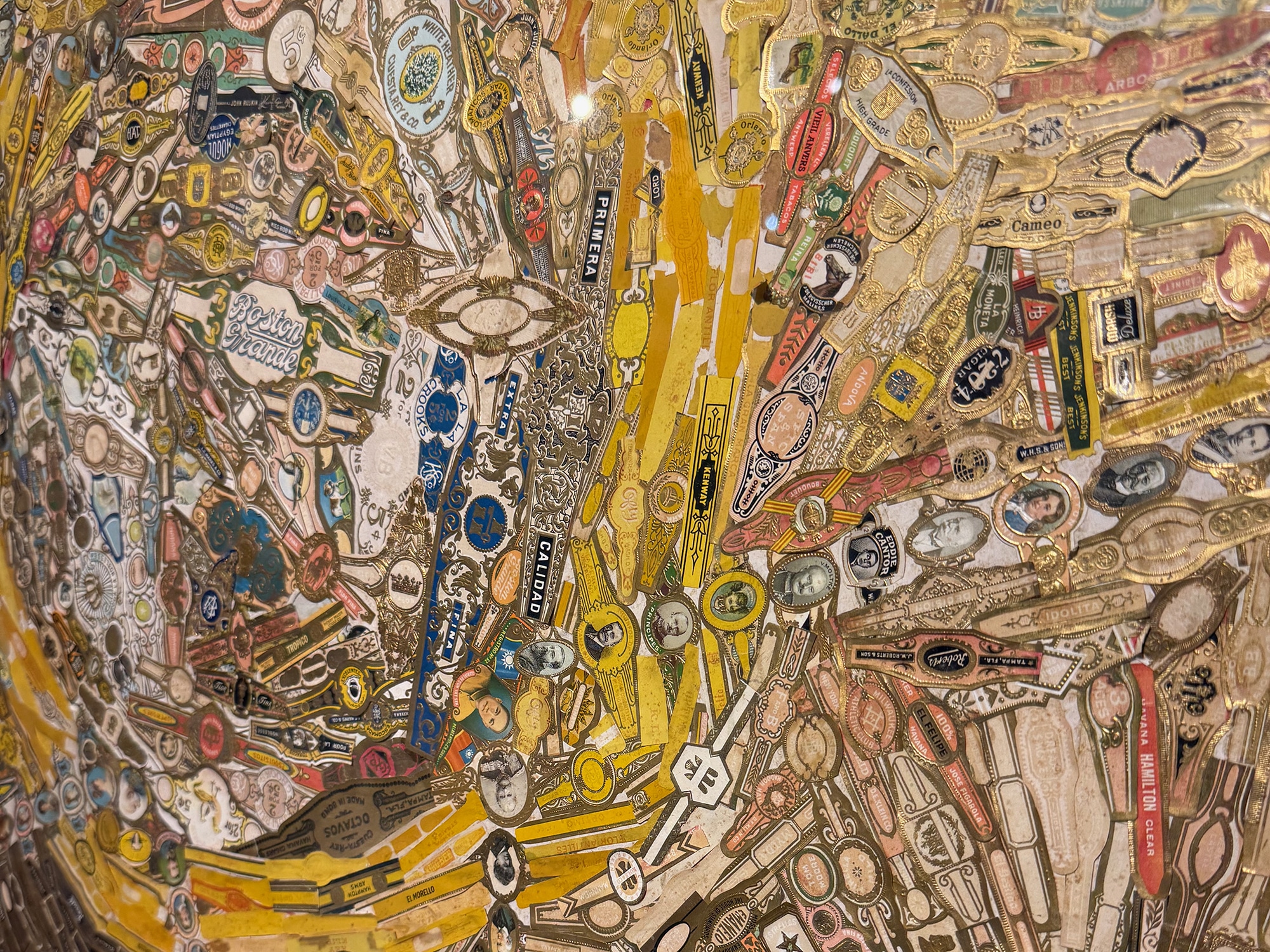
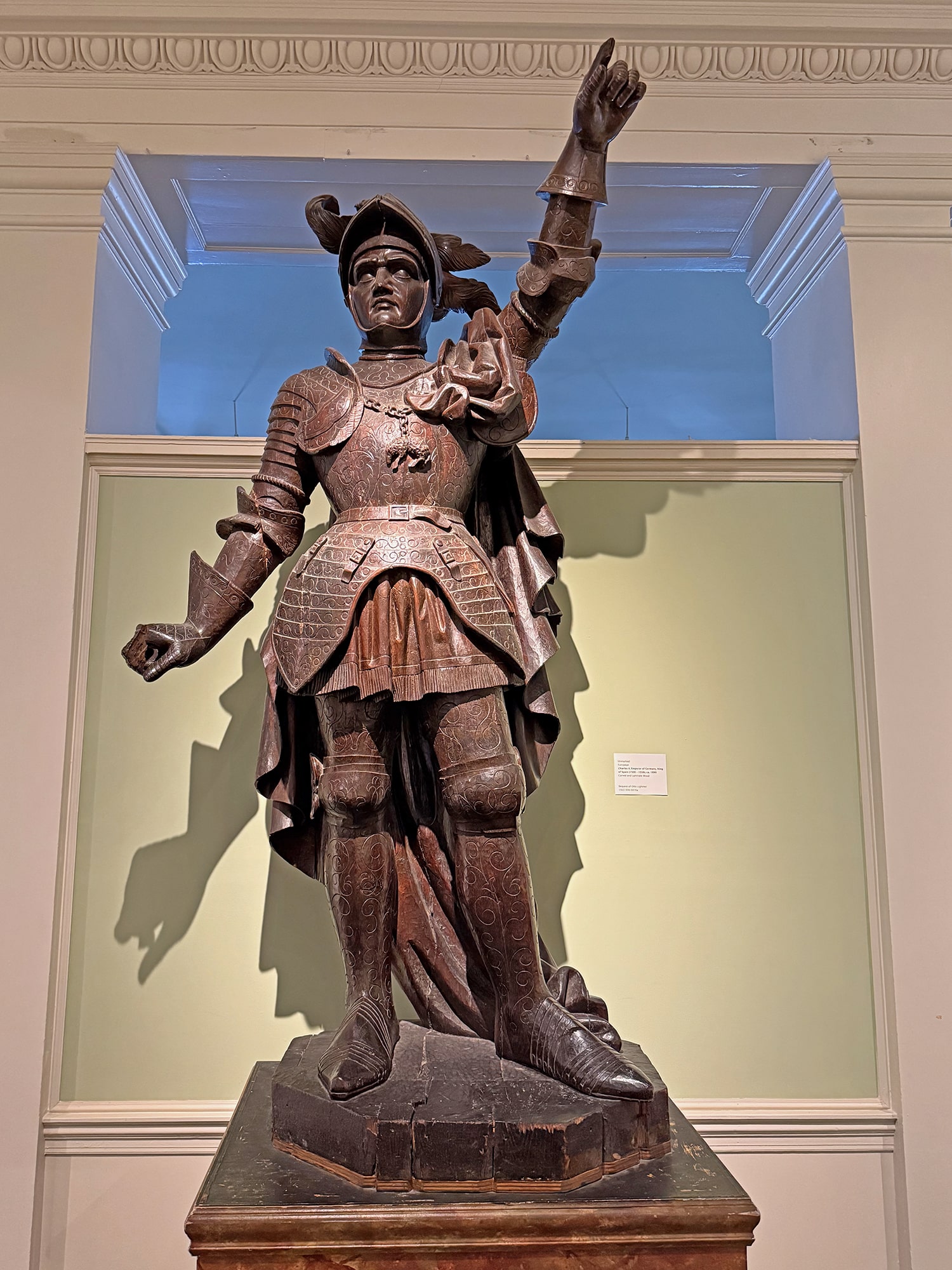
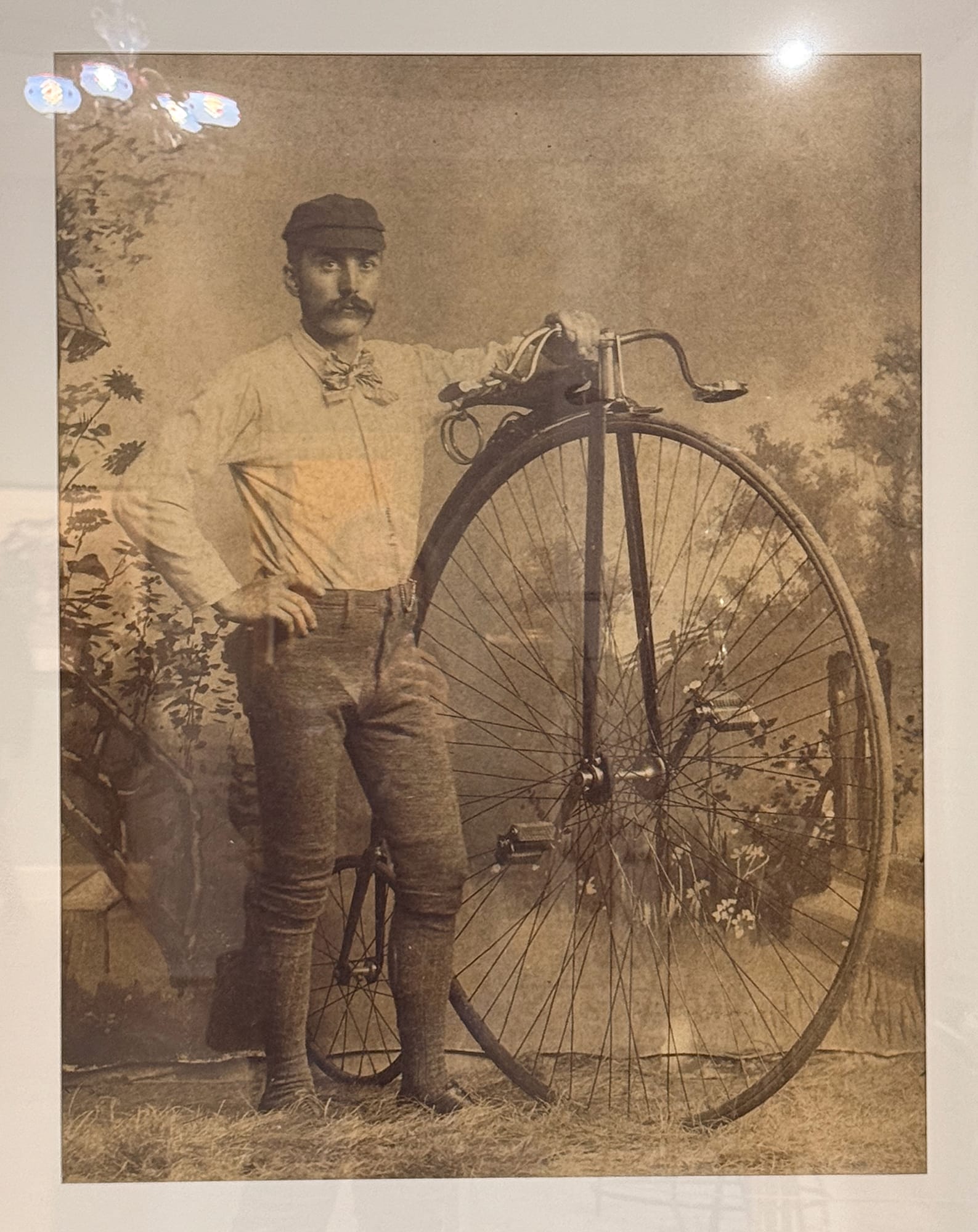
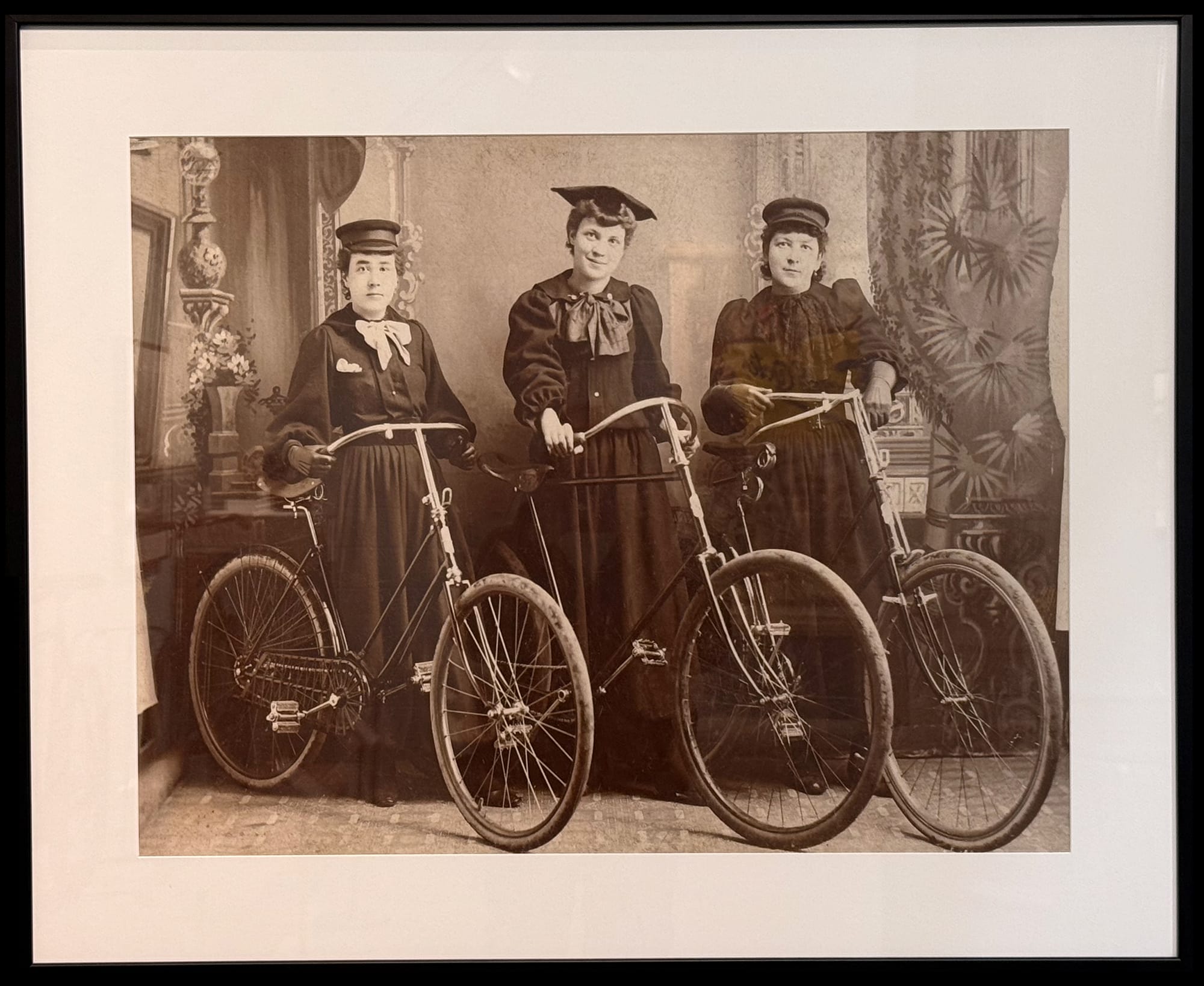
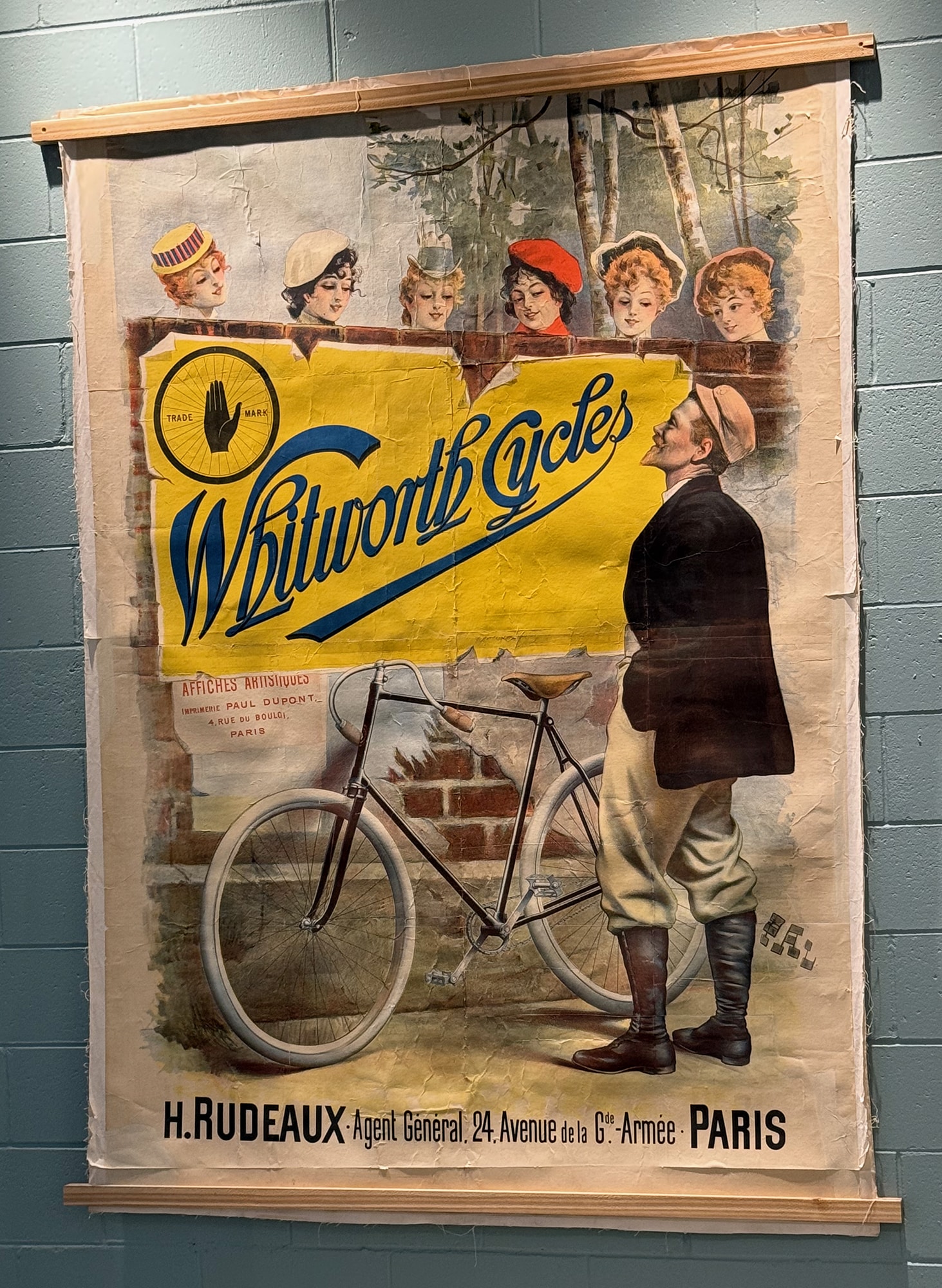
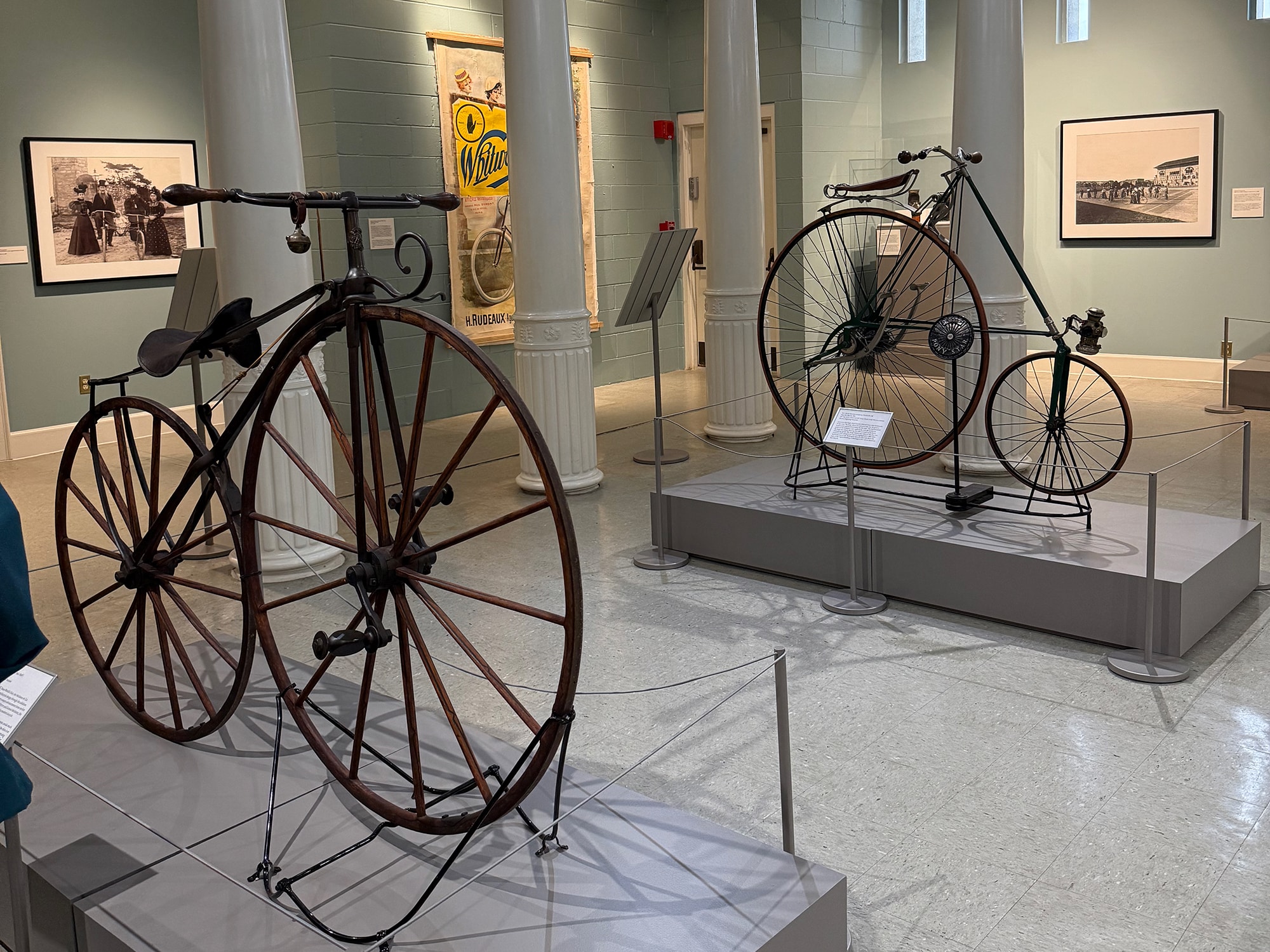
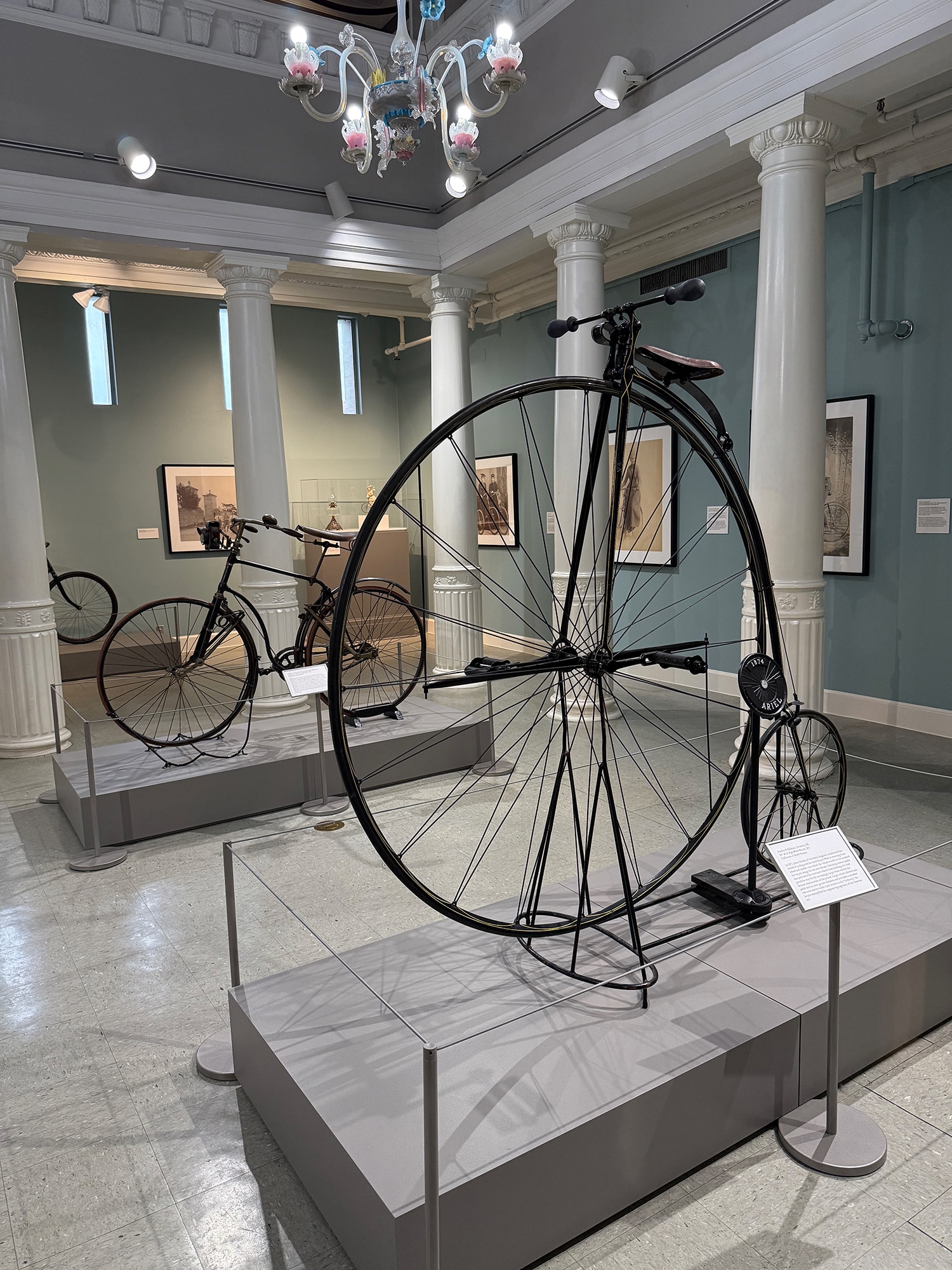
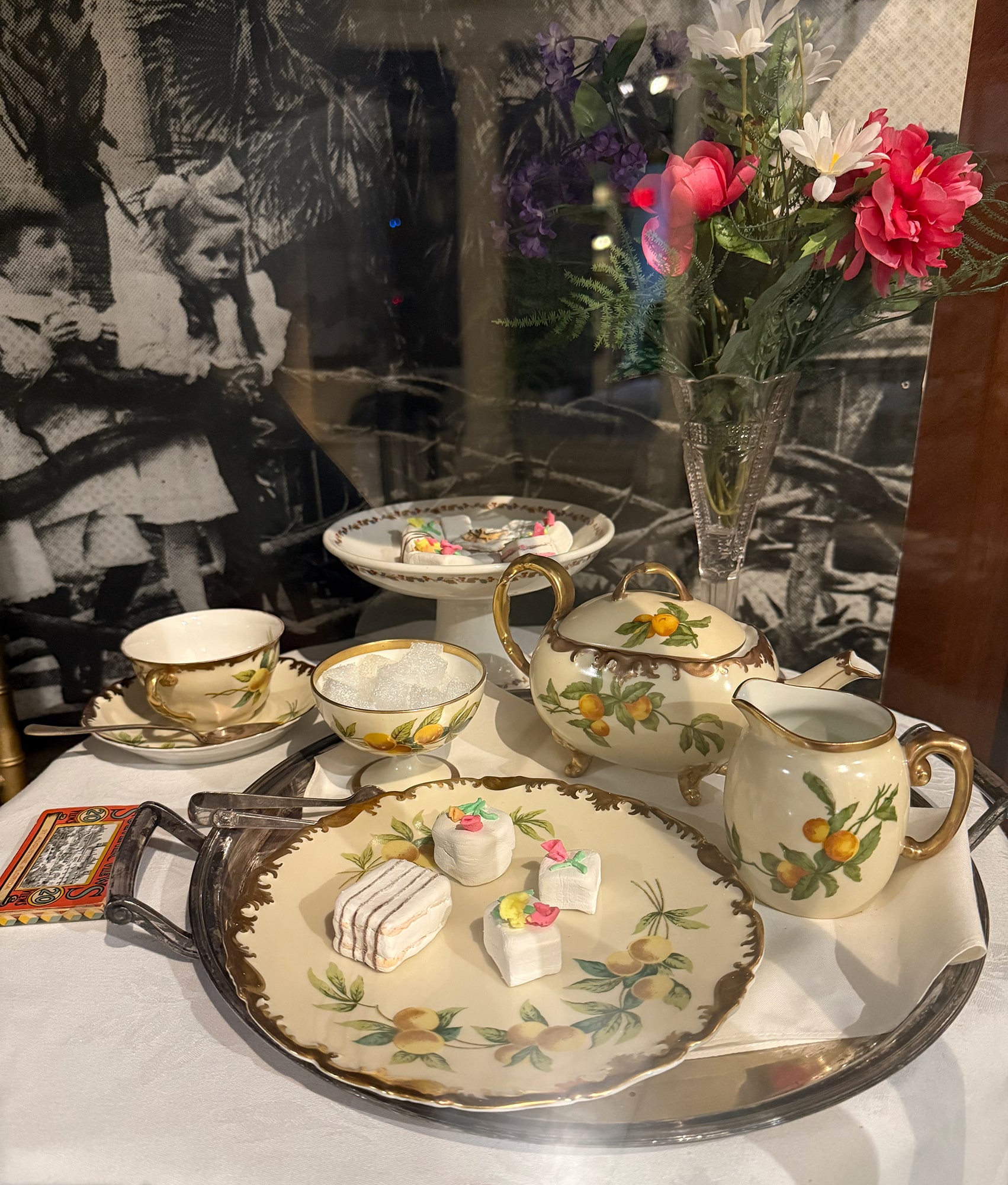
The first two photos below were just two of the photos by William Henry Jackson that adorn a long hallway at the Lightner Museum. For more information on William Jackson, check out this link. He played a major role in shaping public perception of the American West and was instrumental in swaying the congressional vote to establish Yellowstone National Park in 1872. The others were random photos I took of the exhibitions, including the Riding High exhibit, some of the original hotel components and information about the old spa.
The Hotel Monica
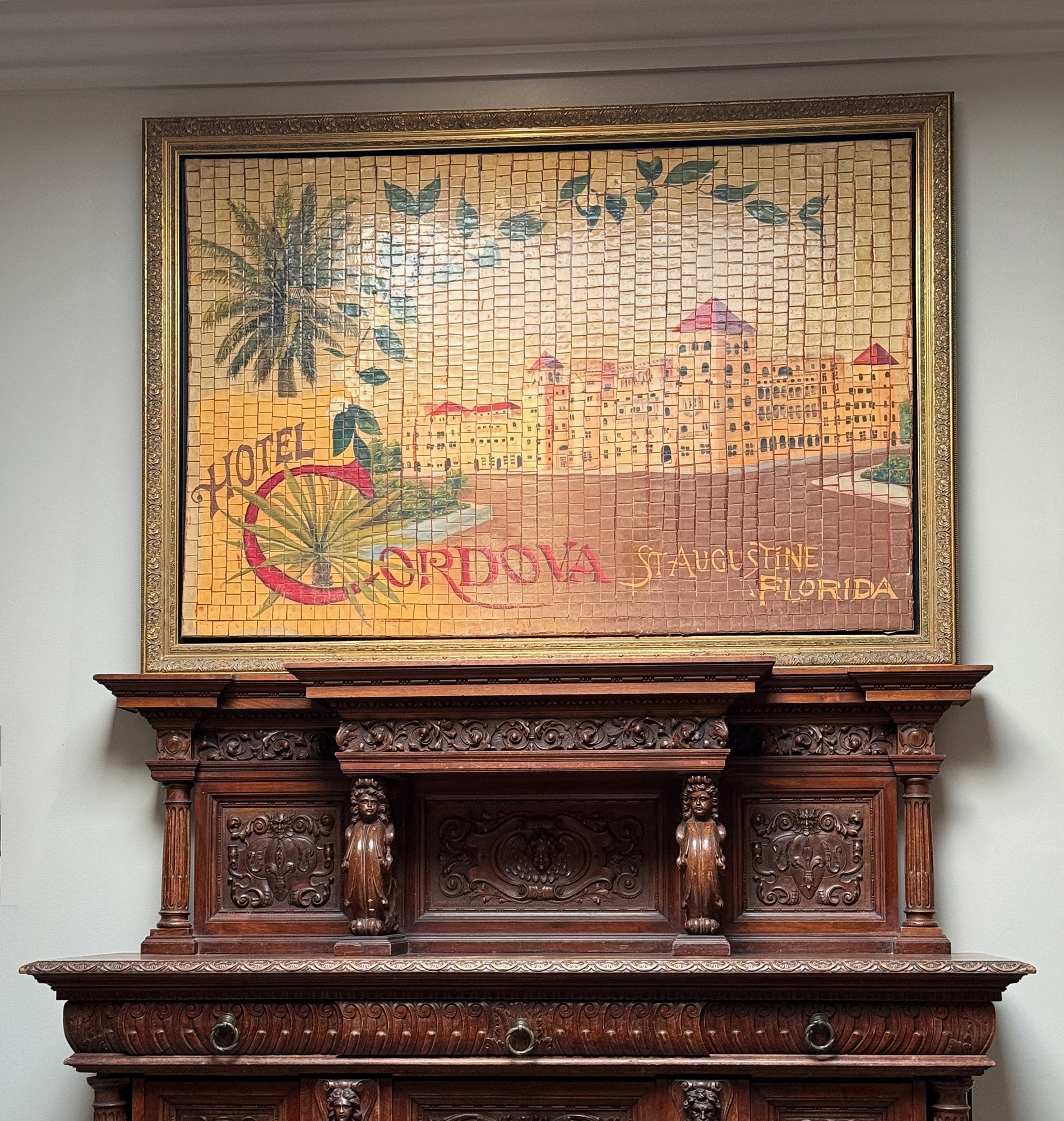
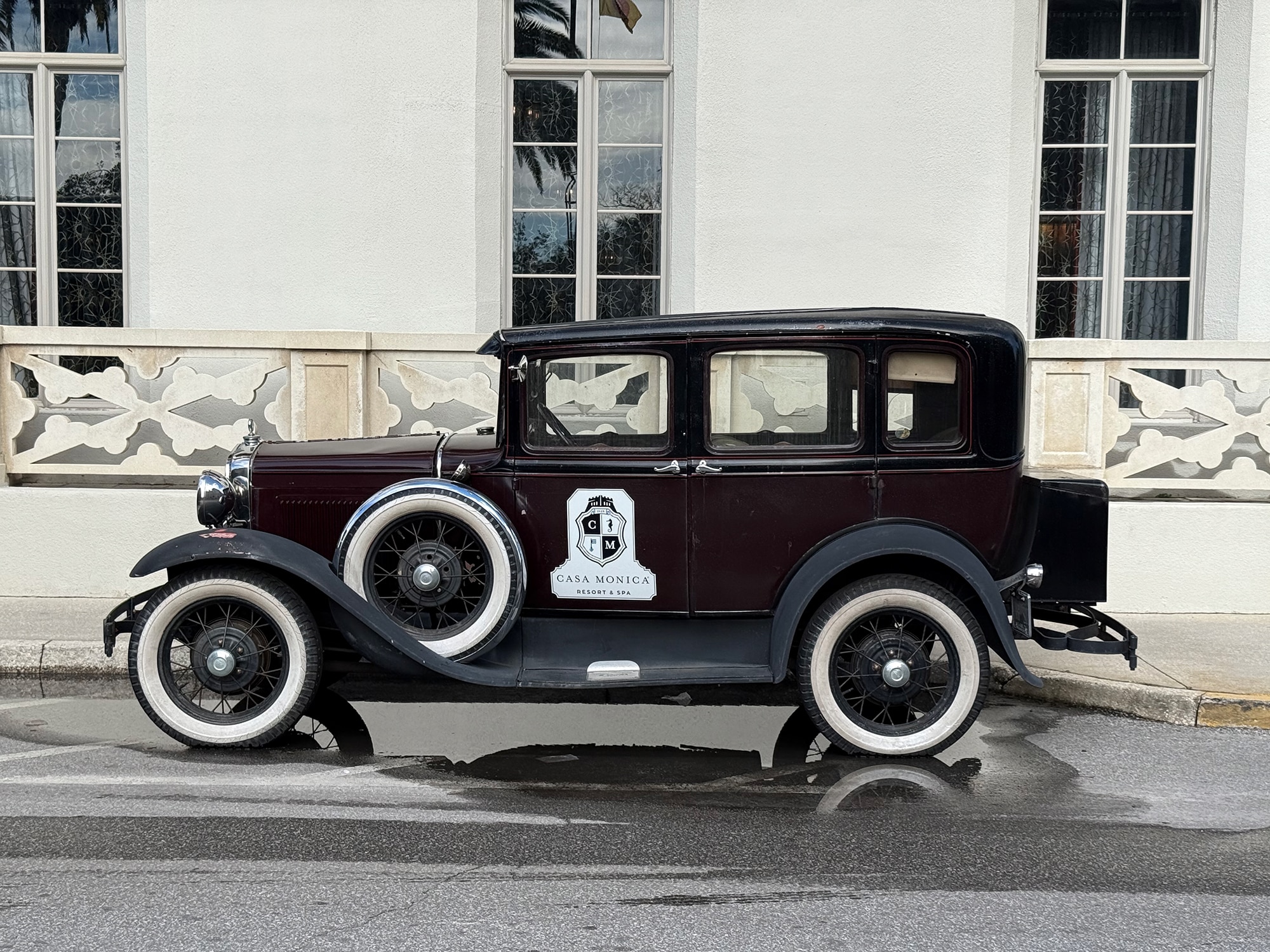
“A member of Historic Hotels of America since 2001, the Casa Monica Resort and Spa is St. Augustine’s most historic holiday destination. It first debuted in 1888, following a year of arduous construction work undertaken by Franklin W. Smith. Smith was a noted Civil War-Era abolitionist and social activist with a deep interest in Victorian architecture. A native Bostonian, he decided to build such a magnificent building because of the rise in Florida tourism at the end of the 19th century. The great Henry Flagler—who played a significant role in the state’s Gilded Age commercial development—sold the land to Smith as soon as he founded a spur to one of his local railways through St. Augustine.” ~ READ MORE about how Henry Flagler ended up with the Hotel Monica.
Time for a Break!
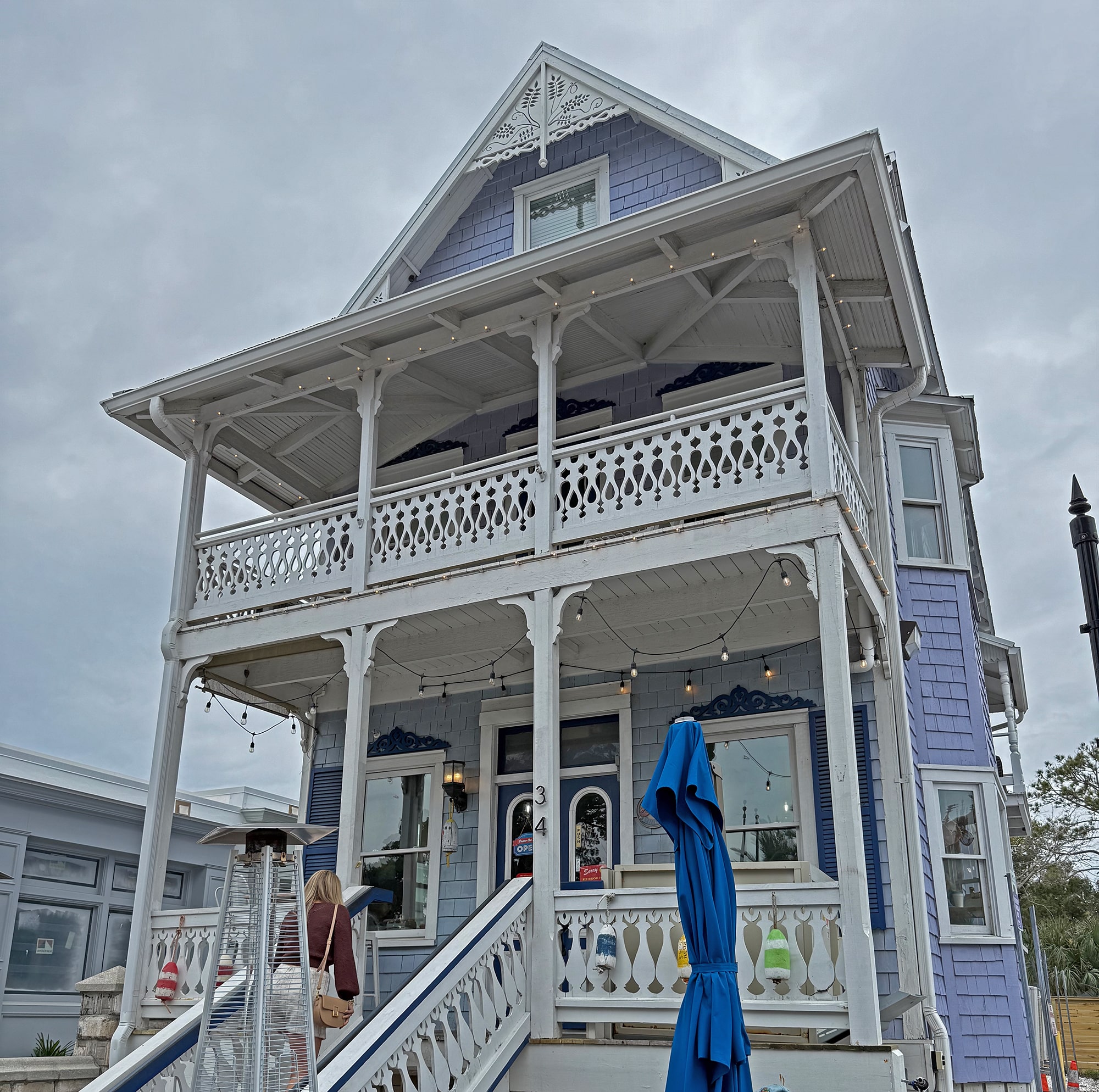
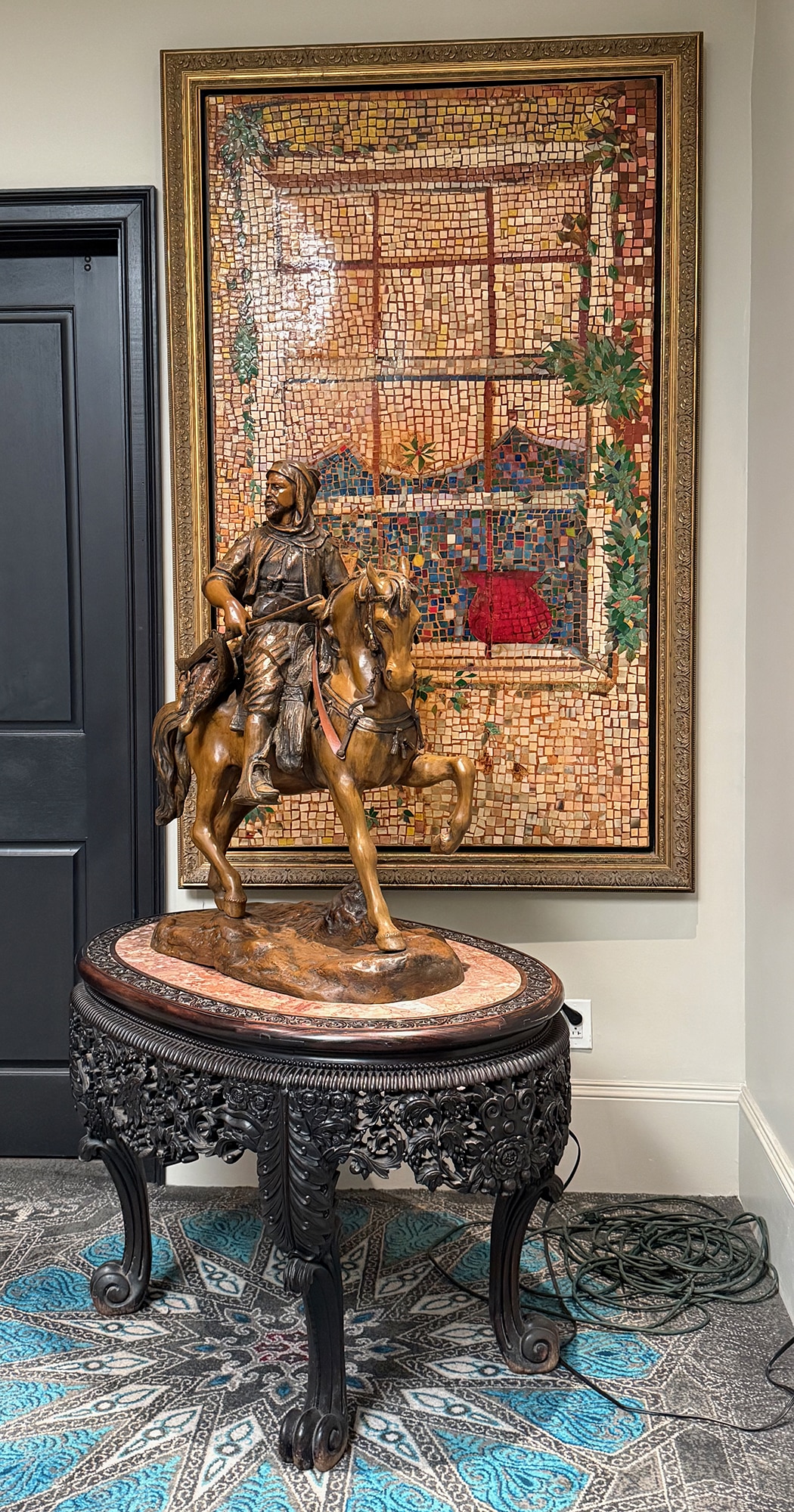
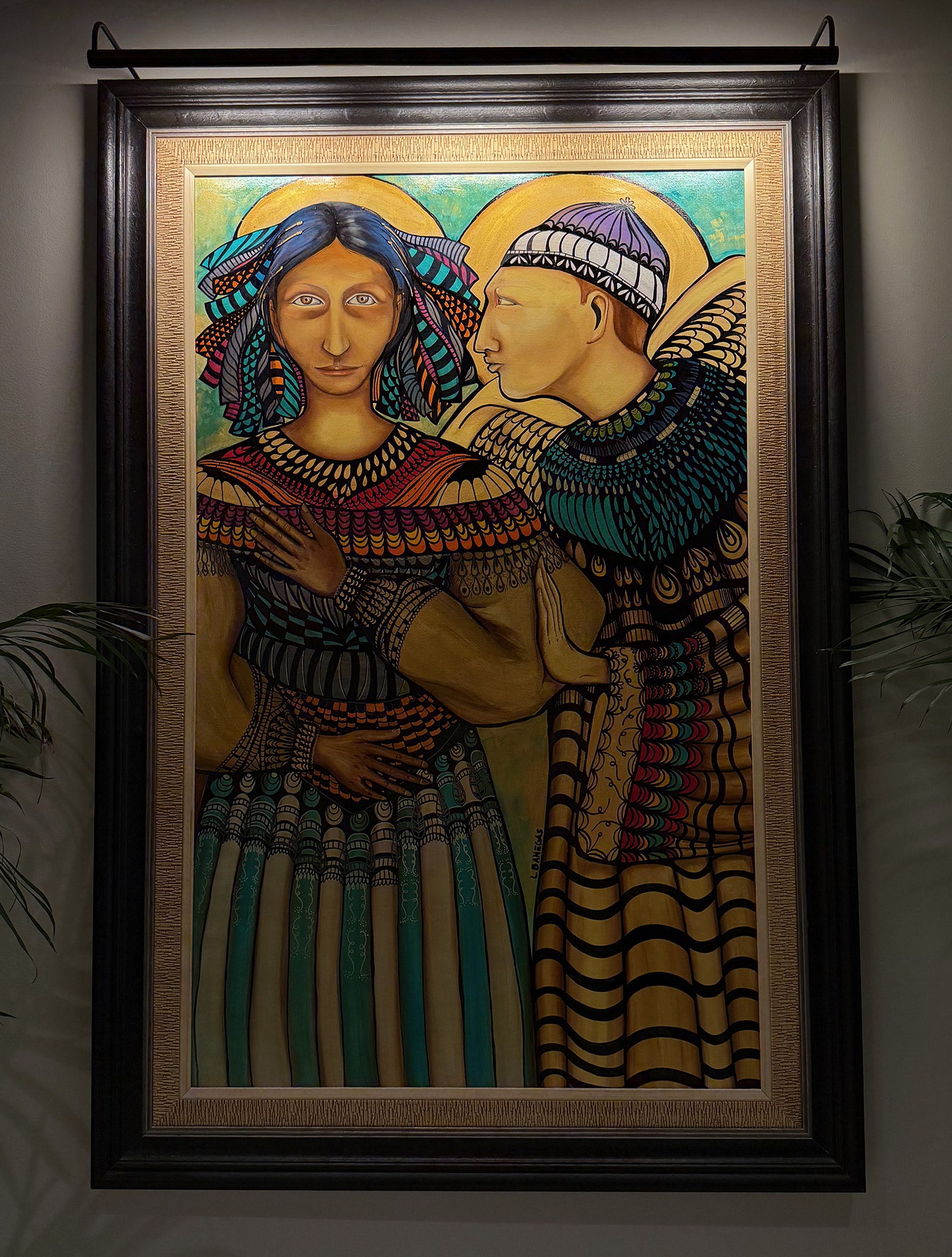
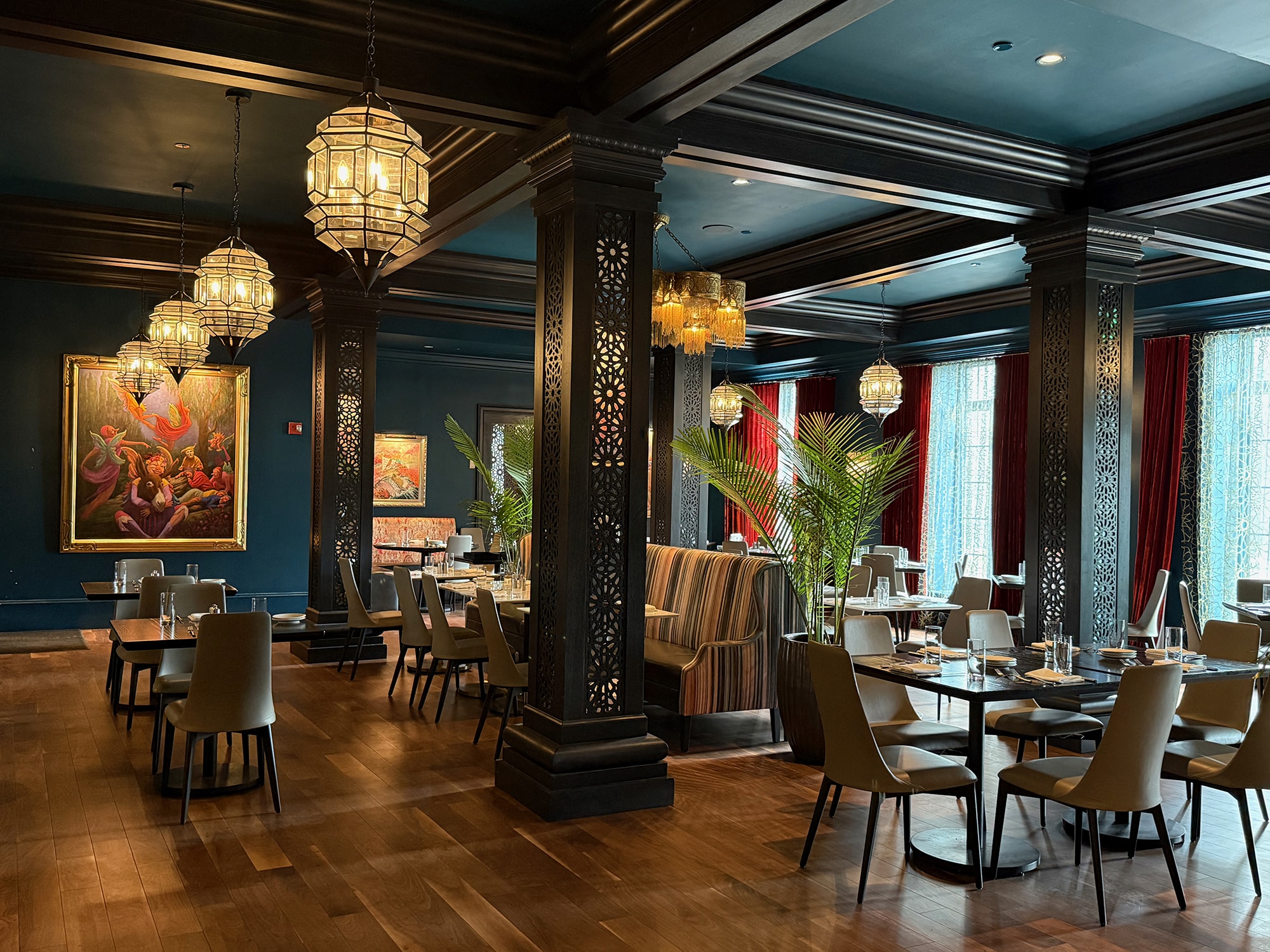
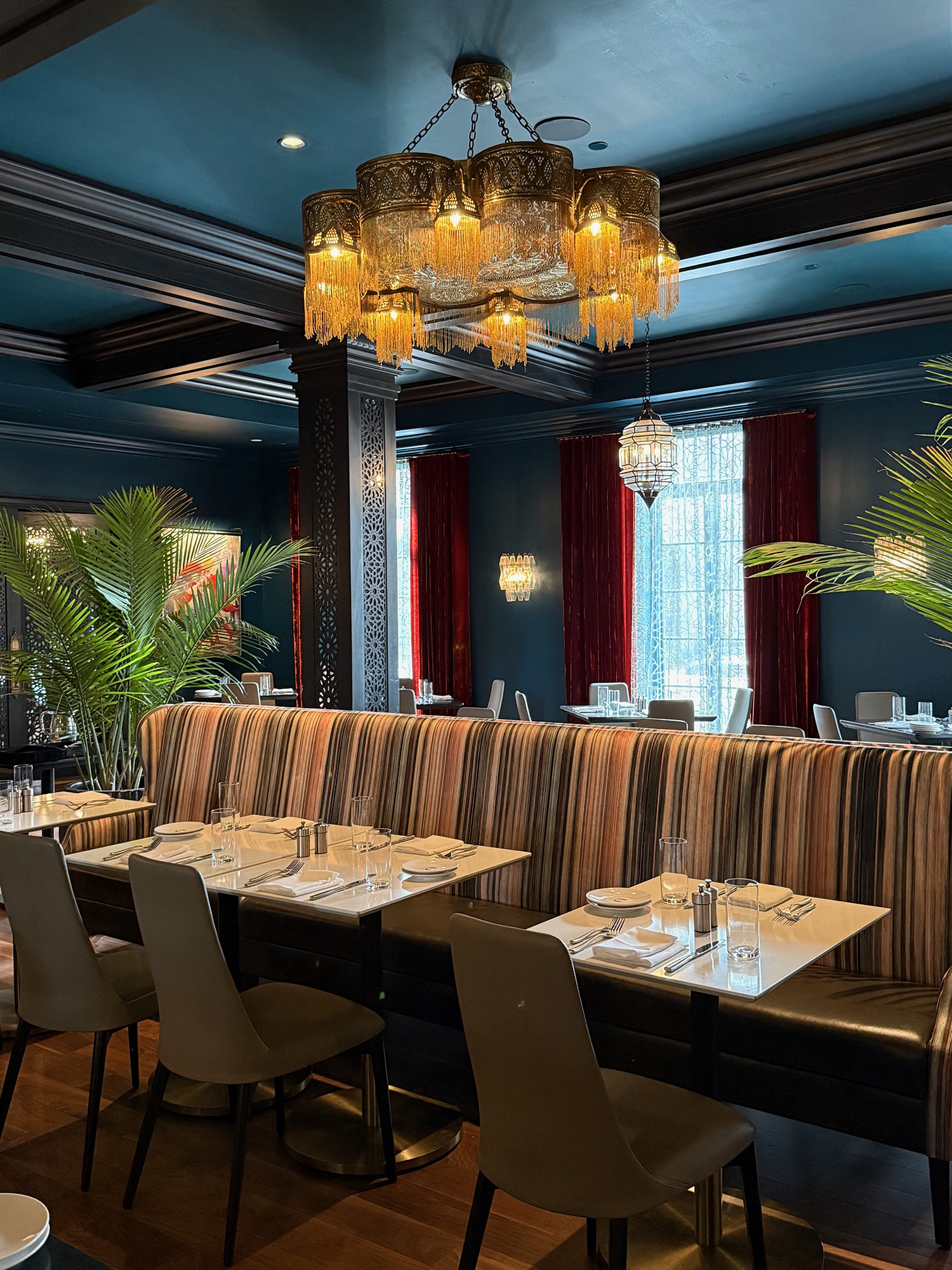
We had hoped to grab a drink at the bar in the lobby of the beautiful Hotel Monica, but it had already been a long day so we just snooped around a bit and took some pictures for next time. With so much history under our belts and no empty tables at the Alcazar Café, we headed over to Lobstah on a Roll on the way back to our car. When we realized there was a “Two for $20 Fish Sandwich” special, we jumped all over that. It’s hard to beat a good fish sandwich. And ours were delicious!
Next up: A Beautiful Transition
Happy trails,
Barb